Formulating With Eugenol: Start With the Limit
Most accord guides begin with the smell and finish with the limits. With eugenol it works better the other way round, because the limit decides how much eugenol your formula can hold before the accord gets a say. Here is the order we would follow before a pipette comes out: the product, the total eugenol from everything in the bottle, how the molecule behaves, and only then the partners.

Pick the product first
The IFRA Standard on eugenol gives a maximum for each of twelve product categories, measured in the finished product (IFRA Standards, 51st Amendment, pp. 103-105). A few show the spread: fine fragrance 2.5%, body lotion and oil 0.64%, baby products 0.21%, bar soap 4.9%, reed diffusers and similar 4.0%, and candles "no restriction". The same fragrance concentrate can be comfortable in one product and over the line in another, so decide the category before you decide the dose. The full table, and why a limit on the finished product is not a limit on the concentrate, is in our IFRA limits article.
Count every source of eugenol
Eugenol turns up in other raw materials, and the IFRA calculation counts it wherever it comes from. The Standard's annex lists indicative eugenol levels of roughly 85% in clove leaf oil, 82% in clove bud oil and 74% in cinnamon leaf oil, to use when you have no analysis of your own (IFRA eugenol Standard, Amendment 49, with Annex I). That matters because cinnamon leaf is among the materials we list as partners for eugenol oil. A recipe that adds it for warmth has already spent part of the eugenol budget before the isolate goes in.
Here is the sum, with invented inputs and an assumption we state outright. Take a 10 g concentrate of 6 g eugenol oil and 4 g of an oil assumed to be 80% eugenol, and assume the eugenol oil is 99% eugenol. That gives 5.94 g plus 3.20 g, so 9.14 g of eugenol in 10 g, a 91.4% share. Swap in the real figures from your lot reports and the answer moves; our worked example shows the method in full.
Turn the limit into a ceiling
The highest eugenol share a concentrate can have is the category limit divided by the dose. These are illustrations with invented doses:
| Product | Concentrate dose | Limit | Highest eugenol share |
|---|---|---|---|
| Fine fragrance (4) | 15% | 2.5% | 16.7% |
| Body oil (5A) | 5% | 0.64% | 12.8% |
| Bar soap (9) | 10% | 4.9% | 49% |
| Reed diffuser (10A) | 20% | 4.0% | 20% |
Set the 91.4% concentrate beside the table and every row falls short, which is the whole lesson. Eugenol is a material you dose in small percentages, so choose the dose your product needs and let the ceiling decide how much of the concentrate can be eugenol. For skin products we would start from the low end of the range, around half a percent for leave-on use, and check the category row.
How the molecule behaves
A few properties from the reference records shape a formula, and each is worth knowing.
- It is a phenol. PubChem lists a pKa of 10.19 and says it dissolves in aqueous alkali hydroxide solutions (PubChem, CID 3314). In a strongly alkaline base such as fresh soap, some will sit as a salt rather than free oil, which is why our soap usage-rate post treats timing carefully.
- It is unhurried. The boiling point is 252 to 256 C and the vapour pressure about 0.03 mmHg at 25 C, which fits the middle-to-base placement we give it. It lingers instead of flashing off, so the dose has to respect the limit for as long as it lasts.
- It has a high flash point. Above 100 C, closed cup. That does not make a candle formula automatic; see our candle safety post.
Now the fun part: partners
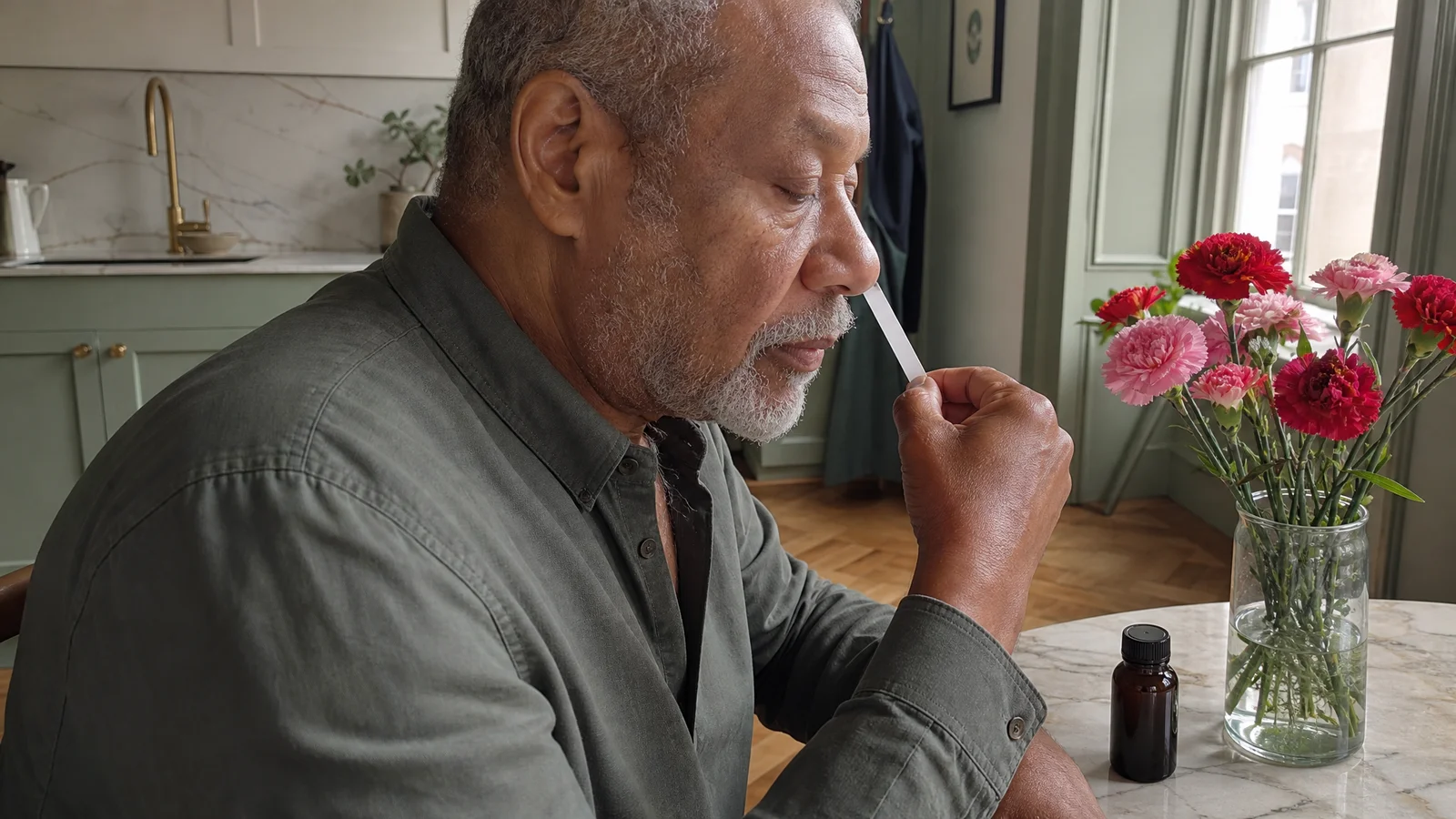
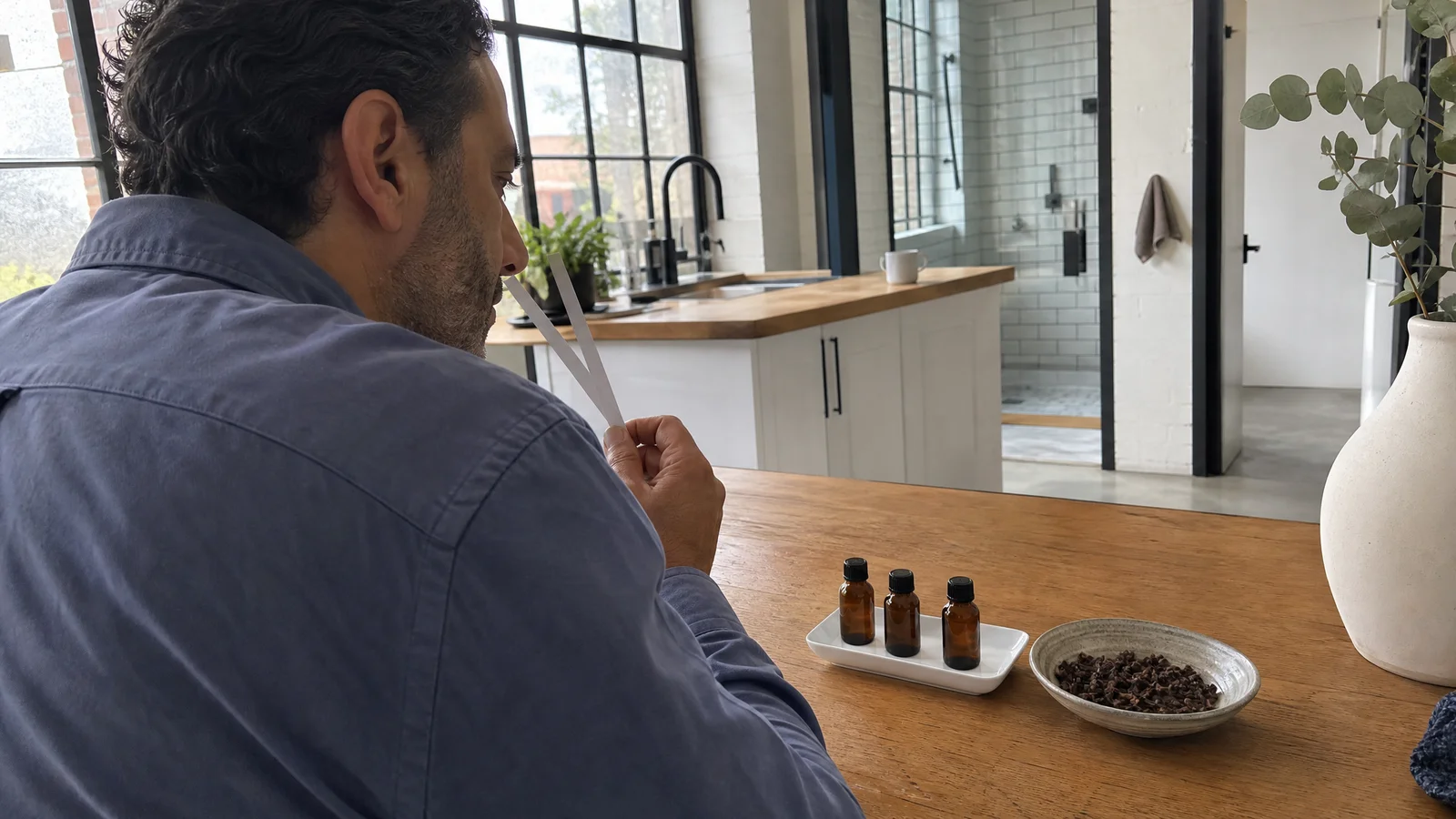
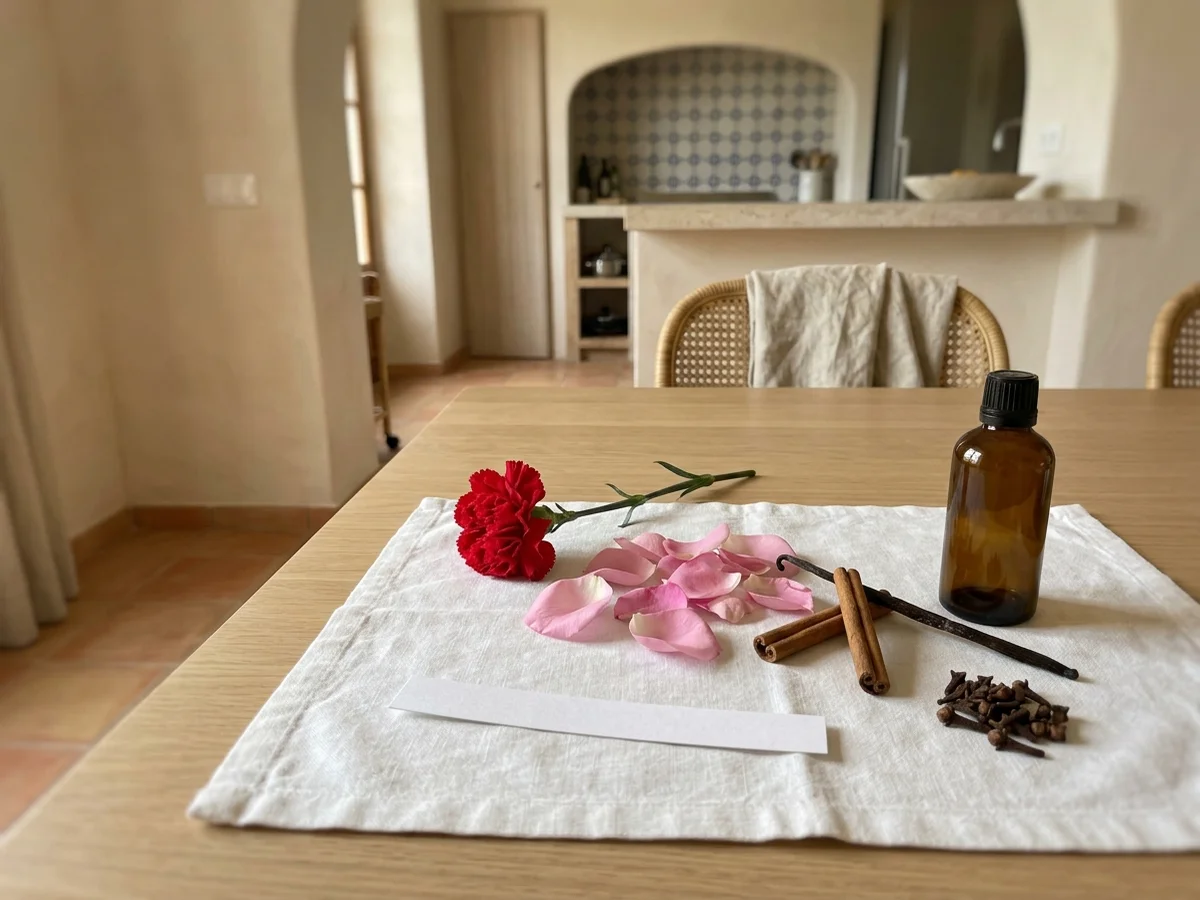
Published descriptions of eugenol itself are "odor of cloves" (Merck Index) and "warm, spicy, floral" (Kirk-Othmer), both quoted in PubChem. We describe ours as warm, spicy and carnation-like, sweeter and more focused than whole clove. Rose and ylang ylang meet the floral half of that description, vanilla rounds the spice with sweetness, sweet orange lifts it, cinnamon leaf doubles down on the warmth and patchouli carries it into the base. That is reasoning from descriptions, so judge every pairing on a smelling strip; our strip method and the list of partner materials help.
The discipline that follows is simple: hold the eugenol steady and move everything around it. If the clove sits too sharply on top, add more of the partners at the same eugenol dose, which keeps you inside the limit. Judge the dry-down as well as the first minute.
Keep a notebook for the sums and the nose
Put the arithmetic and the smell in the same notebook: the formula on the left page, and on the right what you noticed on the strip at one hour, one day and one week. In a month you will see which pairings you actually love, and the limit sums will already be done.
Check, then wait
Re-run the sums with real figures from your lot reports, write down the final eugenol share, and check the labelling rules for your market, which our labelling article covers. Patch test any leave-on product and have a cosmetic chemist or regulatory specialist review anything you plan to sell. Then let the blend rest before you judge it; our ageing post explains how.
Eugenol belongs in the formulas where a warm clove-carnation note earns its place. For infant products, where Category 5D allows only 0.21%, or anything meant for the mouth, it is best left out, and a cosmetic chemist, dentist or physician is the right person to ask.
Sources & Further Reading
- IFRA Standards, 51st Amendment (eugenol, pp. 103-105). IFRA Standards PDF
- IFRA Standard on Eugenol, Amendment 49, with Annex I (indicative levels). perfumersworld.com
- PubChem, Eugenol (CID 3314). pubchem.ncbi.nlm.nih.gov