Clove and Eugenol: A History From Spice to Molecule
When the Gribshunden, a Danish royal flagship, sank near Ronneby in Sweden in June 1495, there were cloves aboard. More than 3,000 years earlier, someone in a burned house at Terqa, in Syria, had cloves too. That is the odd thing about clove: its story is ancient and far-flung, while the molecule that gives it so much of its character has only been a named, purified material for about a century.

An old spice with a few famous finds
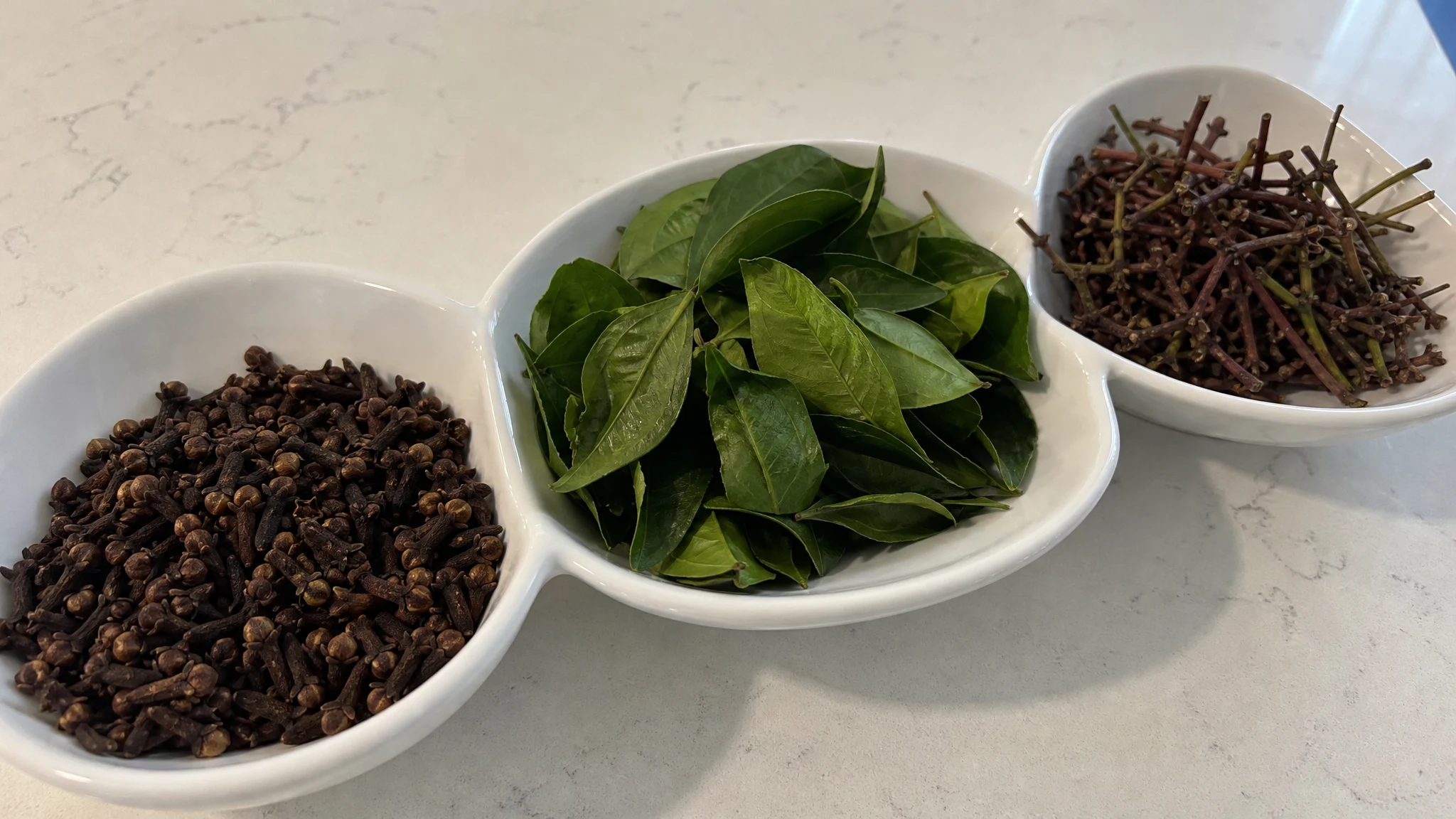
Cloves are the dried flower buds of a tree native to the Maluku Islands. A summary of the archaeology and trade record notes the Terqa find, reported by Giorgio Buccellati in 1978 and dated to about 1720 BC, cloves reaching Rome by the first century AD, and the 1495 Gribshunden wreck (Wikipedia, Clove). A review of eugenol adds that clove "has been used in ancient China as a spice and fragrance for more than 2,000 years" (Kamatou et al., Molecules, 2012). The charming story of Han court officials freshening their breath with cloves before addressing the emperor is repeated everywhere, but the same summary flags it as needing a citation, so we tell it lightly.
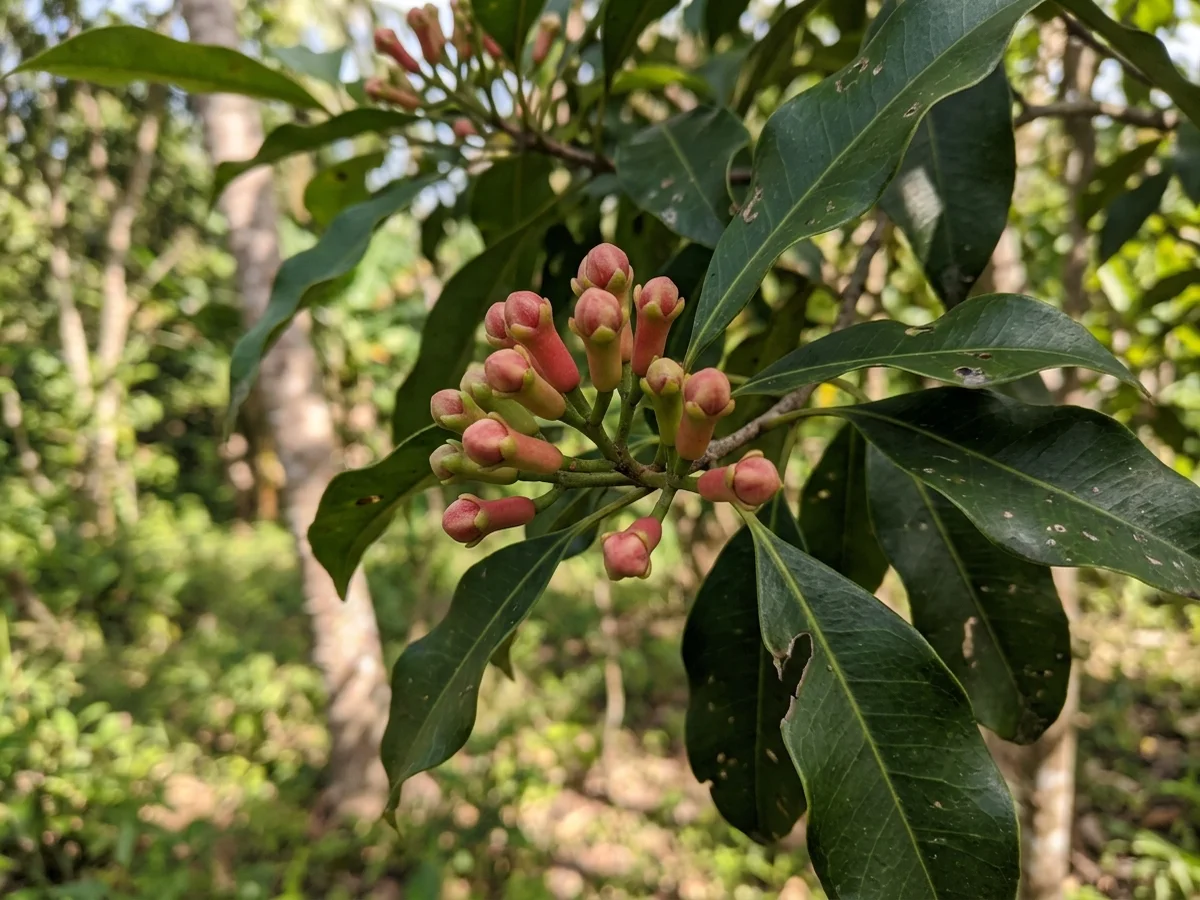
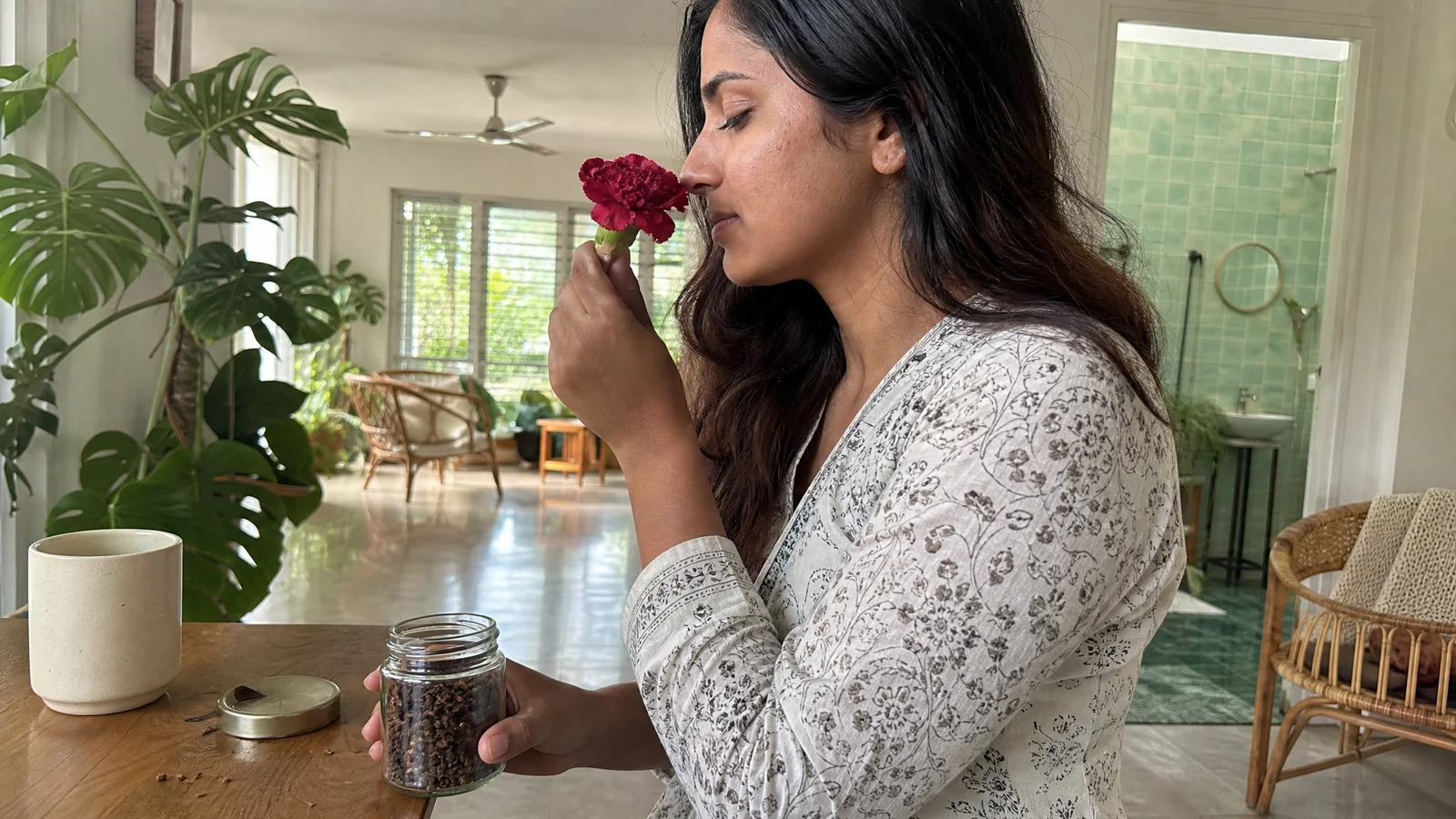
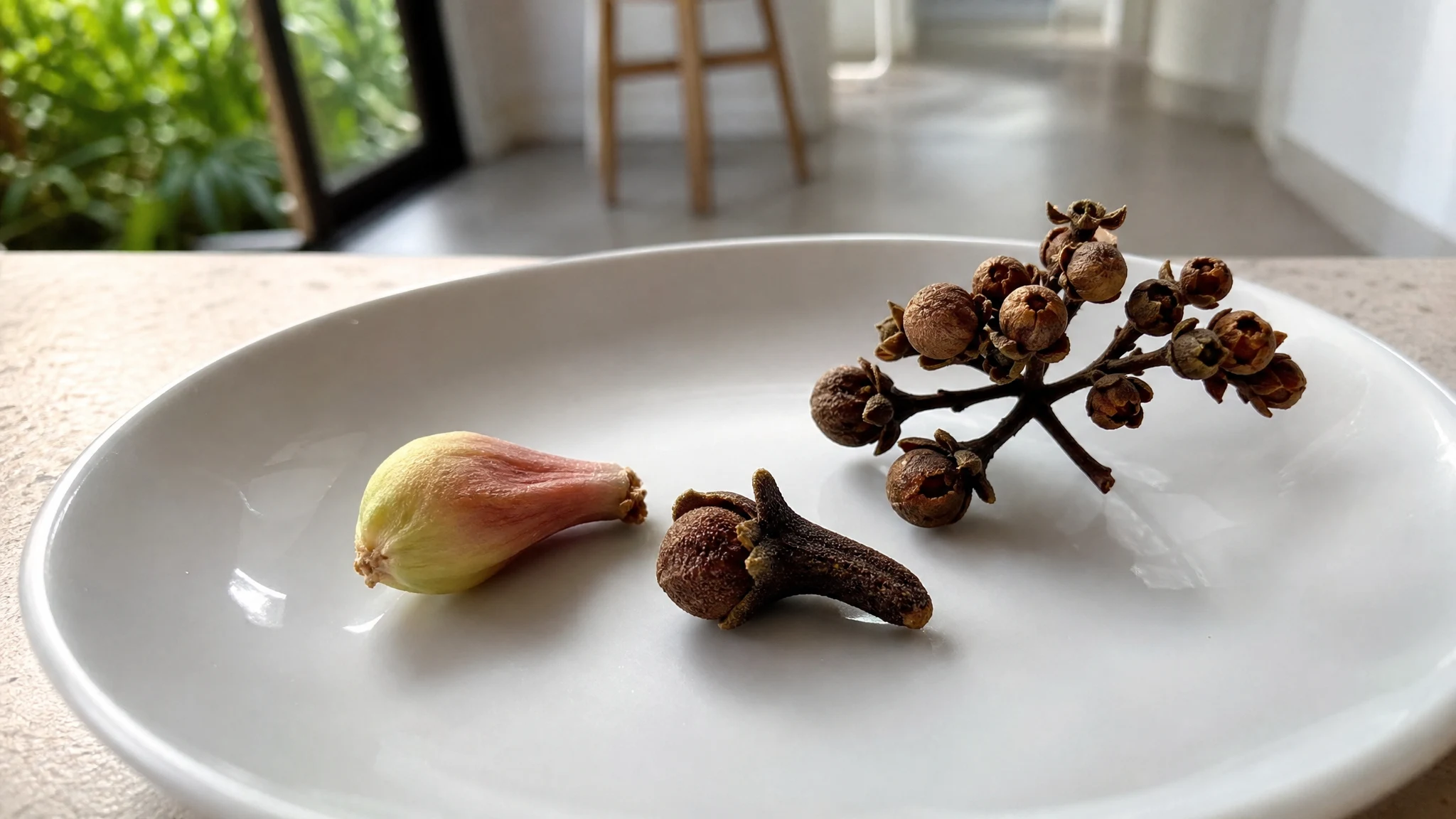
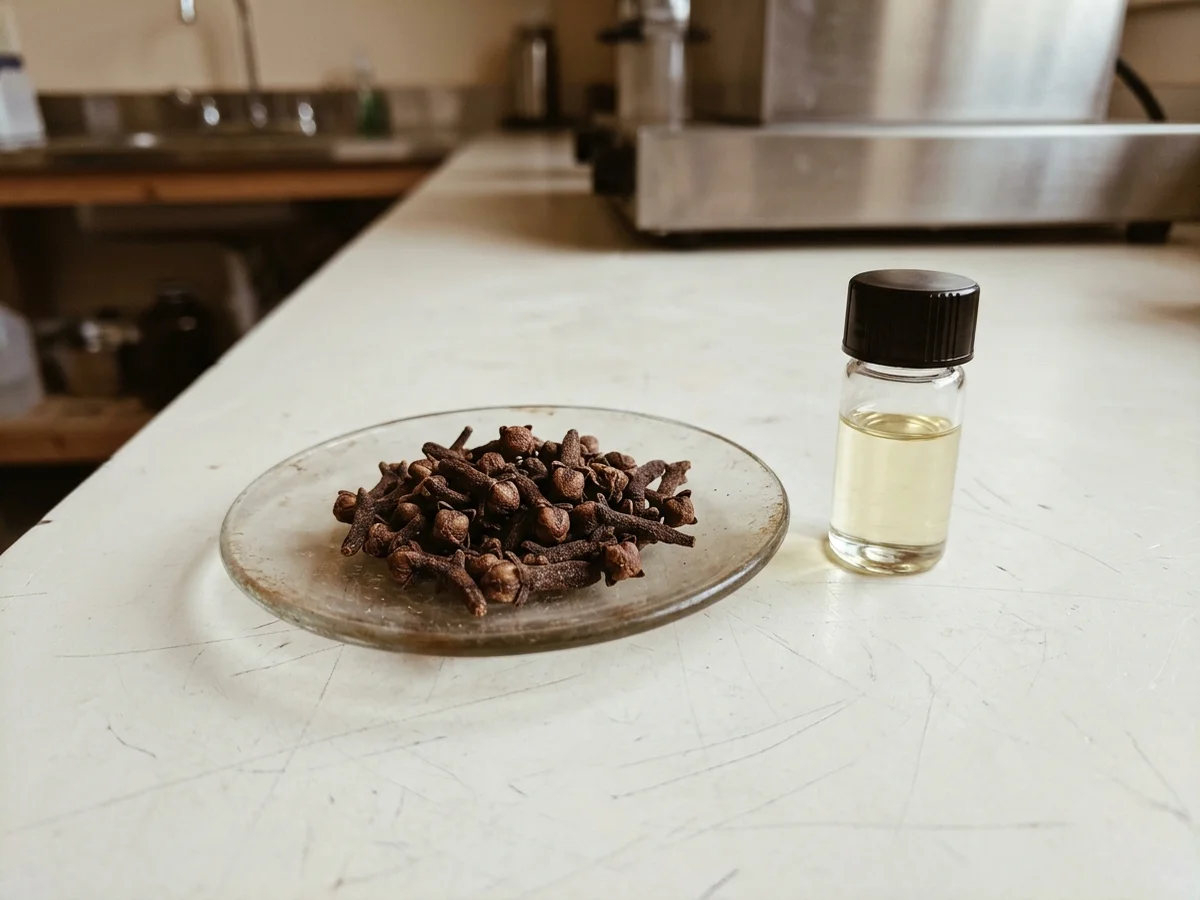
It is a small thing to hold in your hand, a dried clove: a little brown nail with a tiny ball at the head. Squeeze one between your fingers and you will notice how hard and dry it is, and then how quickly the warmth comes up when it is crushed. That immediate, sweet-spicy smell is the reason traders crossed oceans for it, long before anyone could say what was inside.
Monopolies, smuggled seedlings and a map that moved
The Dutch East India Company tried to monopolise cloves in the 17th century as it had nutmeg, but clove trees grew all over the Moluccas, and control slipped away. In 1770, seedlings taken from Ternate under the instruction of Pierre Poivre travelled on to Mauritius, the Seychelles and later the Caribbean (Wikipedia, Clove). The Kamatou review sums the period up as one of "struggle over control of the industry, warfare, decreased trade prices and even smuggling of seedlings for cultivation."
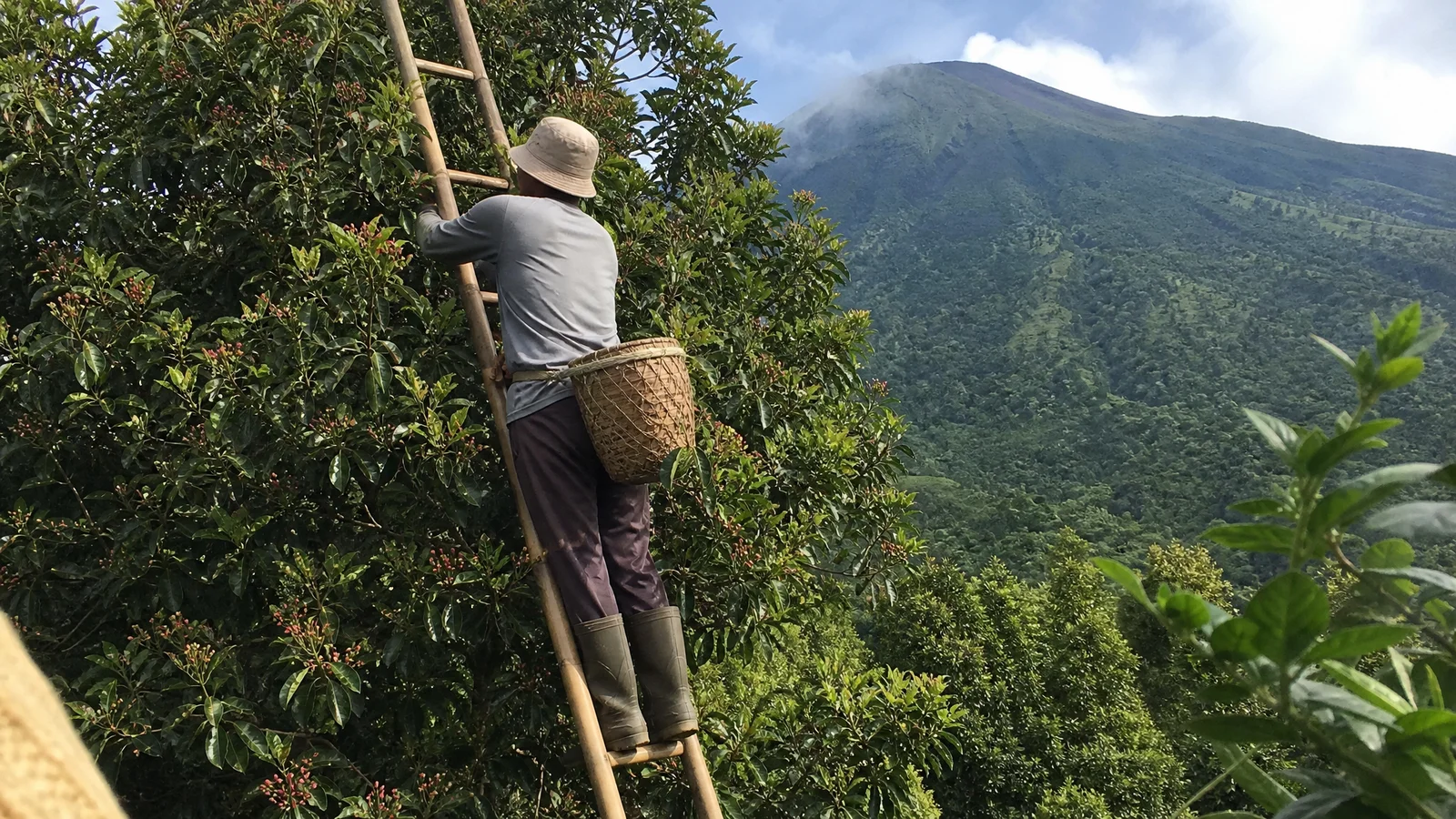
The result is today's map. Leading producers include Indonesia, Madagascar, Tanzania, Sri Lanka and Comoros, and the work stays hands-on: buds are picked by hand before they open and lose about two thirds of their weight as they dry. Our How We Test page describes clove oil as coming mainly from Indonesia and Madagascar, with the refining done by a specialist elsewhere, which fits that long pattern of supply moving around.
It is easy to forget how much patience this crop asks for. Clove trees take years before they give a useful harvest, and the buds have to be picked at the right moment, by hand, before they open. Everything that reaches a perfumer's bench, whether it is a whole spice, an oil or a refined isolate, started with someone on a ladder choosing the right bud.
From a spice to a named molecule
The molecule's name comes from Eugenia caryophyllata, the old botanical name for the clove tree. The same review reports that eugenol was first isolated in 1929 and that US commercial production began in the 1940s, though it rests that on a secondary citation, so we pass the date along as that review's account. The method it describes is classic chemistry: treat the oil with alkali, remove the non-phenolic part, acidify, then purify by fractional distillation. Our isolation article walks through it, and plants that contain eugenol shows that clove was never the only source. For the dental reputation clove picked up along the way, see our dentistry history article.
Why we like telling this story
We sell a modern material, but we enjoy knowing it belongs to a very old line. When you smell eugenol oil, you are smelling something that people have prized in kitchens, markets and workshops for a very long time, and that makes the careful, modern habits (weighing, labelling, checking limits) feel like part of the same tradition of looking after a valuable thing.
Next time you handle a clove, try this: roll it between your fingers, then smell your fingertips a minute later. The scent clings, and it keeps changing as it fades, sweet at first and then drier and woodier. That lingering quality is the same reason the molecule has stayed so useful on the fragrance bench.
Rules, and a second origin story
As a fragrance material, eugenol is now covered by an IFRA standard, listed as a Restriction, with earlier versions published in 2004, 2006, 2007, 2008 and 2020, and the current text from 2023 (IFRA Standards, 51st Amendment). That means an old formula from a forum post may not fit today's limits, so check it against the current standard. Our IFRA explainer does the arithmetic.
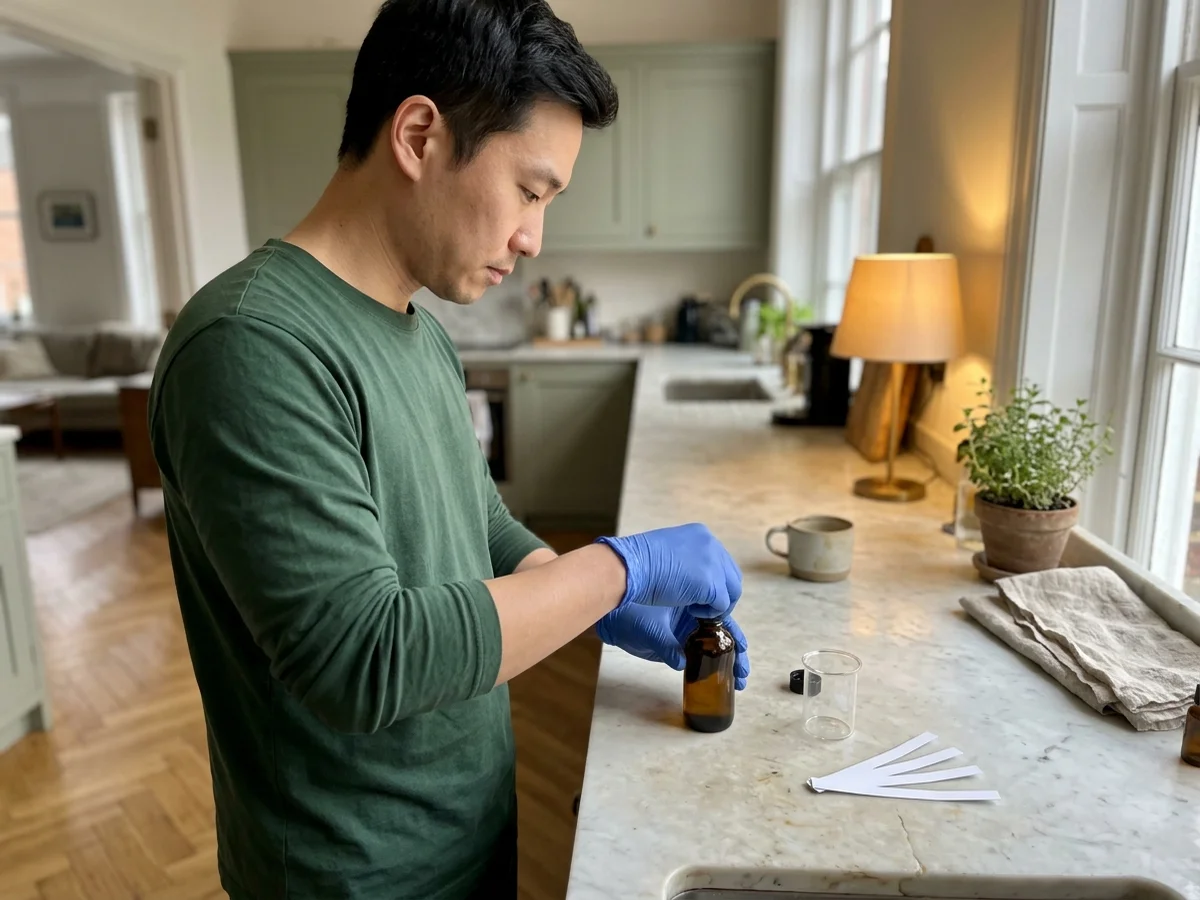
The molecule also has a second history. In 2021 Solvay announced a synthetic eugenol for fragrance, saying that "natural origin is not essential" and pointing to "the quality, supply and price fluctuations occurring in the sourcing of natural eugenol extracted from cloves" (Solvay, 2021). Clove-derived and synthetic eugenol are the same molecule. Our natural versus synthetic article explains how makers tell them apart.
We sell one material, eugenol oil, for the fragrance bench, and it is not offered for dental or therapeutic use. For questions about clove and your health, a dentist or physician is the right person. It is a lot of history for one small bud, and it still smells the way it did in a Syrian house: warm, sweet and unmistakably spiced.
Sources & Further Reading
- Wikipedia. Clove (history, archaeology, trade, producers). en.wikipedia.org/wiki/Clove
- Kamatou GPP, Vermaak I, Viljoen AM, 2012. Eugenol: from the remote Maluku Islands to the international market place. Molecules 17(6):6953-81. PMC6268661
- IFRA, 2023. IFRA Standards, 51st Amendment, eugenol. ifra-standards-51st-amendment.pdf
- Solvay, 2021. Solvay launches Eugenol Synth for fragrance applications. solvay.com press release