What Is Eugenol Oil? How It Differs From Clove Oil
Eugenol oil is not clove oil with a fancier name. It is the heart of clove, the single aroma molecule that gives clove most of its character, lifted out of the oil and concentrated until little else is left. Perfumers, soap makers and candle makers reach for it when they want that warm, spicy, carnation-like note without the rest of the clove orchestra.

One molecule, not a whole oil
Eugenol is a single compound, C10H12O2, named 2-methoxy-4-prop-2-enylphenol (PubChem, CID 3314). It is a phenol: a benzene ring carrying a hydroxyl group, a methoxy group and a short allyl tail. So the useful question about a bottle is not "which plant?" but "how much of this is eugenol, and what is the rest?"
We say it plainly: this is not an essential oil. It is one molecule pulled out of a distillate and concentrated, narrower than the oil it came from on purpose. Anyone selling an isolate as a more potent clove oil has the relationship backwards. We sell eugenol oil, a refined isolate obtained from clove oil, and we do not sell clove oil itself.
Where it comes from
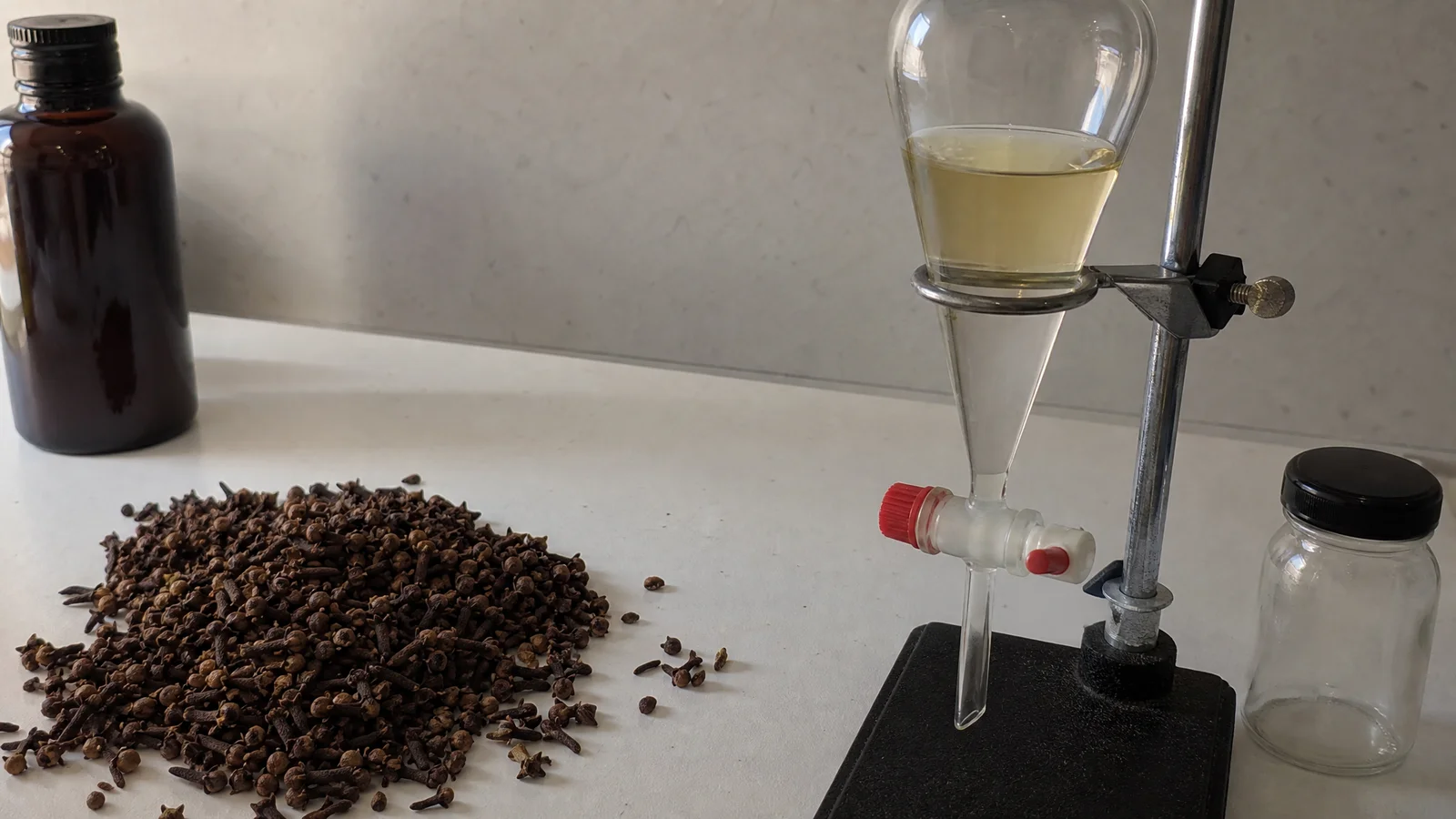
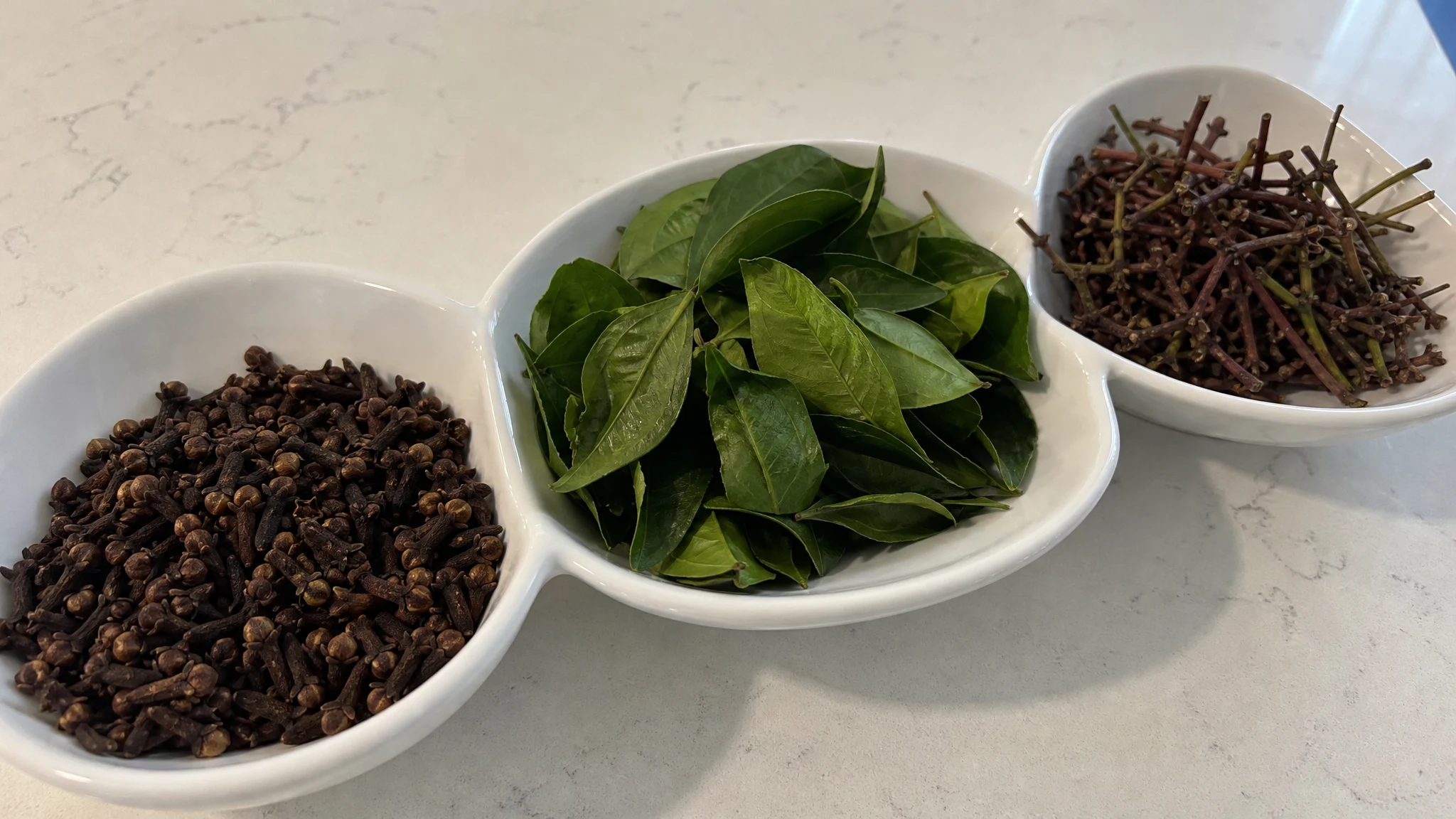
Clove, Syzygium aromaticum, is the main natural source. A 2012 review explains that eugenol is predominantly prepared from natural oil sources: the oil is treated with aqueous sodium or potassium hydroxide, the non-phenolic part is removed, the mixture is acidified and the eugenol is purified by fractional distillation. A synthetic route from guaiacol also exists (Kamatou et al., Molecules, 2012). The starting oil is distilled from buds or leaves, and in the EFSA batches bud oil averaged 75.06% eugenol while leaf oil averaged 82.60% (EFSA FEEDAP Panel, 2023). Eugenol also lives in other plants, notably cinnamon leaf and pimento, which our post on plants that contain eugenol takes through. How an isolate is made and what can be proven about it are covered in our natural versus synthetic post.
How the isolate differs from the oil
Physical constants make the difference easy to see. EFSA's clove bud oil batches had a refractive index of 1.534 to 1.537 and a specific gravity of 1.0559 to 1.0593, while eugenol itself is listed with a refractive index of 1.540 to 1.542 and a density of 1.064 to 1.070. The Certificate of Analysis we publish for one batch reports a relative density of 1.065 and a refractive index of 1.541 against those same standards. Those numbers line up with the eugenol column rather than the whole oil column, which is a reassuring fit. They are physical readings, so for a percentage you would ask for a lot report; our guide to reading a certificate of analysis explains each line.
Scent and personality
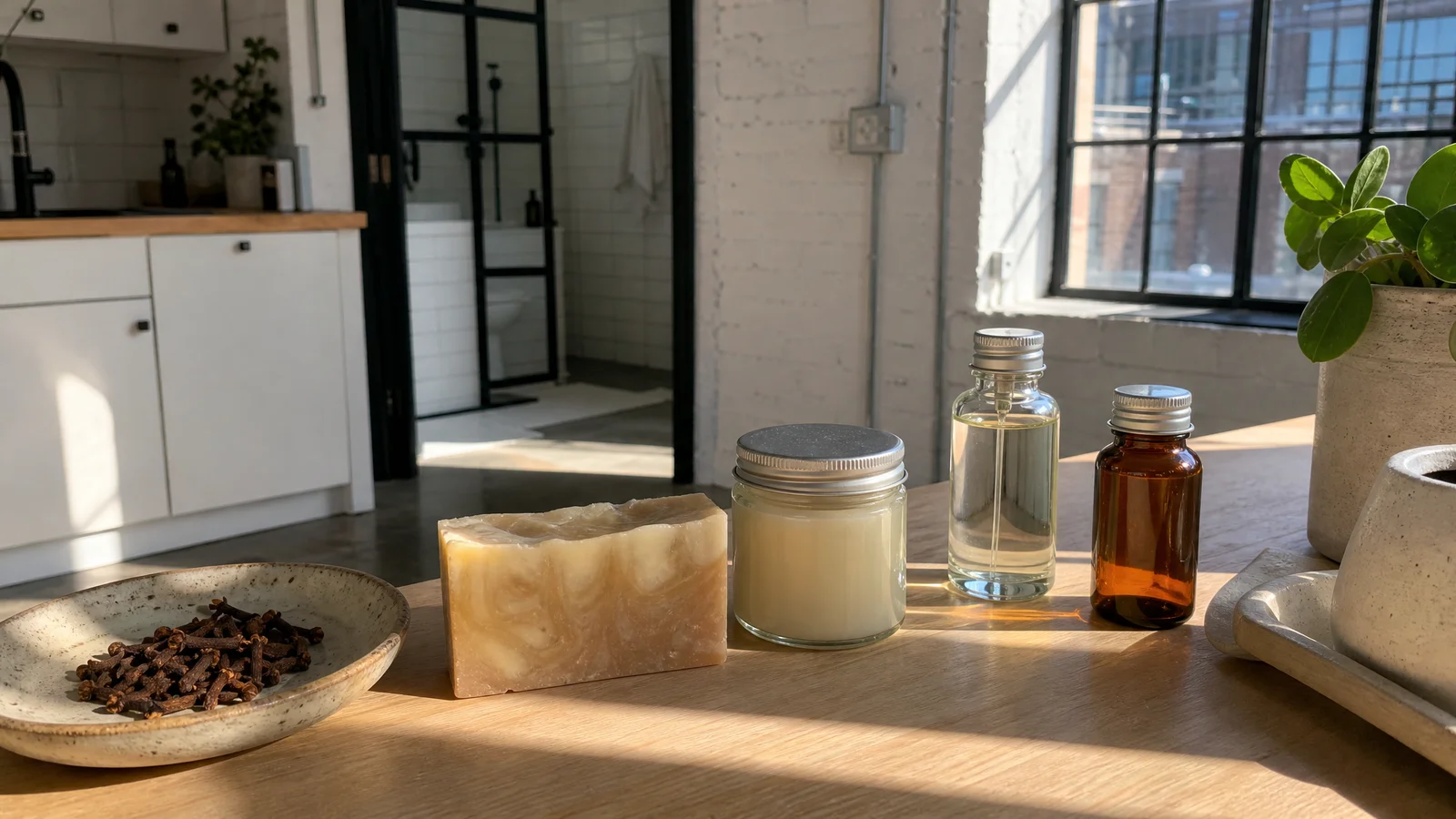
Reference works describe the molecule as "odor of cloves" (Merck Index) and "warm, spicy, floral" (Kirk-Othmer). We call ours warm, spicy and carnation-like, sweeter and more focused than whole clove, with a middle-to-base presence. That is why it shows up in carnation and Oriental spice accords and deepens rose, ylang ylang and vanilla compositions, and why makers use it in spiced soap, candle fragrance, potpourri refreshers and reed diffusers. See our scent profile for more.
How it behaves on the shelf
- Mixing. It dissolves in oils, waxes and alcohol, and in water only to a small degree (PubChem lists about 2,460 mg/L at 25 C), so a water-based product needs a solubiliser.
- Staying power. It boils at 252 to 256 C and evaporates slowly, which fits its role as a middle-to-base note.
- Ageing. It keeps about three years cool, dark and tightly closed, and it darkens toward amber once air gets at it. That is ordinary behaviour for a phenol, and it means a part-used bottle ages faster than a sealed one. Every size of ours comes in dark glass.
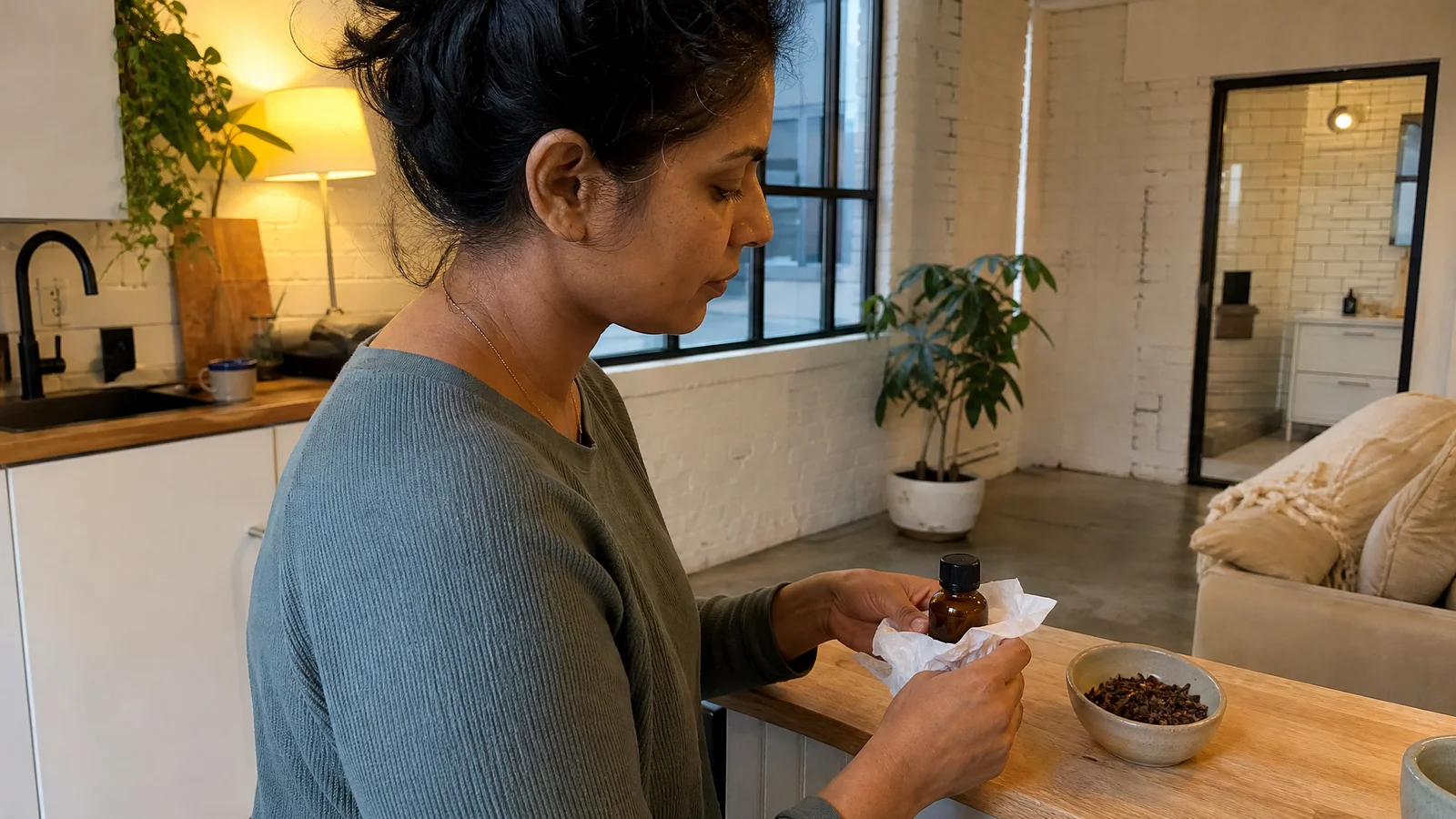
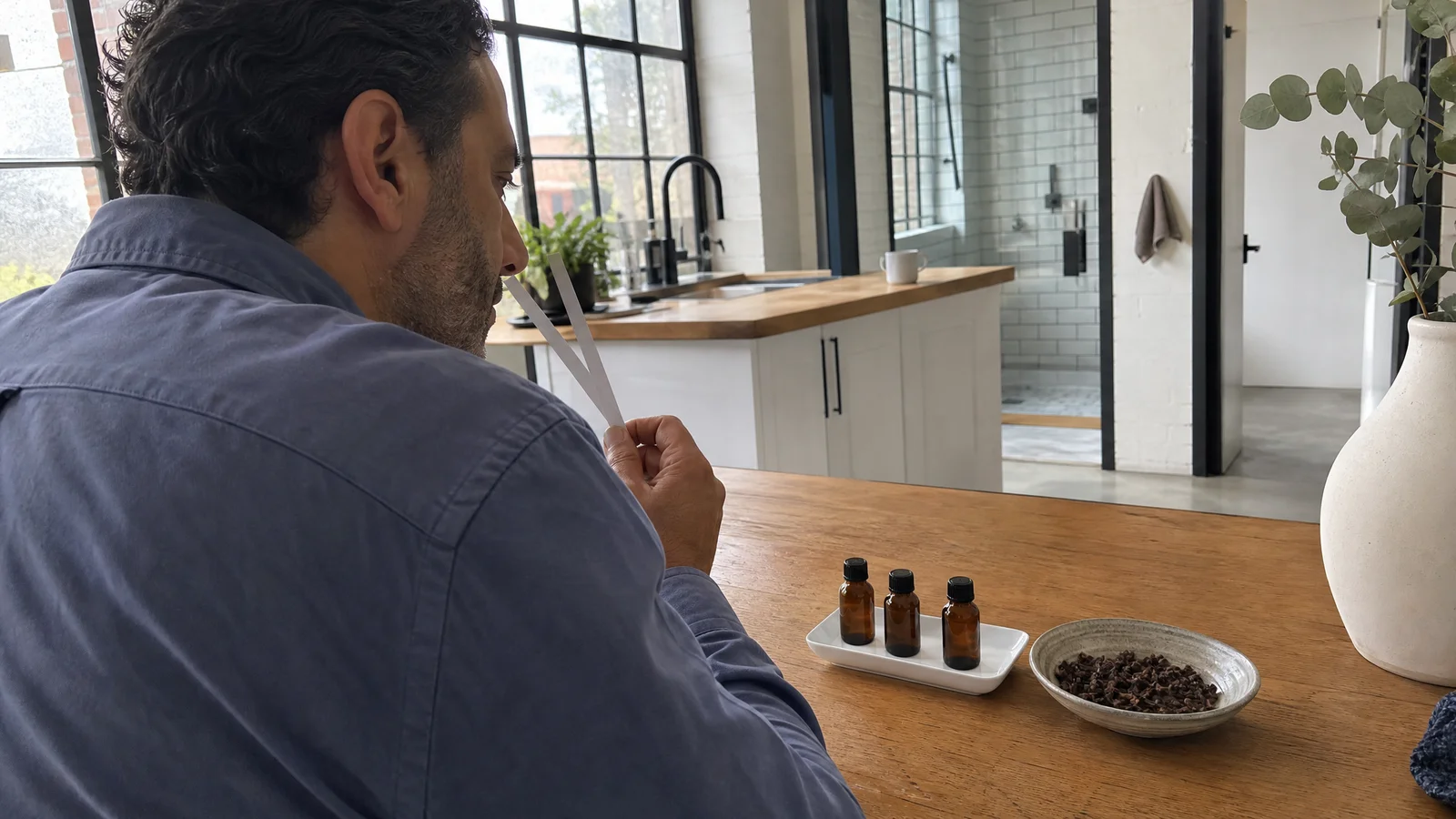
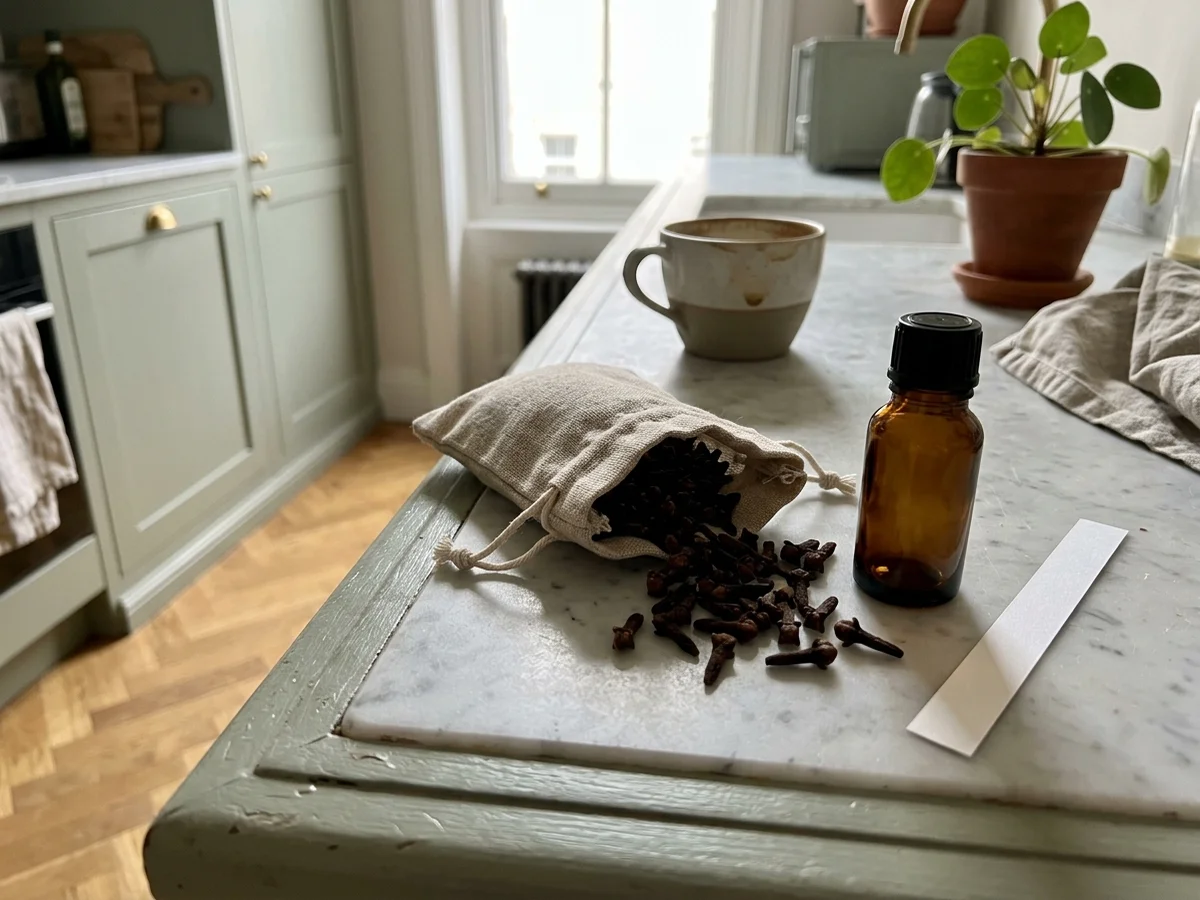
If you are new to it, here is a simple way to get to know it. Open a bottle and take one short sniff from a few centimetres away. You will notice warmth and sweetness first, with a clove edge behind it, and the smell tends to hang around on a strip long after lighter materials have gone. Then smell a jar of ground clove from your kitchen and compare. They are related, but they are not the same thing.
Handling it well
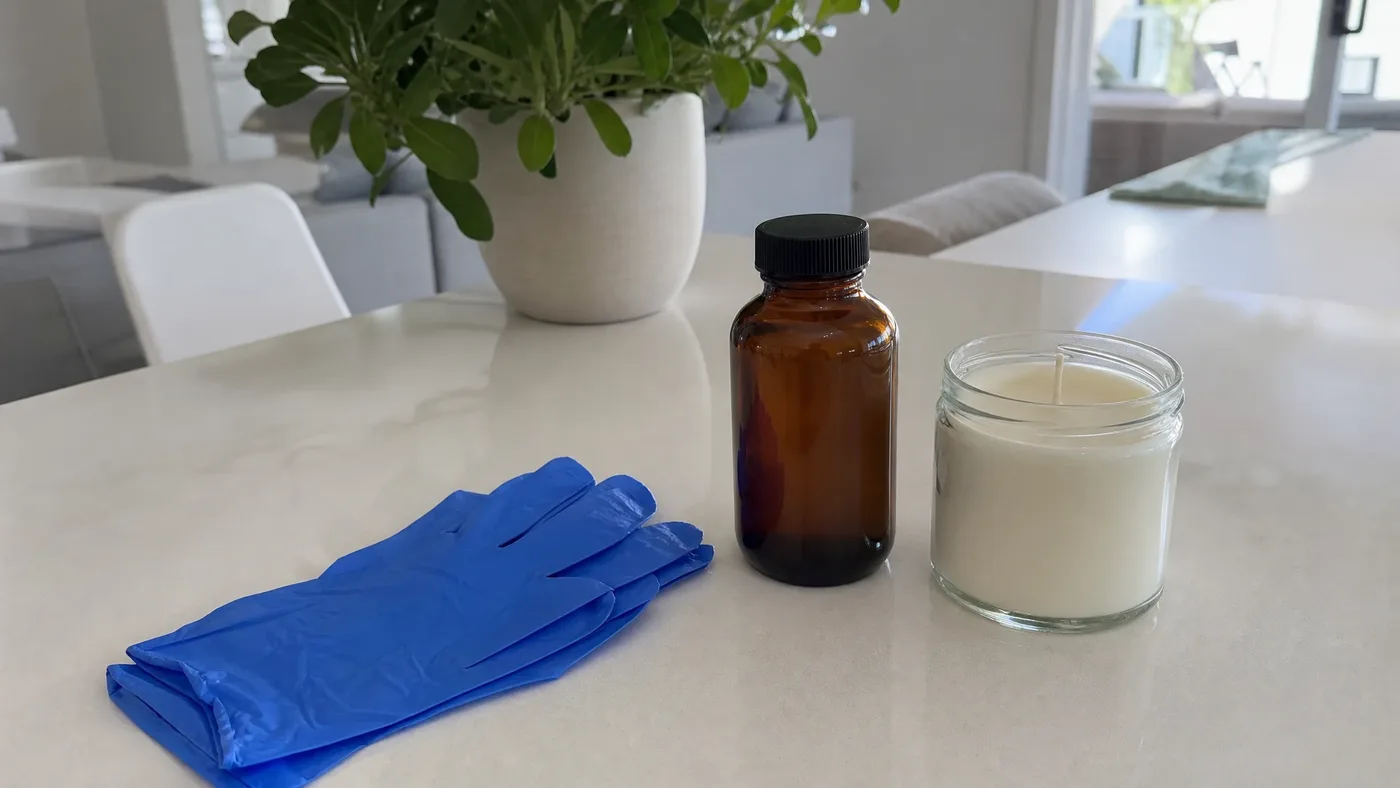
Eugenol is a recognised skin sensitiser. The IFRA Standard restricts it category by category, from 0.14% in underarm products to 4.9% in bar soap, with no restriction for candles (IFRA Standards, 51st Amendment). It is also one of the allergens declared on cosmetic labels in the EU and UK above set thresholds. We recommend keeping it off undiluted skin, working in small percentages, starting from a half percent or less for anything that stays on skin, and patch testing first. Keep it away from eyes, children and pets, wash hands after handling and store it tightly capped and out of casual reach. Our posts on safe handling and IFRA limits by category go into the practical side.

What it is not
It is not an aromatherapy oil and we make no medical claims for it. Eugenol has a place in dentistry's history, which has its own article, but ours is not offered for dental or therapeutic use of any kind and is not for internal use. For questions of that sort, a dentist or physician is the right person.
If you make perfume, soap or candles and want one spice molecule with a clear job, eugenol oil is a lovely thing to get to know. If you want a whole botanical oil, clove oil is the thing to look for elsewhere.
Sources & Further Reading
- PubChem, Eugenol (CID 3314). pubchem.ncbi.nlm.nih.gov
- Kamatou GPP, Vermaak I, Viljoen AM, 2012. Eugenol, from the remote Maluku Islands to the international market place: a review of a remarkable and versatile molecule. Molecules. pubmed.ncbi.nlm.nih.gov/22728369
- EFSA FEEDAP Panel, 2023. Safety and efficacy of feed additives consisting of essential oils derived from the flower buds or the leaves of Syzygium aromaticum (clove bud oil and clove leaf oils) for all animal species. EFSA J. PMC10375362
- IFRA Standards, 51st Amendment (eugenol, pp. 103-105). IFRA Standards PDF