Clove's Heart, Refined
Warm, spicy eugenol with a carnation-sweet edge that builds Oriental accords and deepens rose and vanilla compositions.
Eugenol is the aromatic heart of clove, isolated and refined for the fragrance bench. Drawn from Syzygium aromaticum oil, this refined isolate gives perfumers, soap makers, and candle crafters the warm carnation-spice note they want, with the consistency a formulation demands.
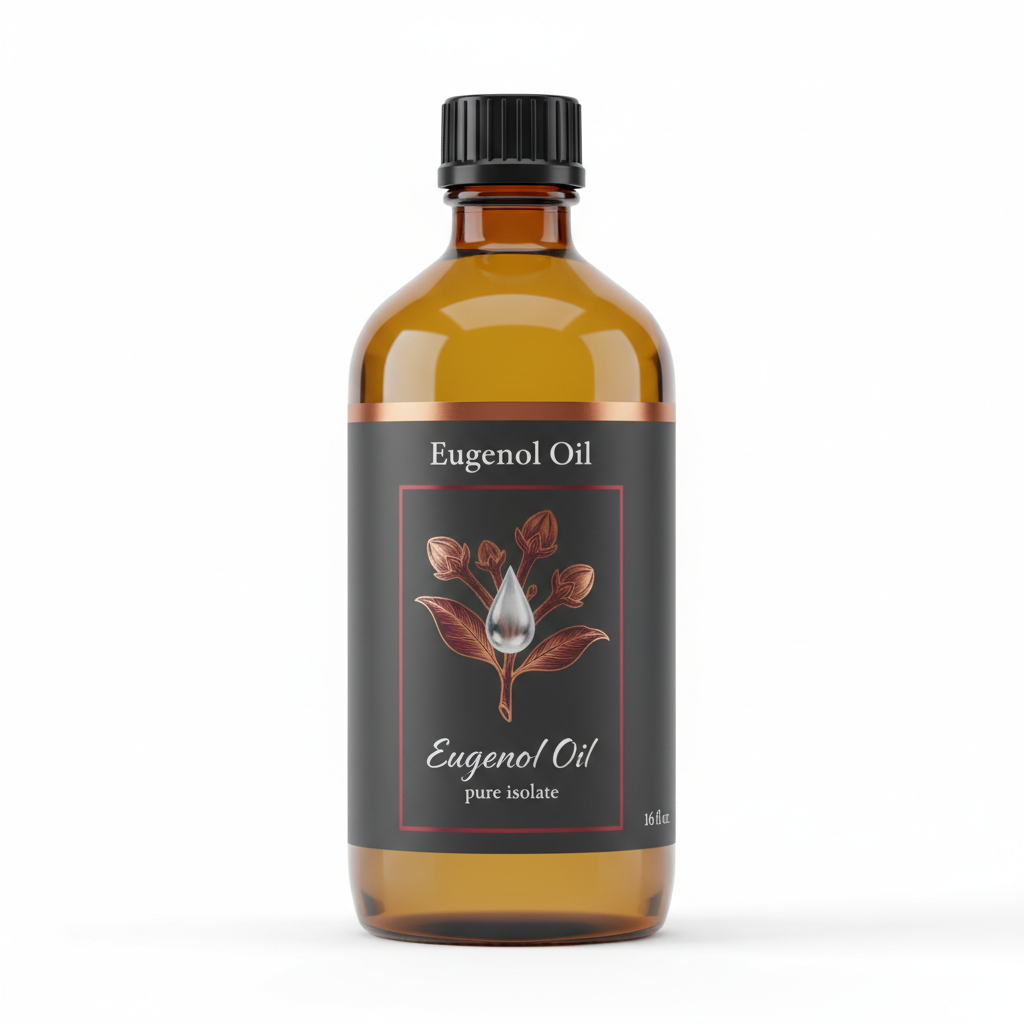
From $10.99 for 0.5 oz · sizes up to 400 lbs
Shop Eugenol OilBuild carnation, oriental spice, and vintage-style accords around a concentrated eugenol isolate instead of whole clove oil.
Explore →Dose eugenol into spiced candle blends for warm, carnation-like throw that holds up through a full burn.
Explore →Work eugenol into cold process bars with an eye on discoloration and trace acceleration before you scale a batch.
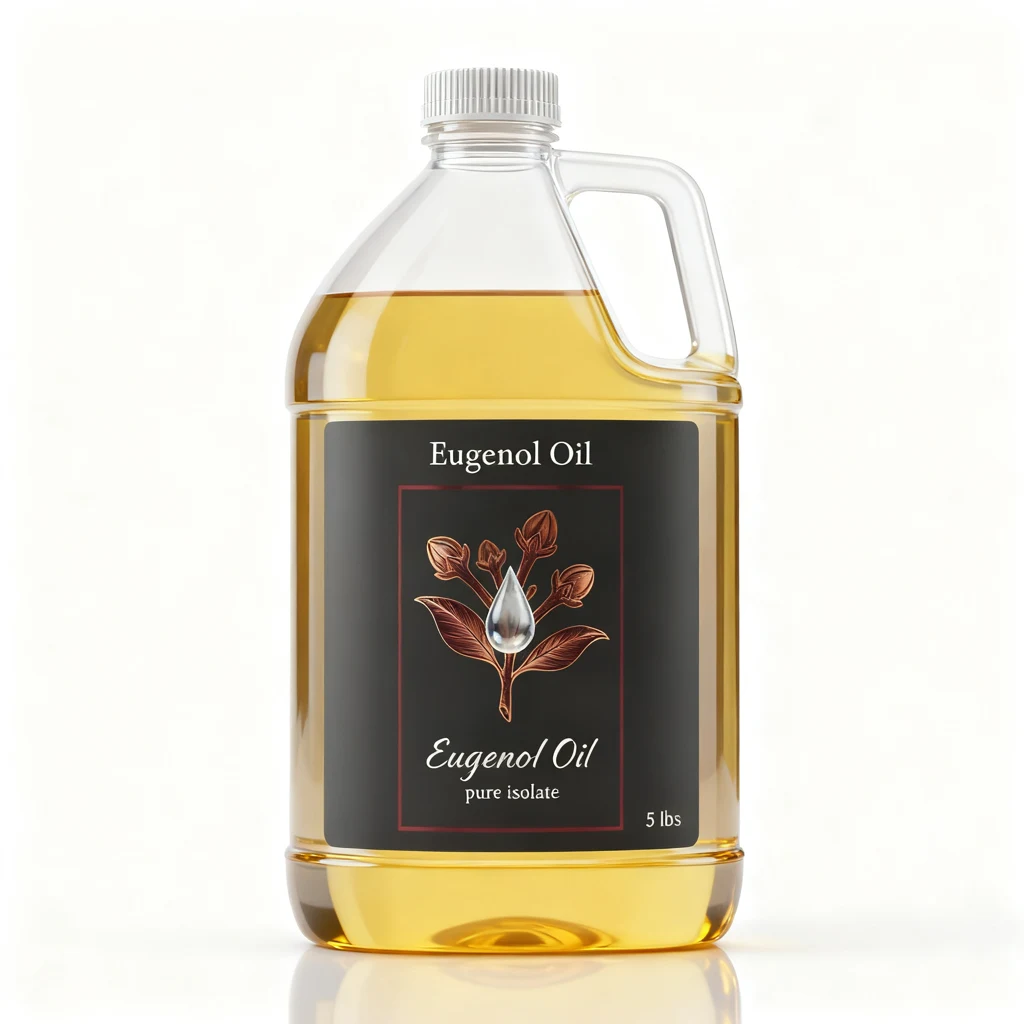
Explore →Order eugenol oil by the pound for soap, candle, and perfume production, backed by the same published batch documentation.
Explore →
Evaluation Vial
A small bottle to test eugenol's carnation-like aroma in your accord before committing to a full build.
Pilot Batch
Enough eugenol to run a real trial batch of candles or soap before you order production volume.
First Production Size
The first size priced for real production runs, with a lower per-ounce cost than either sample bottle.
Eugenol oil is a refined aromatic isolate obtained from clove oil, itself steam-distilled from the buds and leaves of Syzygium aromaticum. Fractionation concentrates the eugenol content well beyond that of whole clove oil, producing a consistent material prized in perfumery and flavor work.
The scent is warm, spicy, and distinctly carnation-like, sweeter and more focused than whole clove. In classic perfumery eugenol builds carnation and Oriental spice accords, and it deepens rose, ylang, and vanilla compositions with remarkable efficiency.
Formulators reach for eugenol when building candle fragrance blends, spiced soap bars, potpourri refresher oils, and vintage-style perfume accords. It is a concentrated raw material: work in small percentages, follow standard fragrance-industry dilution guidance, and keep it capped and out of casual reach.
Eugenol oil is a refined isolate, which makes it easy to cut with cheaper diluted or synthetic material without anyone noticing by aroma alone, so buyers formulating perfume, candle, or soap projects need a way to confirm what's actually in the bottle.
The certificate of analysis for the current batch is published on this site, so you can check the material before building a formula around it or placing a bulk production order.
| Refined Eugenol Isolate | Synthetic Clove Fragrance | |
|---|---|---|
| Source | Distilled from real clove buds and leaves | Compounded from synthetic aroma chemicals in a lab |
| Aroma | Warm, spicy, and naturally carnation-like | Approximates clove with a flatter, single-note smell |
| Composition | A concentrated eugenol fraction of clove oil | A blend of synthetic aromachemicals and diluents |
| Documentation | Batch tested, with a COA published on this site | Documentation is inconsistent and rarely batch-specific |
| Best for | Perfumery and formulations calling for a natural isolate | Budget fragrance where natural sourcing isn't required |
Distilled solely from Syzygium aromaticum, the clove tree
Clove sourced across six regions spanning Asia and East Africa
Refined specifically to concentrate eugenol beyond whole clove oil
A certificate of analysis is published for the current batch
These guides cover blending eugenol into fragrance work, safe dilution on the perfume bench, and its signature carnation-spice scent.
Soap houses, candle studios, and perfumers building carnation and spice accords buy eugenol oil by the pound once a small bottle confirms the aroma they need. At 5 lbs and up, the per-ounce cost drops well below bottle pricing, and every bulk size ships under the same published batch documentation as the smaller sizes.
Cold process and melt-and-pour makers building spiced bars who need consistent eugenol batch after batch.
See the guide →Fragrance houses dosing spiced wax at production volume, where per-ounce cost matters more than at bottle scale.
See the guide →Bench chemists building carnation and Oriental spice accords who need the same isolate at production quantities.
See the guide →