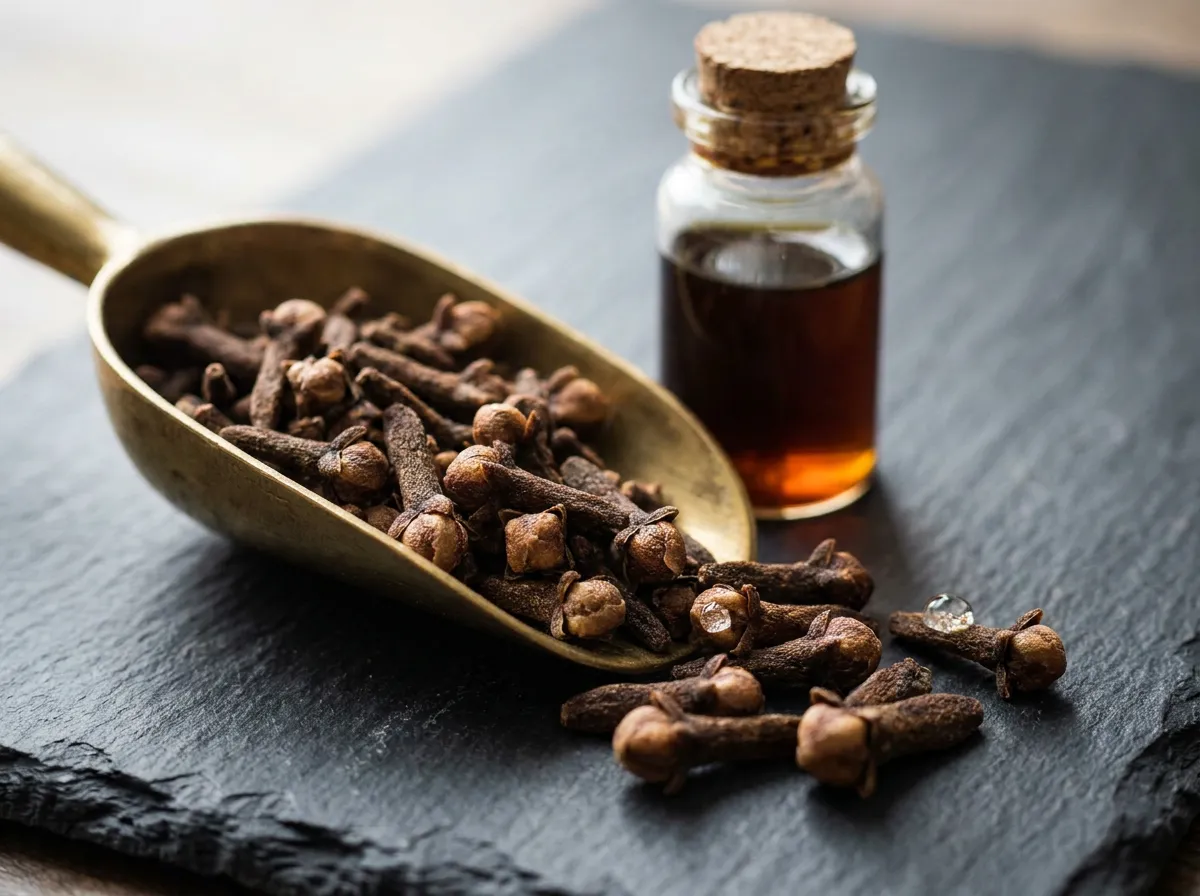
Synthetic eugenol and clove eugenol are the same molecule with the same spectrum. If a supplier tells you theirs is natural, ask how they know.
This is not an essential oil, and the page would be dishonest if it pretended otherwise. It is one molecule, pulled out of a distillate and concentrated until almost nothing else is left.
Whole clove oil is a mixture. Eugenol is the compound that carries most of what people recognise as clove, and separating it out gives the fragrance bench something an oil cannot: a material that behaves identically from one batch to the next, which is the whole reason formulators buy isolates at all.
What is lost in that trade is everything the mixture was doing around it. An isolate is narrower than the oil it came from, on purpose, and anyone selling it as a more potent version of clove oil has the relationship backwards.
We sell it as what it is, for fragrance and flavour work. It is not offered for dental or therapeutic use of any kind.
These are two industries in two countries, and a supplier naming only one of them is telling you half a sentence.
Leaf and bud oil comes principally from Indonesia and Madagascar, which between them account for most of the world's clove oil, with Sri Lanka, Tanzania and India also supplying. It is distilled at origin and moves as crude oil.
Isolation happens where the fractionation capacity is, which in practice means India or China. So a genuinely clove-derived eugenol is usually a tropical crop refined an ocean away, and we would rather say so than blur the two.
Both halves are on file against the lot: the origin of the oil and the house that refined it. Ask for either and you will get both.
Eugenol is made two ways. It is isolated from clove oil, and it is synthesised from guaiacol. Above ninety-nine percent purity those two materials are the same molecule with the same spectrum, and a GC/MS will not tell them apart. This is worth knowing before you pay a premium for the word natural.
Carbon isotope ratio analysis will. Radiocarbon establishes whether the carbon is biobased at all, and the ratio of carbon-13 to carbon-12 by IRMS separates plant-sourced material from petrochemical. It is the only routine test that can answer the question the label is making a claim about.
Ours is clove-derived, and we would rather hold the document than ask you to take our word for it. If a lot ever came through nature-identical, the label would say so in type no smaller than the word eugenol.

Nothing about this product resembles a copper still. Isolation is continuous vacuum fractional distillation in a tower, run around the clock by a handful of specialist producers, and it is a chemical engineering operation rather than a craft one.
We are not one of those producers and have never suggested we are. We choose the house, write the specification, and check what arrives. That is the fourth product family on this network where the honest answer is that somebody else made it.
The upside of industrial process control is real, though. It is why an isolate can be specified to a number at all, and why a formulator can build a fragrance around it and expect the same result next year.
An isolate is bought on figures, and a supplier who will not put them on paper is selling you a description.
Eugenol by GC-FID area, specified rather than hoped for. This is the number the whole material is bought on.
Both capped by specification. They are what a lazily fractionated clove eugenol carries through, and they are where corner-cutting shows.
Radiocarbon and 13C/12C by IRMS, because it is the only analysis that distinguishes clove-derived material from guaiacol-derived.
Quote your lot and the figures come back to you. We keep no certificate library on the site, since the only sheet with any bearing on your work is the one behind your drum.
Every size in dark glass, because a phenol and daylight are poor company.
Isolate alone, undiluted, with no solvent and no carrier riding along.
Where the clove grew and where the column ran, held against the lot number.
Eugenol is a recognised skin sensitiser and it is restricted accordingly. Standard fragrance-industry guidance puts the ceiling around half a percent in leave-on products, and it is also one of the fragrance allergens that must be declared on cosmetic labels in the EU and UK above set thresholds. A formulator can work with a number. Nobody works with a warning they skimmed.
It keeps three years cool, dark and tightly closed. It darkens toward amber once air has been at it, which is ordinary behaviour for a phenol rather than a sign of spoilage, though it does mean a part-used bottle ages faster than a sealed one.
Work in small percentages, keep it off undiluted skin, and store it away from heat. We make no medical claims for it and do not offer it for dental or therapeutic use. When a lot misses specification we hold it back and go short.
Clove oil from Indonesia and Madagascar, refined on a column in India or China, specified to 99.0 percent, and backed by the isotope analysis that a chromatogram cannot substitute for.
Buy the number, not the adjective.
Shop Eugenol Oil