Eugenol Flash Point: What It Means for Candle Making
Eugenol's flash point is the number everyone asks about, and it is not the one that decides how hot you can run a candle pot. The reference value is above 100 C (212 F) in a closed cup. Most candle-making steps happen well below that, so the real margin comes from your wax, the other oils in your blend and how closely you watch the pot.

A ladder of temperatures
PubChem records eugenol's flash point as 219 F (about 104 C) from an NTP entry with no method stated, and as above 212 F (above 100 C) closed cup from an NFPA guide, with a boiling point of 252 to 256 C (PubChem, eugenol). For comparison, a listing for Golden Brands GW 464 soy wax gives a pour range of 125 to 145 F and an instruction to melt to 185 F, take the pot off the heat, then add fragrance (Voyageur listing). Converting with C = (F - 32) x 5/9, that fragrance addition is about 85 C, which leaves the eugenol flash point at least 15 C higher. That is a comfortable gap for eugenol on its own.
What a flash point actually tells you
The MSDS HyperGlossary defines flash point as the lowest temperature at which a liquid releases enough vapor to form an ignitable mixture with air near its surface. It also notes that a closed-cup test usually gives a result a few degrees lower than an open-cup test, which is why a flash point should always be quoted with its method (ILPI, Flash Point). That is why we show both PubChem values above.
Your blend is not just eugenol
Reasoning from how mixtures behave, a blend can ignite at a lower temperature than its highest-flash ingredient, because lighter components set the vapor. If your blend contains citrus or terpene oils, alcohols or other volatile materials, the number that matters is on that blend's safety data sheet, section 9. Ask each supplier for the data sheet, and see our guide to reading one. Eugenol's low vapor pressure points the same direction: PubChem lists 0.0221 mmHg at 25 C, so it is not the first thing to leave the pot.
Set the bench up before the wax melts
Most pouring mishaps start with someone walking away from a hot pot to fetch something. Lay everything out first: containers lined up and already wicked, thermometer clipped on, spoon, a heatproof surface under the pot, and the fragrance weighed out in its own small cup. Clear the counter of towels, paper and anything else that does not need to be there. Then the only thing left to do once the wax is hot is the job itself.
The hot wax is the fuel
- Melt in a double boiler rather than directly on a burner.
- Take the pot off the heat before adding fragrance, as the GW 464 instructions describe, and stir gently.
- Keep a lid and a suitable extinguisher within reach, and never put water on a wax fire. Your local fire authority can tell you which extinguisher suits your setup.
- Ventilate the room and stay in it while the wax is hot.
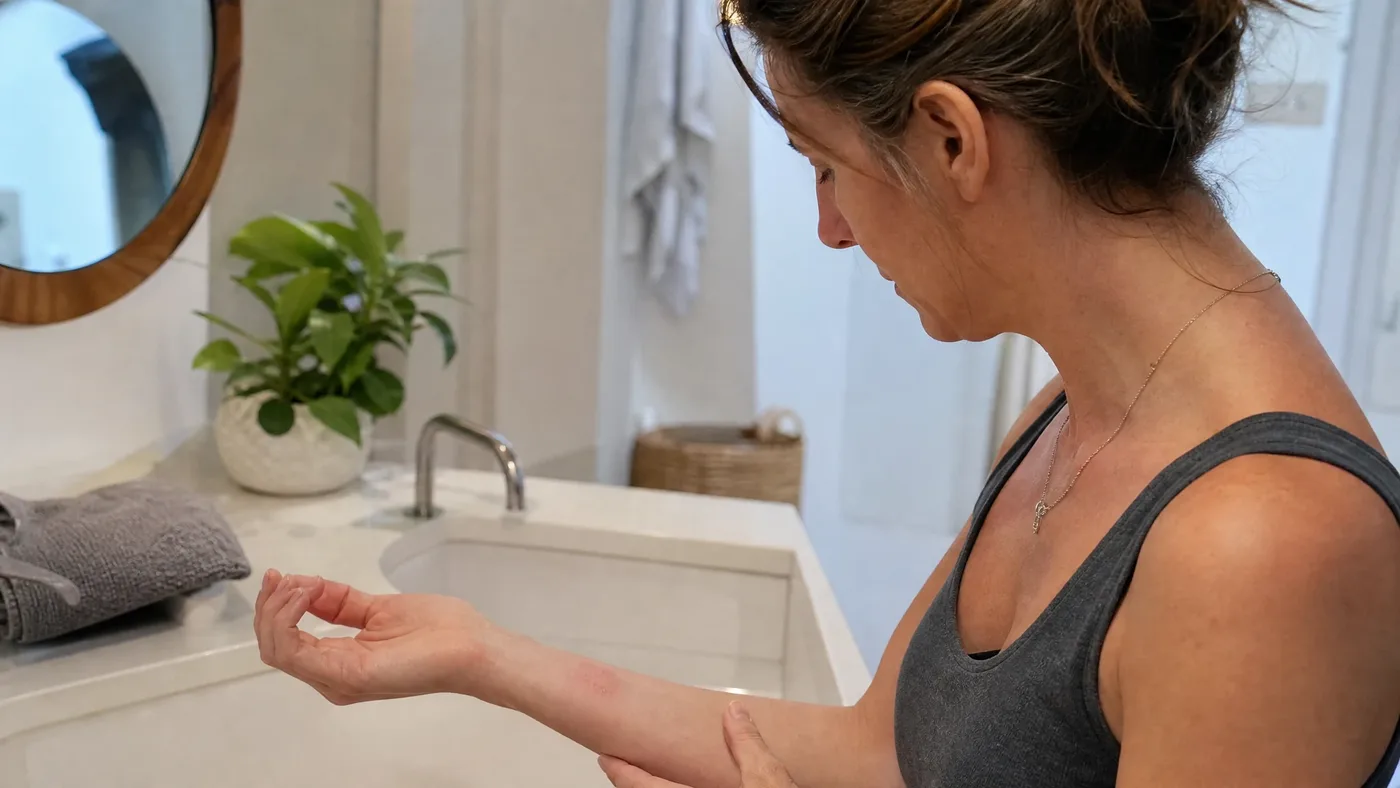
Eugenol is also a recognised skin sensitiser, so we suggest gloves and eye protection at the pot, and handwashing afterwards. Our safe handling guide covers the bench routine, and the wicking guide covers how the finished candle burns.
Pour slowly and stay put
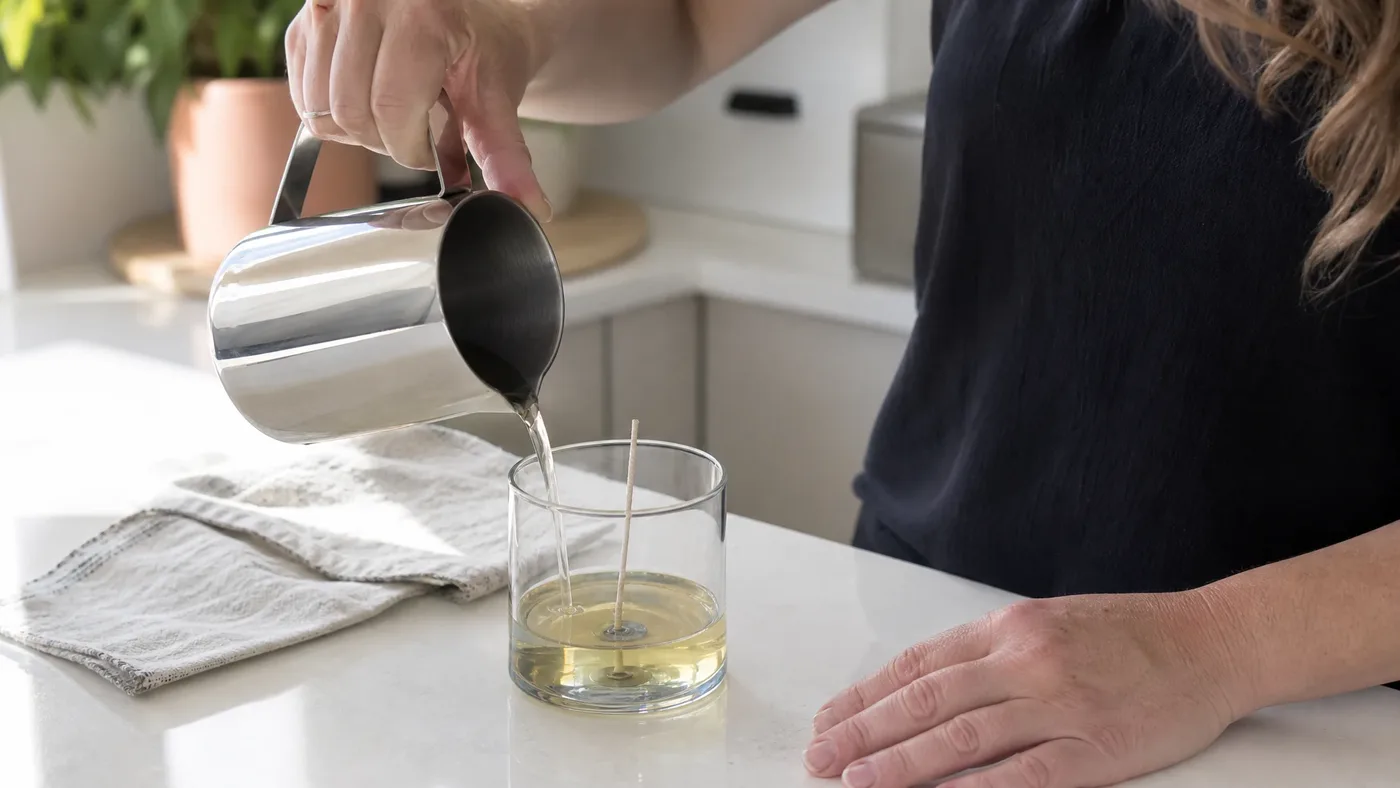
Once the fragrance is stirred in, pour in a thin, steady stream and keep the pot low to the container. Rushing is how wax ends up on the counter, the outside of the jar and your sleeve. Wipe the rim, set the candles somewhere still, away from drafts, and leave them alone while they cool. If you have to move one, wait until it is firm.
Cooling is the quiet part of the job. Wax that is cooling still holds heat well after it stops looking hot, so keep pets and small children out of the room until everything is back to room temperature.
A quick check before every pour
- Write down the flash point and method for the wax and every oil from each data sheet.
- Take the lowest figure and compare it with your fragrance addition temperature in the same units.
- If the gap is smaller than your safety adviser would like, cool the wax before adding fragrance.
- Use a thermometer rather than guessing, and write the reading down.
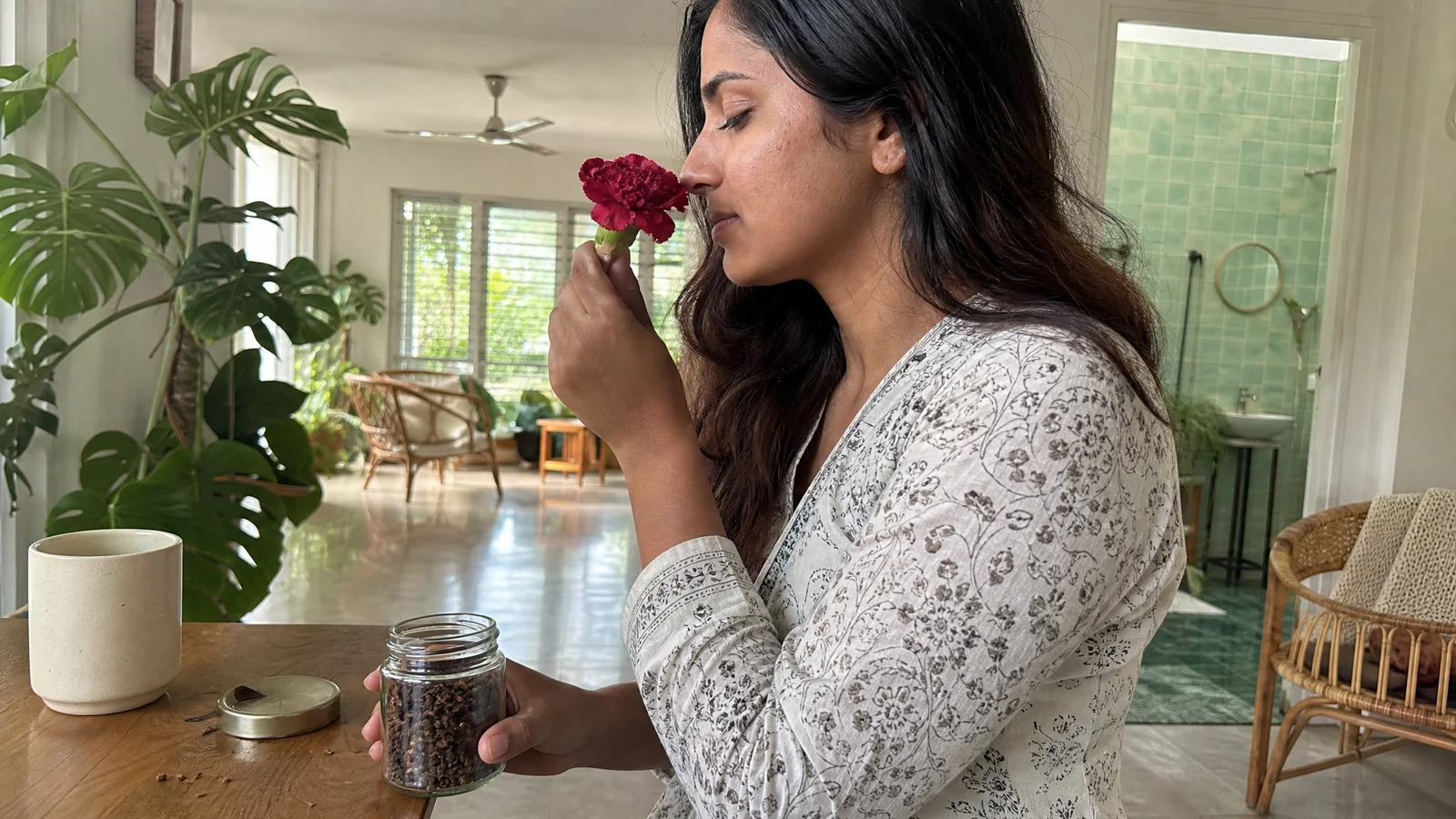
When the candles have set, there is a small reward. Take the lid off one the next day and you will notice the warm, spicy, carnation-like edge of eugenol sitting quietly in the cold wax, much softer than it was in the pot. That is a good moment to write down what you did, so the next pour starts from your notes and not from memory.
Hobby pours are small and the double boiler covers most of the risk. If you make candles to sell, store wax in quantity or work in a shared building, a fire-safety specialist and your insurer are the right people to ask, and a candle sold to others is a question for a product-safety specialist. Wax, wicks and heating gear come from candle suppliers; we sell eugenol oil only. For a related read, see our spiced candle post. Keep a thermometer by the pot and the margin takes care of itself.
Sources & Further Reading
- National Library of Medicine. PubChem, eugenol (CID 3314). pubchem.ncbi.nlm.nih.gov/compound/Eugenol
- Voyageur Soap and Candle. Golden Brands GW 464 product page. voyageursoapandcandle.com
- ILPI. The MSDS HyperGlossary: Flash Point. ilpi.com/msds/ref/flashpoint