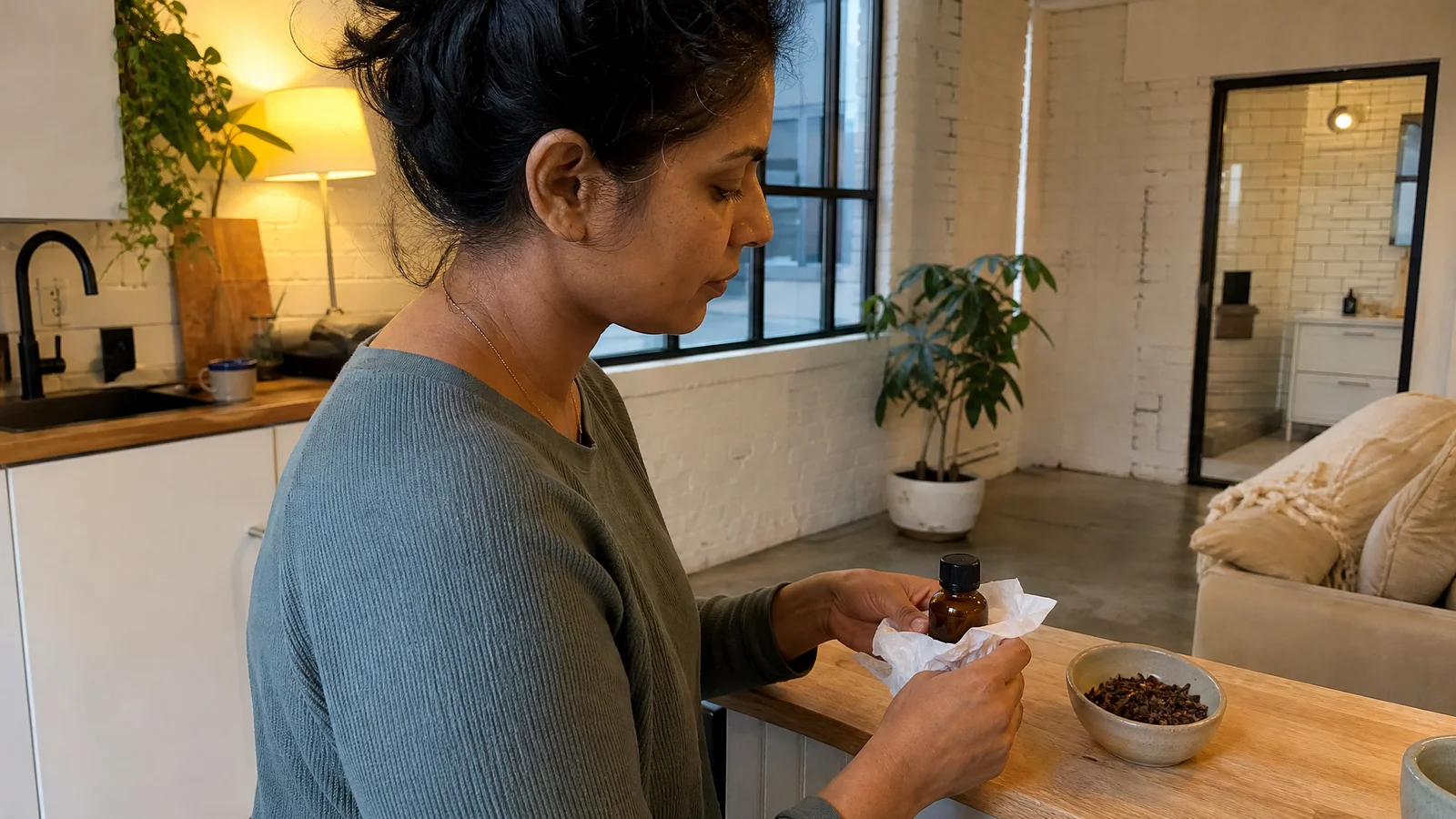
Where Does Eugenol Oil Come From? Tree to Bottle
Every bottle of eugenol oil has a long story behind it, and most of it happens before anyone fills a bottle. A clove tree in Indonesia or Madagascar, a still, a refinery with a tall fractionating column, and finally a label. Knowing the chain helps you ask the right question of the right link.

Start at the tree
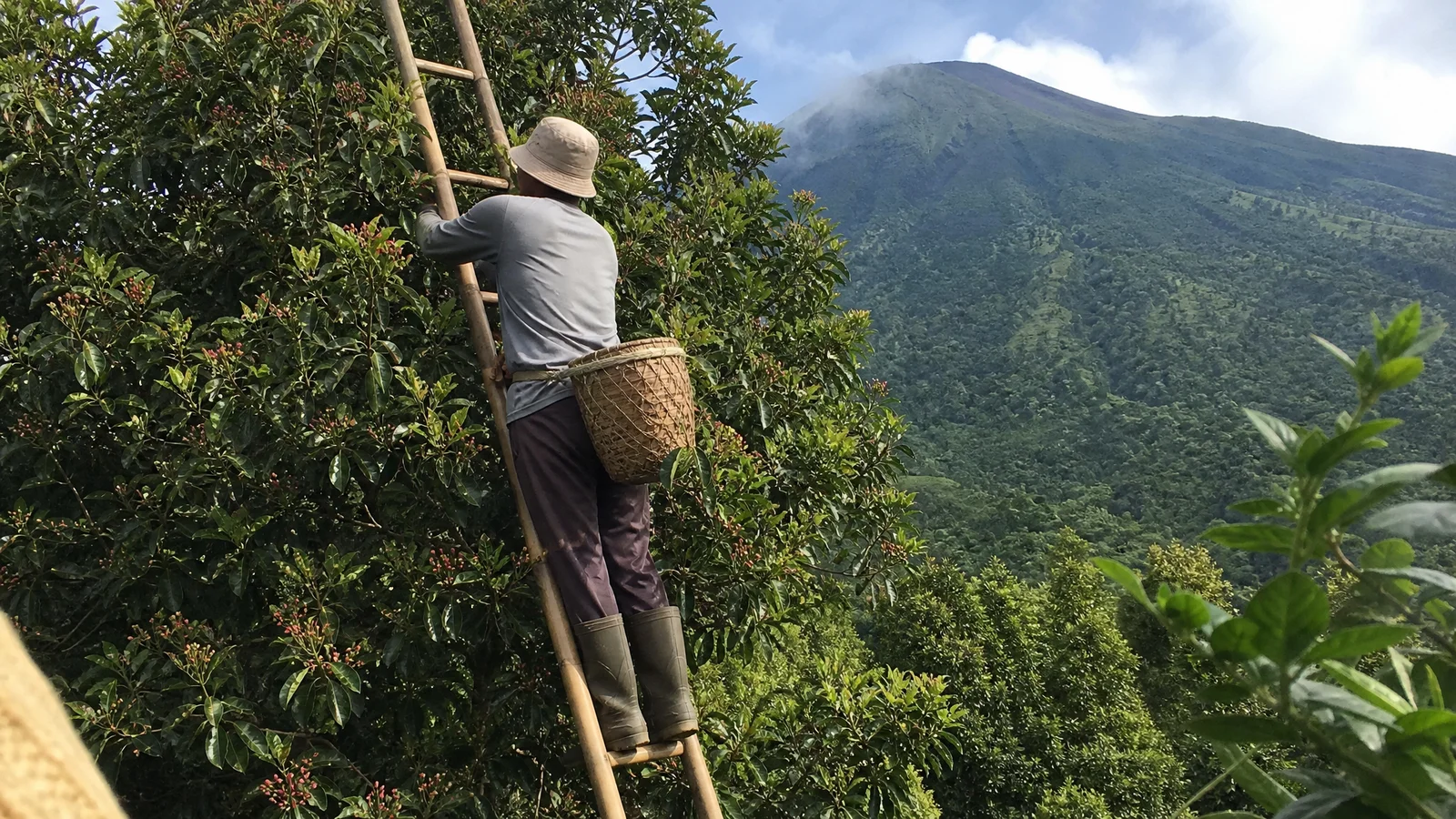
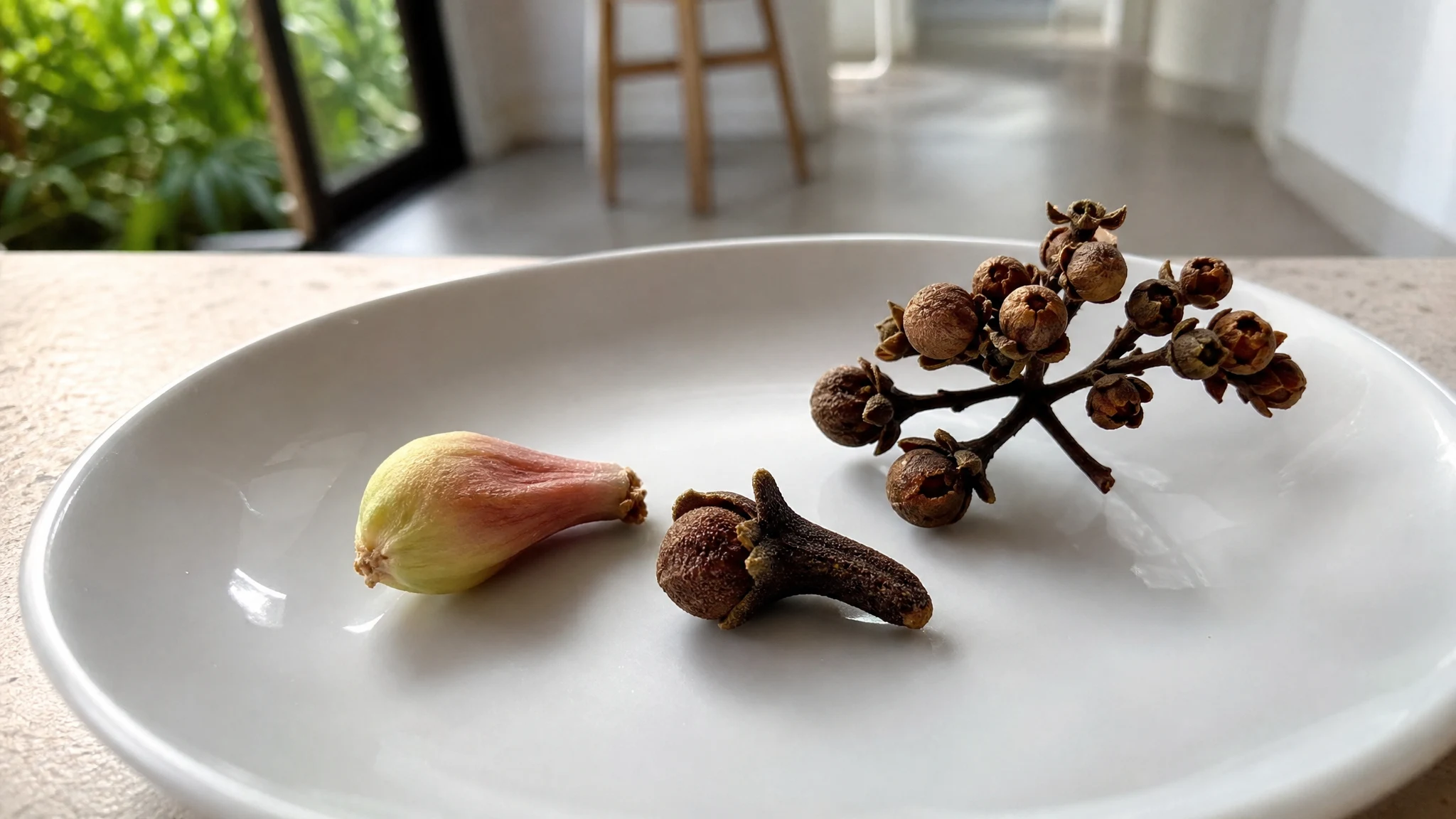
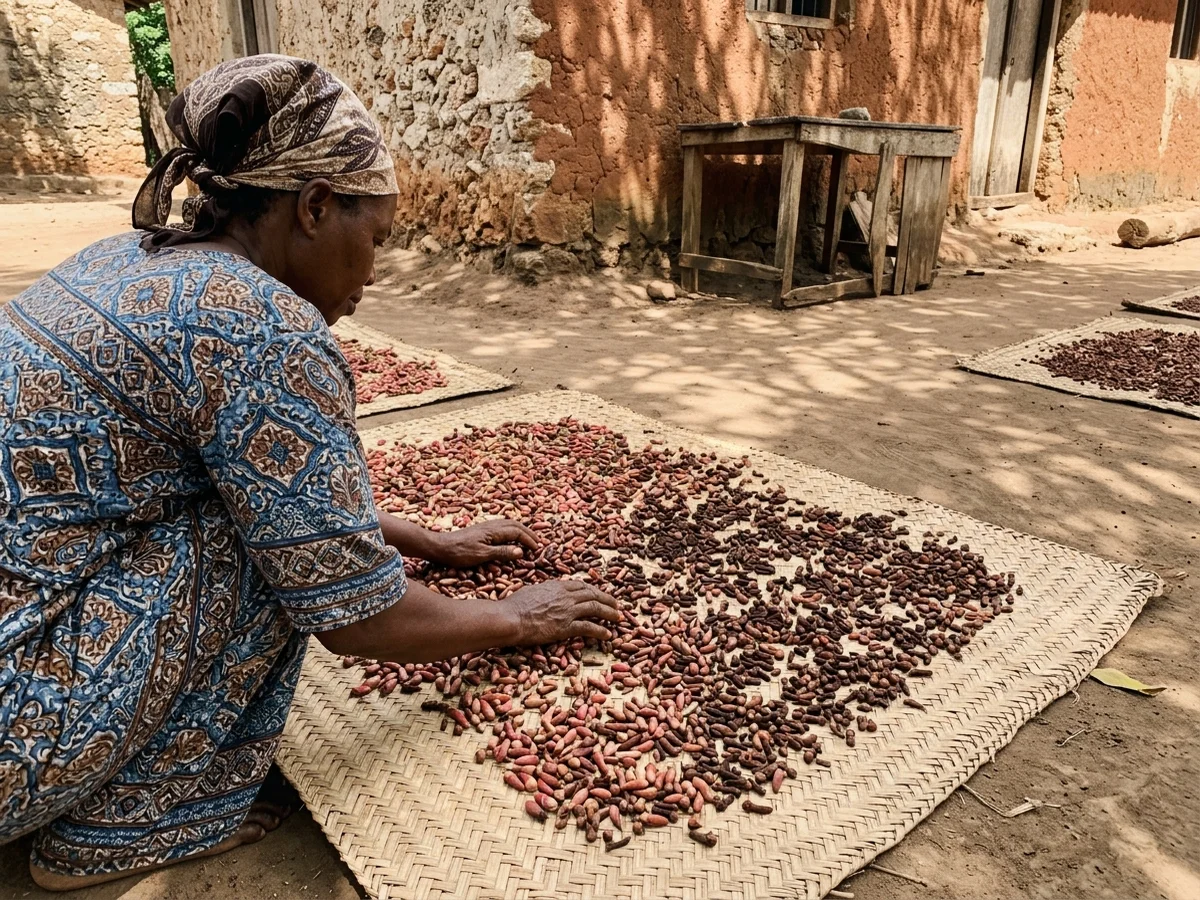
Eugenol comes mainly from clove oil, and clove oil comes from more than one part of the tree. The EFSA opinion on clove oils describes two industrial products: bud oil, steam-distilled from dried flower buds (in that opinion, sourced from Indonesia), and leaf oil, steam-distilled from leaves sourced from Madagascar and Indonesia (EFSA FEEDAP Panel, 2023). That is one applicant's supply rather than a map of the trade; a 2012 review lists the major clove producers as the West Indies, Madagascar, Tanzania, India, Sri Lanka, Indonesia and Malaysia, and notes that the unopened buds are picked by hand (Kamatou et al., Molecules, 2012).
The two oils are not the same starting point. In the EFSA batches, bud oil averaged 75.06% eugenol with 7.92% eugenyl acetate, while leaf oil averaged 82.60% eugenol with just 0.70% eugenyl acetate. For someone who wants eugenol at the end, leaf oil is a very sensible raw material, not a lesser one. Our article on eugenol in bud, leaf and stem oil goes through the numbers.
The refinery link
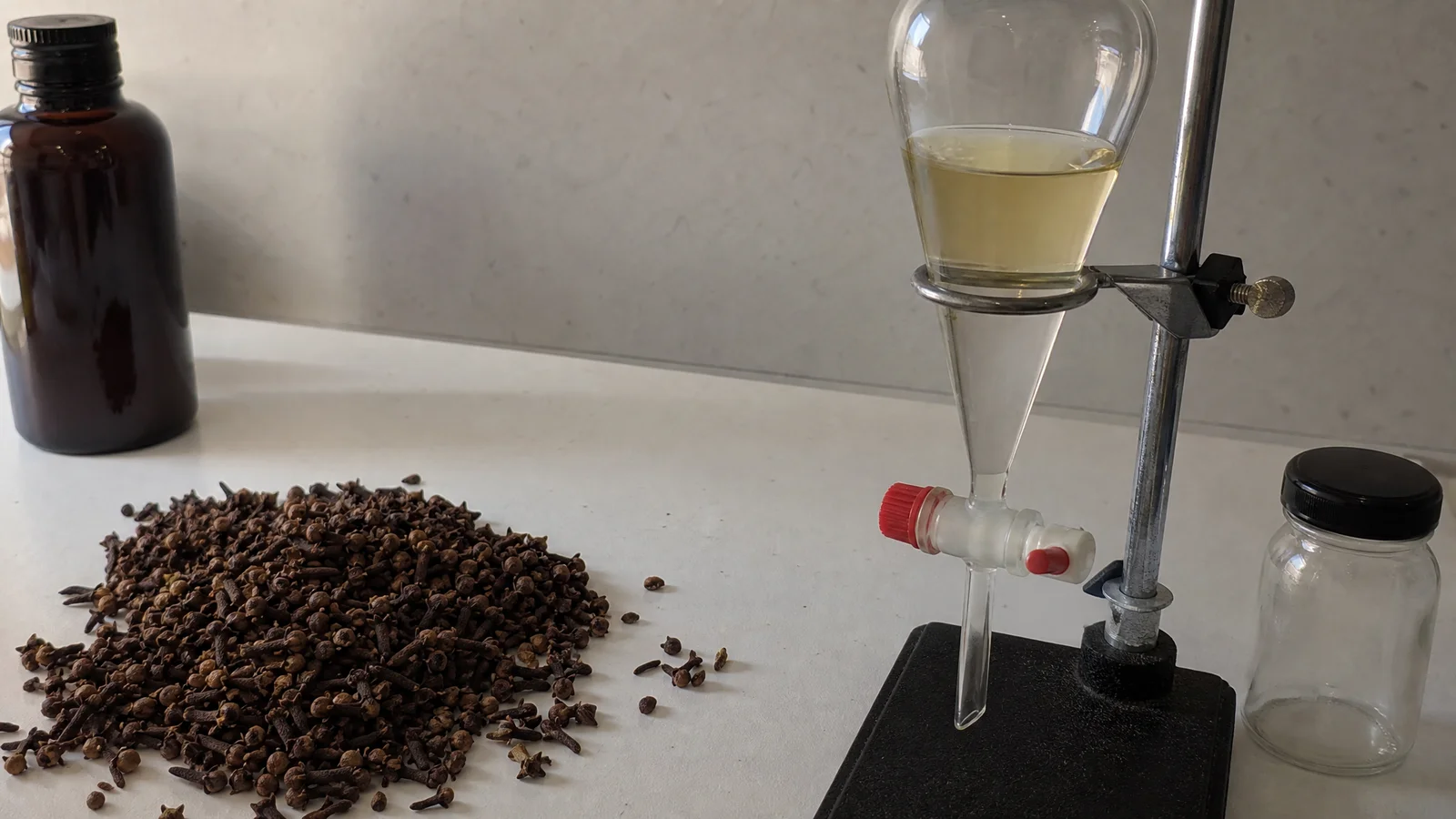
Clove oil is not eugenol oil; something has to separate them. The classic method in the review is a caustic wash: the oil goes into aqueous sodium hydroxide (3%), the eugenol dissolves as a salt, the other components are removed, and the liquid is acidified and fractionally distilled. Another route, from guaiacol, also exists, which we cover in our natural versus synthetic post.
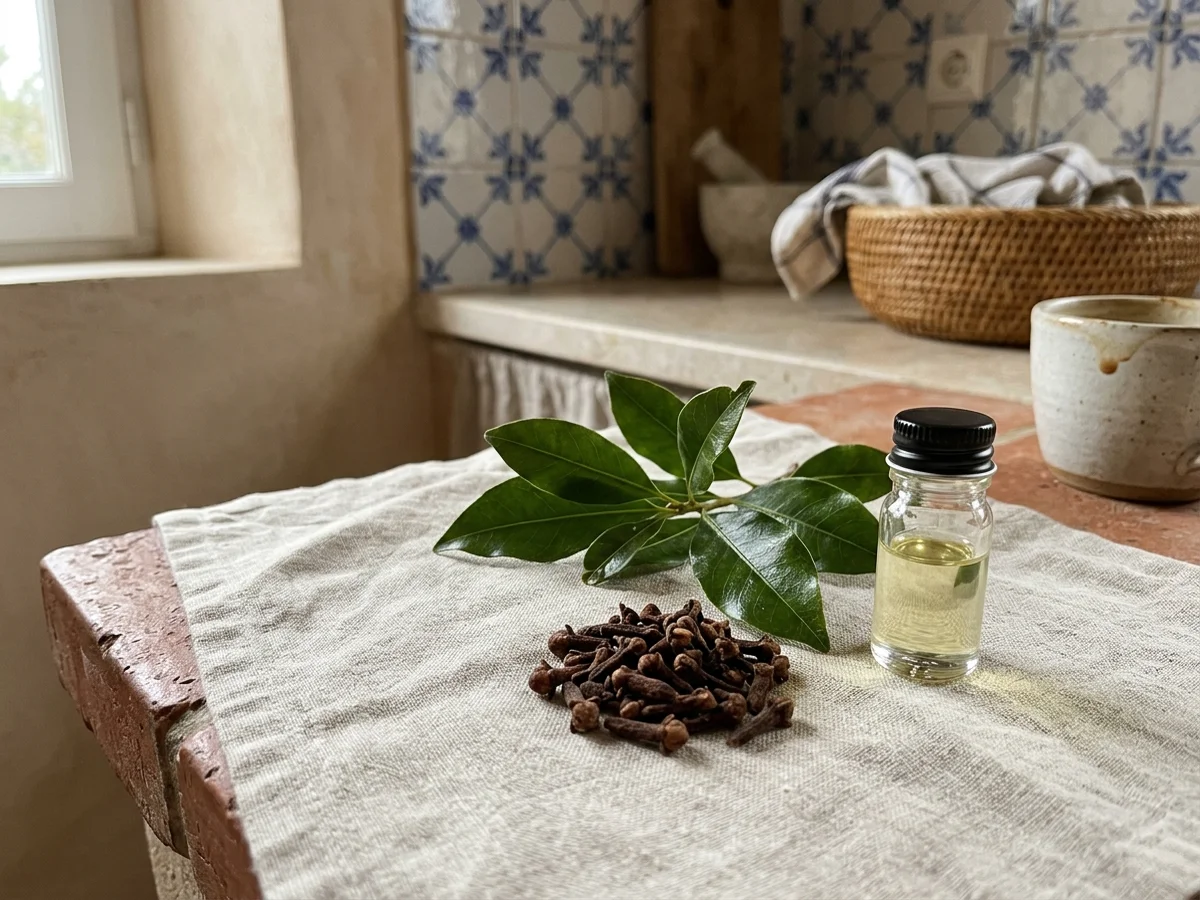
For ours, we describe the general pattern this way. Clove leaf and bud oil comes principally from Indonesia and Madagascar and is distilled at origin. Isolation happens where the fractionation capacity is, in practice India or China, on a continuous vacuum fractional distillation column. We are not the producer; we choose the house, write the specification and check what arrives, and when a lot misses specification we hold it back and go short. That is how we work, and it is the reason we focus on the paperwork that comes with each lot.
This link matters because it is where most of clove oil's other material is taken out. The EFSA tables show the companions, including beta-caryophyllene, eugenyl acetate and a little methyl eugenol (0.039% to 0.128% in bud oil, 0.010% to 0.030% in leaf oil). A refined eugenol should carry much less of all of them, and a gas chromatography report is what shows how much less. Our methyl eugenol article explains why that particular name is worth a line of its own.
What the paperwork can say
The Certificate of Analysis we publish for one batch lists appearance, smell, a relative density of 1.065 and a refractive index of 1.541, against standards of 1.064 to 1.070 and 1.540 to 1.542. Those constants sit comfortably with eugenol and noticeably apart from whole clove bud oil, where EFSA's batches showed a refractive index of 1.534 to 1.537 and a specific gravity of 1.0559 to 1.0593. So the certificate is a quick, honest check that the liquid behaves like eugenol. If you need the eugenol percentage, the minor components, an isotope result or the full chromatogram, ask us in writing through our contact page, or quote a lot number through our wholesale page, and ask any supplier the same question.
Two other documents live with the product rather than the lot: the safety data sheet and the IFRA certificate. They tell you how to handle the material and whether a category fits, and they are worth requesting from every supplier you use.
Matching the questions to your product
We would not start with origin. We would start with what the material is for. In a candle or a bar of soap the limits are generous, and the documents that matter most are the SDS and a GC assay for the lot. In a leave-on product the IFRA limits are tighter (0.64% in body lotions and oils, 0.21% in baby products, per the IFRA eugenol Standard), so a full GC report is worth having before you fix a recipe; our blend calculation shows the sums. If you plan to say "natural", you will want the isotope document before the claim.
For a first order, our buying checklist goes through a listing line by line, and our price guide covers how to compare quotes.
A material for the fragrance bench
Eugenol oil is an isolate for fragrance work. If you want a whole clove oil for aromatherapy or cooking, this is a different thing. We say plainly that ours is not offered for dental or therapeutic use and is not for internal use; a dentist or physician is the right person for those questions.
Keep a simple folder for every material you use: the certificate, the safety data sheet, the IFRA statement and the date you received them. When you ever need to answer a question about a lot, a folder like that saves hours of searching.
The best compliment a supply chain can earn is that you never have to think about it. Until then, a lot number and a report are the thread that ties the bottle back to the tree.
Sources & Further Reading
- EFSA FEEDAP Panel, 2023. Safety and efficacy of feed additives consisting of essential oils derived from the flower buds or the leaves of Syzygium aromaticum (clove bud oil and clove leaf oils) for all animal species. EFSA J. PMC10375362
- Kamatou GPP, Vermaak I, Viljoen AM, 2012. Eugenol, from the remote Maluku Islands to the international market place: a review of a remarkable and versatile molecule. Molecules. PMC6268661
- IFRA Standards, 51st Amendment (eugenol, pp. 103-105). IFRA Standards PDF