IFRA Eugenol Limits by Product, Made Simple
Picture one eugenol concentrate on your bench and four products you might put it in. It can pass comfortably in a bar of soap, pass in a perfume, pass in a diffuser, and still miss the mark in a body oil. Nothing about the concentrate changed; the product did. That is the whole idea behind the IFRA Standard on eugenol, and once it clicks, the table of numbers stops looking intimidating.

The limit belongs to the product, not the bottle
IFRA does not cap what you buy or store. It caps how much eugenol may sit in a finished product, and it sets a different ceiling for each of twelve product categories, from lip products to candles. The reason is exposure: a body oil stays on skin all day, bar soap rinses off in seconds, and a candle never touches skin at all.
The arithmetic is short. Eugenol in the product equals the eugenol share of your concentrate multiplied by the dose of that concentrate. Flip it around and the ceiling dose is the limit divided by the eugenol share. Here is an invented concentrate that is 8% eugenol by weight, chosen only because the numbers are easy. It describes no real product.
| Finished product (IFRA category) | Concentrate dose | Eugenol in product | Limit | Ceiling dose |
|---|---|---|---|---|
| Fine fragrance (4) | 18% | 1.44% | 2.5% | 31% |
| Bar soap (9) | 3% | 0.24% | 4.9% | 61% |
| Body oil (5A) | 10% | 0.80% | 0.64% | 8% |
| Reed diffuser (10A) | 25% | 2.0% | 4.0% | 50% |
The body oil is the one that overshoots, and it does so at a dose that looks modest on paper. A tenth of the product being a perfume-style concentrate sounds gentle, yet it lands above the 0.64% line for body oils. That single comparison is worth remembering the next time a recipe says "10% fragrance" without naming a category.
The rows most makers actually need
The Standard prints twelve rows; most home and small-batch formulating touches only a handful. These are the limits in the 51st Amendment for finished products (IFRA 51st Amendment compilation, eugenol, pages 103 to 105).
| Category | Limit | What it covers |
|---|---|---|
| 2 | 0.14% | Underarm products |
| 4 | 2.5% | Fine fragrance, aftershave |
| 5A | 0.64% | Body creams, oils and lotions |
| 7B | 2.0% | Hair products, including hair perfume |
| 9 | 4.9% | Rinse-off products such as bar soap |
| 10A | 4.0% | Household care with hand contact, including reed diffusers |
| 12 | No restriction | Candles, incense, products not meant for skin |
"No restriction" for candles means this particular Standard sets no number. It does not make a candle a free-for-all, because flash point, labelling and the wax supplier's own fragrance guidance still apply. If your scent will also go into a soap or a spray, the lowest applicable row is the one to design around. The Standard's implementation dates are 30 March 2024 for new creations and 30 October 2025 for existing ones.
Where the numbers come from
IFRA's Guidance explains the method in outline: a sensitisation benchmark called the NESIL, safety factors, and an estimate of consumer exposure for each product type, compared against each other. The eugenol Standard names two drivers, dermal sensitisation and systemic toxicity, and prints the lower of the two outcomes. You do not need to repeat that maths. You need to know that the rows are deliberate, they come from exposure, and they get revised with each Amendment, so quote the Amendment number whenever you write a limit down.
Three things that trip people up
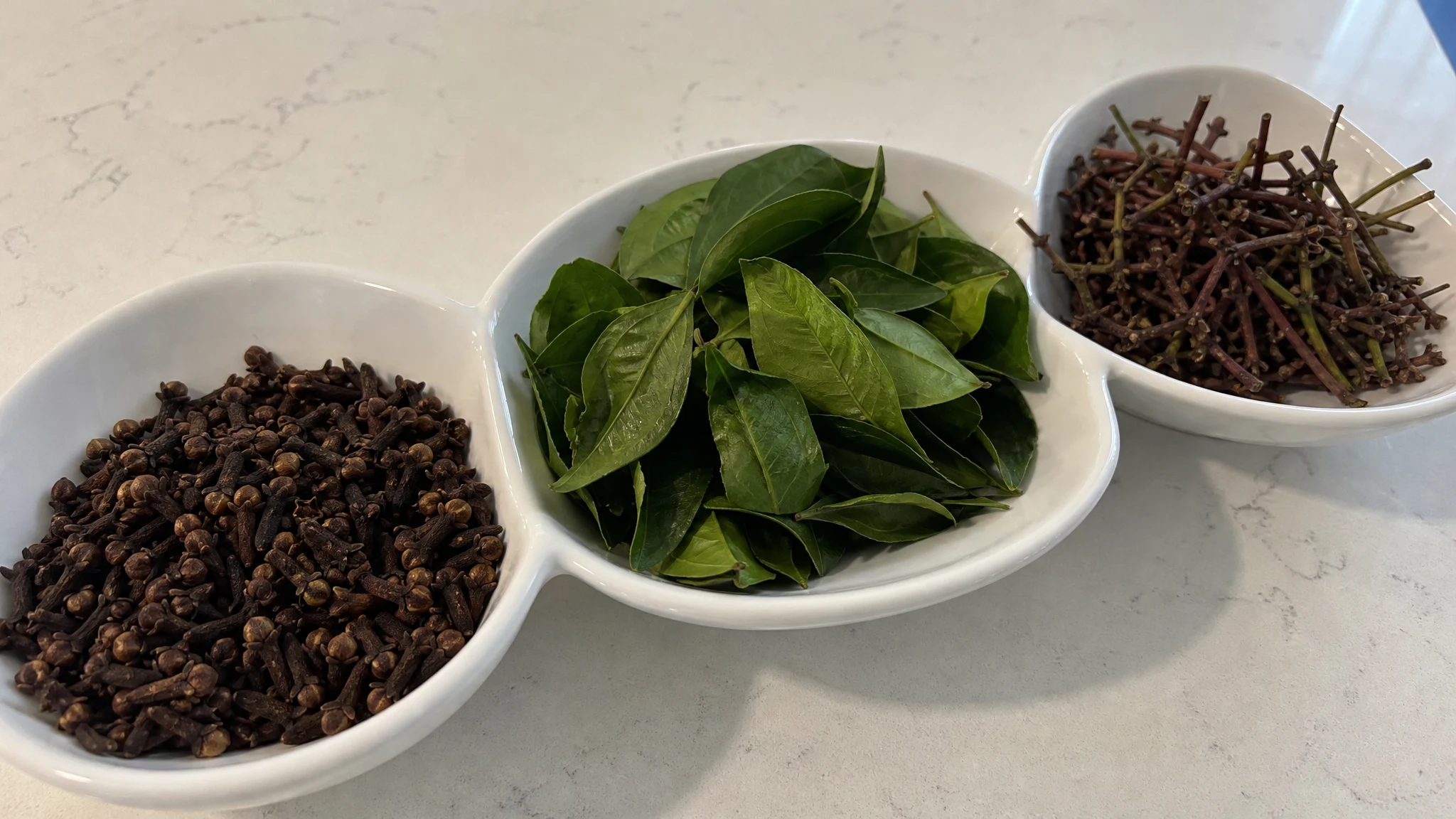
Eugenol you did not add on purpose. The Guidance says limits apply whether the restricted substance is added directly or indirectly, so natural oils that carry eugenol count toward your total. Clove leaf oil, cinnamon leaf oil and rose all contribute some. If you blend eugenol oil with one of them, add the eugenol from every line before you compare with the table. Our blend calculation article walks through the sum.
Supplier certificates. An IFRA certificate is a document from the fragrance mixture maker. The Guidance describes it as resting on a trusting relationship, says IFRA takes no responsibility for it, and says it does not replace a safety assessment. Read it for the Amendment number and the category it covers, and then do your own sum.
Choosing the category. The Guidance lists which products belong where: body sprays in Category 2, fine fragrance and solid perfume in 4, body oils in 5A, bar soap and body wash in 9, reed diffusers, potpourri and fabric sprays in 10A, candles and sachets in 12. For leave-on skin products we point to about half a percent as a sensible working ceiling, and the category row has the final word: 0.64% for body oils, 0.14% for underarm products.
A short routine for your own formula
- Name the product and find its row in the Guidance's category table.
- Write the formula as percent of the finished product, counting every ingredient that carries eugenol.
- Add the eugenol up and compare it with the row, noting the Amendment you used.
- Ask each supplier for the SDS and IFRA statement, and for an assay of the eugenol material.
The Certificate of Analysis we publish for one batch lists density, refractive index, appearance and smell, so for step four on our oil, ask us in writing through the contact page for the lot's figures. Our soap usage-rate article applies the same method to a bar of soap, and the compliance guide covers the wider rules around it. Anything you sell deserves a look from a regulatory specialist or cosmetic chemist.
One small habit helps: print the table of the rows you use most and tape it inside a cupboard door near the scale. When the numbers are in front of you while you work, checking a formula takes a minute and not an afternoon.
Once you see the limit as a ceiling on the finished product, every recipe becomes a short piece of division, and the table turns into a planning tool instead of a hurdle.
Sources & Further Reading
- IFRA. The complete IFRA Standards, up to and including the 51st Amendment (eugenol, pp. 103-105). IFRA Standards PDF
- IFRA, 2023. Guidance for the use of IFRA Standards, 51st Amendment. IFRA Guidance PDF