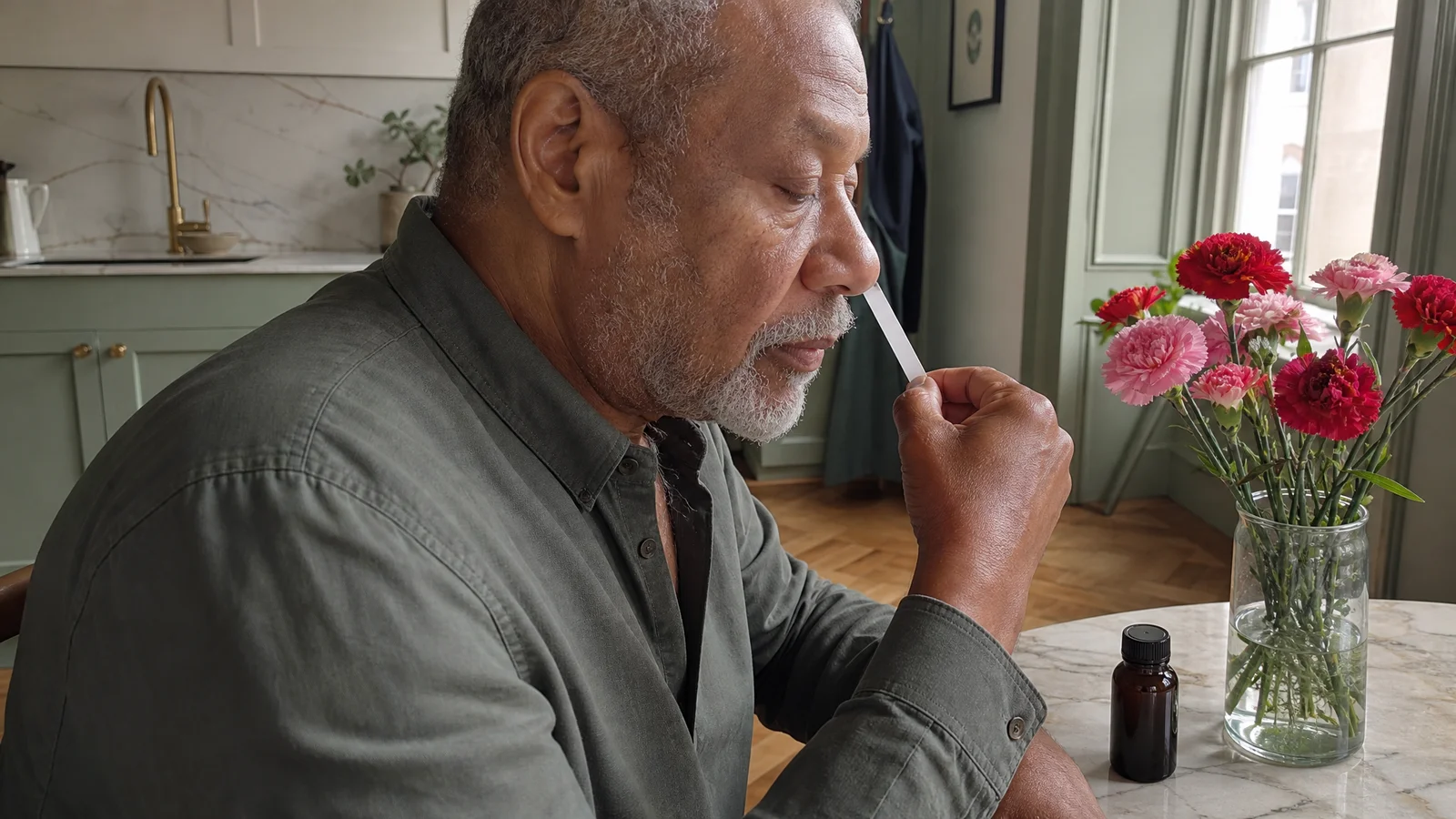
Carnation Accord With Eugenol: A Starter Formula
A carnation accord is a beautiful piece of perfumery sleight of hand. The flower itself is rarely a clove bomb, yet the carnation of fragrance is warm, spicy and a little peppery, and eugenol is the thread that makes us believe it. Here is a small accord worked out by weight, with the arithmetic that shows which ingredient sets the ceiling in each product.

What you are imitating
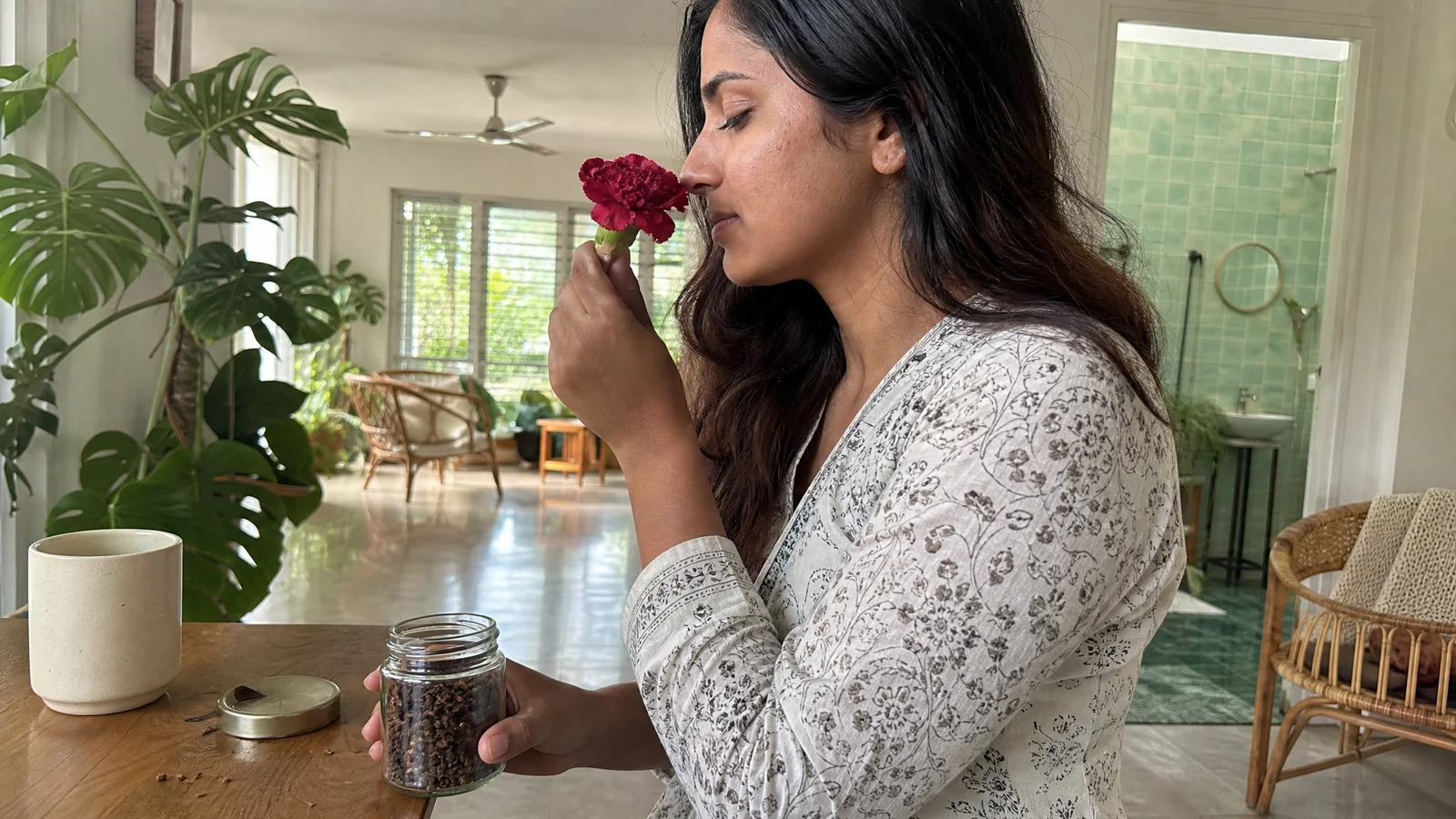
Modern cut carnations are mostly quiet. A 2013 gas chromatography study of carnation scent reported that most modern cultivars have weak scents dominated by methyl benzoate, and that eugenol was emitted in high amounts by some wild Dianthus species and by hybrids made from them (Kishimoto et al., J Jpn Soc Hortic Sci, 2013). So perfumery's carnation is an idea of the flower, spicy and clove-leaning, and eugenol is the right place to start.
A perfumery glossary describes the classic reconstruction as eugenol and isoeugenol with benzyl salicylate, cinnamic alcohol and methyl diantilis, and puts carnation absolute as mostly benzyl benzoate (14 to 15%) with eugenol at only 3 to 4% (PREMIEREPEAU glossary). That is a handy reminder that the real extract carries far less eugenol than a reconstruction usually does.
Leaving out isoeugenol
We sell eugenol oil, not isoeugenol, and the IFRA Standards show why that is a comfortable place to start: the fine-fragrance limit for isoeugenol is 0.11%, against 2.5% for eugenol (IFRA Standards, 51st Amendment). Our isoeugenol comparison sets the two side by side. So this accord takes its body from a salicylate and a benzoate instead, a design choice rather than a claim that it smells identical to the isoeugenol version.
The accord, by weight
All quantities are parts by weight in a 100 g concentrate, a starting formulation worked out from published limits and arithmetic for your own strip trials. Benzyl salicylate, benzyl benzoate, ylang ylang and perfumer's ethanol come from a perfumery or aroma-chemical supplier.
| Material | Parts (g) | Role |
|---|---|---|
| Eugenol oil | 12 | Clove-spice core |
| Benzyl salicylate | 40 | Powdery body |
| Benzyl benzoate | 33 | Soft base |
| Ylang ylang oil | 5 | Floral lift |
| Perfumer's ethanol | 10 | Thins the concentrate |
Weigh the smallest quantity first, into a clean beaker, on a scale that reads to 0.01 g, so an error does not get lost under the larger volumes.
Who sets the ceiling?
Here is the surprise. Divide each material's IFRA limit by its share of the concentrate and you get the highest dose of concentrate that keeps that ingredient inside its limit (limits from the 51st Amendment texts for each material: eugenol, benzyl salicylate, benzyl benzoate and ylang ylang extracts).
| Category | Eugenol (12%) | Benzyl salicylate (40%) | Benzyl benzoate (33%) | Ylang ylang (5%) | Binding |
|---|---|---|---|---|---|
| 4, fine fragrance | 20.8% | 18.2% | 14.5% | 14.6% | benzyl benzoate |
| 5A, body lotion or oil | 5.3% | 4.8% | 13.0% | 3.6% | ylang ylang |
| 9, bar soap | 40.8% | 35.0% | 5.8% | 28.0% | benzyl benzoate |
At a 10% concentrate in an eau de parfum style product, the finished fragrance carries 1.2% eugenol, 4.0% benzyl salicylate, 3.3% benzyl benzoate and 0.5% ylang ylang, all inside Category 4. Move the same concentrate into a body oil and the dose has to fall to about 3.6%, and it is the ylang that sets that, not the eugenol. Eugenol gets all the attention, but it is not always the one that binds.
These sums count only what you weigh in. IFRA's Guidance says indirect contributions from natural complex substances must be counted (IFRA Guidance, 51st Amendment, section 1.4), so ask your ylang ylang supplier for a GC report and add what it shows using the method in our worked example. The 12-part eugenol load leaves headroom in Category 4 for exactly that reason.
Grams, not drops
A 30 g batch of concentrate, enough for 300 g of a 10% product, holds 3.6 g of eugenol. The batch on our Certificate of Analysis has a relative density of 1.065, so a millilitre weighs about 1.065 g, and at the rough convention of 20 drops per millilitre one drop is about 0.053 g. That convention varies with the dropper. Even so, one stray drop in a 30 g mix is about 0.18% of the concentrate, or 1.5% of the eugenol you meant to add. A recipe measured in drops cannot be checked against any limit afterwards, which is why weights go on the label.
Mix, rest, judge
- Weigh the eugenol, benzyl salicylate and ylang into a glass beaker, then the benzyl benzoate, then the ethanol, and stir with a glass rod.
- Label the beaker with the date and every weight. A limit check six months later needs that record.
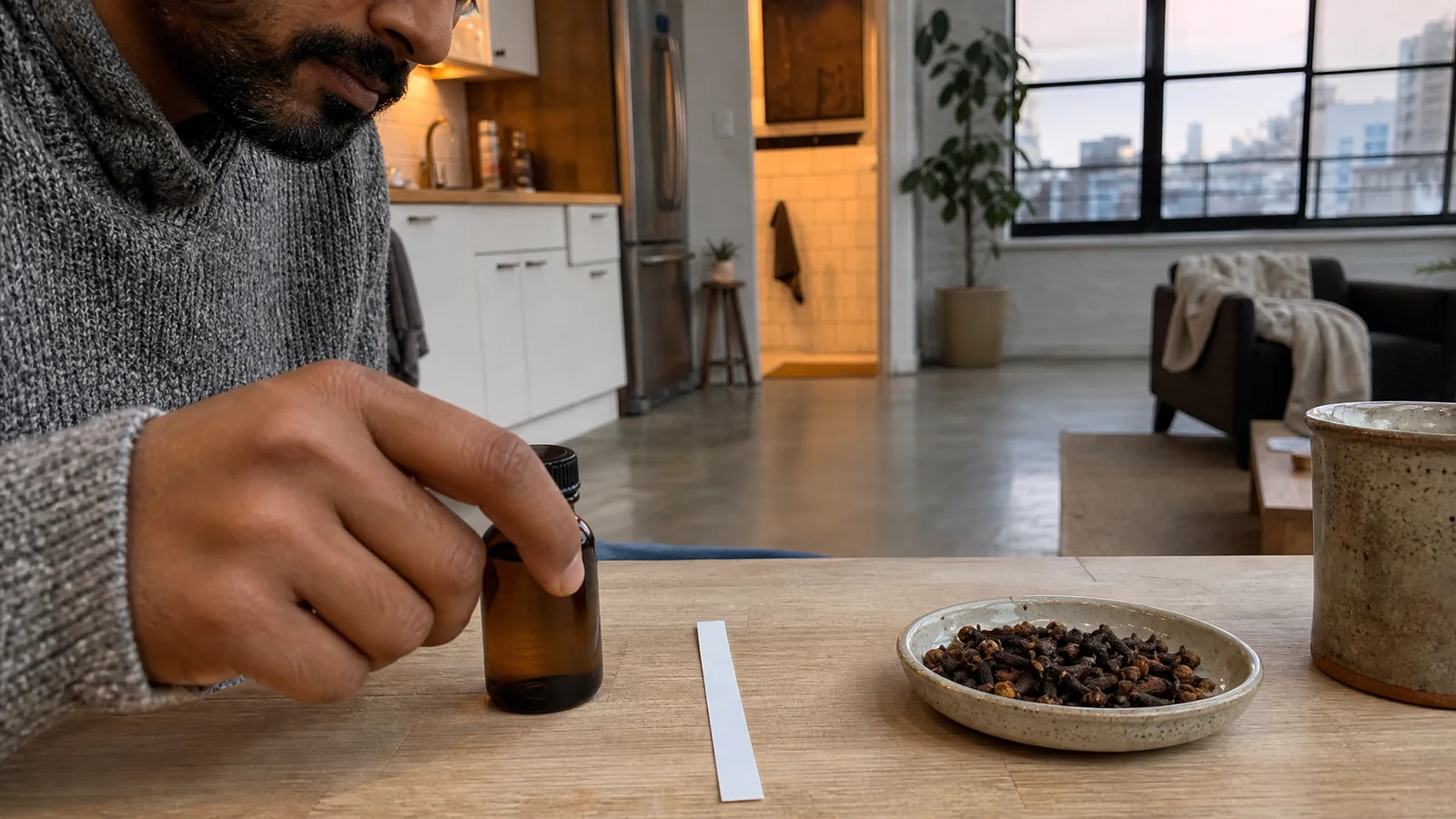
- Let it rest, then compare a strip dipped now with one dipped after a few days. Our smelling-strip method shows how.
- If the clove sits on top of the flower instead of inside it, take a part or two out of the eugenol and re-run the table.
A word on patience. An accord like this rarely sings on the first dip. Let the mixed concentrate rest, smell it again the next day, and keep a note of what changed. You may notice the clove sits up front at first and then tucks in behind the powdery body, which is the moment a carnation starts to feel like a carnation and not a spice jar.
One sensible caution
Eugenol is a recognised skin sensitiser. In a 2023 study of repeated open application testing, 67 subjects across six European clinics took part, and among the 34 with contact allergy to eugenol the lowest concentration giving a positive patch test was 0.031% (Ofenloch et al., Contact Dermatitis, 2023). If you have reacted to fragrance before, or plan to sell the result, a dermatologist or qualified safety assessor should look at it first. Our sensitisation post goes through that study.
Treat this accord as a first draft to judge on paper and on a strip. When the weights and the limits agree, you have a carnation that behaves as well as it smells.
Sources & Further Reading
- Kishimoto K et al., 2013. Analysis of scents emitted from flowers of interspecific hybrids between carnation and fragrant wild Dianthus species. J Jpn Soc Hortic Sci 82(2):145-153. jstage.jst.go.jp
- PREMIEREPEAU, Carnation (perfumery glossary). premierepeau.com
- IFRA Standards, 51st Amendment (eugenol, isoeugenol, benzyl salicylate, benzyl benzoate, ylang ylang extracts). IFRA Standards PDF
- IFRA, Guidance for the use of IFRA Standards, 51st Amendment. IFRA Guidance PDF
- Ofenloch R et al., 2023. Allergic reactivity for different dilutions of eugenol in repeated open application test and patch testing. Contact Dermatitis. pubmed.ncbi.nlm.nih.gov/37218587