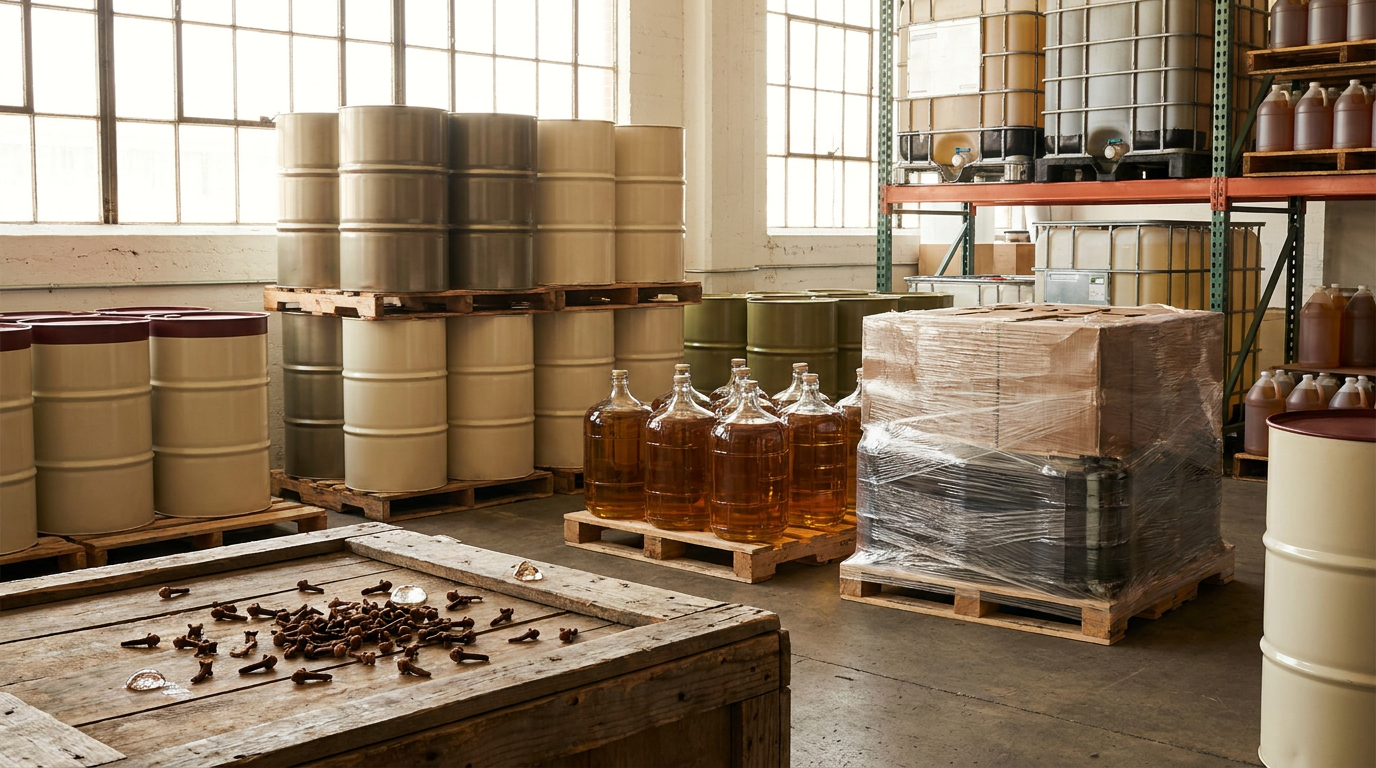
Eugenol oil sold by the pound is a different purchase than eugenol oil sold by the bottle: the sourcing questions, documentation, and packaging all change once a formulation moves from bench to production run. This guide covers what buyers actually order, how to read a listing, and which size fits which stage of growth.
Sample a bottle, then scale into pound and drum sizing once your formula is set.
Eugenol oil is a refined aromatic isolate, not a whole essential oil pulled straight from the still. Clove buds and leaves are first steam-distilled into clove oil, and that clove oil is then fractionated to concentrate its eugenol content well past what whole clove offers. The process, covered step by step in how eugenol is isolated from clove oil, is what turns a broad, slightly rough clove aroma into a focused, carnation-leaning spice note.
For formulators choosing between raw materials, the distinction matters on the bench and on the invoice. Eugenol oil and clove oil serve different roles: clove oil carries a broader profile useful in general spice blending, while the eugenol isolate is the tool of choice when a formula needs a clean, dosable carnation or Oriental spice note without the extra material clove oil brings along.
Grading in this category is mostly a matter of origin and purity documentation rather than marketing language. A batch Certificate of Analysis, not a bottle label, is what tells a buyer whether they are looking at a natural clove-derived isolate or a synthetic substitute standing in under the same name.
| Sold as | What it actually is | How to recognize it |
|---|---|---|
| Natural eugenol oil (clove-derived) | An isolate fractionated from steam-distilled clove bud or leaf oil, carrying a batch CoA tied to that distillation lot | Listing states clove origin and natural sourcing, and the CoA references Syzygium aromaticum as the source material |
| Synthetic or nature-identical eugenol | Manufactured from petrochemical or other non-clove precursors to the same molecule, priced well under natural material | No clove or botanical sourcing language on the listing, and a price that undercuts natural material by a wide margin; see natural vs synthetic eugenol |
| Eugenol sold under an isoeugenol CoA, or the reverse | A related but chemically distinct clove-derived molecule with a different, more floral-toned profile | Cross-check the named compound on the CoA against the listing title, detailed in eugenol oil vs isoeugenol |
| Whole clove oil relabeled as an eugenol isolate | Undistilled or lightly processed clove oil with a lower, less consistent eugenol concentration than a true fractionated isolate | Aroma reads broad and whole-clove rather than a focused carnation note, and the listing skips any mention of a fractionation step |
The recurring trap in this category is price anchoring: a drum priced far below the going rate for natural, clove-derived eugenol is a synthetic substitute or a cut material almost every time, whatever the listing calls it. A batch CoA naming Syzygium aromaticum as the source is the only reliable way to confirm what is actually in the container.
The buyers placing repeat pound-tier orders for this material fall into a fairly narrow set of trades. Candle and wax melt manufacturers use it to build spiced and holiday lines, cold process soap makers reach for it as a bar fragrance with its own discoloration behavior to manage, and indie and niche perfume houses build carnation and Oriental spice accords around it as a signature middle-to-base note. The range of uses is wide, but production-scale demand concentrates in these few categories.
A smaller but steady share of wholesale demand comes from home fragrance and reed diffuser brands, potpourri and sachet producers, and contract manufacturers formulating private label lines for retail partners. Buyers new to sourcing this material at volume generally start with a dedicated bulk buying guide and a broader quality and sourcing guide before committing to a pound-tier order.
Before placing a first bulk order, confirm the listing covers the following.
Treat the CoA as the actual product and the listing as marketing copy. Checking a listing before you order covers the label, lot, and storage-date details worth confirming before a pound-tier order ships, and our own batch documentation is posted at the eugenol oil Certificate of Analysis.
Bulk buyers rarely jump straight to drum quantities. Most formulators validate a new supplier at bottle sizes, scale a proven formula into the low pound tiers, and only move into multi-pound and drum sizing once a production line depends on the material arriving on schedule.
The sizing below reflects that path: bottle sizes for sampling and small runs, pound sizes for standing production, and drum sizes for buyers running continuous lines or supplying private label partners. Pricing and current availability for each tier are on the bulk pricing page.
Order a small bottle first and run it against your existing formula before committing to a pound-tier quantity. This also confirms aroma and color match what your current supplier or lot has been delivering.
Ask for the batch CoA tied to the lot you would actually receive, not a specimen sheet. Reach out through the contact page for a per-order lot match.
Once the sample checks out, request pricing at the pound or drum tier your production run needs. Larger tiers typically carry better per-unit pricing, detailed on the bulk page.
Production buyers do best setting a standing reorder point tied to their own usage rate rather than ordering reactively once a drum runs dry, which avoids gaps in a candle or soap production line.
The sections below break out the specific trades that build wholesale demand for this material, with the formulation context and sourcing checks relevant to each.
A concentrated spice note for wax lines that formulators dose in small percentages rather than build entire blends around.
Read the sourcing guide →A spice-forward fragrance note that soap makers manage carefully for its known discoloration and acceleration behavior.
Read the sourcing guide →The backbone note for carnation and Oriental spice accords, bought in bench-testing bottles and production-scale pounds alike.
Read the sourcing guide →A spice note diffuser and home fragrance brands dose carefully for reed uptake and steady scent throw over time.
Read the sourcing guide →A warm spice note producers add to potpourri blends and drawer sachets to refresh scent without new dried material.
Read the sourcing guide →The spice note anchoring autumn and holiday product lines across candles, home fragrance, and soap.
Read the sourcing guide →The anchor note in Oriental spice accords, bought at volume by contract formulators building private label fragrance lines.
Read the sourcing guide →Request a batch CoA and pound-tier pricing before your next formulation cycle.