Which Plants Contain Eugenol Besides Clove?
Two oils can both carry the word "cinnamon" on the label, and one holds about 74% eugenol while the other holds about 2%. That single contrast explains most of what you need to know about where eugenol turns up in nature: the plant matters, but the part of the plant often matters more.

Clove is the famous one, not the only one
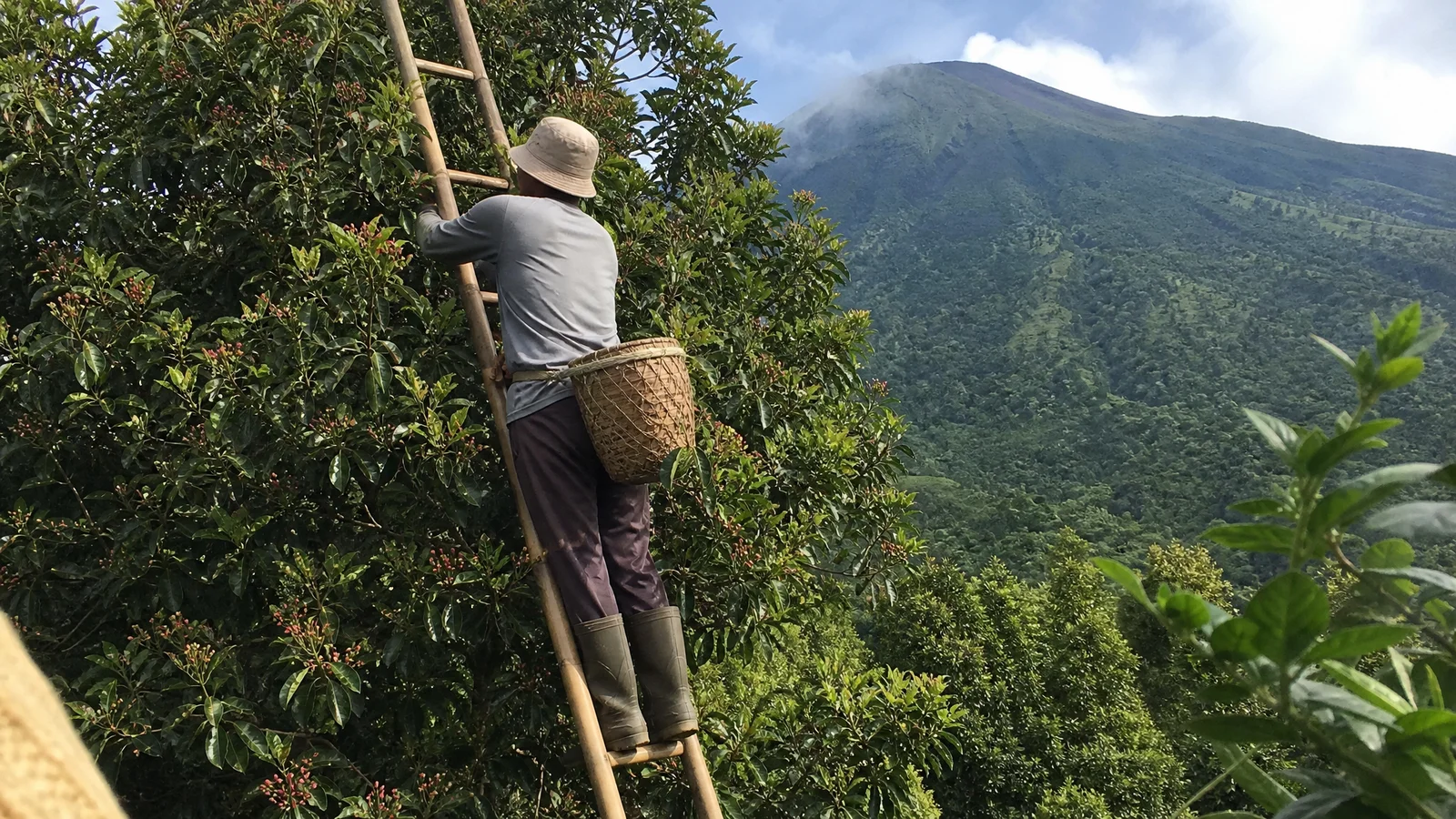
Eugenol is a phenylpropanoid that a surprising number of plants make. A review of the compound's history and sources notes that, besides clove, it is obtained from cinnamon leaf and from basil oil, though clove remains the commercial workhorse (Kamatou et al., Molecules, 2012). For a practical sense of scale, the annex to IFRA's eugenol Standard lists typical eugenol levels for natural materials. These are indicative figures, and IFRA says to use your own analysis where you have one (IFRA Eugenol Standard, Amendment 49 text with Annex).
| Natural material | Typical eugenol, % |
|---|---|
| Clove stem oil | 88 |
| Clove leaf oil | 85.3 |
| Pimenta leaf oil | 83 |
| Clove bud oil | 82 |
| Cinnamon leaf oil | 74 |
| West Indian bay leaf oil | 51 |
| Carnation absolute | 18 |
| Rose absolute | 2.3 |
| Cinnamon bark oil | 2 |
| Ylang ylang oils | 0.5 |
A walk through the spice cupboard
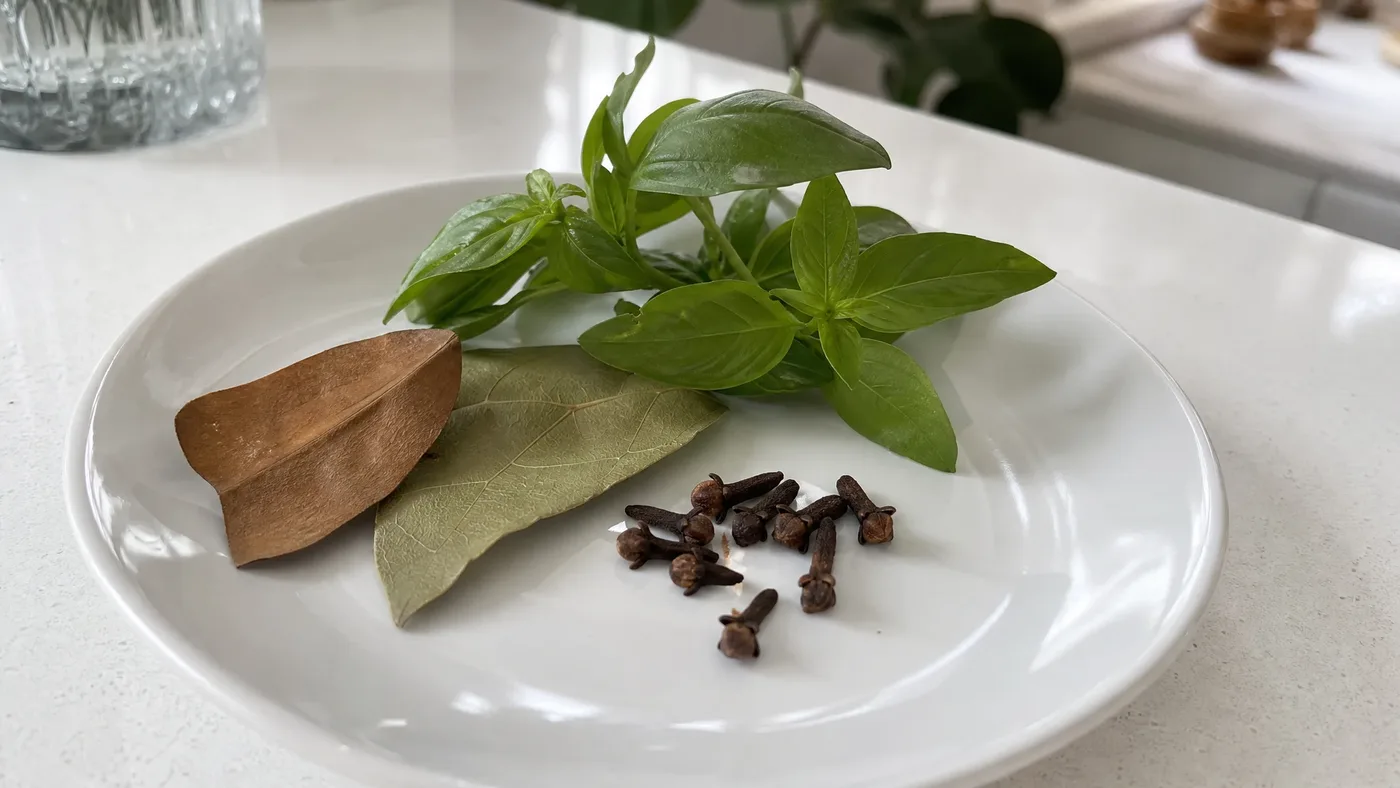
Most kitchens hold a few of these already. Whole cloves are the obvious one, small dark buds shaped like nails. Cinnamon sticks, allspice berries and dried basil sit nearby. Open the jars one after another and you will notice a warm, sweet-spicy thread that runs through several of them. Part of that family resemblance is probably eugenol, though plenty of other molecules join in, so treat it as a fun observation and not a measurement.
The part of the plant is the plot twist
Look at the cinnamon rows. Leaf oil sits near the top of the list and bark oil sits near the bottom. Leaves and bark are chemically different factories: the leaf stores a lot of eugenol, while with only about 2% eugenol, most of the bark oil's character must come from other molecules. Clove shows a milder version of the same effect, with stem, leaf and bud oils each landing a little differently. So when a label says only "cinnamon", the label cannot tell you the eugenol content. A GC report for the specific lot can.
The list also holds some surprises at the low end. Rose absolute and ylang ylang oils carry only a little, but a little is not nothing in a finished perfume where the eugenol budget is tight, which is why our piece on chypre and fougère styles counts eugenol that arrives indirectly. And carnation, the flower that gave the clove-spice accord its name, shows up as an absolute with roughly 18% eugenol.
Reading a list like this as a maker
Do not try to memorise the numbers. Remember the habit instead: whenever a spice oil appears in a formula, ask which part of the plant it came from and whether you have a report for your lot. Leaf, bark, bud and stem can behave like different ingredients, and the name on the label does not always say which one you are holding.
- Write the plant part on every label and every batch sheet.
- Keep the lot report in the same folder as the formula.
- Judge scent on a paper strip, not straight from the bottle.
It is worth noticing, too, how many of these are things people have loved for centuries in food and home fragrance. That long familiarity is part of why a clove-and-carnation warmth feels so comforting in a drawer, a candle or a bar of soap.
Why a perfumer or soap maker should care
Eugenol is one molecule, so every ingredient that carries it adds to the same total. The sums are simple. A concentrate that includes 10 g of an oil at 74% eugenol per 100 g carries about 7.4 g of eugenol, and a different lot of the same oil at a different strength shifts that total. IFRA's guidance says a restricted material counts whether it is added directly or indirectly, so the total, not the headline ingredient, is what meets the limit. Our blend calculation article walks through a complete example.
That is also the case for a refined isolate. Starting from clove oil, eugenol oil is a narrower material than any plant's whole oil, so you add up one thing instead of a variable mixture. For the clove figures in detail, see our bud, leaf and stem breakdown, and for how the isolate differs from the whole oil, the clove oil comparison.
If you want eugenol figures for the lot you will actually receive, ask the supplier for a GC report. For ours, send the request in writing through the contact page.
Why we like a single-ingredient bench
We sell eugenol oil on its own because one material with one job is easy to plan around. When a bottle holds mostly one thing, the arithmetic stays short, the scent stays clear and there is less to second-guess at the end of a long day of blending. A mixed oil can be wonderful, and it asks for more homework. Choose whichever suits the way you like to work.
Sources & Further Reading
- IFRA Eugenol Standard, Amendment 49 text with Annex I of natural contributions. perfumersworld.com copy of the Eugenol Standard
- Kamatou GP, Vermaak I, Viljoen AM, 2012. Eugenol: from the remote Maluku Islands to the international market place. Molecules. PMC6268661
- IFRA, 2023. Guidance for the use of IFRA Standards, 51st Amendment. ifra-51st-amendment-guidance.pdf