Eugenol Oil FAQ: Clove, Skin, Soap and Storage
Most people meet eugenol oil by accident: they reach for clove oil to get that carnation-and-spice warmth, and someone tells them the refined version is what perfumers actually use. These are the questions that come up next, answered the way we would answer them across a counter.

Is it the same as clove oil?
No, and it is not an essential oil either. We sell one material, a refined eugenol oil, and we describe it as one molecule taken out of a distillate and concentrated until little else is left. That makes it narrower than the clove oil it came from, on purpose. Whole clove bud oil carries caryophyllene and eugenyl acetate alongside its eugenol; in the batches EFSA's feed-additive panel described, bud oil averaged about 75% eugenol by GC-MS with roughly 13% caryophyllene and 8% eugenyl acetate (EFSA FEEDAP Panel, 2023). Strip most of that away and you get a sweeter, more focused carnation note. It is a different tool, not a stronger version of the same one.
Does a high eugenol percentage prove it came from clove?
It does not. Eugenol from clove oil and eugenol made from guaiacol are the same molecule, so a chromatogram tells you how much eugenol is there, not where its carbon began. Only radiocarbon-type testing, such as the method in ASTM D6866, speaks to biobased content, and even that does not address geography. The route to eugenol is laid out in Kamatou and colleagues (2012). If "natural" matters for your product, ask any supplier for that report on your lot. Our guide to what to ask for lists the rest.
How much can go in soap, candles and perfume?
IFRA sets a ceiling by product category, expressed as eugenol in the finished product (IFRA Standards, 51st Amendment, eugenol entry). Fine fragrance can carry 2.5%, bar soap 4.9% and reed diffusers 4.0%. Body creams and lotions are lower at 0.64%, and candles carry no restriction because skin exposure is negligible. The count includes eugenol that arrives inside clove or cinnamon leaf oil, so tally everything. Worked examples are in our IFRA article.
What should I do about skin dilution?
Begin with the IFRA figure for the product you are making rather than a single all-purpose dilution. Our guidance leans toward the low end: patch test first, keep amounts small, and treat roughly half a percent as a sensible ceiling in leave-on products. If anything ever reddens skin, stop and see a dermatologist. Eugenol is a known contact allergen, and patch tests are not a perfect safety net. In one 67-person study, patch testing picked up only about 62% of the eugenol-allergic participants (Ofenloch et al., 2023). Our sensitisation article goes deeper.
How long does it keep, and why does it go amber?
Tightly capped, in a cool, dark place, it typically keeps two to four years. Eugenol darkens and thickens with air exposure, which PubChem records for the compound (PubChem, eugenol). That is ordinary phenol behaviour and not spoilage, though a half-used bottle ages faster than a sealed one. If you will open a bottle often, decant working amounts into a small dark bottle. More in our storage guide.
What does the certificate of analysis tell me?
The Certificate of Analysis we publish for one batch lists appearance, smell, relative density (1.065 at 20 C), refractive index (1.541) and a statement of compliance with pharmacopoeia standards. If you need an assay, chromatogram or isotope result, ask us in writing through the contact page before you order. Our certificate guide shows how to read it.
Can I use it for toothache or in food?
No. It is an external fragrance material and is not for internal use, and we do not offer it for dental or therapeutic purposes of any kind. For a toothache or sore mouth, see a dentist or physician.
Is it a concern around pets?
Treat it with care. Pet Poison Helpline lists clove among the oils that can poison animals and says cats and birds are at greatest risk (Pet Poison Helpline). Keep the oil out of reach, and ask a veterinarian about any particular animal. We cover what makers should tell customers in our pets article.
How should I smell it for the first time?
Never straight from the bottle. Put a drop on a paper strip, wave it gently and hold it a hand's width from your nose. The first impression is usually clove, and then the sweeter, carnation-like side tends to come through as it airs. Come back after ten minutes and again after an hour, and write down what you notice at each stage. Give your nose a rest between smells, because spicy materials tire it quickly.
Where do I start with a first small batch?
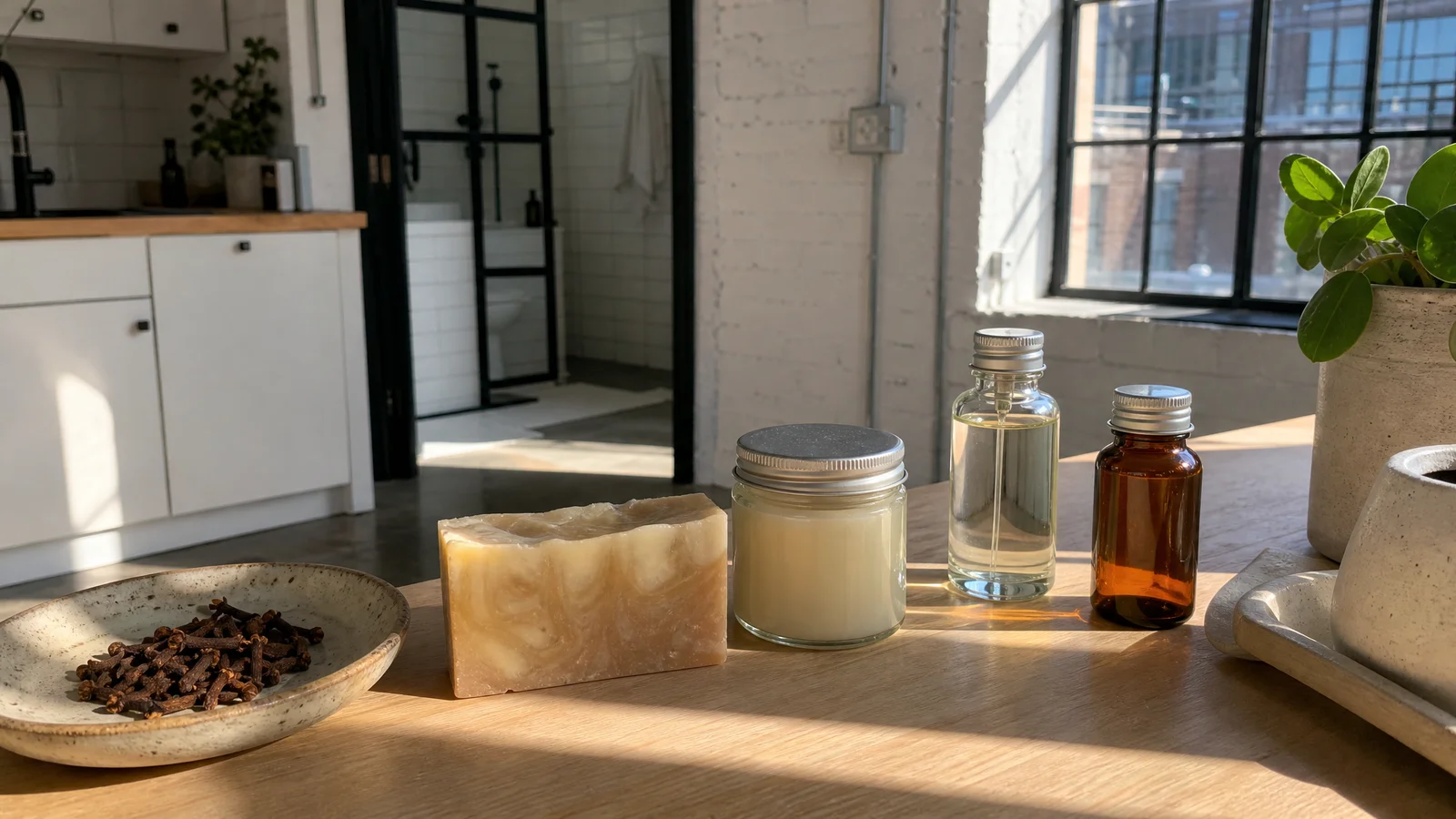
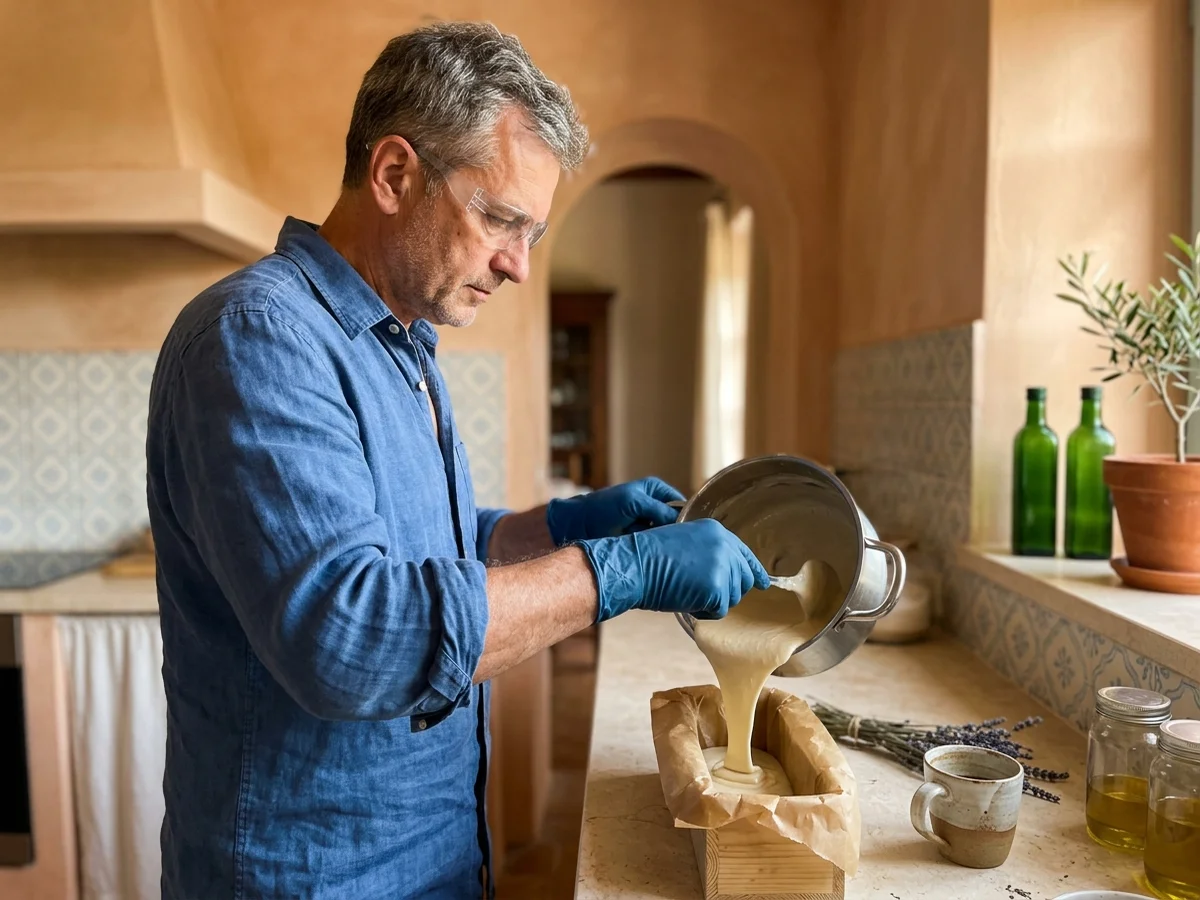
Start with the product that has the most room, and a small amount. Soap, a reed diffuser or a candle all give you more space than something that stays on skin. Weigh the oil on a scale instead of counting drops, work out your limit before you pour, and write down what you did so the second batch can improve on the first.
What does it smell like, and what does it pair with?
Warm, spicy and carnation-like, sweeter than whole clove, and sitting from the middle to the base of a composition. Rose, ylang ylang and vanilla are the classic partners. Noses differ, so smell it beside clove oil on a strip before you commit a formula.
If your question is not here, write to us through the contact page, and sample bottles are available through our wholesale form.
Whatever you decide to make, take the first batch slowly and keep notes.
Sources & Further Reading
- EFSA FEEDAP Panel, 2023. Safety and efficacy of clove oils. pmc.ncbi.nlm.nih.gov/articles/PMC10375362
- Kamatou GP, Vermaak I, Viljoen AM, 2012. Eugenol: from the remote Maluku Islands to the international market place. Molecules 17(6):6953-6981. pmc.ncbi.nlm.nih.gov/articles/PMC6268661
- ASTM International. D6866-22, biobased content by radiocarbon analysis. store.astm.org/d6866-22
- IFRA, 2023. IFRA Standards, 51st Amendment, eugenol entry. ifra-standards-51st-amendment.pdf
- Ofenloch RF, et al., 2023. Eugenol dilutions in repeated open application and patch testing. Contact Dermatitis 89(2):95-102. pubmed.ncbi.nlm.nih.gov/37218587
- National Library of Medicine. PubChem, eugenol, CID 3314. pubchem.ncbi.nlm.nih.gov/compound/Eugenol
- Pet Poison Helpline. Essential oils. petpoisonhelpline.com/pet-poison/essential-oils