What Does Eugenol Smell Like? Clove, Carnation, Spice
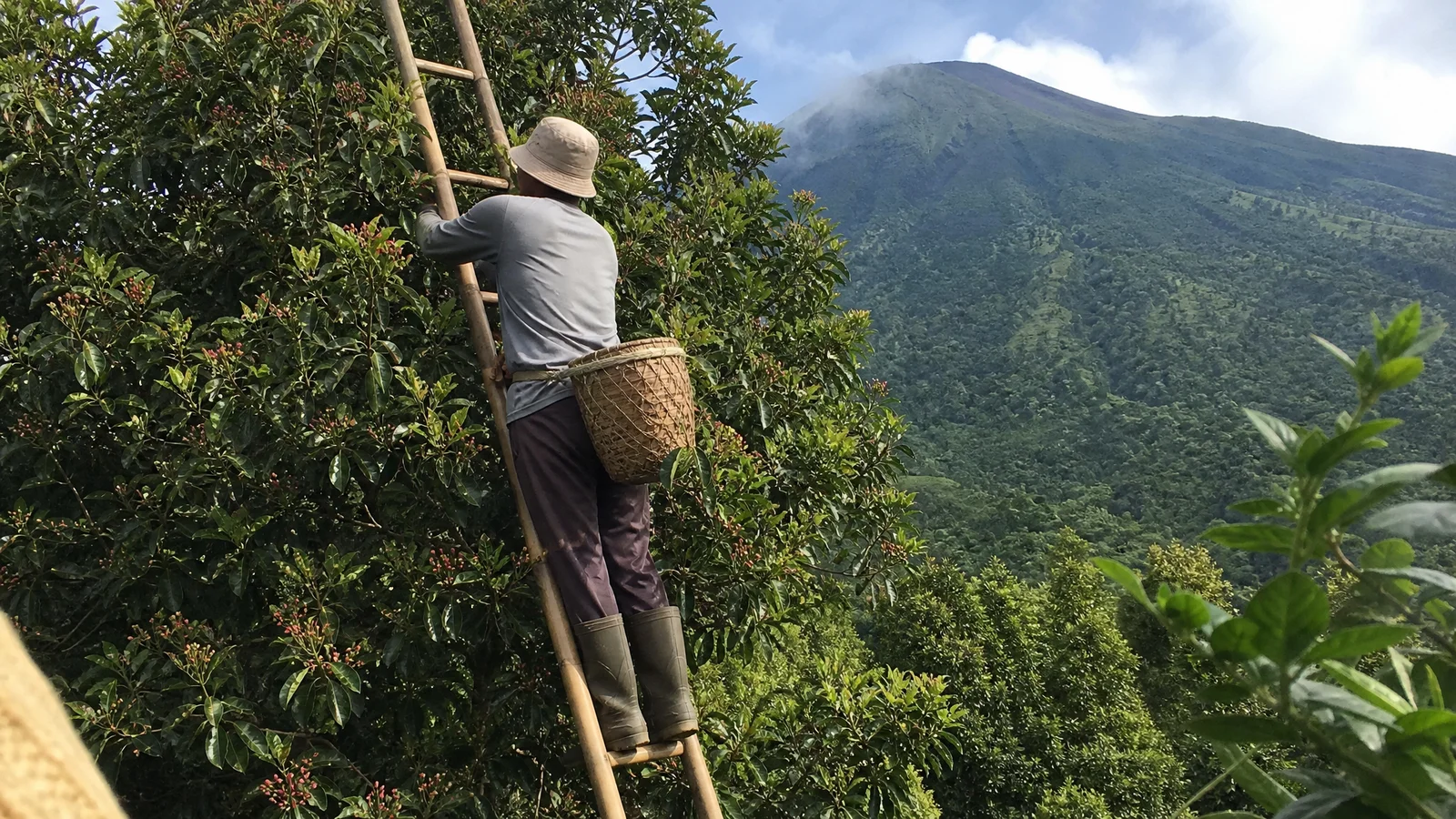
"Clove" is the quick answer to what eugenol smells like, and it hides the interesting part. Reference books describe the same molecule as clove, as warm and spicy-floral, and as carnation, depending on who is writing and what they have just smelled it next to. Eugenol is a character with a few different faces, and the face you meet depends on what surrounds it.

What the reference books say
PubChem collects odour descriptions from standard references. The Merck Index (2006) says simply "odor of cloves". The Kirk-Othmer perfumery entry (2005) says "warm, spicy, floral" (PubChem, eugenol). A review of the molecule calls it a characteristic and pleasant odour of cloves (Kamatou et al., Molecules, 2012). The chemical dictionaries lean on the plant it is best known from, while the perfumers' encyclopaedia reaches for vocabulary like floral. Neither is a measurement; both are people describing a smell.
Even the close relatives borrow each other's words. Isoeugenol gets "spice-clove" and methyl eugenol gets both "mild-spicy, slightly herbal" and "clove, carnation" in different references. So when a brief says "clove", it helps to ask which material is meant, and to smell the candidates side by side. Our smelling strip walk-through shows how, and the isoeugenol comparison explains why the two are not interchangeable.
Why eugenol oil is not simply a jar of cloves
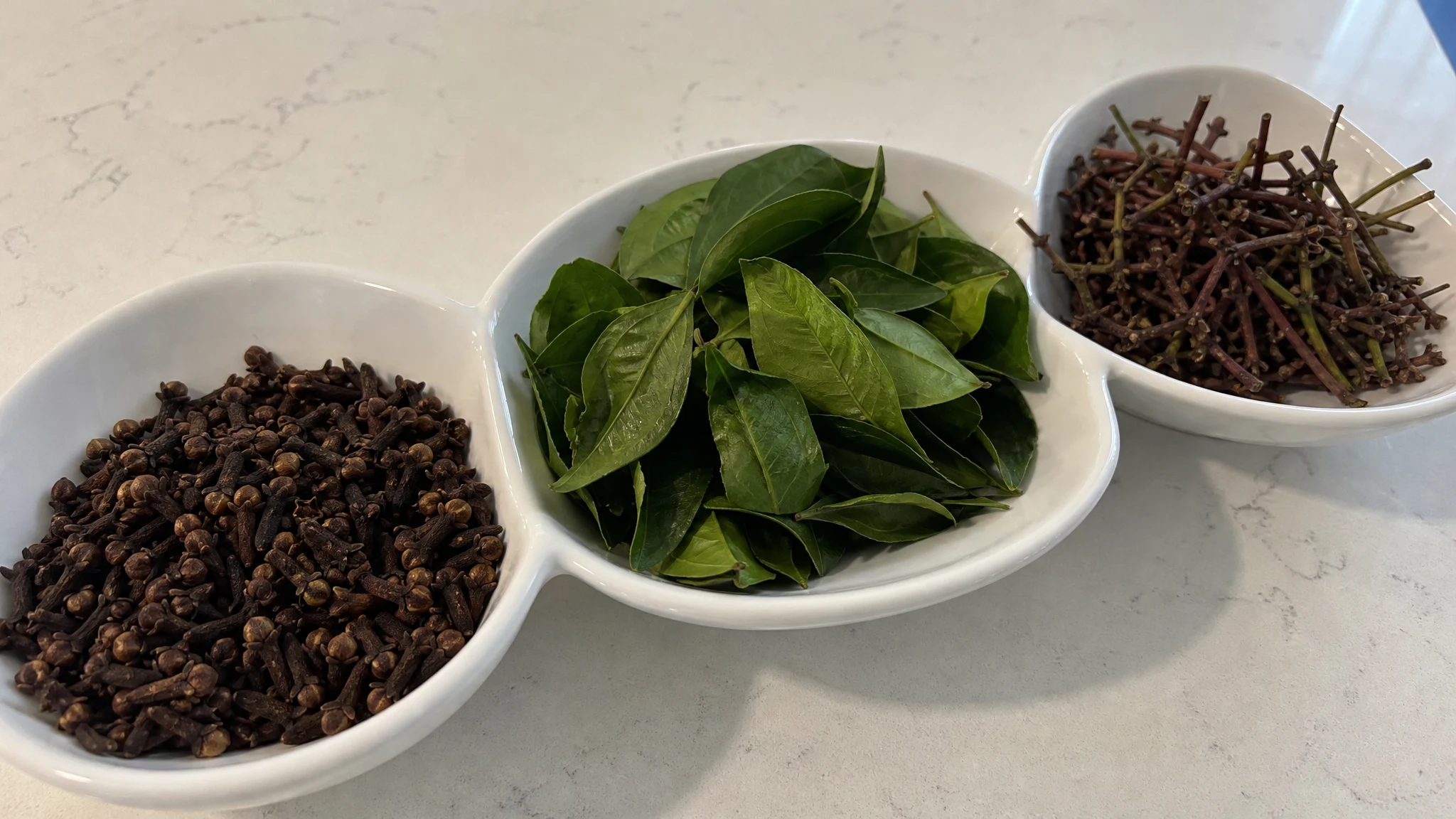
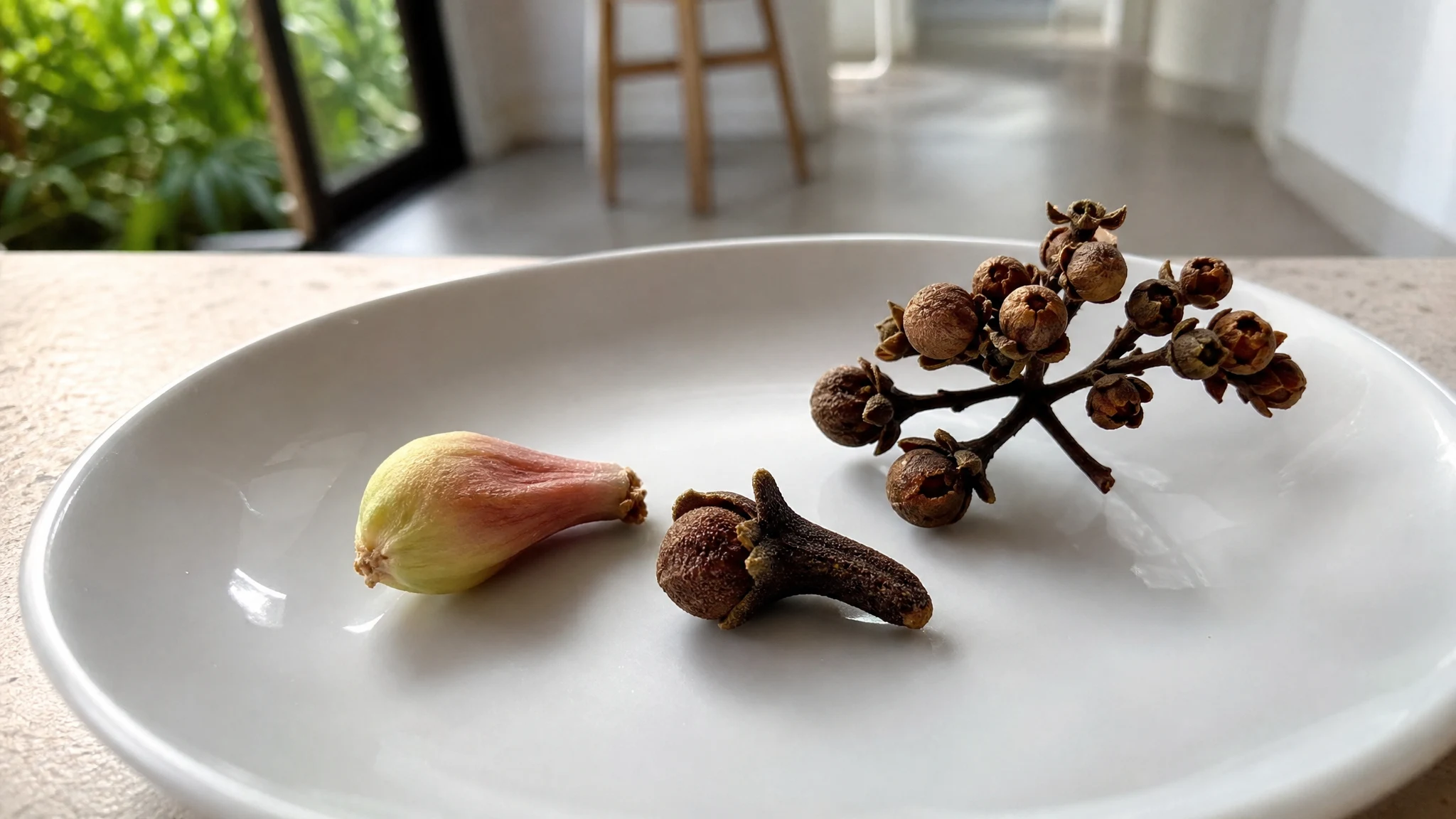
Whole clove oil is a mixture. In EFSA's analysis of seven bud oil batches, eugenol averaged 75.06% by GC-MS, alongside caryophyllene at 13.20% and eugenyl acetate at 7.92% (EFSA FEEDAP Panel, 2023). The Kamatou review notes that the acetate form does not have the powerful spicy notes of the free phenol. Reasoning from that, taking everything else away does more than turn up the volume. What is left is the free phenol, and we describe ours as warm, spicy and carnation-like, sweeter and more focused than whole clove.
It may also explain why the smell feels familiar before people can name it. Eugenol combined with zinc oxide has long been used as a dental cement, so many people know the scent from a dentist's chair. We sell our eugenol oil for fragrance work only, not for dental or therapeutic use, and any dental question belongs with a dentist.
The carnation story is half true
Perfumers treat eugenol as the carnation note, and that is worth treating as a perfumery convention rather than botany. A 2013 study of scents from carnation and fragrant wild Dianthus species found that most modern carnation cultivars have weak scents dominated by methyl benzoate, while some wild species and their hybrids emitted eugenol in high amounts (Kishimoto et al., 2013). A florist's carnation barely smells of clove, so the carnation accord in perfumery is an assembled idea, and our carnation accord recipe builds it step by step.
The Kamatou review also lists eugenol among ingredients in cosmetics and several popular perfumes, naming Opium and Kouros by Yves Saint Laurent. That is a statement that it appears in such products, not a claim about dose or role.
Smelling it yourself
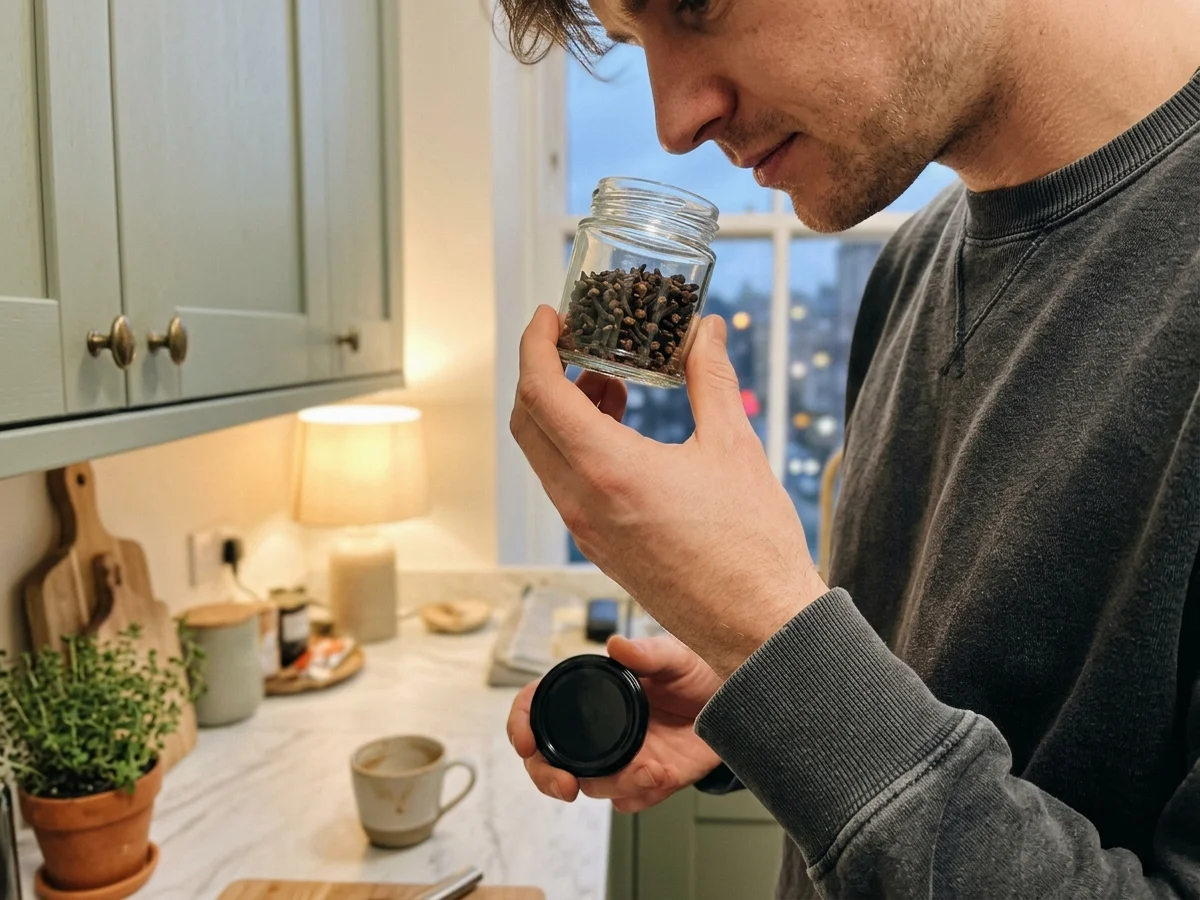
The best way to learn this material is to meet it in stages. Dip a strip, hold it a hand's width from your nose and note your first impression. Smell it again after a few minutes, then after an hour. You will notice the sharp clove-like first moment settle into something sweeter and warmer, and this is the part perfumers care about. Keep a notebook with a line for each time. Over a few weeks your own words for it will become more useful than anyone else's. Compare it with a spice you know well, like a clove from the kitchen drawer, and notice which facets match and which do not.

Where it sits in a blend
We describe eugenol as a middle to base note, and it earns that place by lending warmth and a spicy backbone. Rose, ylang ylang and vanilla are the partners we point to first. Reasoning rather than testing: rose and ylang give the floral side of the Kirk-Othmer description something to lean on, and vanilla rounds the spice toward sweetness. Which facet comes forward depends on dose and on your nose, so try a few ratios on a strip held at a distance, and do not sniff the neat bottle repeatedly.
Keep the dose modest. Eugenol is a recognised skin sensitiser and a declarable fragrance allergen, and IFRA's Standard sets 2.5% for finished fine fragrance and 0.64% for body creams, oils and lotions (IFRA Standards, 51st Amendment). Our limits article has the full list.
Writing a brief that survives contact with a supplier
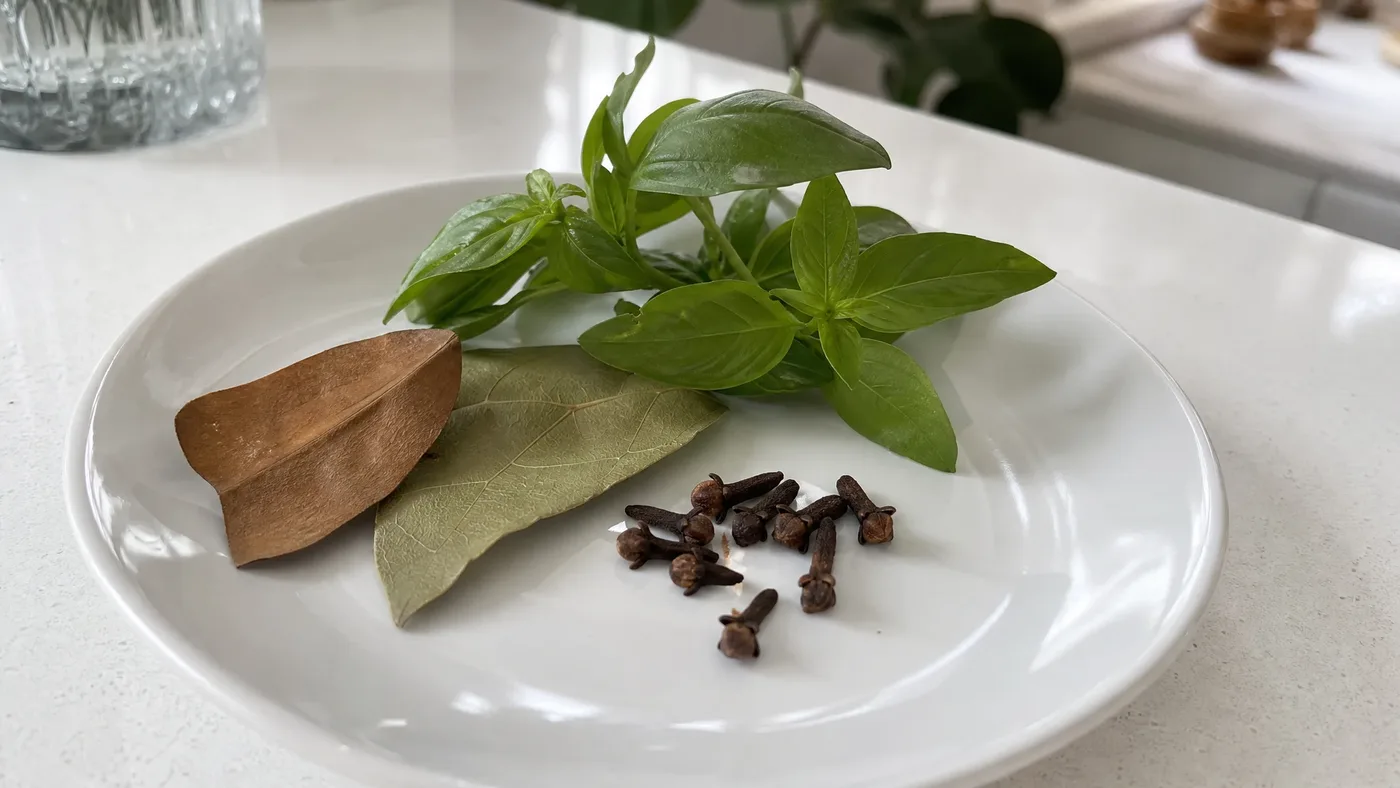
Three words in a fragrance brief each hide a choice. "Clove" might mean whole bud or leaf oil, with its caryophyllene and ester, or the refined phenol. "Carnation" means the perfumery idea, not the flower. "Spice" means almost nothing without a reference. Name the material and its CAS number (eugenol is 97-53-0), say you want the free phenol, and smell a reference on the same day. Smell alone cannot tell you purity or origin, and our How We Test page notes that only carbon isotope analysis separates a clove-derived eugenol from a synthetic one. For what to ask a supplier, see our adulteration article.
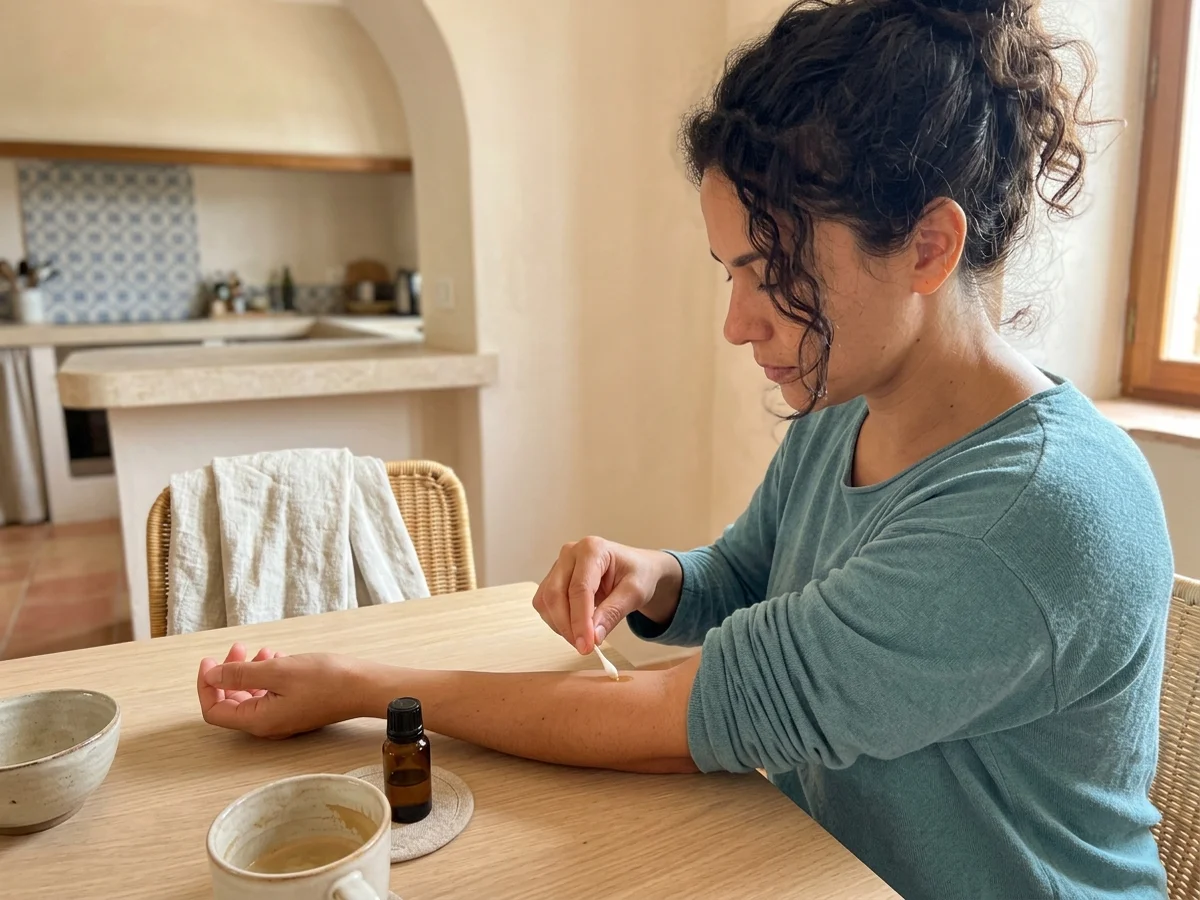
One last thing worth enjoying: it is rare for a single molecule to be this recognisable. Smell it in your own base, against your own reference, and you will know it.
Sources & Further Reading
- PubChem, Eugenol, CID 3314: odour entries (Merck Index 2006; Kirk-Othmer 2005). pubchem.ncbi.nlm.nih.gov/compound/Eugenol
- PubChem, Isoeugenol, CID 853433 and Methyleugenol, CID 7127: odour entries. pubchem.ncbi.nlm.nih.gov/compound/853433
- Kamatou GP, Vermaak I, Viljoen AM, 2012. Eugenol: from the remote Maluku Islands to the international market place. Molecules 17(6). PMC6268661
- EFSA FEEDAP Panel, 2023. Clove bud oil and clove leaf oils for all animal species. PMC10375362
- Kishimoto K, et al., 2013. Analysis of scents emitted from flowers of interspecific hybrids between carnation and fragrant wild Dianthus species. J Jpn Soc Hortic Sci 82(2):145-153. jstage.jst.go.jp
- IFRA, 2023. IFRA Standards, 51st Amendment, Eugenol (CAS 97-53-0). ifra-standards-51st-amendment.pdf