Natural vs Synthetic Eugenol: Does It Matter?
Here is the short version: natural and synthetic eugenol are the same molecule, and no test that only looks at composition can tell one bottle from the other. What differs is the route that made it and the paperwork that proves it. Most makers never need to care. A few need to care a great deal, and this post will help you work out which group you are in.

Two roads to one molecule
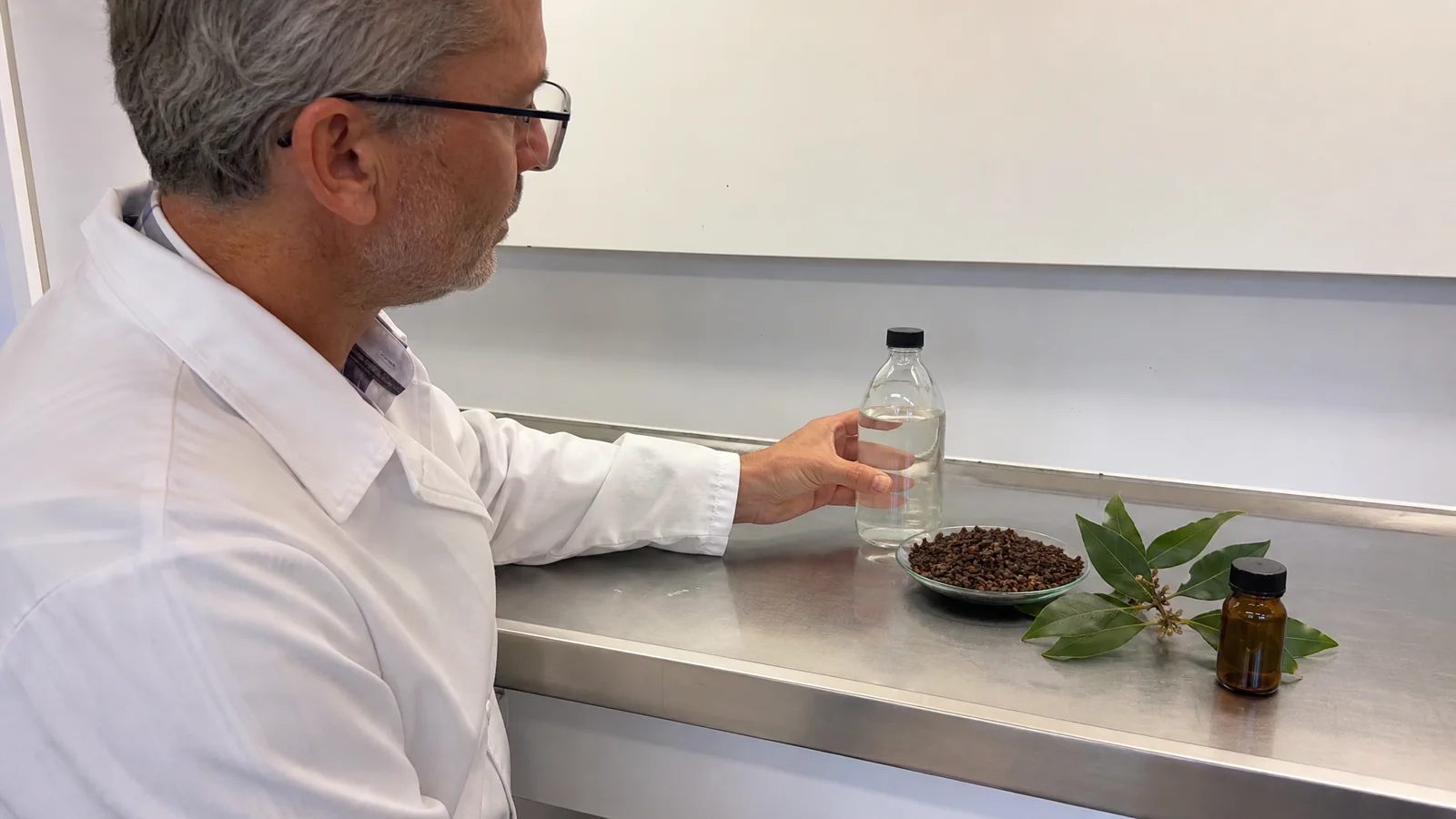
Eugenol is 2-methoxy-4-prop-2-enylphenol, C10H12O2, and nothing in its chemical record depends on where it came from (PubChem, CID 3314). A 2012 review in Molecules describes both industrial routes (Kamatou, Vermaak and Viljoen, 2012). The traditional one starts with clove oil. The oil is stirred with an excess of aqueous sodium or potassium hydroxide, which turns the phenol into a water-soluble salt; the rest of the oil is washed away; the solution is acidified in the cold; and the freed eugenol is purified by fractional distillation. The other route is built from scratch, and the review calls the allylation of guaiacol with allyl chloride the most practical method.
Both end at the same liquid. We describe ours as a refined isolate obtained from clove oil, taken out of the distillate on a fractionating column and concentrated until little else is left.
Why a synthetic exists
A manufacturer explains it best. In January 2021 Solvay announced a "high purity synthetic eugenol" for fragrance, aimed at "applications for which natural origin is not essential", and said it was designed to offset the quality, supply and price swings of sourcing eugenol from cloves (Solvay press release, 2021). That is a producer describing its own product, so treat it as a viewpoint rather than a comparison. The useful part is the framing: synthetic is sold on steady supply, clove-derived on its botanical origin.
What is the same, and what is not
Everything a formulator has to regulate is the same. IFRA writes the eugenol Standard on the substance itself, CAS 97-53-0, and its category limits carry no "natural" or "synthetic" column (IFRA Standards, 51st Amendment). The sensitisation sums in our limits article work either way.
If anything differs, it is the trace material. A eugenol isolated from clove oil began life in a mixture with beta-caryophyllene, eugenyl acetate and small amounts of related compounds (EFSA FEEDAP Panel, 2023), and refining reduces these without promising to erase them. A eugenol built from guaiacol would bring its own route-specific traces instead. So the origin story, if it shows up in a composition report at all, shows up among the small peaks, not the eugenol peak. Our article on GC-MS for fragrance materials shows how to read that list.
It helps to remember that "natural" is a word people hear differently. To one customer it means a plant on the label, to another a certificate in a drawer, and to a third just a nice feeling. Knowing which of those the people you sell to mean saves a lot of awkward questions later.
When origin genuinely matters
- You want to call something "natural" on a label or website. That is a claim about carbon and process, and it needs a statement of origin and process from your supplier. Check what your market allows the word to mean.
- You are quoting a biobased share. The test built for that is radiocarbon analysis under ASTM D6866, with accelerator mass spectrometry or liquid scintillation counting (ASTM D6866-22). A biobased result says plant carbon rather than fossil carbon. It does not say clove, and the standard states it does not address geographical origin.
- Your story names a place. Ask for traceability documents. No bottle-side test confirms a country.
Our adulteration article goes further into what each test can and cannot answer. If none of the three applies to you, the choice comes down to aroma, documentation and a supplier who answers questions about the lot.
A bench-side way to think about it
Smell will not give you the answer, but your own priorities will. Ask yourself three questions. Who is my customer? What will I print on the label? Would I be comfortable if someone asked where this came from? If the honest answers are "no one asks" and "I make no origin claim", the choice is about scent and paperwork, and the rest can wait.
Where we stand on our own bottle
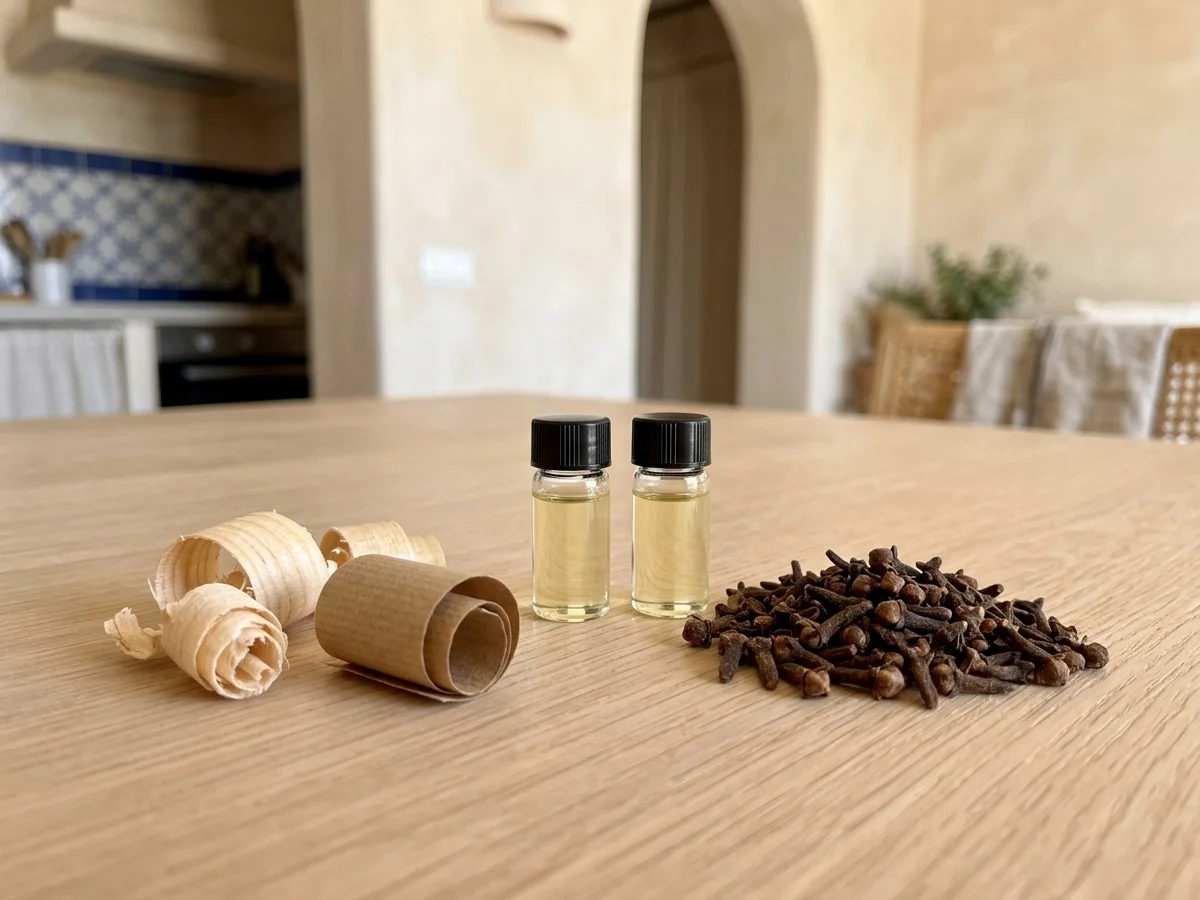
We sell one material, eugenol oil, and we say it is clove-derived. We also say, plainly, that above 99% purity synthetic and clove eugenol are the same molecule, that GC/MS cannot tell them apart, and that only carbon isotope analysis can. If a lot ever came through nature-identical, the label would say so. The Certificate of Analysis we publish for one batch lists appearance, smell, relative density and refractive index, so an isotope result would be a separate document. If you need one for a lot, ask us in writing through our contact page before you rely on it, and ask any other supplier for the same.
The cleanest decision is the simplest: if origin is part of what you tell the people you sell to, buy against a document that supports it; if not, spend your effort on dose and limits.
We would always rather you ask a hard question than assume. A supplier who welcomes the question is usually one worth staying with. Our eugenol oil is in the shop, larger sizes are on our bulk page, and our guide to buying eugenol oil in bulk lists the documents worth requesting.
Sources & Further Reading
- Kamatou GPP, Vermaak I, Viljoen AM, 2012. Eugenol, from the remote Maluku Islands to the international market place: a review of a remarkable and versatile molecule. Molecules. PMC6268661
- Solvay, 2021. Solvay launches Eugenol Synth for fragrance applications (press release). solvay.com
- IFRA Standards, 51st Amendment. IFRA Standards PDF
- EFSA FEEDAP Panel, 2023. Safety and efficacy of feed additives consisting of essential oils derived from the flower buds or the leaves of Syzygium aromaticum. EFSA J. PMC10375362
- ASTM D6866-22, Standard Test Methods for Determining the Biobased Content of Solid, Liquid, and Gaseous Samples Using Radiocarbon Analysis. store.astm.org
- PubChem, Eugenol (CID 3314). pubchem.ncbi.nlm.nih.gov