Eugenol and Dentistry: A Short History
If you landed here with a toothache, please call a dentist; nothing on this page is advice for your mouth. For everyone else, this is a short history of why eugenol has a dental reputation, and why that reputation has nothing to do with the fragrance oil on a maker's bench.

Dentists use a cement, not a bottle of oil
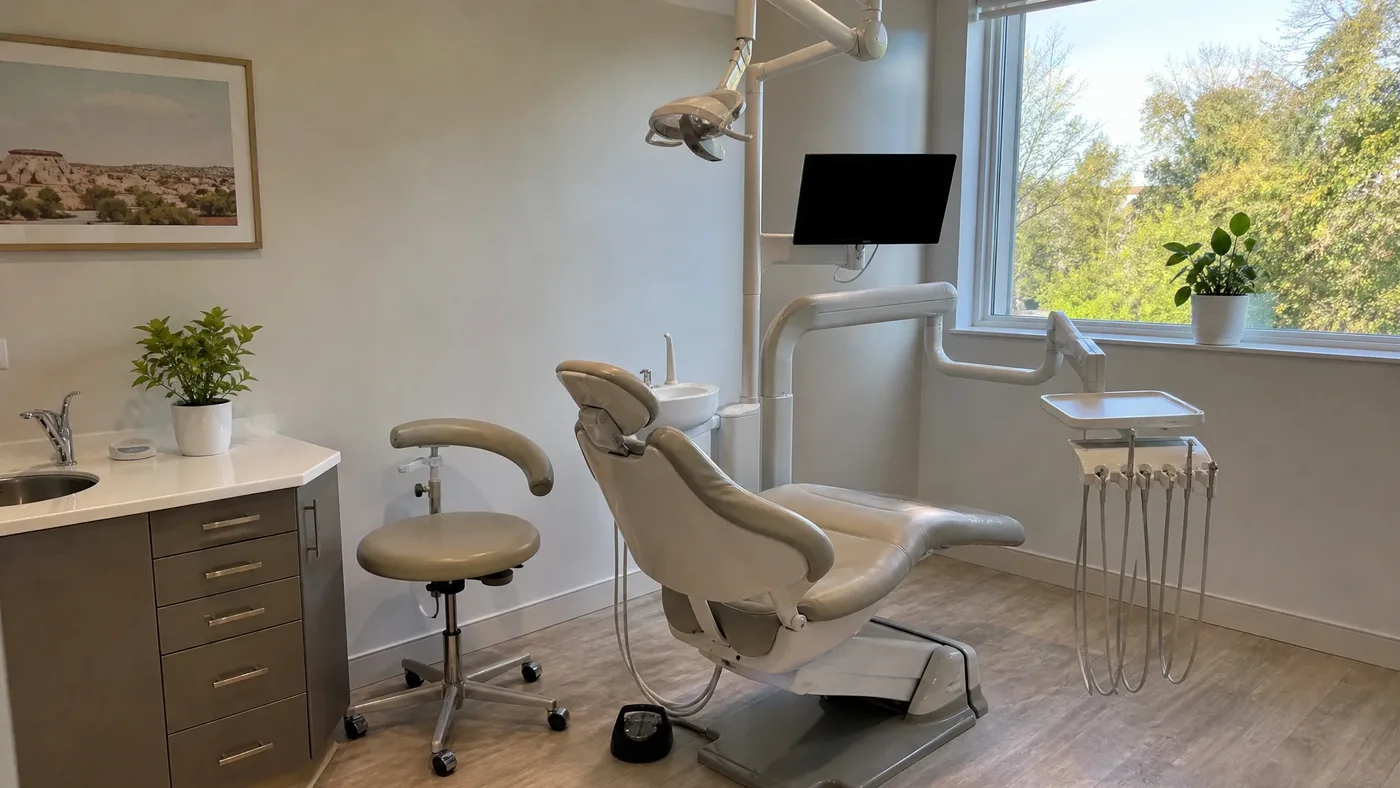
The dental material is zinc oxide-eugenol, a cement made by mixing zinc oxide with eugenol. In US regulation it is a device. 21 CFR 872.3275 describes it as a device "intended to serve as a temporary tooth filling or as a base cement to affix a temporary tooth filling, to affix dental devices such as crowns or bridges, or to be applied to a tooth to protect the tooth pulp", classified as Class I and exempt from premarket notification, while dental cement other than zinc oxide-eugenol is Class II (21 CFR 872.3275). A review of the molecule describes the same family of products as cements for surgical dressings, temporary fillings, pulp capping agents and cavity liners (Kamatou et al., Molecules, 2012). The point is that the regulated item is a finished product placed by a dental professional, and not a raw ingredient.
Many of us carry a memory of that smell from a childhood appointment: warm, sweet, sharp, unmistakably clove. It is a powerful memory because scent is tied so closely to feeling, and that is probably part of why the dental story has stuck so hard to this molecule. People hear the word eugenol and think of the chair, not the perfume bench.
Why dentistry has moved on from it in some jobs
A 2023 review of dental luting cements reports that provisional cements once mostly contained eugenol, and today are mainly made without it (Heboyan et al., Molecules, 2023). A 2024 laboratory study checked the idea on 112 samples cut from 56 extracted human molars. It found that eugenol-containing cement left in place for 24 hours significantly reduced the bond strength of a self-etch adhesive, while exposure for a week or more had minimal effect (Khaitan et al., 2024). So "eugenol blocks resin" is a tidy slogan for something more nuanced, and it was measured in teeth on a bench, not in people.
It helps to keep the two worlds apart in your head. In the dental one, a trained person chooses a material, places it with care and watches the result. On the fragrance bench, the work is quieter: weighing a little oil, labelling the bottle and keeping the cap on. The skills are different and so are the responsibilities.
What case reports remind us
The Kamatou review lists irritation, ulcers, allergic contact dermatitis and, rarely, anaphylactic-like shock among reported effects of eugenol-containing dental products. Two single-patient reports show how that can look. One describes immediate allergic contact urticaria to eugenol during dental treatment (Tammannavar et al., BMJ Case Reports, 2013). Another describes a zinc oxide-eugenol dressing in a tooth socket that mimicked trigeminal neuralgia for three years, with chronic osteomyelitis and a foreign body reaction, resolved by surgical removal (Alemán Navas and Martínez Mendoza, Int J Dent, 2010). A case report shows that something can happen, not how often, which is why such materials are handled by professionals who take a history first.
Why none of this carries over to a fragrance oil
- Different product. Our eugenol oil is a refined isolate obtained from clove oil, sold for fragrance and formulation work. Our How We Test page says plainly that it is not offered for dental or therapeutic use of any kind, and we make no medical claims for it.
- Different setting. The reported dental effects come from clinical materials placed by a professional. Nothing here supports putting a fragrance material in or near the mouth.
- Same molecule, same sensitiser. Eugenol is a recognised skin sensitiser, which is why our guidance is to dilute, patch test and wash hands after handling. Our sensitisation article and compliance guide go further.
The dental connection is an easy one to wonder about, so here is the simple version: the fragrance world and the dental world use the same molecule for very different purposes, under very different rules. Enjoy the history for what it is, a good story about a remarkable spice, and keep the oil on the workbench where it belongs.
A note for makers
If a customer ever asks whether your scented product can be used for anything dental, the honest and simple answer is no. Say so plainly on the label or in your reply, and point them to a dentist. Clear answers protect the people who buy from you, and they protect you as well.
Where the clove story goes next
For how a spice became a famous molecule, read our short history of clove, and for what our oil is and is not, see the myths article. How oral products containing eugenol are regulated today is a question for a regulatory specialist, and a pharmacist can tell you what an over-the-counter product contains.
A dental problem belongs with a dentist, an allergic reaction with an allergist, and a child or pet that has swallowed a concentrated oil with poison control, a physician or a veterinarian right away. Eugenol earned its place in the dental chair through a well-regulated cement, and our bottle belongs on the fragrance bench.
Sources & Further Reading
- U.S. Code of Federal Regulations, Title 21, Section 872.3275. Dental cement. ecfr.gov/21-CFR-872.3275
- Kamatou GP, Vermaak I, Viljoen AM, 2012. Eugenol: from the remote Maluku Islands to the international market place. Molecules. pubmed.ncbi.nlm.nih.gov/22728369
- Heboyan A et al., 2023. Dental Luting Cements: An Updated Comprehensive Review. Molecules. pubmed.ncbi.nlm.nih.gov/36838607
- Khaitan A et al., 2024. A comparative evaluation of the effect of eugenol exposure time on the bond strength of an etch-and-rinse and a self-etch adhesive to dentin: an in vitro study. pubmed.ncbi.nlm.nih.gov/38989483
- Tammannavar P et al., 2013. An unexpected positive hypersensitive reaction to eugenol. BMJ Case Reports. pubmed.ncbi.nlm.nih.gov/24049087
- Alemán Navas RM, Martínez Mendoza MG, 2010. Case report: late complication of a dry socket treatment. Int J Dent. pubmed.ncbi.nlm.nih.gov/21253516