Summer Eugenol Blends: Which Products Allow Spice?
Warm spice does not have to retire in January. What changes in summer is the product you put it in, and the products people reach for in July, such as body mists, lotions and hand gels, sit in categories with tighter eugenol ceilings than a winter candle does. Sort that out first, and a spice-and-vanilla summer scent is entirely workable.

Start with the category, not the scent
IFRA's eugenol Standard sets a different maximum for each of twelve product categories, measured in the finished product (IFRA Standards, 51st Amendment), and the guidance document places product types into those categories (IFRA Guidance). Here are a few summer formats. The last column is our arithmetic: the highest dose of a concentrate, as a share of the finished product, if eugenol makes up an invented 10% of that concentrate.
| Summer product | Category | Eugenol limit | Ceiling dose at 10% eugenol |
|---|---|---|---|
| Body spray or body mist | 2 | 0.14% | 1.4% |
| Body cream, oil or lotion | 5A | 0.64% | 6.4% |
| Fine fragrance, solid perfume | 4 | 2.5% | 25% |
| Bath gel, liquid soap, body wash | 9 | 4.9% | 49% |
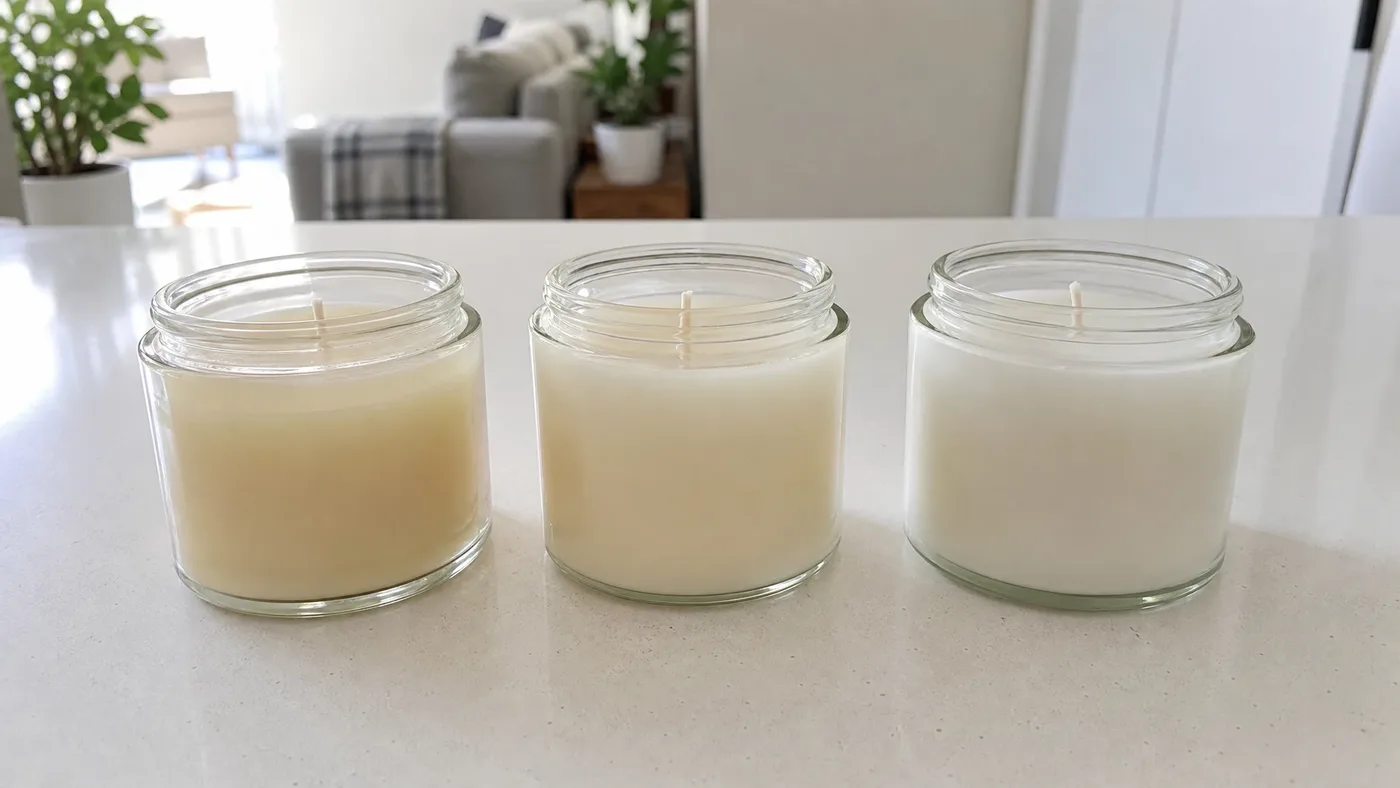
| Candles of all types | 12 | No restriction | None set by this Standard |
The pattern is easy to remember. Eugenol has the most room in products that rinse off or are applied sparingly, and the least in products smoothed over large areas of skin and left there.
Body mist is its own category
A body mist feels like a lighter cousin of fine fragrance, so many makers assume Category 4. The guidance explains why it is different: body sprays, including body mists, sit in Category 2 because the foreseeable use goes beyond the body alone. If the label clearly says not to apply to the underarms, the product can be considered under Category 4, and the guidance recommends that supplier and customer consult on the category for each body spray.
With the invented 10% concentrate, that decision is the difference between a 1.4% ceiling and a 25% one, which is eighteen-fold. We would settle the category in writing with a regulatory specialist before filling a single bottle. Our solid perfume article shows the Category 4 sums for the format that fits comfortably.
Count the eugenol you did not add on purpose
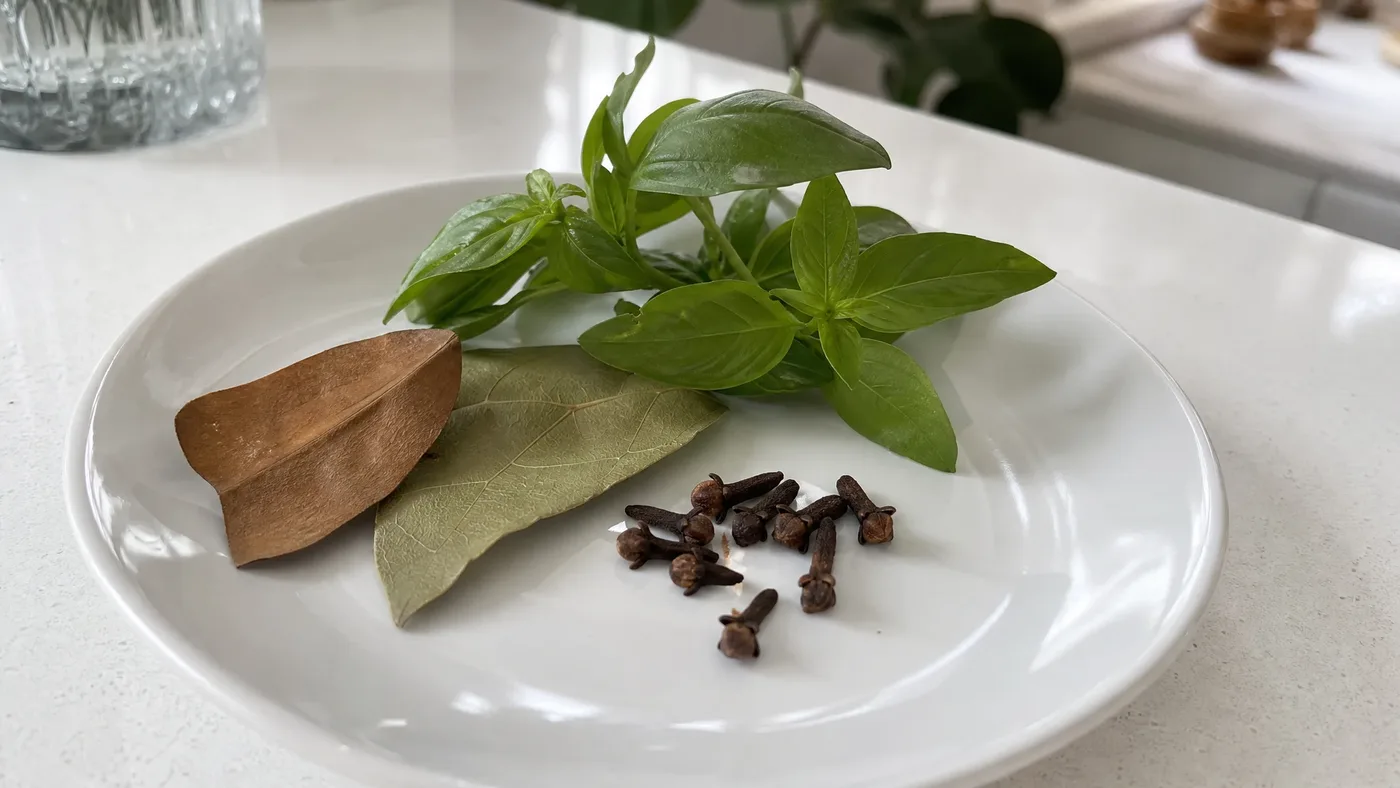
A summer spice accent often arrives as clove bud oil rather than the isolate, and it counts. IFRA's guidance says restrictions apply whether a restricted material is added directly or indirectly. EFSA's analysis of bud oil gives 75.06% eugenol by GC-MS and 82.7% by GC-FID (EFSA FEEDAP Panel, 2023). An invented body mist with 1% clove bud oil would therefore hold 0.75% to 0.83% eugenol, over five times the Category 2 ceiling, while the same 1% in a Category 4 spray sits well under 2.5%. Our blend calculation article shows how to add up several sources.
It is easy to think of clove as a cold-weather smell, all mulled drinks and wood smoke. But think of a summer evening on a porch, a warm breeze, something sweet cooking on a grill. Spice belongs there too, as long as it is handled lightly. In a mist or a lotion that means a whisper of warmth behind brighter notes, not a heavy winter blanket.
Why spice and vanilla belong together
Gourmand work leans on vanilla, and eugenol has a history here: a review records that it was the first natural compound used to synthesise vanillin in the late 19th and early 20th century (Kamatou et al., Molecules, 2012). Reasoning from that, a spice and vanilla pairing puts two materials with shared manufacturing history side by side, which may be part of why they sit so comfortably together. That is a hypothesis about scent, not a finding. Rose and ylang ylang are the other partners we point to, and our guides to partner materials and the smelling strip method will help you try pairings in your own base.
Keep the bottle cool in the warm months
PubChem lists eugenol's vapour pressure as 0.01 mmHg at 68 F and 0.03 mmHg at 77 F (PubChem, eugenol), which triples across a nine-degree step. Reasoning from that, a bottle on a sunny windowsill or in a parked car will lose material and gain headspace faster than one in a cool cupboard, and the same record notes that eugenol darkens and thickens on exposure to air. We recommend keeping it tightly capped in a cool, dark place, and every size comes in dark glass. Summer is when that advice earns its keep. See our storage guide and why eugenol darkens.
Pairing with fresher notes
Try imagining the spice as a base note and putting something bright on top: citrus peel, a clean floral, a green note. You will notice that a little warmth underneath makes a bright top smell richer and more expensive, and that a blend with too much clove starts to smell like winter again. Smell your options on strips, with the method described in our strip article, before committing to a fill.
Limits protect the typical user
People who are already allergic are a separate case. In a 2023 clinic study, the lowest concentration that gave a positive patch test in a eugenol-allergic person was 0.031% (Ofenloch et al., Contact Dermatitis, 2023), lower than the 0.14% mist ceiling, so someone allergic can react to a product that meets the Standard. Declare eugenol on the label where the law requires (see allergen labelling) and avoid describing a spiced mist as suited to sensitive skin.
Candles are the one summer format with no number in this Standard, on the guidance's rationale of expected negligible skin exposure. A summer candle, then, is the easiest place to enjoy a warm spice accent, and the wick and flash point questions are covered in our candle safety article.
Sources & Further Reading
- IFRA, 2023. IFRA Standards, 51st Amendment, Eugenol (CAS 97-53-0). ifra-standards-51st-amendment.pdf
- IFRA, 2023. Guidance for the use of IFRA Standards, 51st Amendment. ifra-51st-amendment-guidance.pdf
- EFSA FEEDAP Panel, 2023. Clove bud oil and clove leaf oils for all animal species. PMC10375362
- Kamatou GP, Vermaak I, Viljoen AM, 2012. Eugenol: from the remote Maluku Islands to the international market place. Molecules 17(6). PMC6268661
- PubChem, Eugenol, CID 3314: vapor pressure and stability entries. pubchem.ncbi.nlm.nih.gov/compound/Eugenol
- Ofenloch RF, et al., 2023. Allergic reactivity for different dilutions of eugenol in repeated open application test and patch testing. Contact Dermatitis 89(2):95-102. PMID 37218587