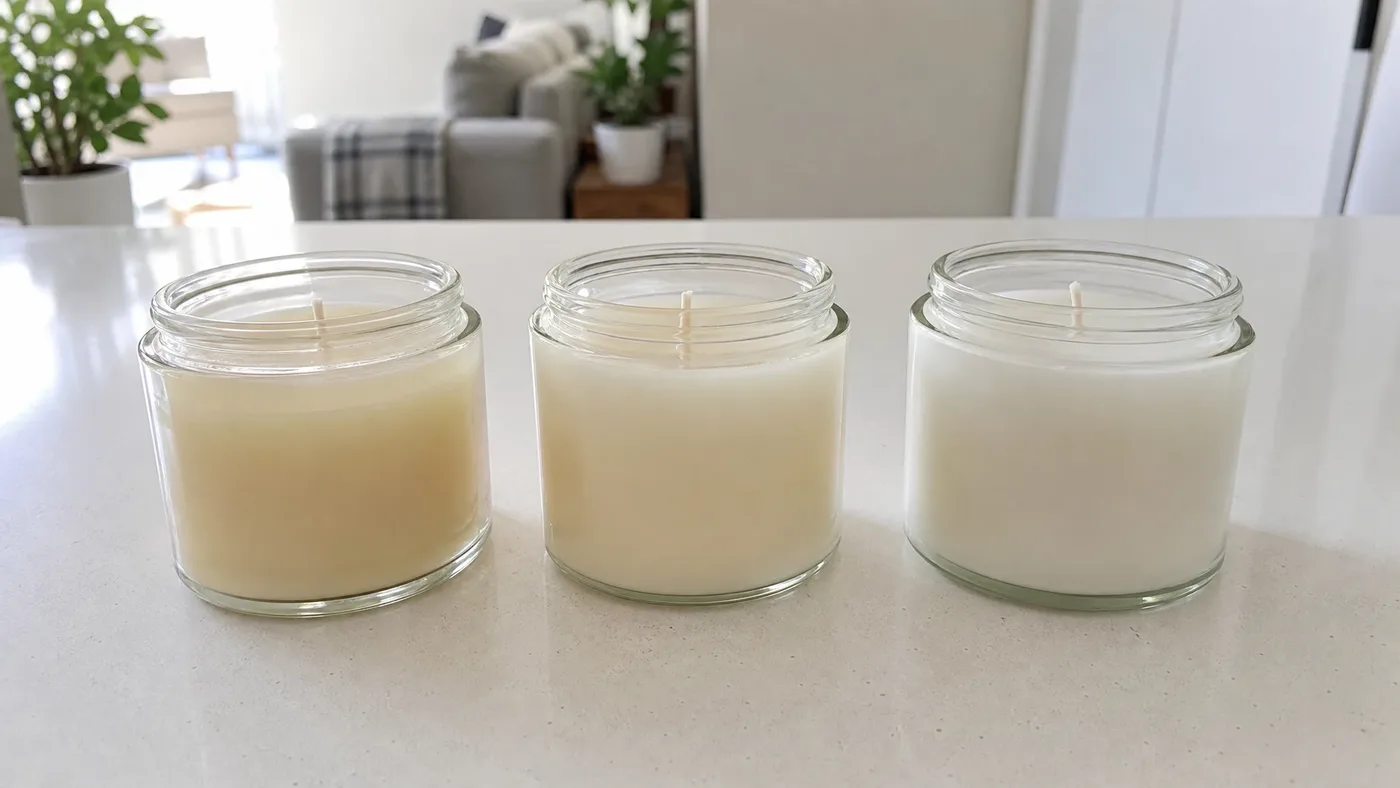
Which Candle Wax Suits Eugenol? A Fair Comparison
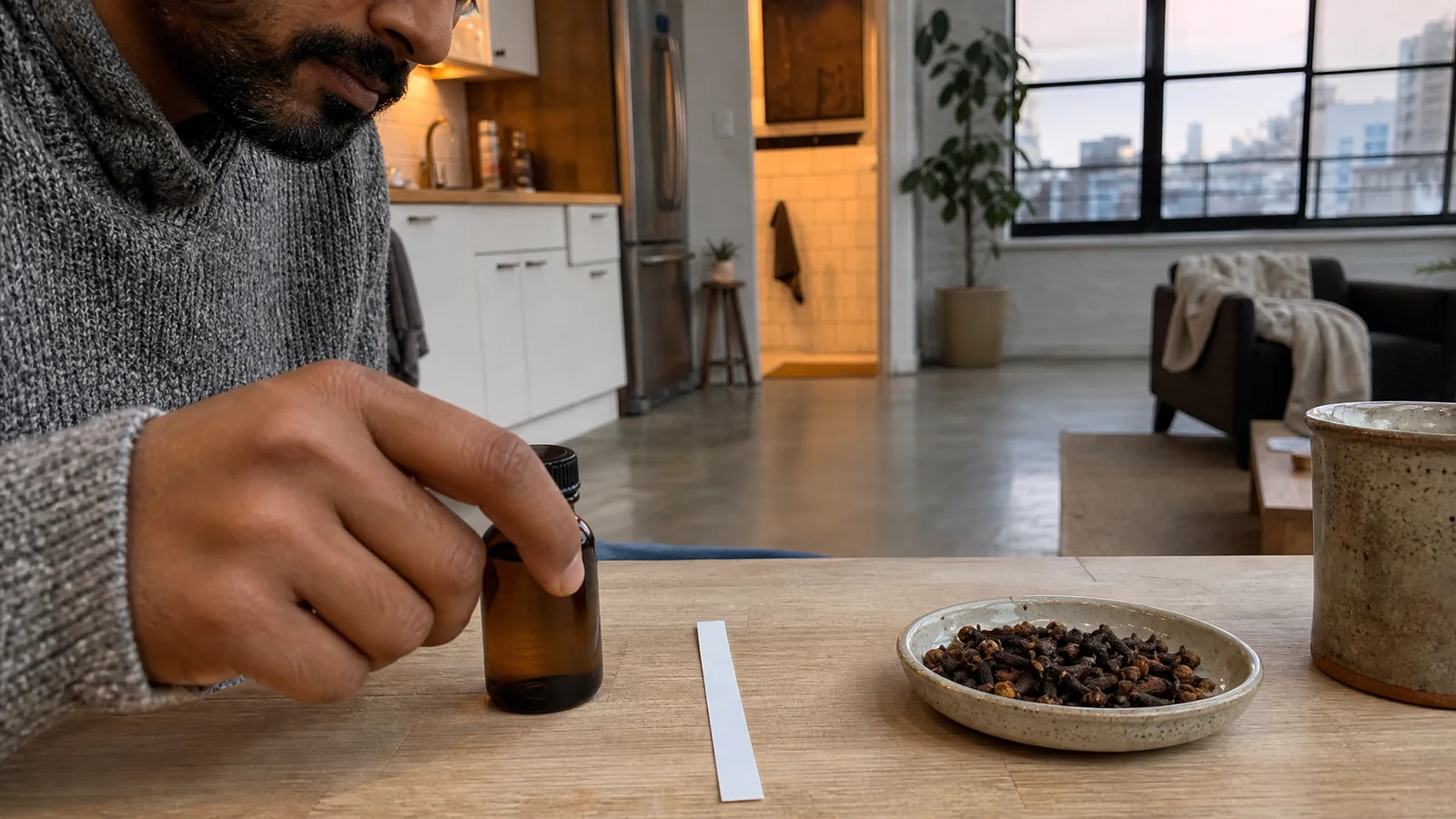
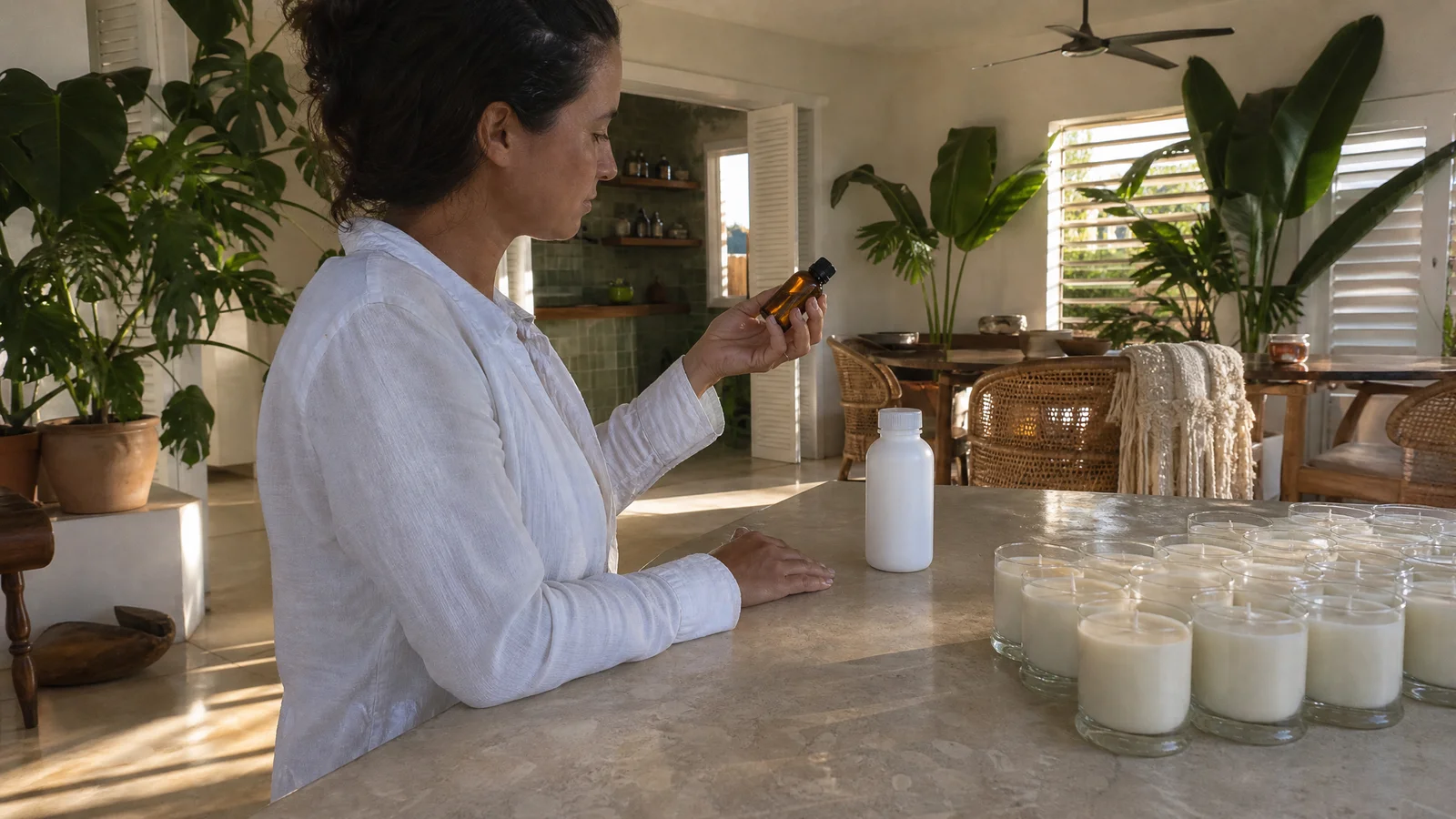
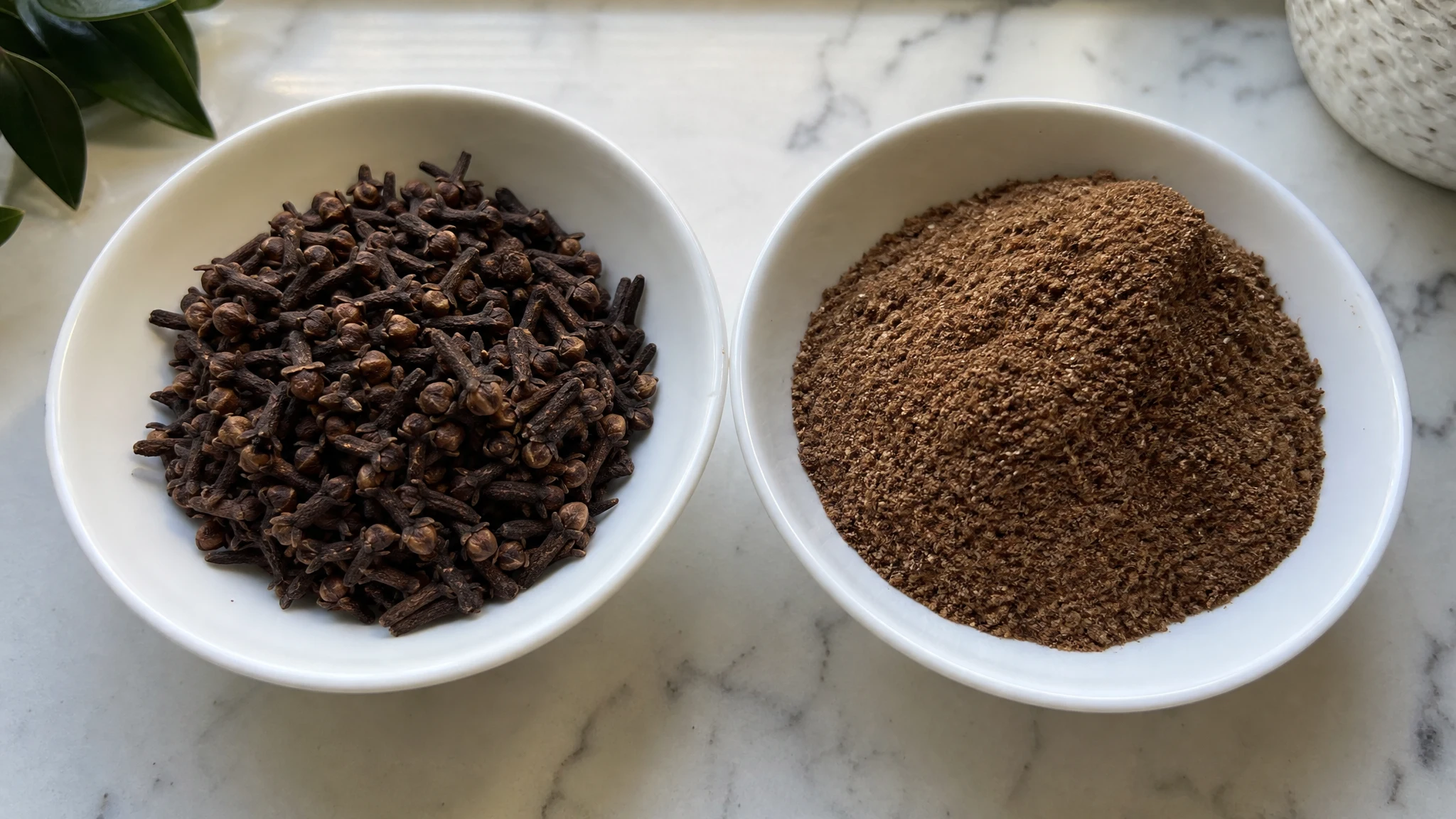
Pour the same spiced fragrance into three waxes and you can end up with three different candles. One holds the scent, one looks creamy by the end of the week, one throws well hot and barely at all cold. Eugenol, the warm clove-and-carnation backbone of many spice blends, is a phenol, and that is a good reason to think about the wax before the wick.

What is actually in the pot
Soy candle wax is hydrogenated soybean oil, which candle makers call soywax, and it was one of the first soy candle waxes studied against paraffin and beeswax (Rezaei, Wang and Johnson, JAOCS, 2002). Paraffin is the petroleum-derived wax. Coconut candle waxes are usually blends: CandleScience describes IGI 6046 as "a proprietary blend of coconut wax and paraffin wax" (CandleScience lab notes), and a soy container wax such as Golden Brands GW 464 is described by its reseller as a blend of soybean oil and specialised soy-based additives (Voyageur Soap and Candle). So "coconut" or "soy" on a label is a starting point. The technical data sheet tells you the rest, and it is worth asking for.
Why a phenol might feel at home in soy
This is reasoning from structure, and we label it as such. Eugenol carries a free phenolic hydroxyl group on a moderately oil-loving molecule (PubChem, CID 3314). A triglyceride wax is full of ester oxygens that can hold on to a hydroxyl; a straight-chain hydrocarbon wax has nothing of the kind. That makes a nice hypothesis for a side-by-side pour: soy might hold eugenol a little differently from paraffin. Whether it shows up as a stronger cold throw, a weaker hot throw or nothing you can smell is what your own comparison settles.
Watch the colour in pale wax
The best-documented colour story in candle making belongs to vanillin. A South African supplier explains that vanillin oxidises, a reaction candle makers call vanillin browning, and that soy wax is more prone to the discoloration than paraffin or coconut wax (SA Candle Supply). That article is about vanilla, not clove. Still, vanillin and eugenol share the same hydroxy-methoxy-benzene ring, and we know eugenol darkens toward amber with air, which is ordinary behaviour for a phenol. So in a pale soy candle it makes sense to photograph the surface at day one, one week and one month, rather than assume it stays white. Our posts on why eugenol darkens and on soap colour cover the molecule's side of the story.
What a load limit really tells you
Wax suppliers publish a maximum fragrance load for all of the fragrance together: about 9% for GW 464 (7% to 9% recommended), and 6% to 8% recommended for IGI 6046. These numbers describe how much liquid the wax can hold before it sweats or pools. They say nothing specific about eugenol. The regulatory side is separate: IFRA places candles of all types in Category 12, negligible skin exposure, and the eugenol Standard lists "No restriction" there (IFRA Standards, 51st Amendment; category from the IFRA Guidance). In other words, IFRA does not cap eugenol in a candle, so the wax's own capacity is the practical ceiling. Amendments change, so check the current one with your supplier. For the loads and rest times of a spiced candle itself, see our spiced candle post.
A fair side-by-side, in a week
- Change only the wax. Same container, same wick series, same fragrance blend by weight, each wax poured in its own supplier's temperature range.
- Weigh in grams. A 300 g pour at a 7% load takes 21.0 g of fragrance. If eugenol is 10% of that blend, that is 2.1 g, or 0.7% of the wax by weight. Write all three numbers on the label.
- Add fragrance the way the supplier says. Both suppliers we read melt to 185 F (85 C), take the wax off the heat, add fragrance and stir for about two minutes. Our flash point post explains why that temperature is worth respecting.
- Rest each wax for its own time. IGI 6046 is advised to rest at least three days, so follow each supplier's number.
- Score cold, then hot. Smell the unlit candle at 24 hours and one week, then the lit candle at hours one, two and four, always the same person, the same room, and an unscented candle for comparison.
- Wick separately. A candle that tunnels in one wax and soots in another is telling you about the wick. Our wicking post goes into it.
Don't forget the cold smell
Part of the pleasure of a spiced candle happens before it is ever lit. Take the lid off and breathe in: that is the cold throw, and it is what a customer meets first on a shelf. Keep a mental note of how each wax carries the spice in the jar, because a candle that smells lovely cold and lovely hot is a happy candle.
A word on soot
Soot belongs to the wax and wick system, and the research agrees. The 2002 soy work reported that paraffin candles produced a considerable amount of soot while soywax candles produced little or none. A 2021 chamber study of five pillar candles found that wax and wick composition strongly influenced soot and particle emissions (Andersen et al., Indoor Air, 2021). Neither study used eugenol, so read them as a reminder to choose the wax and wick as one pair.
We sell eugenol oil only, so waxes, wicks and containers come from a candle-supply shop, along with the SDS and IFRA paperwork for each. A week of weighed, labelled pours will tell you more about your wax than any ranking can.
Sources & Further Reading
- Rezaei K, Wang T, Johnson LA, 2002. Combustion characteristics of candles made from hydrogenated soybean oil. J Am Oil Chem Soc. europepmc.org/article/AGR/IND500743523
- Andersen C et al., 2021. Emissions of soot, PAHs, ultrafine particles, NOx, and other health relevant compounds from stressed burning of candles in indoor air. Indoor Air. pubmed.ncbi.nlm.nih.gov/34297865
- PubChem, Eugenol (CID 3314). pubchem.ncbi.nlm.nih.gov/compound/Eugenol
- IFRA Standards, 51st Amendment, and Guidance for the use of IFRA Standards. IFRA Standards PDF
- CandleScience, Lab notes: IGI 6046 coconut paraffin candle wax blend. candlescience.com
- Voyageur Soap and Candle, Golden Brands GW 464 soy container wax. voyageursoapandcandle.com
- SA Candle Supply, How vanilla affects wax. sacandlesupply.co.za