Eugenol Oil vs Clove Oil: Which Suits Your Formula?
Whole clove oil and eugenol oil share a smell and a parent plant, and they are still different materials. Clove oil is a mixture in which eugenol makes up roughly three-quarters to four-fifths of what a chromatograph sees. Eugenol oil, as we sell it, is one molecule taken out of that mixture. The right one for you depends on whether you want the character of the whole oil or one component you can dose precisely.

What the whole oils contain
The most useful published composition data sits in EFSA's 2023 opinion on clove bud and leaf oils as feed additives. These are the applicant's batches, so they describe those lots rather than clove oil in general, and the figures are percent of chromatographic peak area.
| Oil and method | Eugenol | Beta-caryophyllene | Eugenyl acetate |
|---|---|---|---|
| Bud oil, GC-FID, 7 batches | 82.7% | 6.7% | 8.5% |
| Bud oil, GC-MS, same batches | 75.06% | 13.20% | 7.92% |
| Leaf oil, GC-MS, 6 batches | 82.60% | 13.45% | 0.70% |
Two things stand out. The same bud oil reads about 7.6 points apart depending on the instrument, so a single "eugenol %" means little until you know the method. And bud and leaf oils differ most in eugenyl acetate: around 8% in bud, under 1.5% in leaf. EFSA also reports trace methyl eugenol, 0.039 to 0.128% in the bud oil batches.
How they smell side by side
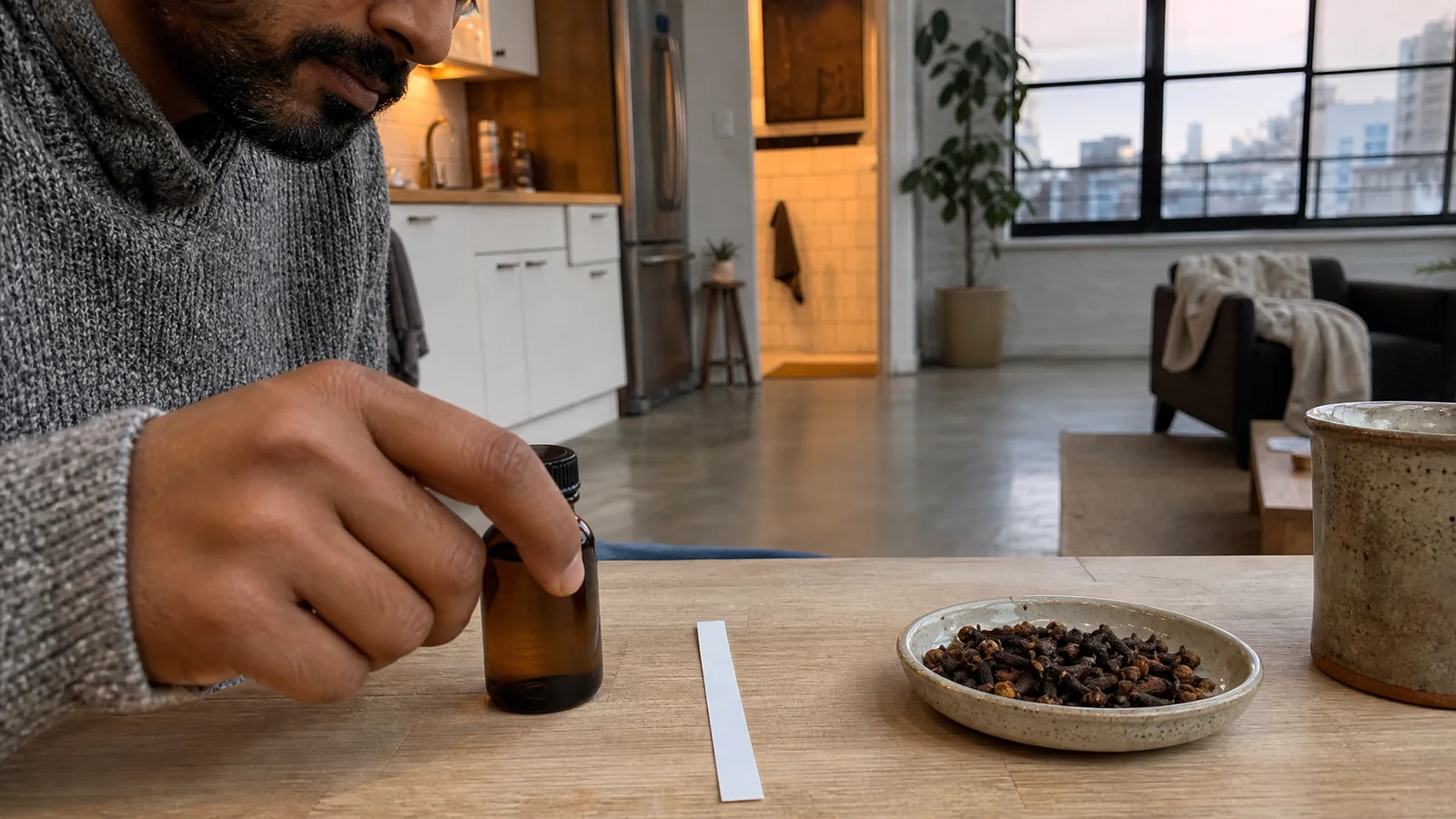
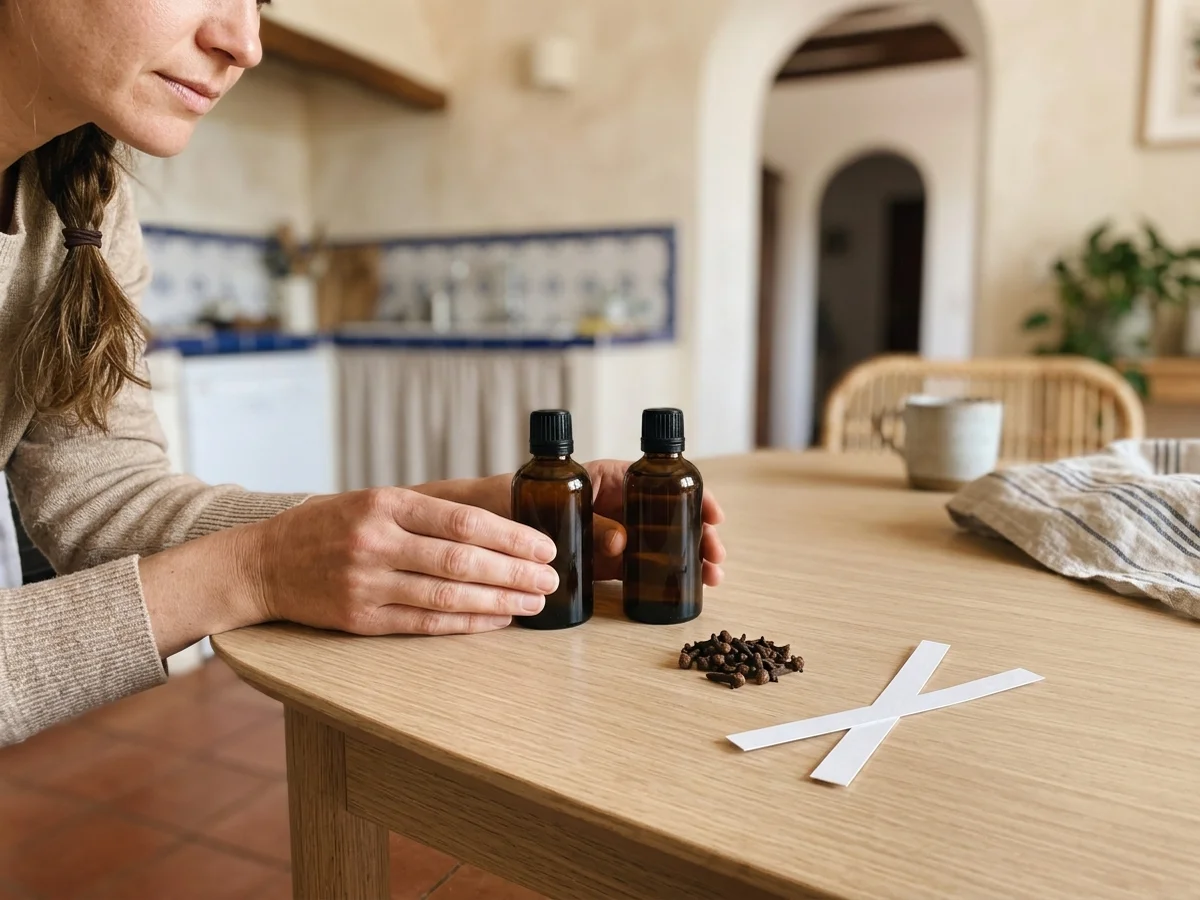
Open a bottle of whole clove oil and a bottle of eugenol oil one after the other and the difference is easy to notice. Whole clove is rounder, with a woody, slightly green background. Ours is warm, spicy and carnation-like, sweeter and more focused. Smelling them side by side on strips is the quickest way to decide which one belongs in your formula.
What narrowing does to a material
Whole bud oil carries a lot more than eugenol: caryophyllene and eugenyl acetate give it breadth and background. Our How We Test page describes the isolate as narrower than the oil it came from, on purpose, and says anyone selling it as a more potent version of clove oil has the relationship backwards. We describe our oil as sweeter and more focused than whole clove. If you want the carnation-like spice facet without the oil's backdrop, an isolate removes variables. If you want the whole oil's roundness, an isolate is a smaller palette.
The physical constants tell the same story. Pure eugenol sits near 1.065 relative density and a refractive index of 1.5405, optically inactive. Clove bud oil in the EFSA batches measured 1.056 to 1.059 and 1.534 to 1.537, with a small negative rotation. The batch on our published Certificate of Analysis reads 1.065 and 1.541, and the certificate shows physical parameters only, so for an assay you would ask us in writing through the contact page. Our certificate guide walks through it.
Why swapping is not one for one
Because an isolate holds more eugenol per gram than a whole oil, a formula cannot move from one to the other by weight. Take the eugenol share of whole oil at 75 to 83% from the figures above: the same weight of a more concentrated eugenol material adds noticeably more eugenol, so the sum has to be redone. Our blend calculation article shows the arithmetic.
A worked example in soap
Here is a calculation from EFSA's figures and IFRA's table, not a recipe. In bar soap (Category 9) the eugenol limit is 4.9%. With bud oil at 75 to 83% eugenol, eugenol alone would allow roughly 5.9 to 6.5% bud oil. Methyl eugenol, however, has its own IFRA Standard, with a Category 9 limit of 0.0017%. At EFSA's 0.039 to 0.128% methyl eugenol in bud oil, that caps the oil at about 4.4% down to 1.3%. So for whole clove bud oil in soap, it is methyl eugenol, not eugenol, that sets the ceiling, and it may be a different figure for a different lot. Our methyl eugenol article explains the difference.
The safety picture matches either way: EFSA says both clove oils should be considered skin and eye irritants and dermal and respiratory sensitisers, PubChem's ECHA roll-up lists H317 for eugenol in 99.8% of 2,820 reports, and IFRA's Guidance counts eugenol from natural oils toward the same total.
Our plain recommendation
If you are unsure, start from the smell you have in your head. If it is a whole spice cupboard, you want the whole oil. If it is a clean carnation-and-clove warmth you can measure out precisely, you want the isolate. We only sell the isolate, so we will say so plainly: the right answer for your bench may well be a bottle from someone else.
Choosing by job
- One component you can dose and calculate: eugenol oil with a documented assay for the lot.
- The breadth of the whole oil: a clove bud or leaf oil from an essential-oil supplier, as we sell neither.
- To know whether the eugenol is plant-derived: an isotope or biobased-carbon report, from whichever supplier.
- Anything for teeth or gums: a dentist. Our eugenol oil is not offered for dental or therapeutic use; our dentistry history article explains why that regulatory history does not carry over to a bench material.
The honest answer is that neither material is better; they are for different jobs. Pick the whole oil for atmosphere and the isolate for control, get the lot's documents, and have a cosmetic chemist look at anything you plan to sell. If the isolate is your pick, you can find it in our shop, and larger sizes for repeat batches are on our bulk page; our guide to buying eugenol oil in bulk lists what to check before you order.
Sources & Further Reading
- EFSA FEEDAP Panel, 2023. Safety and efficacy of feed additives consisting of essential oils derived from the flower buds or the leaves of Syzygium aromaticum. EFSA Journal. PMC10375362
- NCBI PubChem. Eugenol (CID 3314): experimental properties and GHS classification. pubchem.ncbi.nlm.nih.gov/compound/Eugenol
- IFRA. The complete IFRA Standards, 51st Amendment (eugenol pp. 103-105; methyl eugenol p. 303). IFRA Standards PDF
- IFRA, 2023. Guidance for the use of IFRA Standards, 51st Amendment. IFRA Guidance PDF