Which Fragrance Families Already Contain Eugenol?
Here is a surprise from the flower world: most modern carnations barely smell of clove at all. A Japanese study found that most modern carnation cultivars have weak scents dominated by methyl benzoate, and that eugenol is given off in high amounts by some wild relatives and hybrids instead (Kishimoto et al., 2013). The carnation note in perfume is mostly a built idea, and eugenol is the heart of it. That is one hint of how widely eugenol is spread through perfumery.

Florals carry a little
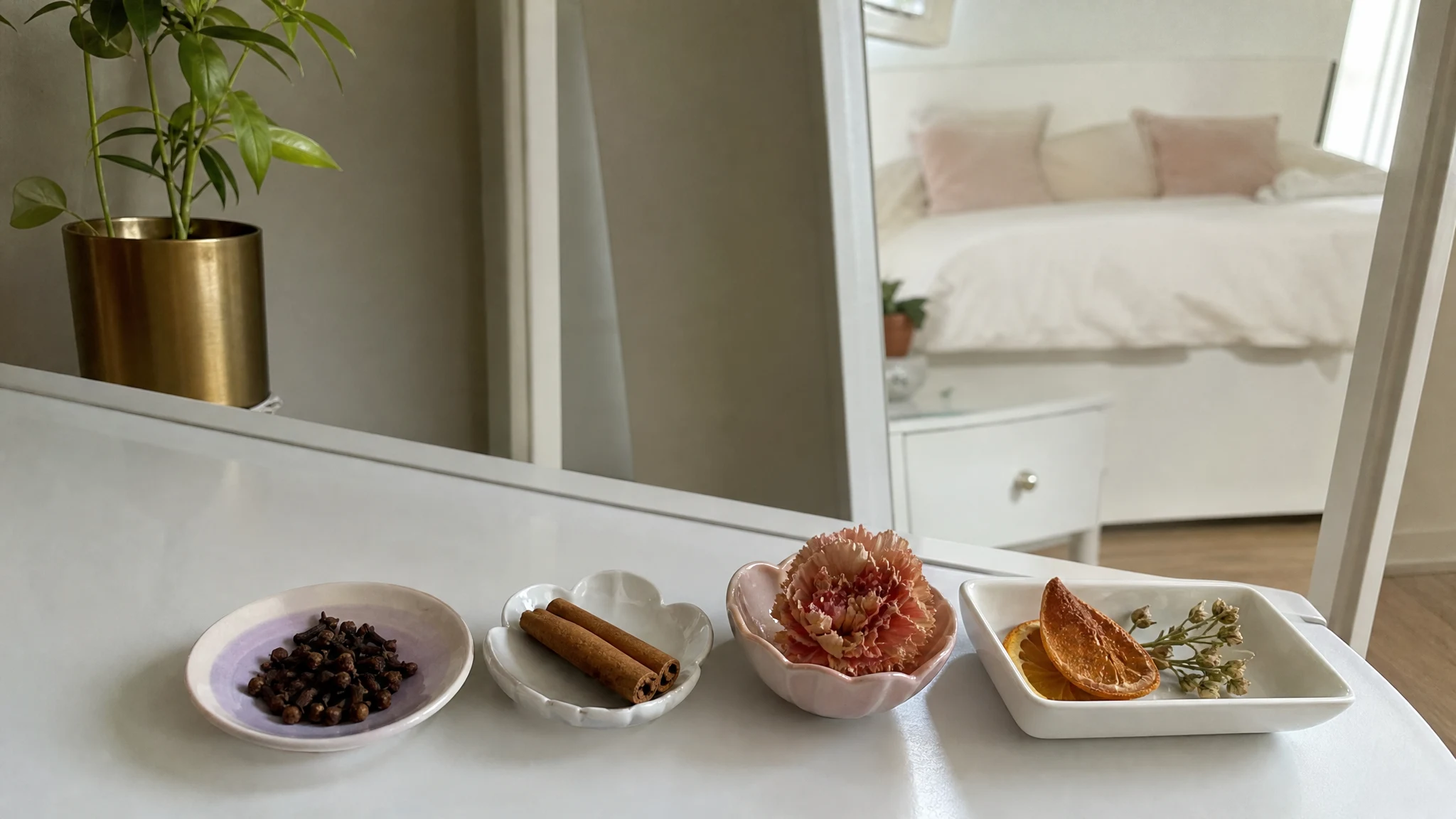
IFRA publishes a non-exhaustive, indicative list of natural materials that contain eugenol (IFRA eugenol Standard, Annex I). Carnation absolute leads the flowers at about 18%. Then come rose absolute at 2.3%, rose oil at 1.2%, jasmine absolute (Jasminum officinale) at 2%, tuberose absolute and ylang ylang oils at about 0.5%, and osmanthus absolute at just 0.07%. For a rose, jasmine and ylang heart, those small numbers add up to a quiet background: 5 g of rose oil, 8 g of jasmine absolute and 6 g of ylang oil per 100 g of concentrate carry about a quarter of a gram of eugenol between them. Our carnation accord guide and soliflore guide show how perfumers build the flower back up.
Spices and herbs carry a lot
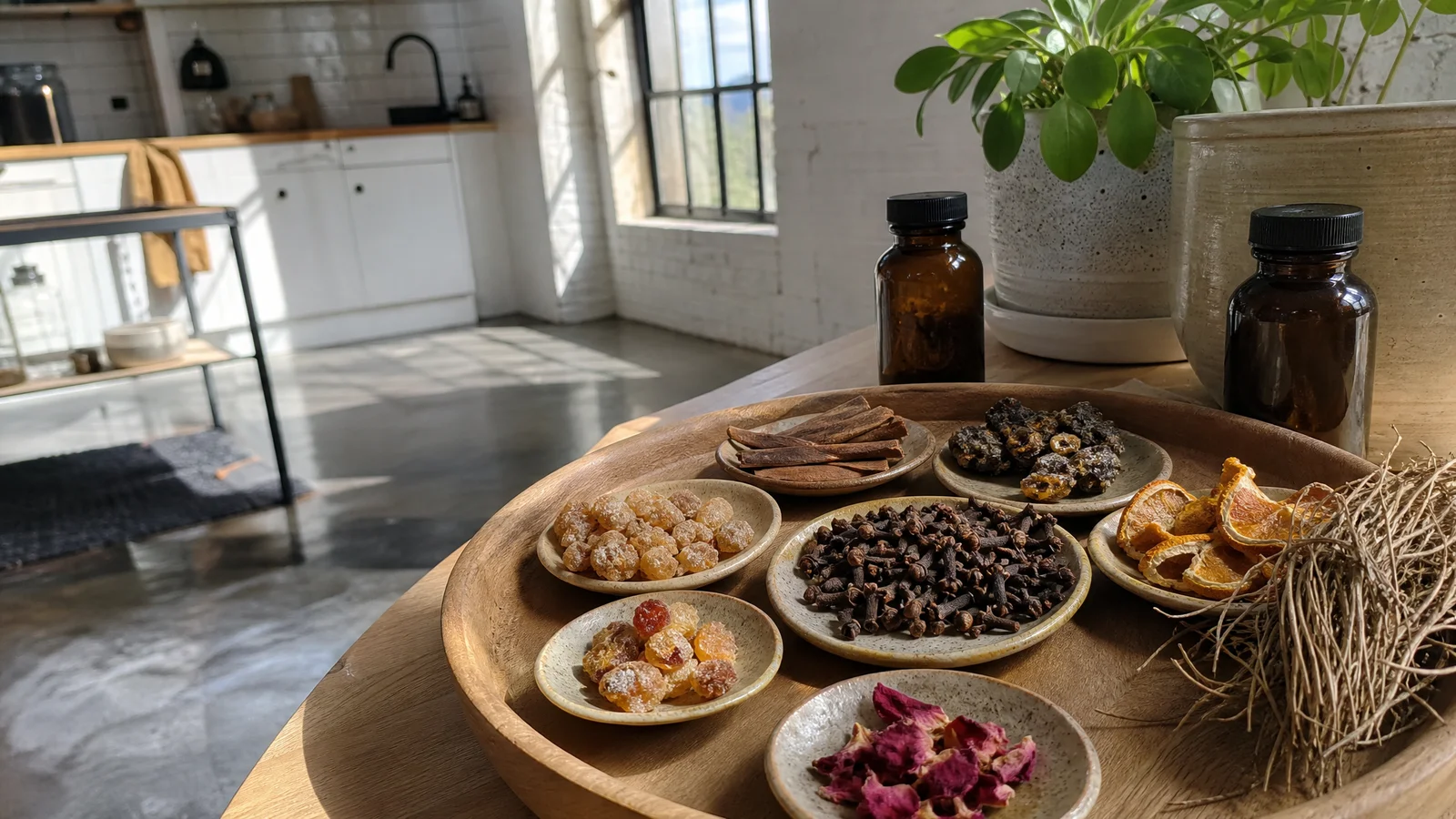
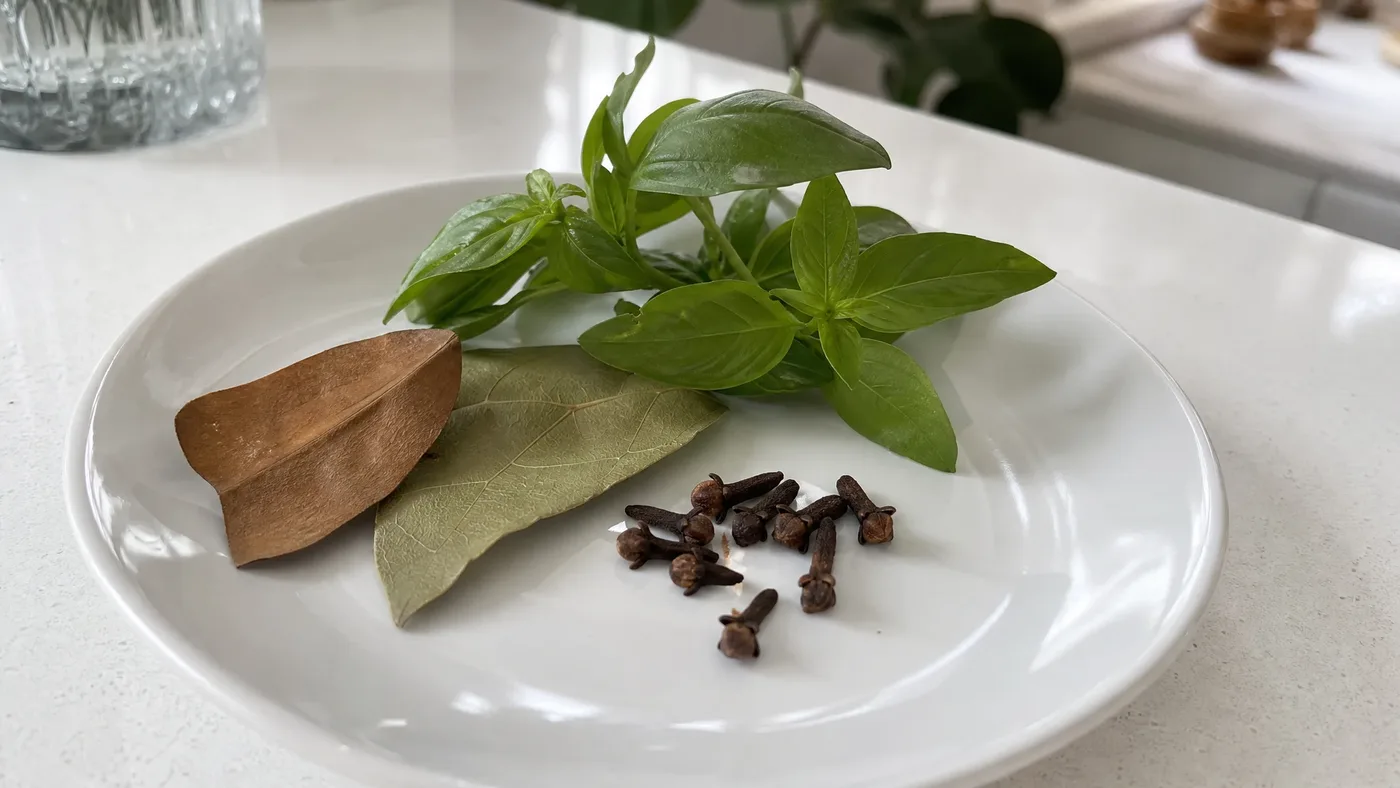
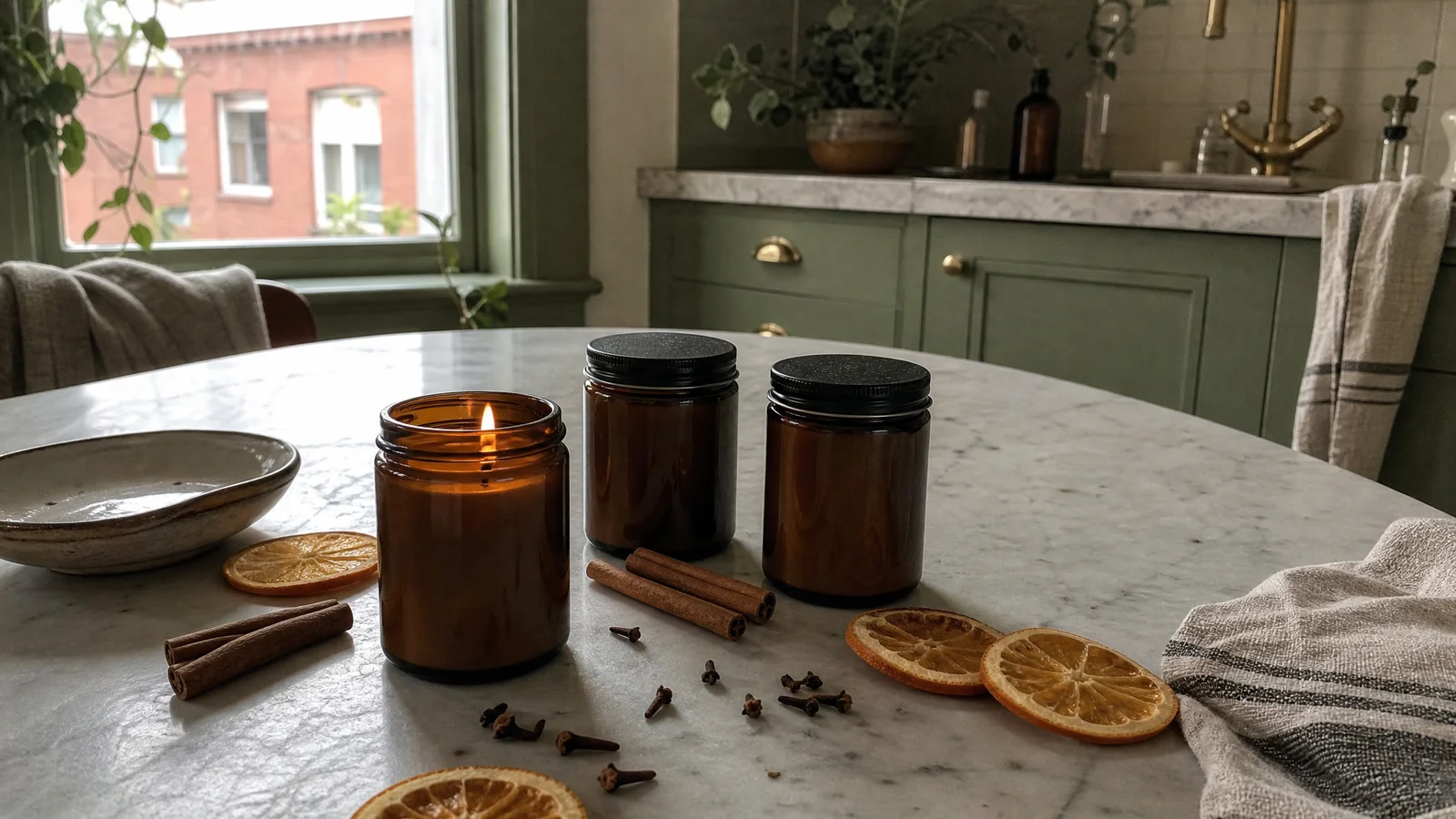
Spices are where eugenol gets loud. The annex lists clove bud oil at about 82%, clove leaf oil at 85%, clove stem oil at 88%, cinnamon leaf oil at 74% and pimenta leaf oil at 83%. West Indian bay leaf oil is also in the same neighbourhood, at 51%. Cassia oil (0.1%) and cinnamon bark oil (2%) are the surprising low entries, and laurel leaf, tarragon and thyme oils come in at a percent or less. So "a little cinnamon leaf" and "a little clove" are, in budget terms, the same eugenol request twice, and a herbal accord built on bay leaf is a eugenol accord whatever the label says.
Amber, once called oriental, is where sweet and spicy meet, and it is the family where eugenol oil makes most sense as a deliberate accent. See our amber skeleton for a worked example.
Woods and fresh families carry almost none
In the entries we read, no wood, moss or oakmoss material is listed, and neither is any citrus, marine, green or fruity material. A fresh or woody perfume therefore gets its eugenol only from whatever spice accent you add, which makes the count easy: the accent is the sum. The tight limits in those families come from other materials, such as isoeugenol (Category 4 limit 0.11%) and oakmoss extracts (0.10%), against 2.5% for eugenol.
Two hearts, side by side
The contrast is easiest to see with numbers. Take the floral heart above at 0.25 g of eugenol per 100 g of concentrate. Now take a spice heart of 3 g cinnamon leaf oil and 1 g clove bud oil, which carries 3 x 0.74 + 1 x 0.82 = 3.04 g, about twelve times as much from a fifth of the oil. At a 20% concentrate that is 0.61% of the finished perfume before any isolate is added, which already sits just under the 0.64% ceiling for body lotion and hand cream (IFRA Standards, 51st Amendment).
That is why we would not call eugenol oil "the warm ingredient". In a spice-led family the warmth probably comes from the naturals already, and the isolate adds a narrower, sweeter edge. In a floral heart there is almost the whole eugenol budget left, which is the case where a small weighed addition is a choice and not a duplicate. The way to decide for your own blend is a smelling strip against the clove or cinnamon you already use; our smelling strip guide shows how.
Start with your nose, then your calculator
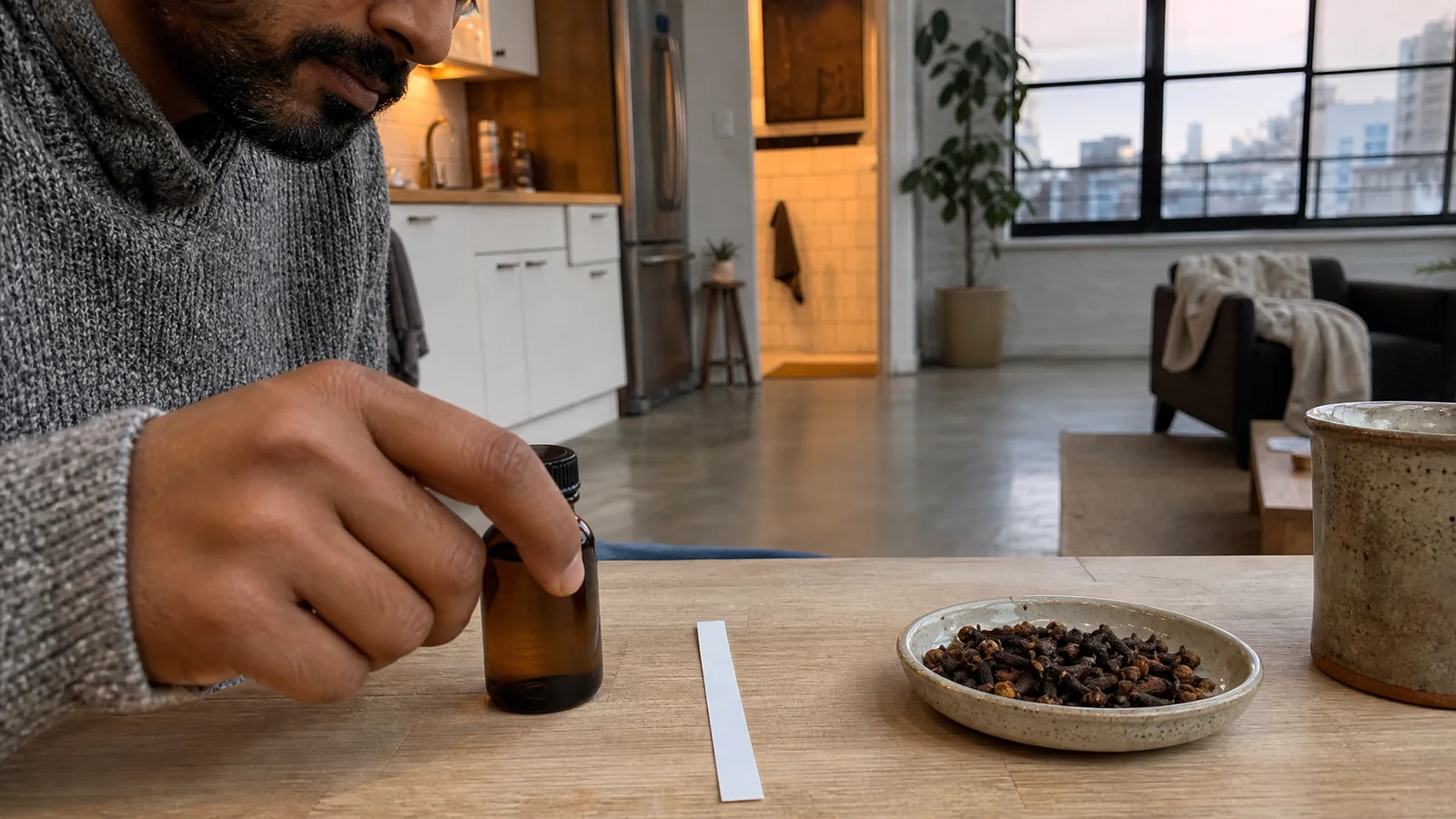
Numbers tell you how much eugenol is present, but they will not tell you whether you can smell it. Set out a strip of the clove or cinnamon you already use, a strip of your floral heart and a strip of your amber base. Smell them one after another, and then again ten minutes later. You will notice that the spicy edge shows up in places you did not expect, and that is useful information before you decide whether an extra pinch of isolate is a good idea.
A method that works in every family
- List every natural in the heart, with its annex figure, or your own GC figure if you have one.
- Multiply each mass by its eugenol fraction, add them up, and divide by the finished product mass.
- Compare with the category limit: fine fragrance is 2.5%, body lotion 0.64%, reed diffusers 4.0%, and candles have no numeric eugenol limit.
- If the sum leaves room, add eugenol oil last from a weighed stock.
Our blend calculation guide works the sum with every contributor, and the IFRA guide explains how the categories are built.
Eugenol is a recognised contact sensitiser. In a 2023 study, 21 of 34 eugenol-allergic people had a positive patch test and the lowest positive concentration was 0.031% (Ofenloch et al., Contact Dermatitis). Anyone with known fragrance allergy should ask a dermatologist or allergist first, and a regulatory specialist should review anything you sell.
Whichever family you work in, eugenol is already in the room, so count it first and then decide if a pinch more is wanted.
Sources & Further Reading
- IFRA Eugenol Standard, Amendment 49, with Annex I
- IFRA Standards, 51st Amendment (eugenol, isoeugenol, oakmoss extracts)
- Kishimoto et al., 2013. Floral scent of carnation and wild Dianthus species and hybrids. J Jpn Soc Hortic Sci 82(2):145-153
- Ofenloch et al., 2023. Allergic reactivity for different dilutions of eugenol. Contact Dermatitis