How to Compare Eugenol Oil Prices by the Gram
"Eugenol oil, per ounce" sounds like a simple number to compare, but two listings can differ in the ounce, the material and the paperwork all at once. We leave prices out of articles because they go stale, and our shop page always carries the current ones. What we can give you is the method that turns any two quotes into the same unit, and a sense of what a gap between them usually means.

Start with grams
Eugenol oil is sold by the ounce, pound, millilitre and kilogram, and sellers do not always say whether an ounce is a weight or a volume. For a liquid this dense, that matters. PubChem lists eugenol's density at 1.0652 g/cm3 at 20 C, and the Certificate of Analysis we publish for one batch prints 1.065. Using 1.065:
| Unit on the listing | Grams of eugenol oil |
|---|---|
| 1 fluid ounce (29.57 ml) | about 31.50 g |
| 1 ounce by weight | 28.35 g |
| 1 pound | 453.6 g (425.9 ml, or 14.4 fluid ounces) |
| 1 millilitre | about 1.065 g |
Divide the quoted price by the grams. The same printed number is about 10% cheaper per gram under the fluid reading, and a "16 oz" bottle is about 504 g if fluid and 454 g if by weight, a gap of roughly 50 g. That is just arithmetic about density, and it is the first thing we check before calling any listing cheaper than another.
Is it the same molecule?
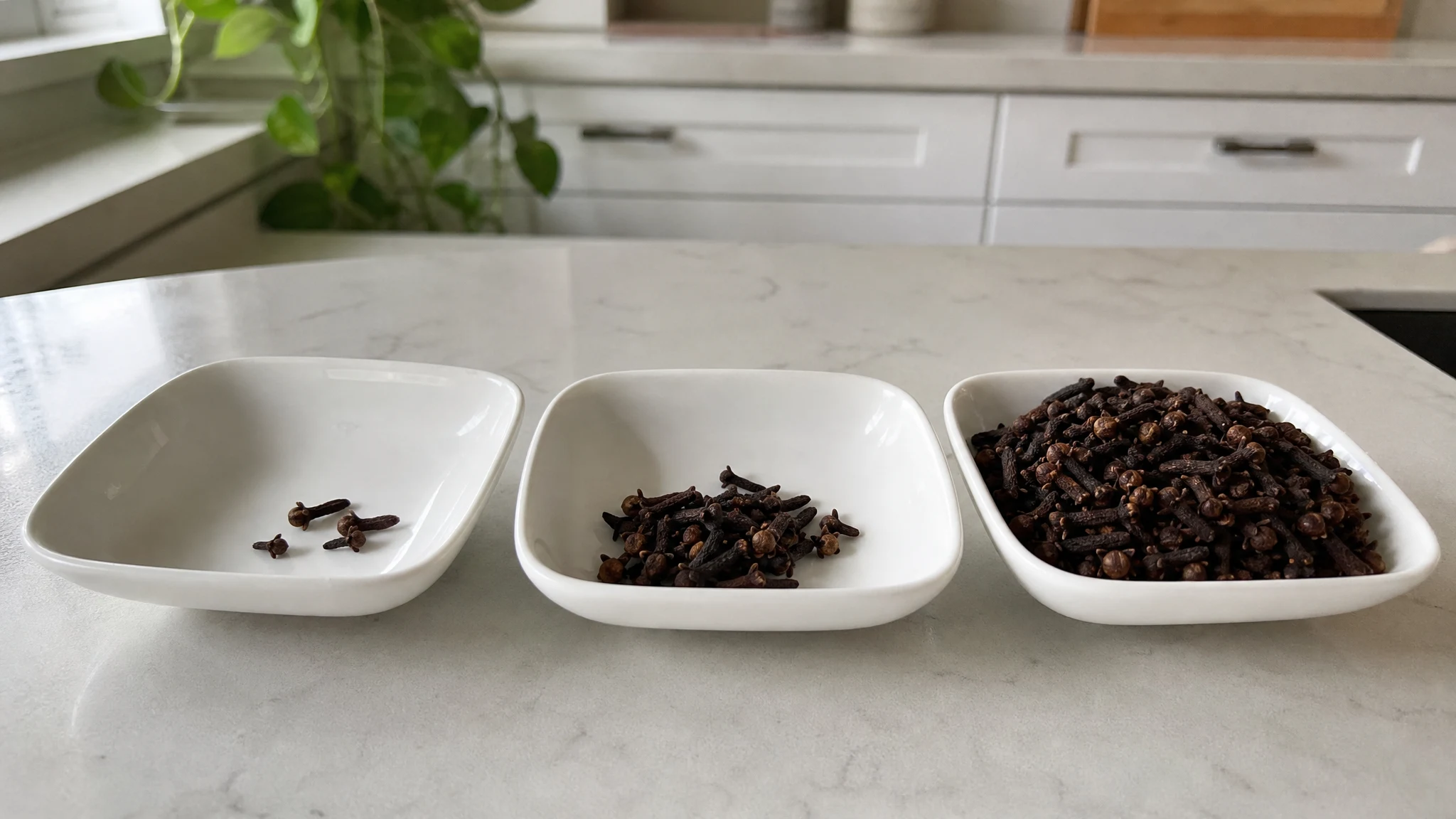
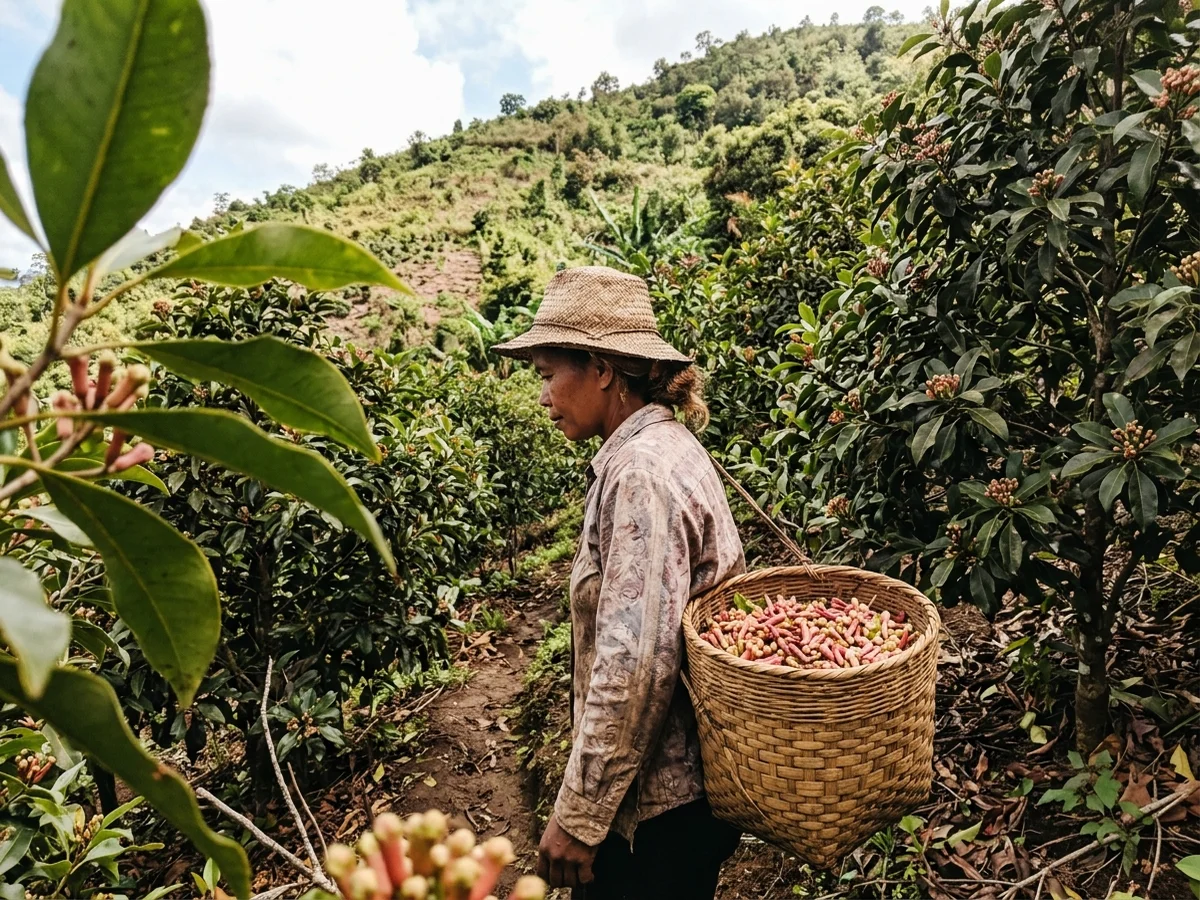
"Eugenol" on a listing can be clove-derived or synthetic, and the two have different supply chains. Solvay's 2021 press release announced a high purity synthetic eugenol aimed at uses where natural origin is not essential, explaining that it wanted to offset quality, supply and price fluctuations in sourcing eugenol from cloves. That tells you the natural route's price follows clove supply. Reasoning from it, two "eugenol" listings far apart in price may simply be comparing different origins, and a listing that does not say which is asking you to guess. Our natural versus synthetic article explains how each is made.
Check what the purity number was measured with
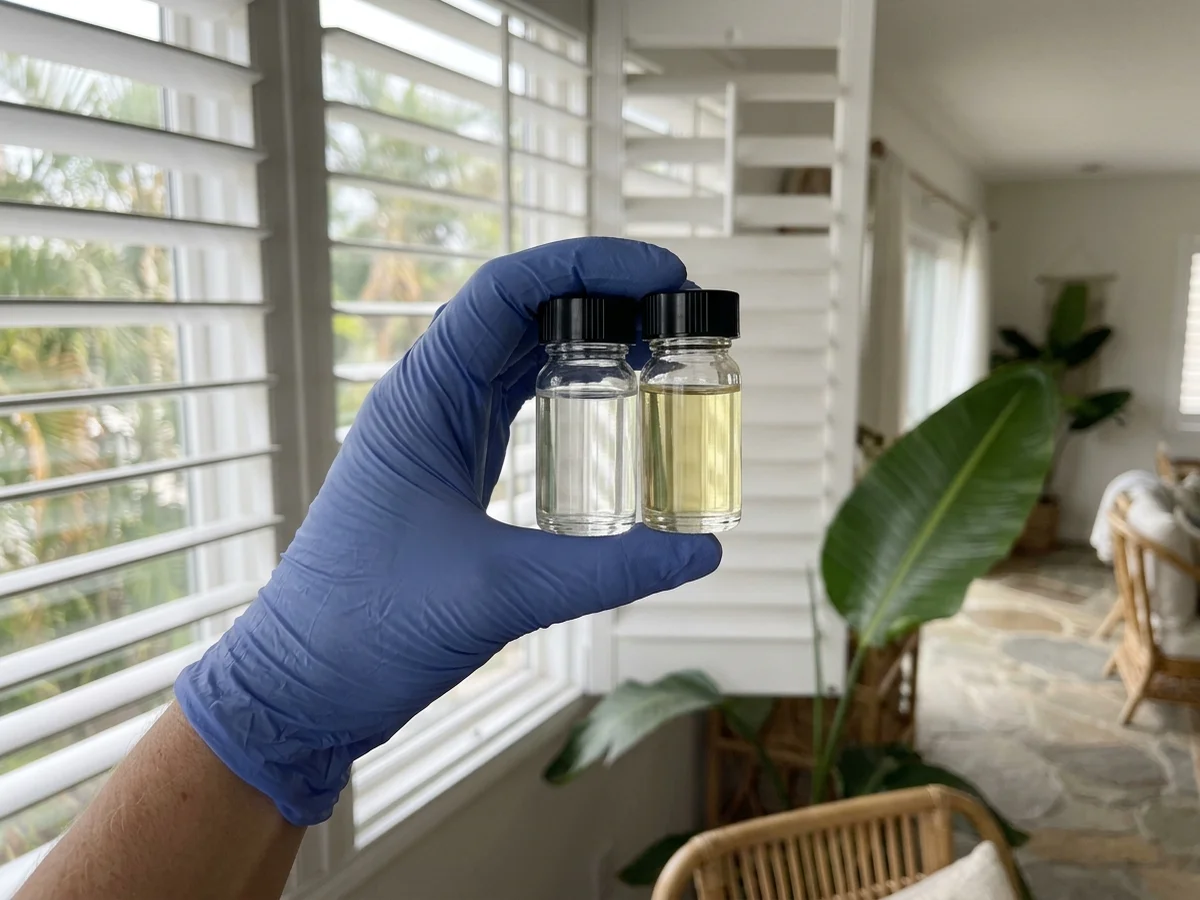
A purity figure only compares with another from the same method. EFSA's 2023 opinion on clove oils shows it neatly: the same seven batches of one bud oil average 82.7% eugenol by GC-FID and 75.06% by GC-MS, about 7.6 points apart from method alone. That was a whole oil rather than an isolate, so applying it to an isolate is an inference, but the lesson holds: "98%" on one sheet and "99%" on another may not rank the way they look. Ask which method, and for the chromatogram.
Before you compare a single price, decide how much you will actually use in a year. A tiny bottle that is used up in one project and a large pack that sits half full are very different purchases, and the cheaper number is not always the better deal.
What pack size should and should not change
Every size of our eugenol oil comes from the same standard, with no separate bulk grade, so moving up a size changes the quantity and not the material. If another seller describes a larger pack as a different grade, ask in writing what differs, since "grade" is not a defined term for eugenol the way an ISO number is for a whole clove oil.
Bigger packs also ask for a bit of planning. Eugenol darkens toward amber once air gets at it, and a part-used bottle ages faster than a sealed one. Our guidance is typically 2 to 4 years tightly capped in a cool, dark place. A lower price per gram on a pack you use half of is not a saving, which is why our first-order article sizes a purchase from batch arithmetic. If bulk is the goal, our wholesale page offers a sample bottle of any size, bottled from the same lots, to try before you commit.
A one-page quote sheet
Make a simple sheet with one row per listing. Give it columns for seller, pack size and unit, grams after conversion, which document comes with it, and any question you still need to ask. Fill it in with the quotes you have, and let the gaps show you what to ask next. Having every quote in the same unit makes the comparison almost boring, which is exactly what you want from a purchasing decision.
When one quote sits far below the rest
Scale, packaging, origin and documentation can all move a price, so a low number proves nothing alone. It is a good prompt for a few questions.

| What you see | What to ask |
|---|---|
| No CAS number or origin | Which molecule exactly (eugenol is CAS 97-53-0), and clove-derived or synthetic |
| A purity figure with no method | GC-FID or GC-MS, and the chromatogram for the lot |
| "Natural" claimed | A biobased-carbon or isotope report for the lot, from a named lab |
| A certificate with no lot number | The certificate for the lot you will receive |
| Ounces without a definition | Weight or fluid, then divide as above |
Our certificate guide shows which of these a physical-constants certificate can answer. The one we publish covers one batch and lists appearance, smell, relative density and refractive index; the best-by date printed on it is 07/21/2026. For an assay, chromatogram or isotope result on your lot, write to us through the contact page, and ask any other supplier the same way. Larger sizes are described on our bulk page and wholesale page.
Whoever you buy from, compare in grams, read the method behind the purity figure, and treat a price far below the rest as a prompt to ask for paperwork.
A comparison sheet turns a confusing page of listings into a short list of questions. Fill it in once and you will find the next order goes much faster.
Sources & Further Reading
- NCBI PubChem. Eugenol (CID 3314): experimental properties, density and stability. pubchem.ncbi.nlm.nih.gov/compound/Eugenol
- Solvay, 2021. Solvay launches Eugenol Synth for fragrance applications (press release, 28 January 2021). Solvay press release
- EFSA FEEDAP Panel, 2023. Safety and efficacy of feed additives consisting of essential oils derived from the flower buds or the leaves of Syzygium aromaticum. EFSA Journal. PMC10375362