Eugenol and Pets: What to Put on the Label
If you scent products that end up in homes, sooner or later someone asks whether they are fine around the cat. With eugenol the honest answer starts with caution, and it is worth knowing why before you write a label.

What the poison-control groups say
The ASPCA states that cats are especially sensitive to essential oils, notes that swallowing a significant amount could bring digestive upset, nervous system depression and liver damage, and says it would not recommend using essential oils in areas pets can reach unless the pets are supervised or a veterinarian approves (ASPCA). Pet Poison Helpline says essential oil toxicosis can affect all species but cats and birds are at greatest risk, and clove appears in its list of oils that can cause poisoning (Pet Poison Helpline).
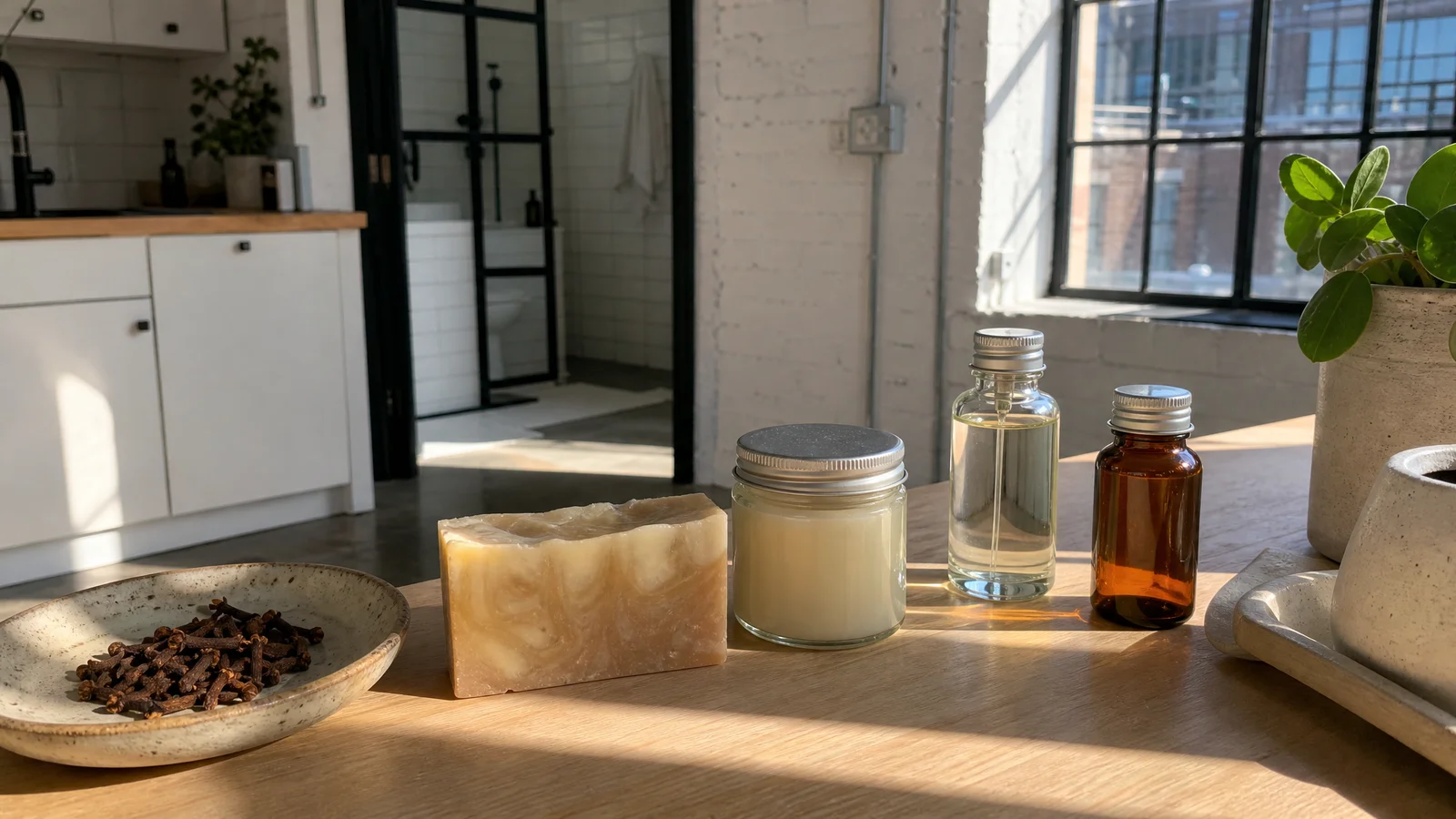
Our eugenol oil is a refined isolate rather than an essential oil, and we sell it as an external fragrance material. That distinction does not change our advice. It comes from clove, eugenol is the main component of clove oil, and we keep it away from animals as a matter of course.
Why cats get the most attention
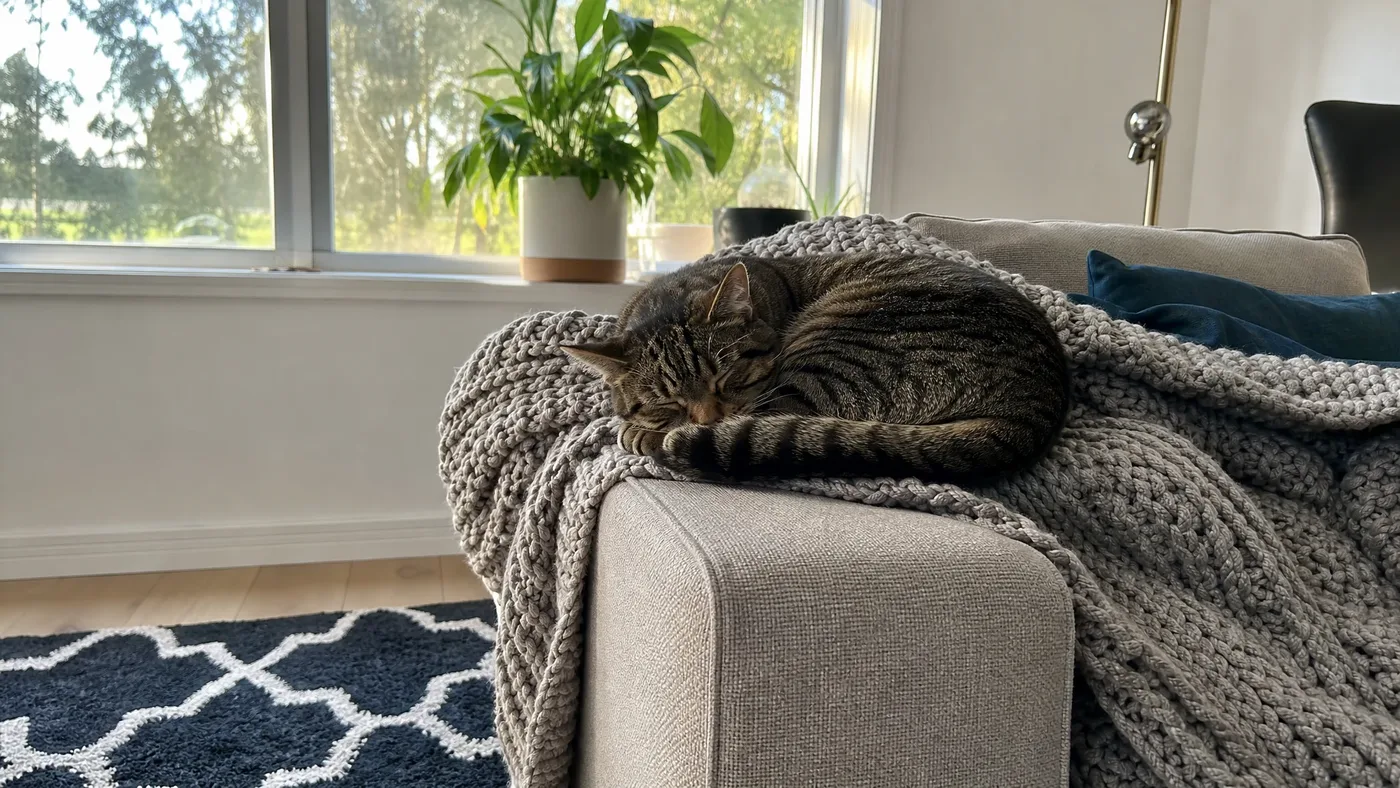
Cats lack a working version of a liver enzyme gene called UGT1A6, which helps clear phenolic compounds. A 2011 study traced that loss to somewhere between 11 and 35 million years ago and found it in every living cat; among 22 other carnivores, only the brown hyena and northern elephant seal showed the same kind of disabling change, and all of them are strict meat eaters (Shrestha et al., PLoS One, 2011). The authors were explaining cats' sensitivity to drugs such as acetaminophen and aspirin, not studying fragrance. Eugenol is a phenol, so it is reasonable to read the finding as a reason for extra care. That is an inference and not a measured threshold.
Think like the animal in the room
The easiest way to catch a problem is to walk through your product from a pet's point of view. Cats jump on shelves, birds sit near the warm air above a candle, dogs find the low table with the little dish on it. Look at where your product will sit and ask what is within reach, what is at nose height and what could be knocked over. A few seconds of that thinking tells you more than a long checklist.
Thinking about how exposure happens
For a maker, the useful question is how an animal could meet the product. Three routes are worth keeping in mind, and the ranking is our reasoning, not data.
- Swallowing is the one the ASPCA warning addresses: a spilled bottle, a potpourri bowl, a wax melt dish, or sprayed fabric that gets licked.
- Skin contact comes from wet floors and freshly scented fabric. NOAA's CAMEO Chemicals entry calls eugenol a primary irritant and sensitizer, which describes human exposure, so applying it to animals is an extrapolation.
- Breathing depends on the format. A passive reed diffuser or a candle in a big room is a modest source, while a mist or spray puts more into the air.
Our guides for those formats are reed diffusers, wax melts and the room and linen spray, which puts the most liquid into a room.
It is also worth remembering that a home is rarely just one room. A scented candle in the lounge, a diffuser in the hall and a bar of spiced soap by the sink are three small decisions, and a cat that wanders between them meets all three. Think about the whole house, not only the product in front of you.
What goes on the label
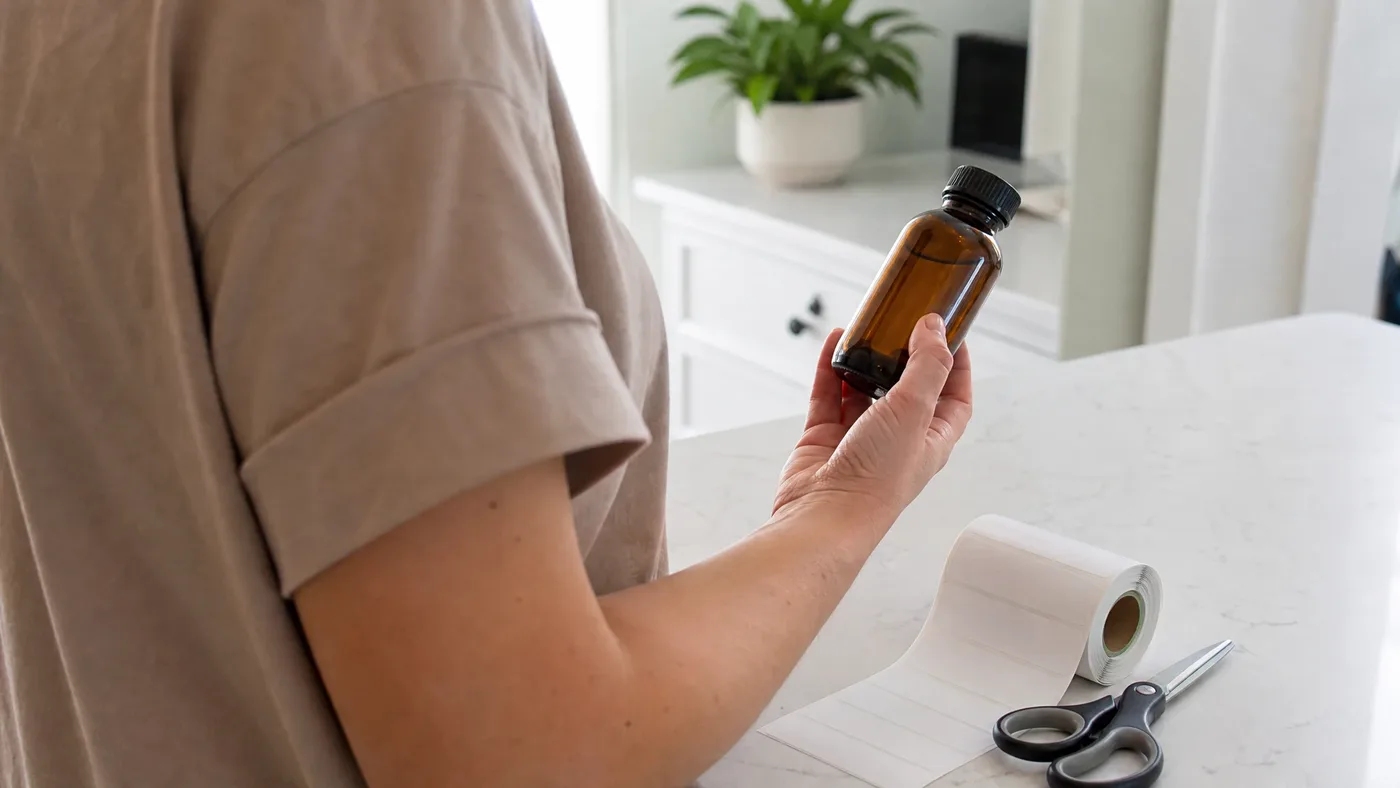
Skip words like pet-safe, pet-friendly or "natural, so fine". Nothing we have read supports them. Say plainly that the product contains an eugenol-bearing fragrance, keep it out of reach of children and pets, and add that it should not be used in rooms where pets, particularly cats and birds, cannot leave. Include your supplier's safety data sheet with wholesale orders. Anything stronger than that, such as a "pet-safe candle", needs a veterinarian's sign-off and a regulatory specialist, and it is not a call we can make for you.
Small habits that help
- Keep bottles capped and stored high, in a closed cupboard, rather than on an open shelf.
- Wipe up spills at once and wash your hands after handling the neat oil, since a pet greeting you at the door meets whatever is on your hands.
- If you sell scented goods, tell customers plainly where not to use them, in words a busy person will read.
- Let any room that has been scented air out, and make sure animals can always leave it.
None of this is complicated, and all of it comes from the same instinct: treat a concentrated fragrance material with respect, and give the animals in the house room to get away from it.
If an animal has been exposed
Call your veterinarian or a poison-control service right away, and have the product name, the amount, the timing and the safety data sheet ready. Do not wait for symptoms.
We sell a single material, an external eugenol oil, and we ask the people who buy it to treat animals in the home the way the poison-control groups do: with room to leave, and a closed bottle on a high shelf.
Whatever you make, a short, plain line on the label and a high shelf for the bottle do more good than any amount of worrying.
Sources & Further Reading
- ASPCA. Pet Poisons: Be Mindful of these Household Products and Cleaning Agents. aspca.org
- Pet Poison Helpline. Essential oils. petpoisonhelpline.com/pet-poison/essential-oils
- Shrestha B, et al., 2011. Evolution of a major drug metabolizing enzyme defect in the domestic cat and other felidae. PLoS One 6(3):e18046. PubMed 21464924
- NOAA. CAMEO Chemicals: Eugenol. cameochemicals.noaa.gov/chemical/20399