Shipping Eugenol Oil: Safety Data Sheets and Customs
A bottle of eugenol oil does not need a hazard label to cross the country, but a 400 lb order is a freight conversation, not a parcel. The difference comes down to a few numbers on a safety data sheet, and they are easy to read once you know where to look.

What the safety data sheets say
Two supplier sheets for eugenol agree on the headline. ChemScene's sheet for 98% eugenol lists DOT, IMDG and IATA transport as "Not dangerous goods" (ChemScene SDS), and the Central Drug House sheet says the same for road, sea and air (CDH SDS). Both sheets also carry the sensitiser statement (H317) and eye irritation (H319).
The detail worth reading is the environmental line. ChemScene flags eugenol as toxic to aquatic life, while CDH prints the same wording in its ecology section along with fish and water flea figures. Suppliers classify for their own product, so sheets for the same CAS number can differ. The sheet that governs your shipment is the one for your lot, and we suggest requesting it in writing.
Why flash point settles the fire question
US hazardous materials rules call a liquid flammable at a flash point of 60 C or lower, and combustible between 60 and 93 C (49 CFR 173.120). PubChem lists eugenol's closed-cup flash point above 100 C (PubChem, eugenol), and the two sheets print 110 C and 112 C. Reasoning from those figures, neat eugenol sits outside both fire categories, which is why a small bottle ships as ordinary goods. A blend is a different matter, since a lower-flash ingredient such as a citrus oil or alcohol governs the mixture.
The marine pollutant wrinkle
The aquatic-toxicity wording matters because US rules treat marine pollutants separately. In non-bulk packaging they are generally excepted for highway, rail and air, but not when any part of the trip is by vessel, and packages of 5 L or less carry additional exceptions (49 CFR 171.4). We read that as an outline, not legal advice. Whether a given lot is classed as a marine pollutant is the classifier's decision, and a dangerous-goods consultant or your carrier can confirm.
What to expect from us on timing
Orders ship within one to two business days from our US-based facility, and the larger sizes may need a little extra handling. Bulk sizes run 5, 25, 100 and 400 lb, with more than 400 lb available on request. At the density on our Certificate of Analysis (1.065), 400 lb is about 181 kg, or roughly 170 L, so plan on freight, a pallet and a loading dock. Ask how it will travel and how it is packed before you pay. The bulk page and wholesale form are the places to start, and international questions go through the contact page.
Paperwork you will be glad to have on file
Shipping is mostly a paperwork game. Keep the lot number, the invoice, the safety data sheet and the certificate together in one folder, on paper or on screen, so that when a carrier or a customs officer asks a question you are not hunting through old email. A boring folder saves an exciting afternoon.
The tariff line
The US Harmonized Tariff Schedule has a heading for it, 2909.50.40.10, described as "Eugenol and isoeugenol" (USITC HTS search). The search did not return a duty rate, so we are not quoting one. A licensed customs broker can confirm the right code and the duties for your destination.
If you ship something you make with it
Your finished product is its own material. A perfume oil, diffuser refill or room spray takes its fire class from the lowest flash point among its ingredients, and anything containing alcohol or water behaves differently from the isolate. Gather the sheet for every ingredient, work out the blend, and give your carrier the sheet for the finished product. If a carrier refuses a parcel, ask which rule it is applying, since a carrier's own policy can be stricter than the regulation. Our flash point article covers candles.
Small habits for the day the box arrives
- Open the box somewhere a leak would not matter, on a tray or a tiled floor rather than a good rug.
- Check that the cap is tight and the bottle is upright before it goes on a shelf.
- Write the date received on the label with a marker. It makes rotating stock easy later.
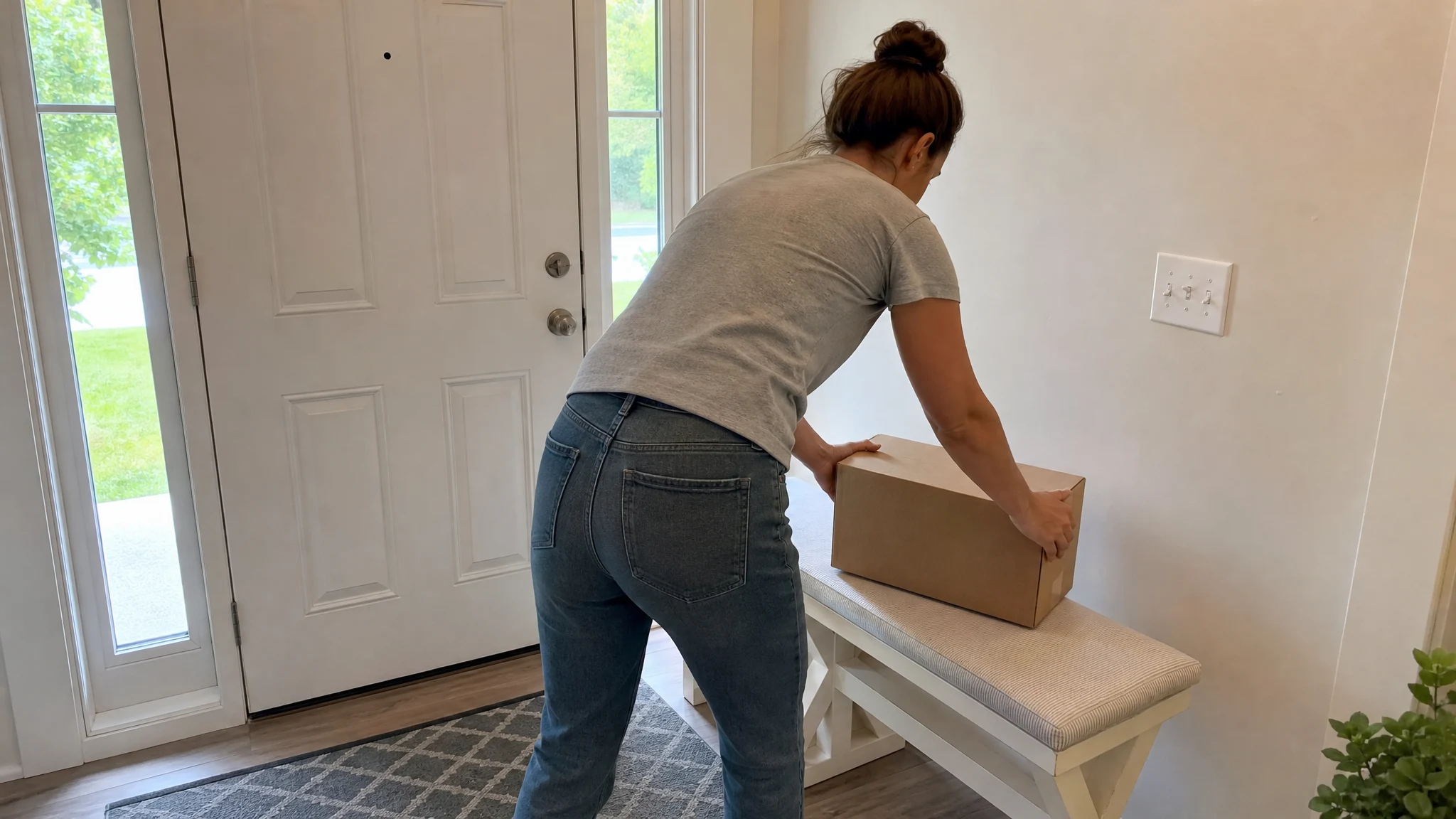
- Keep the outer packing for a day or two, until you are sure nothing has seeped.
The first thing you will notice when you open a fresh bottle is that warm, clove-like sweetness, a little more focused than whole clove. It is a pleasant moment and a good reminder to put the cap straight back on.
What to ask any supplier, and what to do on arrival
Ask for four things in writing: the lot's safety data sheet, the Certificate of Analysis, an IFRA certificate if you sell fragrance products, and an invoice that names the product the way customs will. Our guide to reading the certificate explains what ours covers.
When the box arrives, treat the contents as a skin sensitiser: gloves to open a leaking bottle, tight cap, cool and dark. Eugenol melts at about -12 to -10 C according to the ChemScene sheet, so winter freight is not a worry. Our handling article covers spills.
None of this is glamorous, but a little care at the door keeps the fun part, the scent bench, waiting for you.
Sources & Further Reading
- ChemScene LLC. Safety data sheet, Eugenol 98% (stabilized with TBC), CS-7807. file.chemscene.com
- Central Drug House (P) Ltd. Safety data sheet, Eugenol, CAS 97-53-0. cdhfinechemical.com
- US Government. 49 CFR 173.120, Class 3 definitions. ecfr.gov
- US Government. 49 CFR 171.4, Applicability of the HMR to marine pollutants. ecfr.gov
- US International Trade Commission. Harmonized Tariff Schedule, search for eugenol. hts.usitc.gov
- National Library of Medicine. PubChem, eugenol, CID 3314. pubchem.ncbi.nlm.nih.gov/compound/Eugenol