Eugenol in Cold Process Soap: Colour and Scent
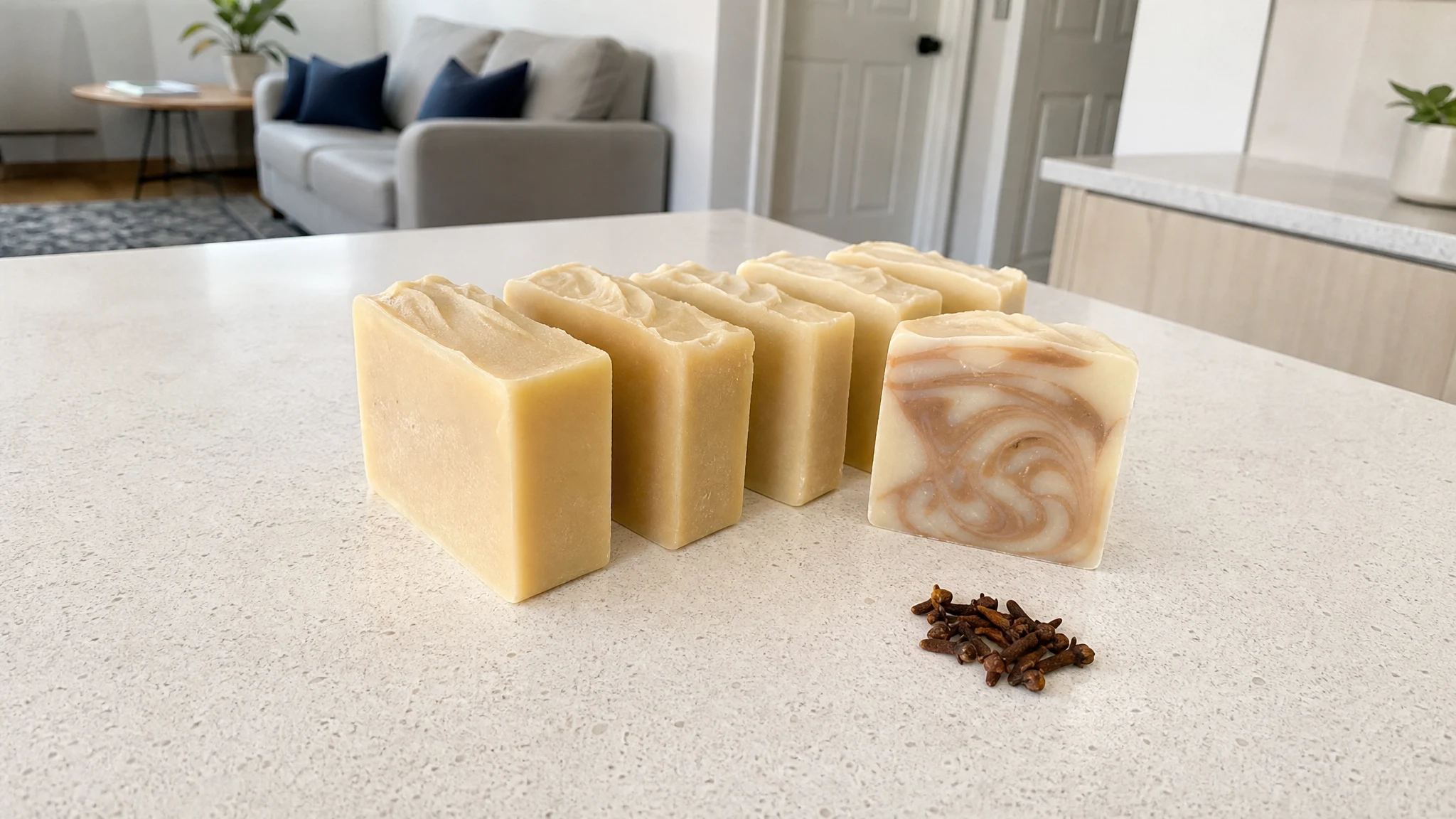
Make a bar of cold process soap with a spice oil and you may unmould something a few shades deeper than the batter you poured. With eugenol that is not a mystery, and it is not a failure either. It is chemistry you can plan a recipe around, and some of the nicest spiced bars lean into it.

Why eugenol and lye get along differently
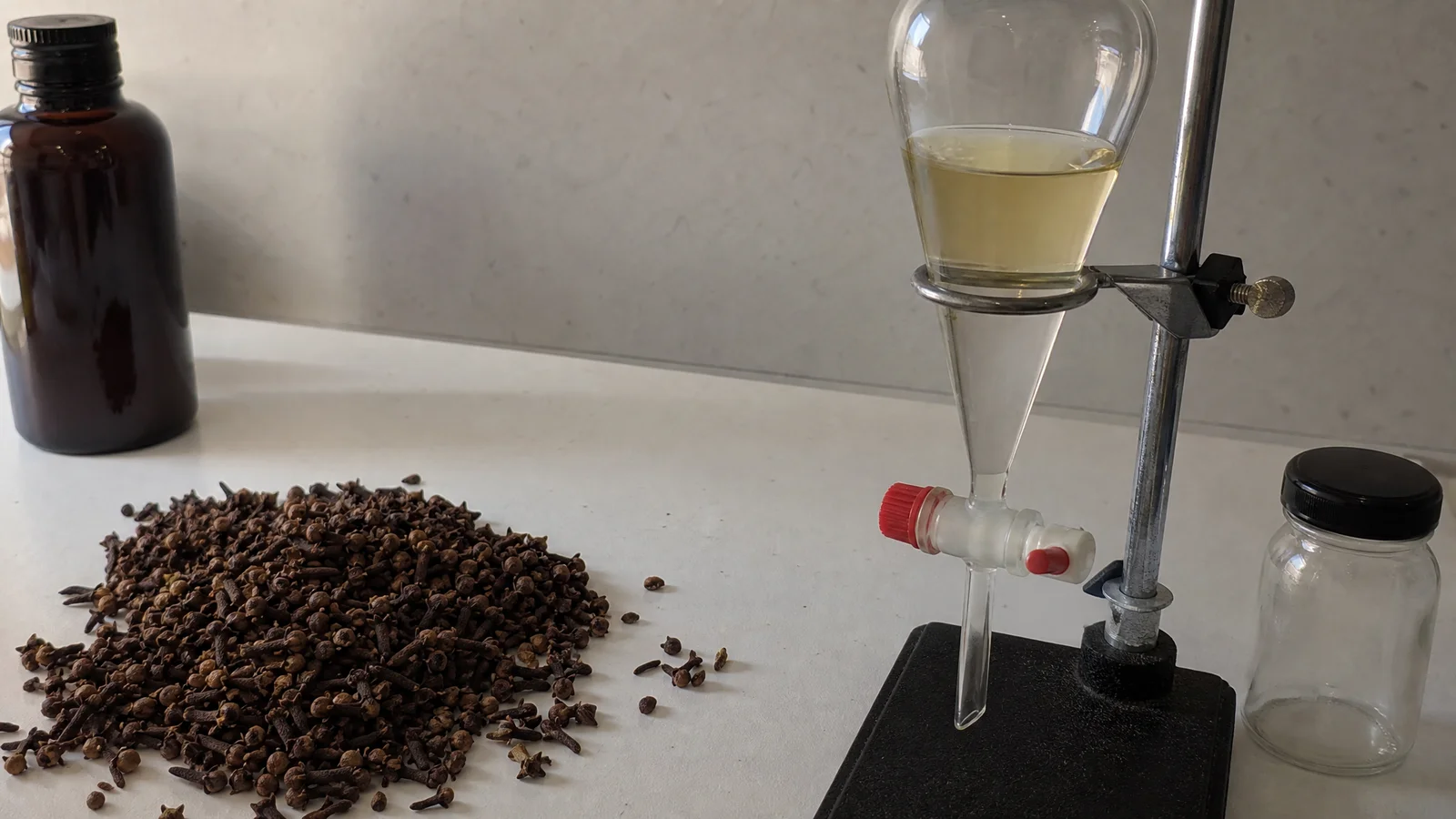
Eugenol is a phenol, and phenols are weak acids. A review of the molecule says plainly that large quantities of eugenol go into soaps and detergents for their spicy aroma, "but they cause discolouration due to their phenol structure", and adds that the ester form is stable and does not discolour but lacks the powerful spicy note (Kamatou et al., Molecules, 2012). So the colour and the scent come from the same free phenol. You cannot keep one and lose the other.
The lye side is easy to picture. PubChem lists eugenol's pKa as 10.19 at 25 C (PubChem, eugenol). At a pH equal to the pKa, half of it sits in its ionised, phenolate form. By simple arithmetic that is about 87% at pH 11 and about 98.5% at pH 12. Fresh soap batter is strongly alkaline, so reasoning from those numbers, much of the eugenol spends the early days of a bar in a different chemical form from the one you sniffed in the bottle. How that links to the shade of the finished bar depends on your oils and your water, which is why the practical answer is a small trial rather than a rule.
Why a spiced bar can look better, not worse
Soap makers often panic at the first hint of brown. Step back and think of the bars people love: cinnamon swirls, oatmeal and honey, gingerbread-coloured squares. A warm tone is exactly what a spiced bar should wear, and the colour can feel like part of the story. If you plan for it from the start, choosing a colourant that sits happily in cream and tan, a drifting shade is a feature and not a problem.
Trace: advice that applies to every fragrance
Soapers often say spiced oils thicken batter fast. Supplier advice on this is general rather than specific to eugenol, and it is sensible for any fragrance that behaves that way: Wholesale Supplies Plus suggests cooler temperatures or slower-moving oils when a fragrance makes batter thicken too quickly, and blending if it turns grainy (Wholesale Supplies Plus, 2025). Their other tip is the one we like best: split one batch into portions and test several fragrances side by side.
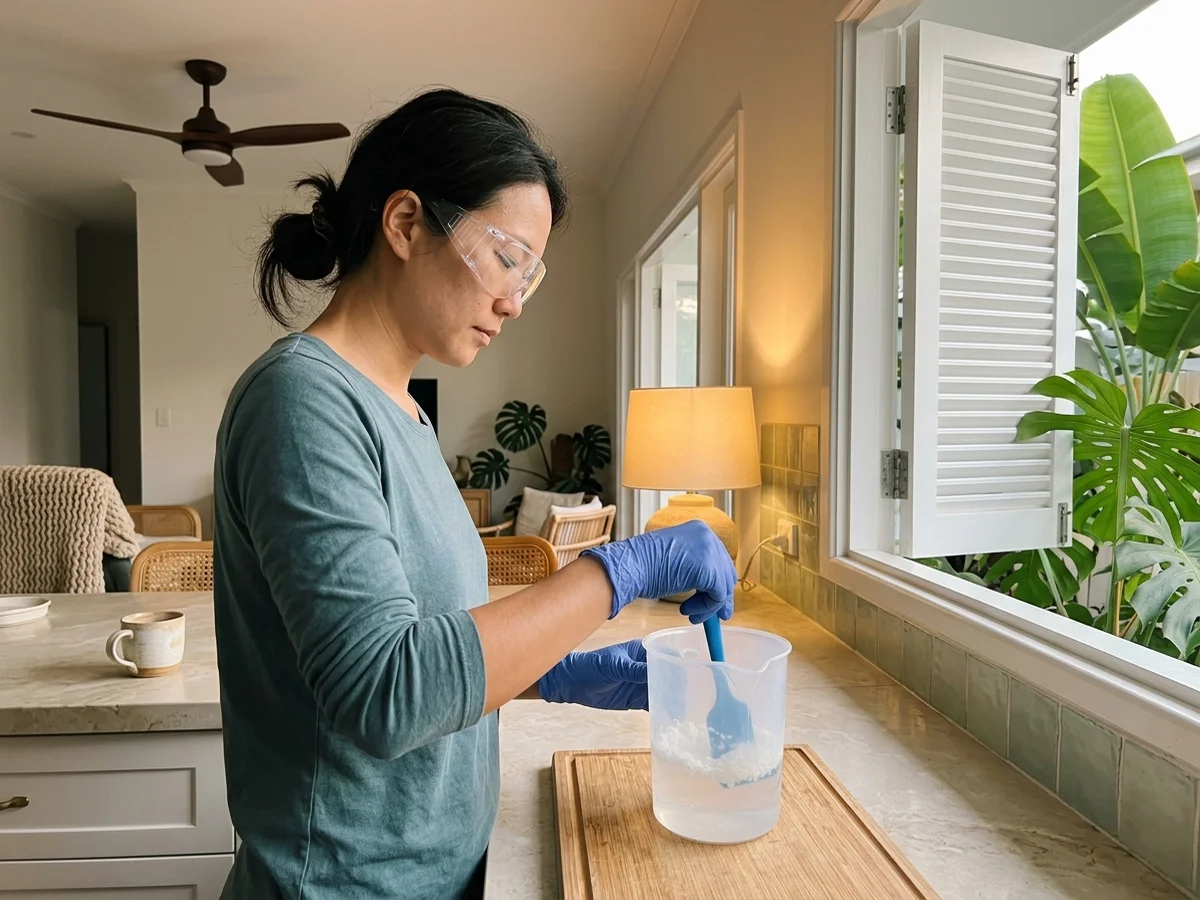
A three-portion trial for your own recipe
Here is how we would set it up, worked out from that split-batch idea and plain arithmetic.
- Make your usual batter and divide it into three equal portions of 300 g, before any fragrance.
- Leave portion A plain. It is your control for speed and colour.
- Add 0.3 g of eugenol oil to portion B (0.1% of the portion) and 0.9 g to portion C (0.3%). A scale that reads to 0.1 g keeps this honest.
- Stir each the same way at the same temperature, pour into matching moulds, and photograph the three at one day, one week and after the full cure, in the same light.
- Judge the scent on the bar at the end of the cure, which Wholesale Supplies Plus puts at around four to six weeks.
You will see what your oils and your water make of eugenol at those levels, and you will know before you commit a whole batch. Change the oils or the temperature and the answer changes with them.
How much is the right amount
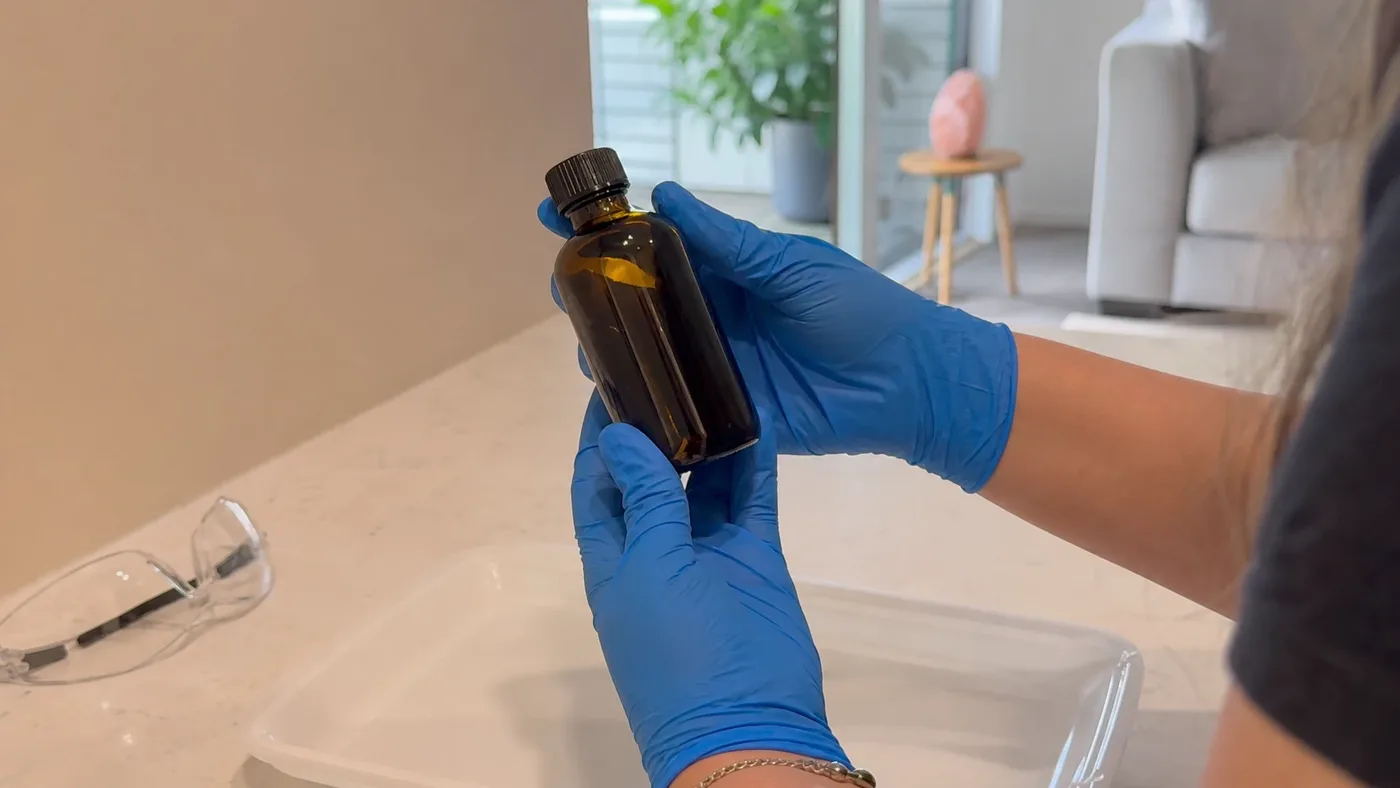
IFRA's eugenol standard gives 4.9% as the most that the finished product can contain for Category 9, the category its guidance uses for bar soap (IFRA Standards, 51st Amendment). That is a ceiling for a safety assessment, not a target, and it counts eugenol from every ingredient, including any clove or cinnamon leaf oil in the blend. Our worked example shows the sum and the usage rate article works backwards from the limit. For handling at the bench, we suggest gloves and eye protection, since you are working with lye and a skin sensitiser together.
Slow down at the stick blender
Spiced fragrances have a reputation for moving quickly, so work with everything ready: moulds lined, scale zeroed, fragrance weighed into its own small cup before the lye ever meets the oils. Stir by hand first and use the stick blender in short bursts. A batter you can still pour is a batter you can still make pretty, and it is a good feeling to unmould a bar that looks the way you pictured it.
What you will notice at the end of the cure
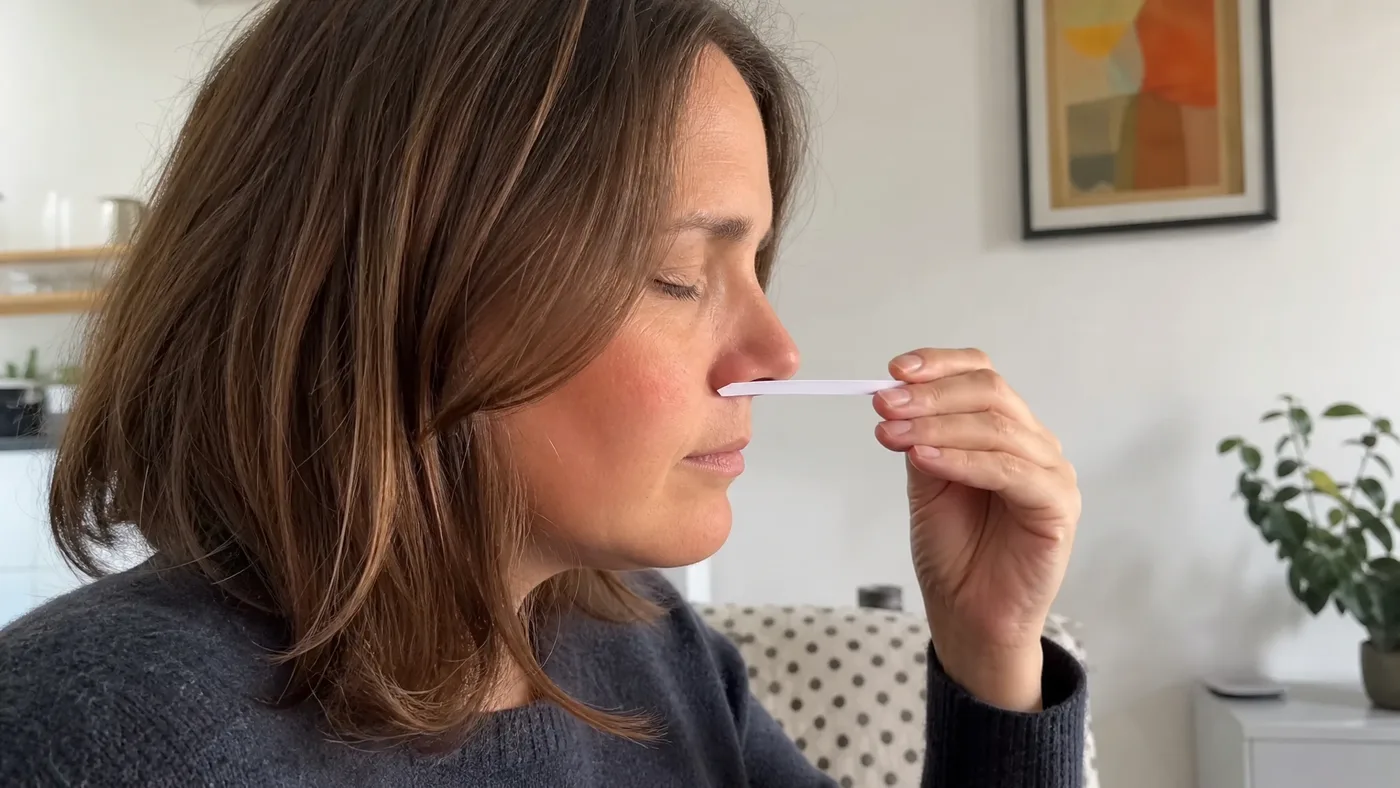
When the bar has had its full cure, pick it up and smell it dry, then again after you have wet your hands with it. The spice is gentler than the neat oil, warm and a little sweet rather than sharp. If it is too faint for you, note that for the next batch rather than rushing the dose up, and check the limit before you do.
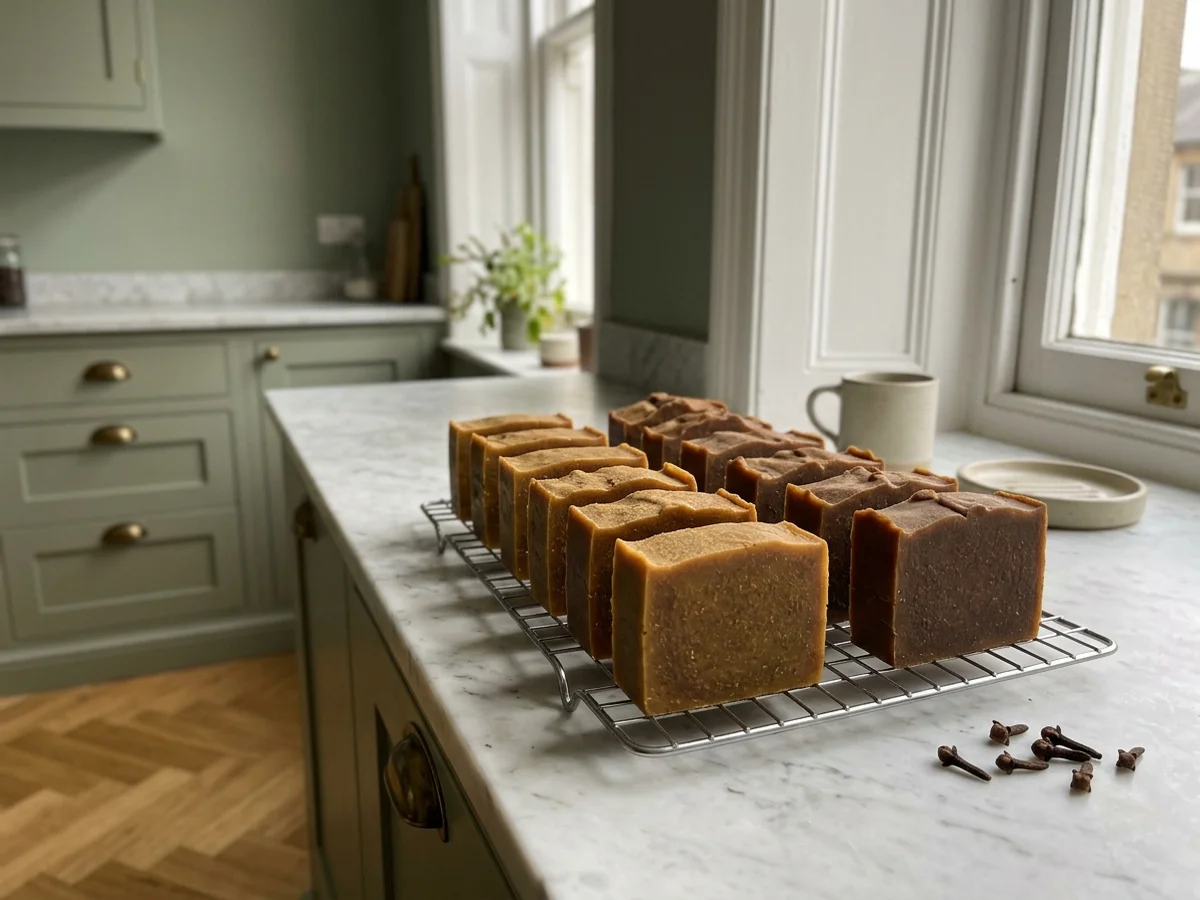
Pick the process for the look you want
- Want a pale bar? Cold process with free eugenol may drift, so consider hot process, where fragrance goes in after the cook.
- Want a clear or bright bar? Melt and pour starts from a finished base.
- Want a spiced bar in warm earthy tones? Cocoa, tan and oatmeal hide drift beautifully. See the spiced soap structures for ideas.
Lye, oils, moulds and colourants come from a soap-supply shop, and anyone with a fragrance allergy should check with a dermatologist or allergist before using a scented bar. A bar that arrives a little browner than planned can still be the best one on the shelf, so name it for the warm colour and enjoy it.
Sources & Further Reading
- Kamatou GPP, Vermaak I, Viljoen AM, 2012. Eugenol: from the remote Maluku Islands to the international market place. Molecules 17(6):6953-81. PMC6268661
- National Library of Medicine. PubChem, eugenol, CID 3314. pubchem.ncbi.nlm.nih.gov/compound/Eugenol
- Wholesale Supplies Plus, 2025. Testing fragrances in cold process soap. wholesalesuppliesplus.com
- IFRA, 2023. IFRA Standards, 51st Amendment, eugenol. ifra-standards-51st-amendment.pdf