Eugenol for Beginners: Habits to Learn Early
Eugenol is a joy to build with, and most of what trips up a first formula is decided before anything is mixed, at the point of deciding what the material is. It is not a stronger clove oil, it is not unrestricted because it came from a plant, and a clean skin test is not a clearance. These are the habits we would pick up early.

Treat it as one note, not a concentrate of clove
Eugenol oil is not an essential oil: it is one molecule pulled out of a distillate and concentrated, narrower than the oil it came from on purpose. That is why a one-for-one swap into a formula written for clove bud or leaf oil does not work. You lose everything else clove oil carries and keep a single note, so redo the arithmetic rather than halving by eye. Our clove oil comparison shows what changes.
Weigh in grams
A formula written in drops cannot be checked against a limit afterward. On the batch of our published Certificate of Analysis, relative density is 1.065, so at a rough 20 drops to the milliliter one drop is about 0.053 g, and in a 30 g batch one extra drop is roughly 0.18%. Against the 0.64% IFRA gives for body lotion and oil (Category 5A), three or four stray drops use the whole allowance. A scale reading to 0.01 g and a written record take care of it.
Count eugenol from every ingredient
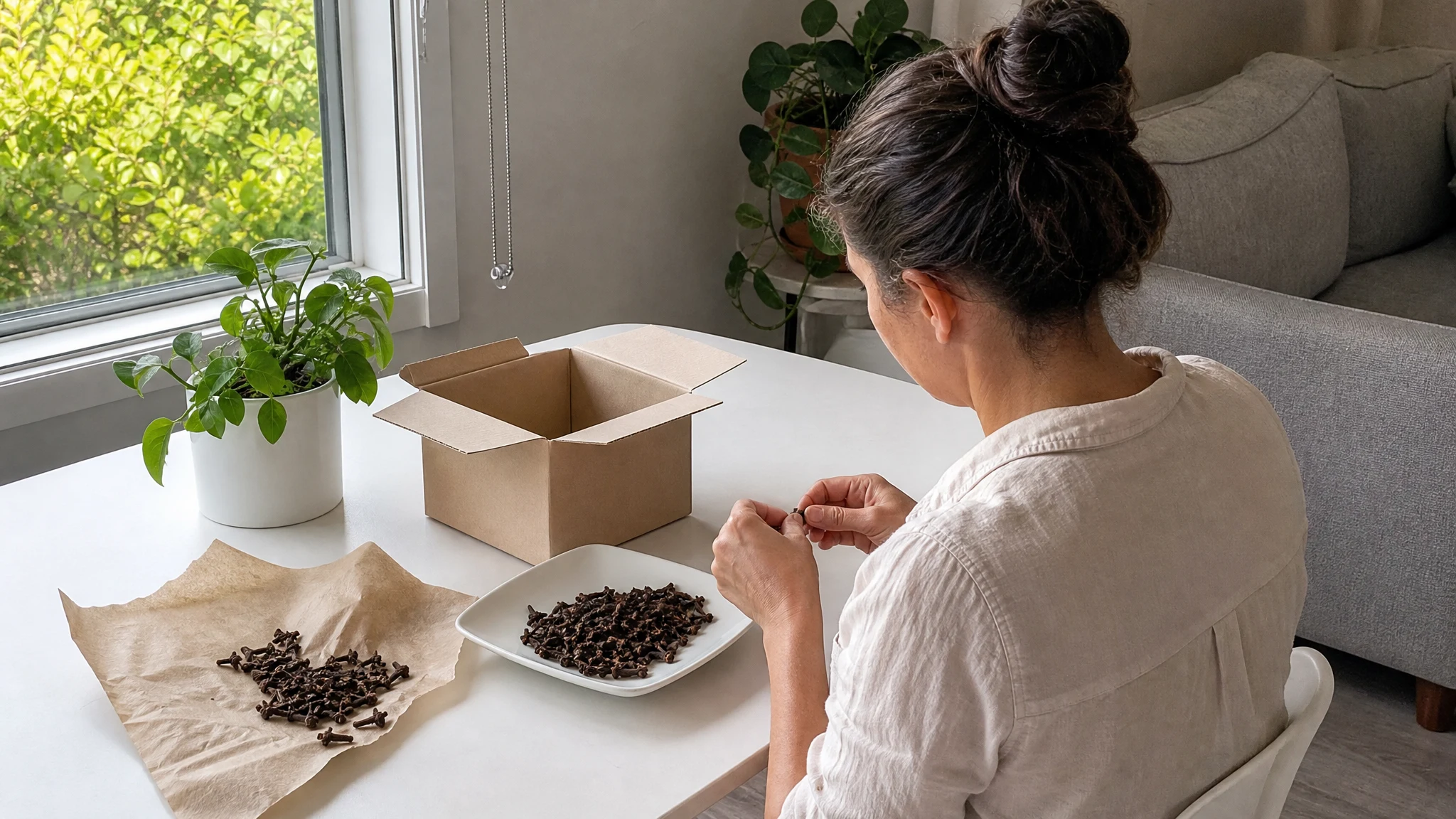
Eugenol turns up in other materials too. PubChem's record describes it as the main component of clove leaf and cinnamon leaf oils, above 90% in some cases (PubChem), and IFRA's guidance says indirect contributions from natural complex substances must be counted (IFRA Guidance, section 1.4). A spiced blend that adds cinnamon leaf for warmth has already spent part of the budget. Our worked example adds it all up.
Name the category before you pick a dose
The eugenol Standard has a different maximum for each product category, from 0.21% for baby products (5D) and 0.45% for lip products (1) up to 4.9% for bar soap (9), with candles in Category 12 at "no restriction" (IFRA Standards, 51st Amendment). Take the same blend that is 12% eugenol, dosed at 10% in a fine fragrance: it puts 1.2% eugenol in a product whose limit is 2.5%. Dose it at 10% in a body oil and the same 1.2% lands in a product whose limit is 0.64%, nearly double. Nothing in the blend changed, only the category. The limits article has the full table.
Start at the lower skin figure
Our guidance for skin is 0.5% to 2% in a carrier with a patch test first, and we would begin at the low end, because How We Test cites a leave-on ceiling around half a percent and IFRA's figure for body lotion and oil is 0.64%. For a product you sell, the number that counts is the one on your own safety assessment, signed by a qualified person.
Do not lean on one clean patch test
In a 2023 study of 67 people from six European clinics, 13 of 34 eugenol-allergic participants had a patch test that did not reproduce on repeat, and 4 of those 13 still reacted during a 21-day open application test (Ofenloch et al., 2023). So a negative forearm test is thin evidence about a sensitizer, and a rash that shows up later is a reason to stop and see a dermatologist. Our sensitization article covers the other studies.
Ask what a purity number can and cannot say
Synthetic and clove-derived eugenol are the same molecule above 99% purity, and GC/MS cannot tell them apart. Only carbon-isotope analysis can. The Certificate of Analysis we publish covers one batch and lists appearance, smell, density and refractive index. If assay, origin or an isotope result matters for your label, ask any supplier in writing for the report on the lot you are buying, and you are welcome to do the same with us through the contact page. Our adulteration article covers what GC misses.
Set up the bench before you open the bottle
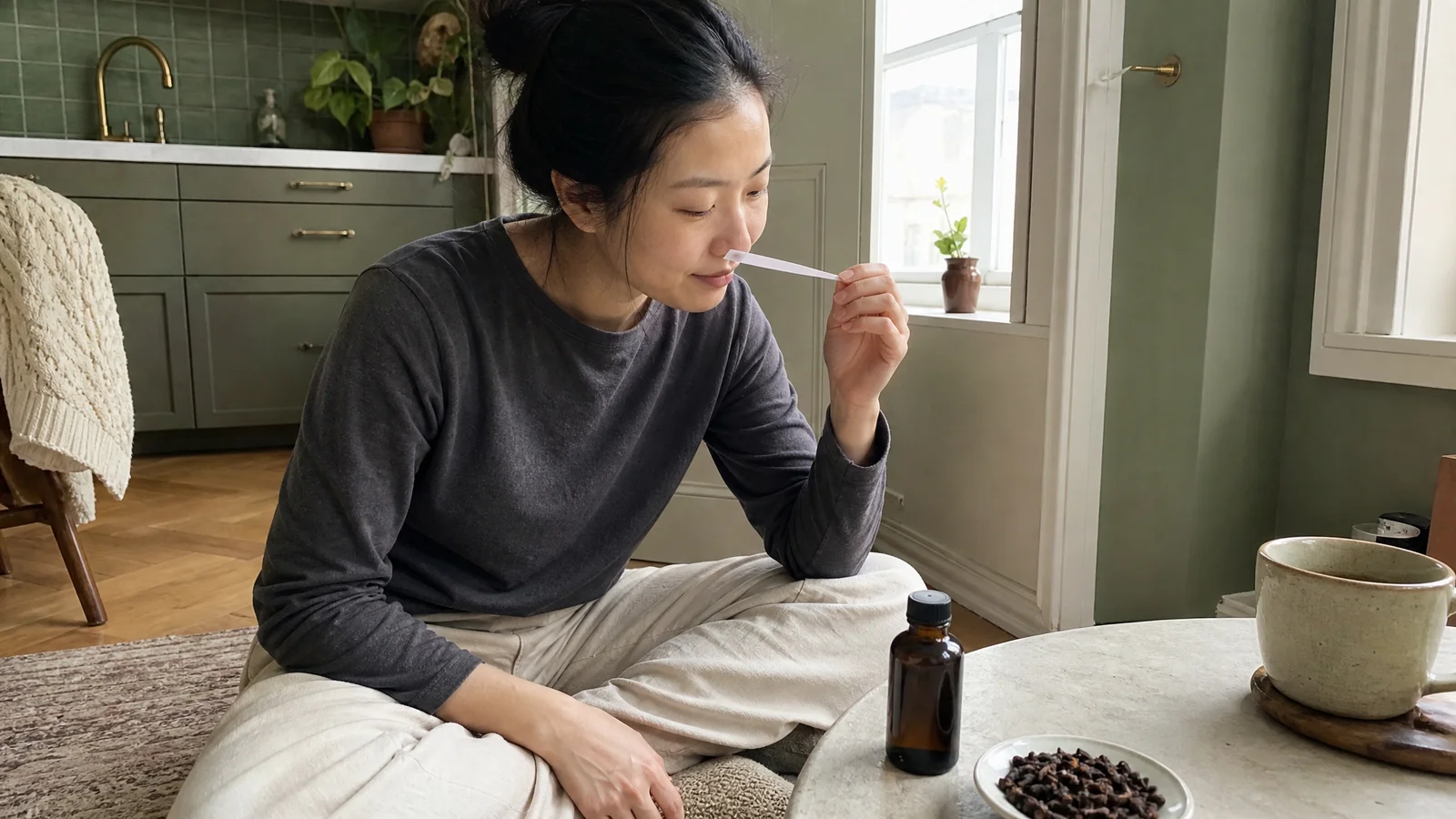
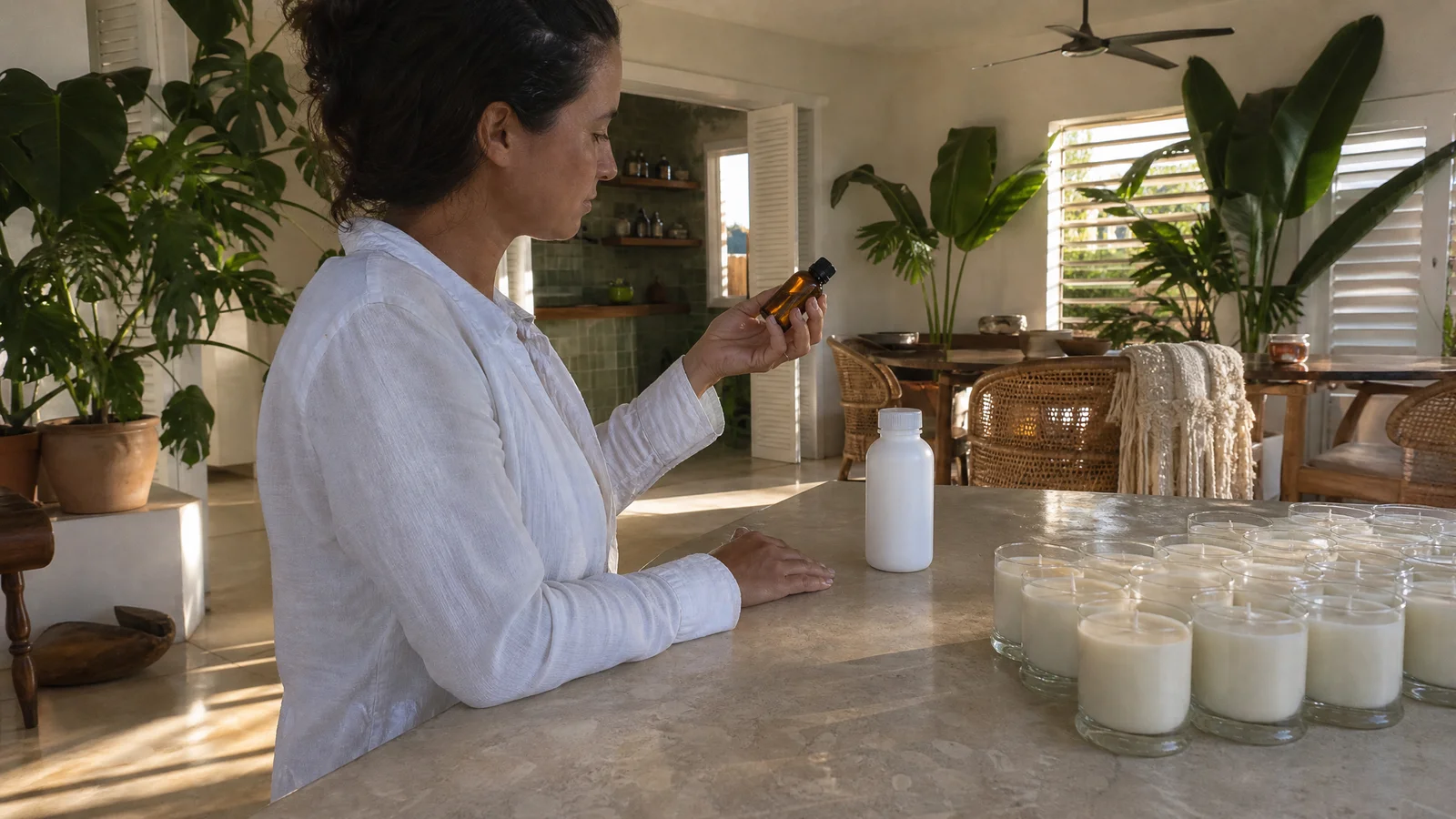
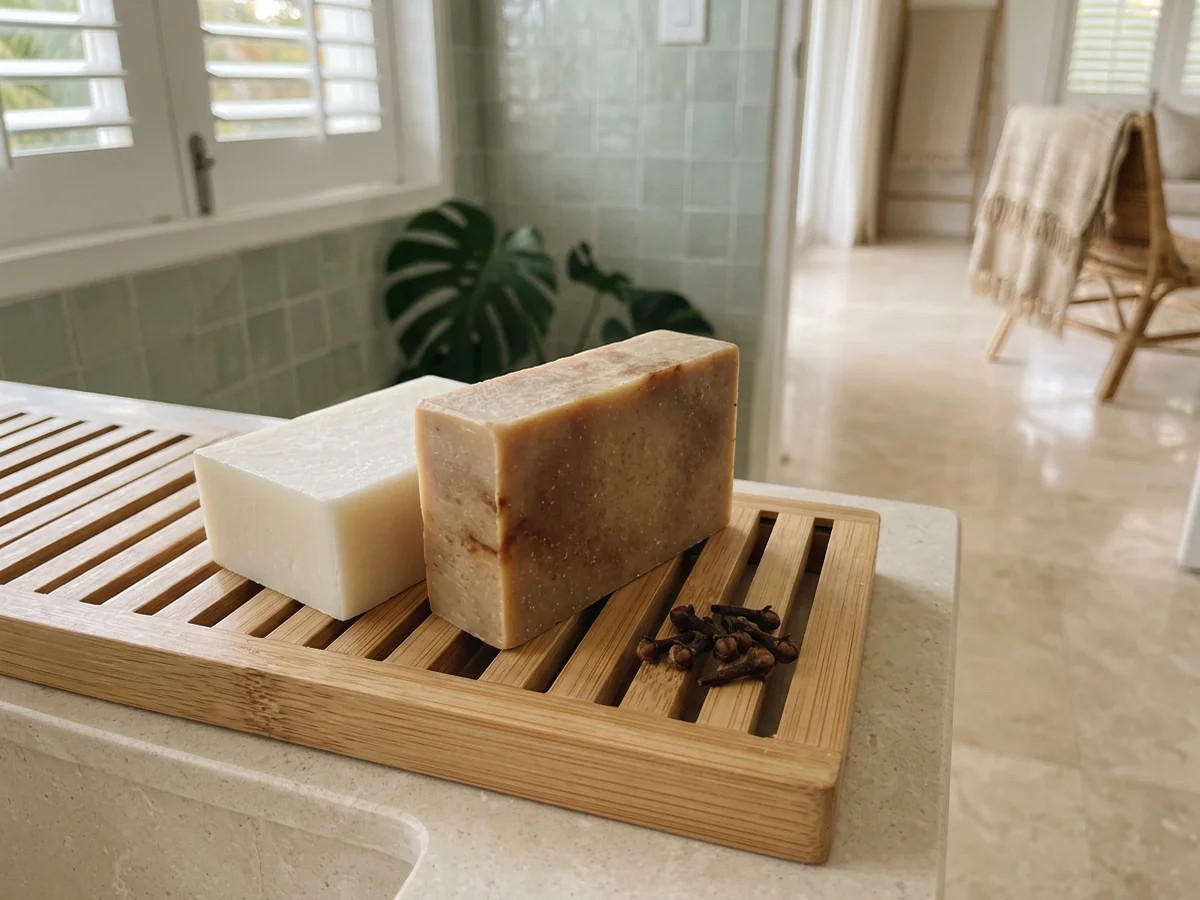
A little preparation makes everything calmer. Clear a space, put out a clean glass beaker, a scale and a pen, and have gloves and paper towel within reach. Cap the bottle again the moment you have poured what you need. Eugenol oil has a strong, warm scent that lingers on hands and sleeves, and you will notice it for a long time if you are careless with drips.
Let amber be amber
PubChem records that eugenol darkens and thickens on exposure to air and darkens with age. A bottle gone amber has met air, which is ordinary for a phenol. A part-used bottle ages faster than a sealed one, so decant working amounts into small dark airtight bottles and keep the main container shut.
A certificate is not a safety assessment either. IFRA's guidance says a Certificate of Conformity rests on a trusting relationship and does not replace one (section 7.14), so ask your suppliers for the SDS and conformity information you need, and see our compliance guide for the questions.
If you keep only three habits, make them these: weigh instead of counting drops, count eugenol from every ingredient and name the category first. Anyone with a known fragrance allergy should not start, and dental or medical questions about clove belong with a dentist or physician, since our eugenol oil is a fragrance isolate offered for no dental or therapeutic use.
Sources & Further Reading
- IFRA Standards, 51st Amendment (eugenol): ifra-standards-51st-amendment.pdf
- IFRA, Guidance for the use of IFRA Standards, 51st Amendment: ifra-51st-amendment-guidance.pdf
- Ofenloch RF, et al., 2023. Allergic reactivity for different dilutions of eugenol in repeated open application test and patch testing. Contact Dermatitis 89(2):95-102: pubmed.ncbi.nlm.nih.gov/37218587
- NCBI PubChem, eugenol (CID 3314): pubchem.ncbi.nlm.nih.gov/compound/Eugenol