What Size Should Your First Eugenol Oil Order Be?
Most first orders of eugenol oil are chosen by looking at the shelf and picking a size that feels sensible. A better way is to do two minutes of arithmetic and let your first few batches decide. We sell one eugenol oil at one standard in every size, so there is no grade ladder to climb. The only real decision is how many grams you will actually use.

Start with the batch, end with the bottle
The method has three steps. Decide what you will make. Take the eugenol share of the finished product from the IFRA table for that product, or lower. Multiply by the batch weight, then divide by the density to turn grams into millilitres. For density we use 1.065 g/ml, the relative density on the Certificate of Analysis we publish for one batch, which sits right beside PubChem's 1.0652 g/cm3 at 20 C.
These three plans are invented for the arithmetic, and each sits below the ceiling in the IFRA eugenol Standard (51st Amendment): 4.9% for bar soap, 2.5% for fine fragrance and 4.0% for reed diffusers.
| Plan | Eugenol share | Eugenol needed | Volume |
|---|---|---|---|
| Ten soap batches of 1 kg | 0.5% | 50 g | 46.9 ml, about 1.6 fl oz |
| Twenty fragrance batches of 100 g | 1.0% | 20 g | 18.8 ml, about 0.6 fl oz |
| Twelve reed-diffuser refills of 100 g | 2.0% | 24 g | 22.5 ml, about 0.8 fl oz |
Read across, a 2 fl oz bottle covers the soap plan comfortably and a 1 fl oz bottle covers either of the others. If you plan several products, add the volumes, then leave a margin for test batches that never become finished products. A hobby-scale plan usually lands between a fraction of an ounce and a couple of ounces.
Candles work differently. The eugenol Standard prints "No restriction" for Category 12, which includes candles, so there is no IFRA ceiling to calculate from. The load comes from your wax supplier's fragrance guidance instead, and our articles on flash point and wicking cover what to look at.
Think about how you work
Some makers like to order once and be done, others like small amounts, often. If you make one scent a season, a small bottle stays fresh from first batch to last. If you run weekly batches, a size up makes sense. Write your plan on paper first and be honest about how often you will really make things; enthusiasm tends to outrun the calendar.
The ounce that is not an ounce
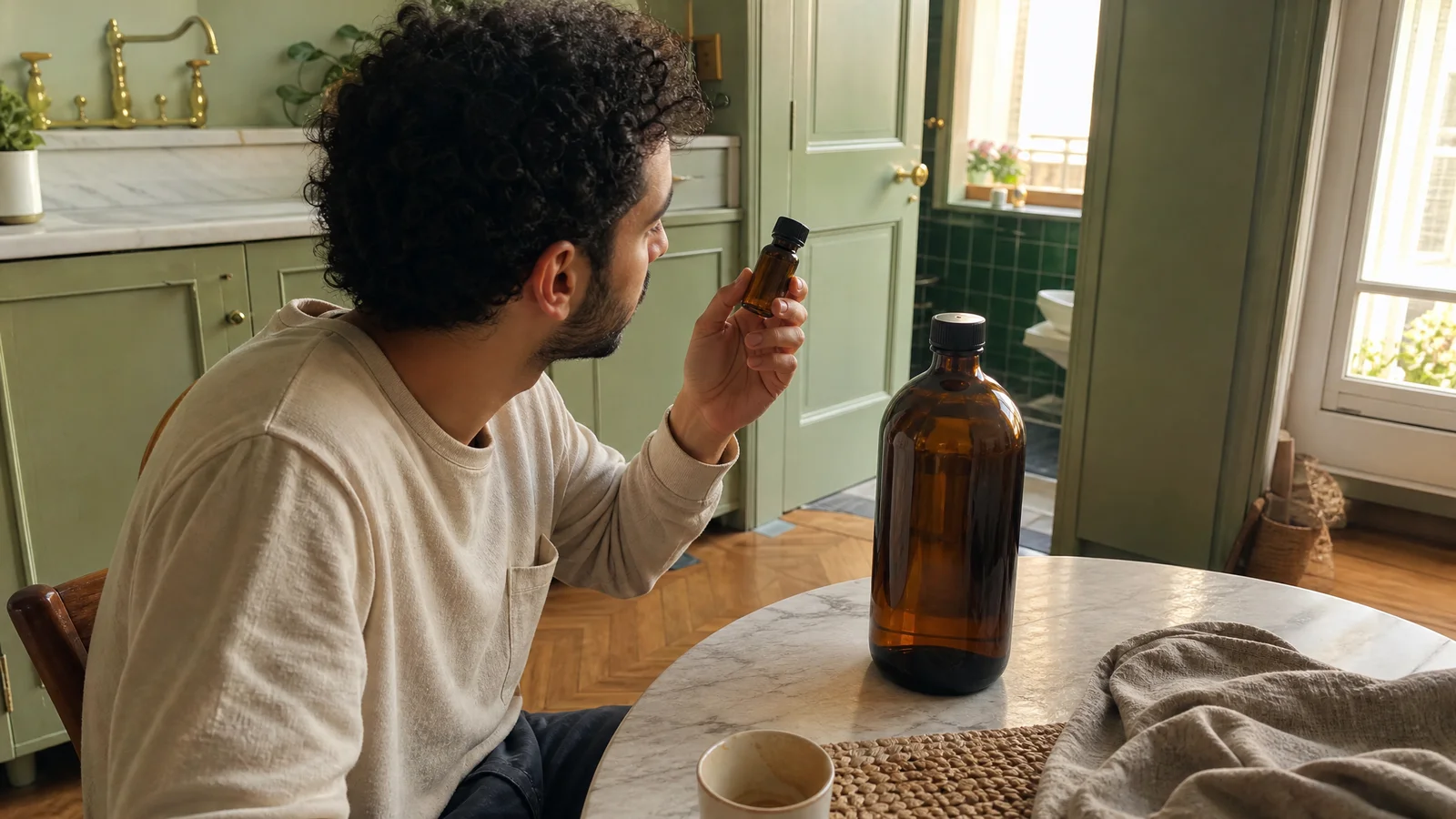
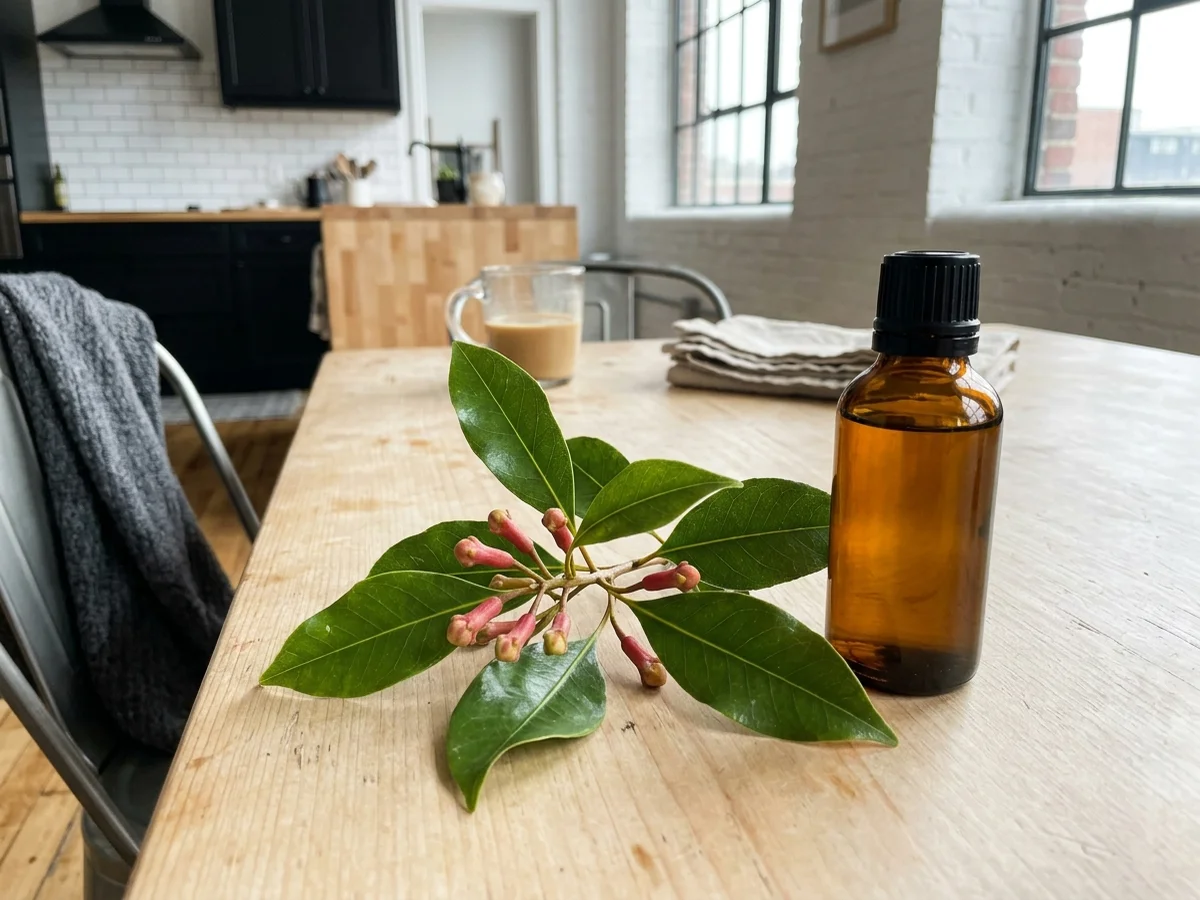
Listings give sizes in ounces and rarely say whether they mean fluid or weight. At a density of 1.065, one fluid ounce (29.57 ml) of eugenol oil weighs about 31.5 g, while an ounce by weight is 28.35 g. That is an 11% gap, enough to matter when you have computed your need in grams. Convert with a scale rather than a conversion table, because density is a figure from one batch.
Why the biggest bottle rarely goes first
A 16 fl oz bottle holds roughly 504 g, and all three plans above use less than a tenth of it. The rest waits, and waiting is where eugenol shows its personality. PubChem records that it "darkens and thickens on exposure to air", and our How We Test page says the same thing in friendlier terms: the oil drifts toward amber once air has been at it, ordinary behaviour for a phenol, though a part-used bottle ages faster than a sealed one. Our guidance is typically 2 to 4 years tightly capped in a cool, dark place.

So we suggest ordering about one plan's worth plus a margin, and keeping the remainder sealed. If you do move to larger sizes, decant working amounts into small, airtight, dark bottles instead of opening the large container every time. Our storage article goes deeper.
If bulk is on the horizon, our wholesale page offers a sample bottle of any size, bottled from the same lots. That is a gentle way to learn how the material behaves in your own product before committing to pounds of it.
What to do when it arrives
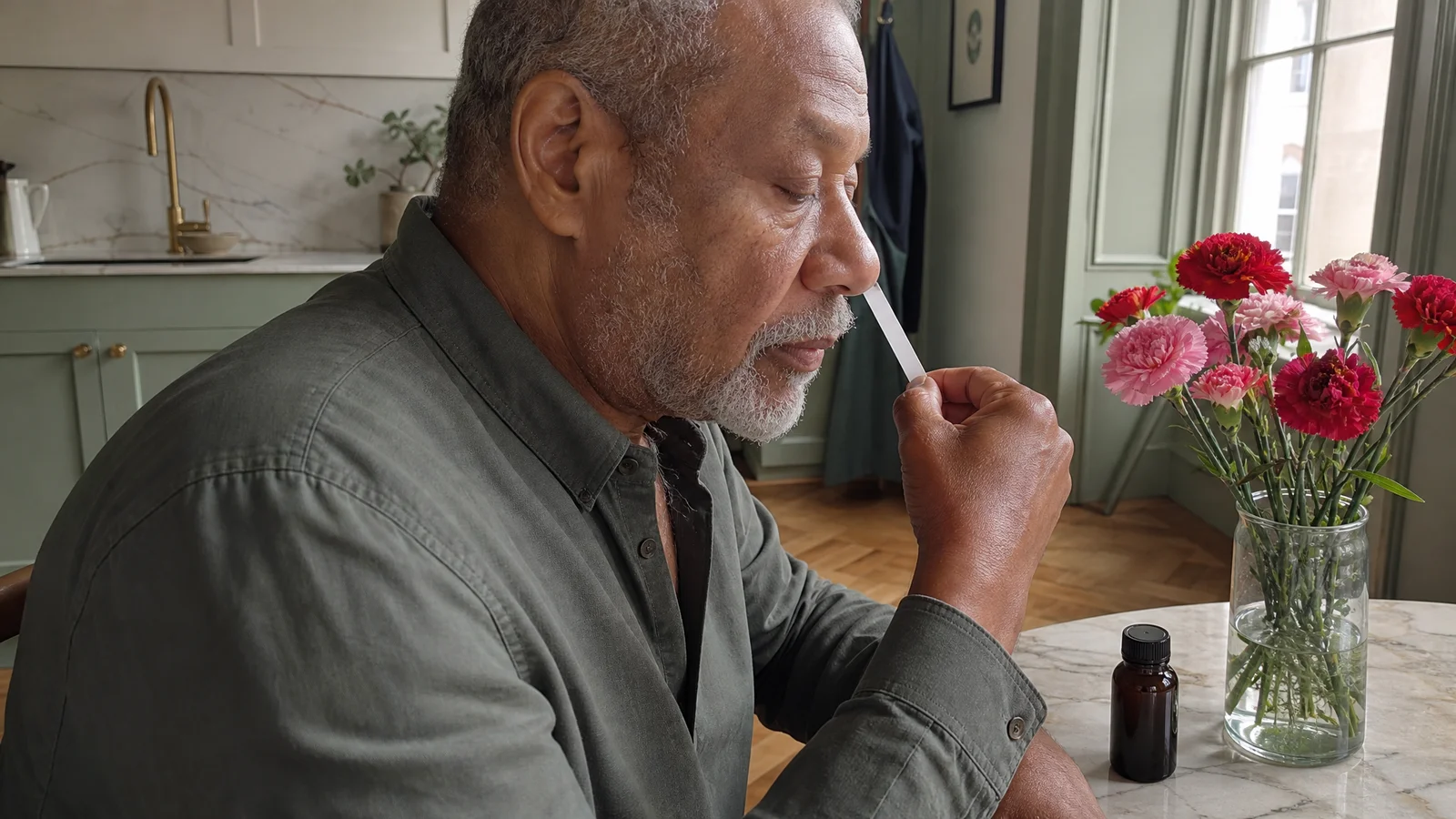
Open the box on a tray and take in that first warm, spicy whiff, then put the cap straight back on. Pour a small working amount into a dark bottle, label it with the name and the date, and return the main bottle to a cool, dark shelf. That one habit keeps most of your oil sealed and fresh.
The rest of the shopping list
Eugenol oil is the only thing we sell, so carrier oils, soap base, wax, wicks, solubilisers and a precision scale come from other suppliers. Add gloves and eye protection: PubChem's roll-up of ECHA notifications lists H317, "may cause an allergic skin reaction", in 99.8% of 2,820 reports. Our handling article covers gloves, spills and storage.
Our eugenol oil is a fragrance material, not offered for dental or therapeutic use, and not for internal use. Tooth and mouth questions belong with a dentist, and a skin reaction with a dermatologist or allergist. If you have reacted to fragrance or clove products before, see an allergist before you handle the neat material.
Limits in the IFRA table apply to the finished product, and eugenol from any other ingredient counts toward the same total, which our IFRA article explains. Once you have your grams, the size picks itself, and we are always happy to hear about your lot documentation questions through the contact page.
Sources & Further Reading
- IFRA. The complete IFRA Standards, 51st Amendment (eugenol, pp. 103-105). IFRA Standards PDF
- NCBI PubChem. Eugenol (CID 3314): density, stability and GHS classification. pubchem.ncbi.nlm.nih.gov/compound/Eugenol