Spice Notes in Soap: Why the Scent Fades and What Helps
Scent that fades in soap is one of the most common frustrations in the craft, and the usual cure, adding more fragrance, has a catch when eugenol is in the blend: more fragrance means more eugenol, and eugenol is the material with a ceiling. The better move is to leave the eugenol where it is and change what surrounds it.

Why soap scent drifts
Soap Queen's article on scent fading says that the pH of cold process soap can attack components of the oil, causing them to smell differently (Soap Queen, How to Prevent Scent Fading in Soap). Volatile top notes also leave first, which is simply how fragrance works. Wholesale Supplies Plus adds that scent should be judged after the full cure, usually four to six weeks (Wholesale Supplies Plus). Eugenol is a phenol with a pKa of 10.19 (PubChem, eugenol), so in strongly alkaline batter part of it sits in a different form from the one you smell in the bottle. Our cold process article follows that thread on the colour side.
Anyone who has unwrapped a bar after weeks on the curing rack knows the small disappointment: the batter smelled wonderful, and the bar smells like soap. It is a very human moment in this craft, and it is why so many makers keep a notebook of scent impressions. Knowing it is normal makes it easier to stay calm and change one thing at a time.
Eugenol is already the anchor
We place eugenol in the middle to base of a fragrance, so in a bar it is usually the sturdy part. Think of sweet orange with eugenol: the orange is the part that fades, and the eugenol is the part with the limit. The useful question stops being "what holds the eugenol" and becomes "what holds the top, without adding eugenol".
Soap Queen's suggestion is to pair fading scents with something deeper, earthier or more complex, naming amber, patchouli and sandalwood. It mentions kaolin clay as a popular fixative while noting the author has not done a lot of scent testing with it, so treat clay as an idea to try on a small batch, not a promise.
The arithmetic of holding steady
Take a batch of 1,000 g of oils at a 5% fragrance load. That is 50 g of fragrance, and if eugenol is 8% of the blend, 4.0 g of eugenol, or 0.40% of the oils. Now suppose the scent seems thin after cure. Here are two responses.
| Response | Fragrance | Eugenol | Eugenol as % of oils |
|---|---|---|---|
| Starting point | 50 g | 4.0 g | 0.40% |
| Raise the whole blend to a 6% load | 60 g | 4.8 g | 0.48% |
| Add 10 g of non-eugenol base notes | 60 g | 4.0 g | 0.40% |
The second row lifts eugenol by a fifth, so it needs headroom under your limit. The third keeps it fixed and lowers its share of the blend from 8% to about 6.7%. Any base note you add has its own ceiling and its own certificate, so check those before you pour. Our usage rate article shows how to find the limit and our spiced soap structures shows complete recipes.
Think about how a bar is used
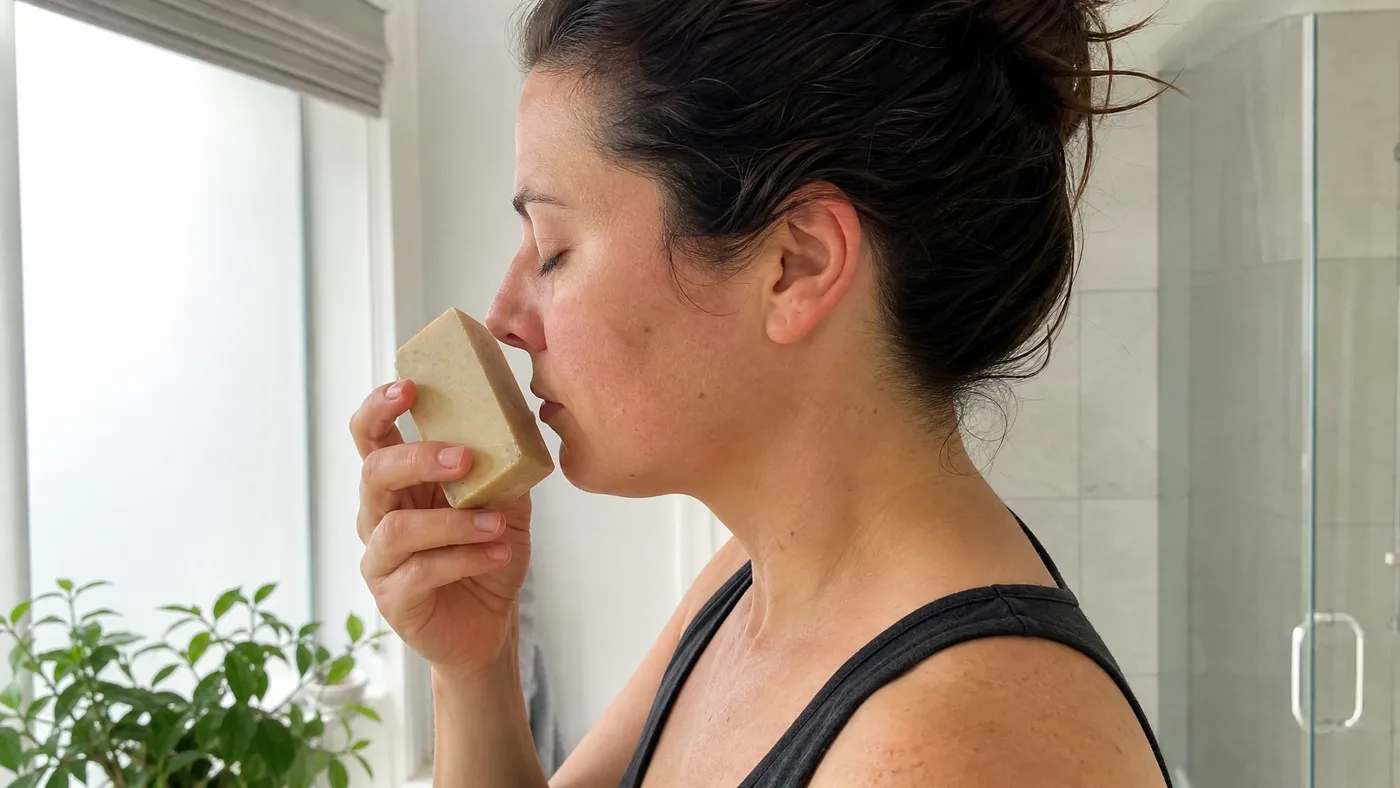
The scent a person meets is rarely the one on the rack. It is the first lather in a warm bathroom, and then the faint trace left on the skin and the towel. When you evaluate a spiced bar, wash your hands with it and notice what is left a few minutes later, as well as what you smell in the sealed box. You may find a bar you liked less on the shelf comes through better in the shower.
Process choices to consider
- Hot process. Fragrance goes in after the cook, so it skips the raw lye stage; that is reasoning rather than measured data, and our hot process article covers the sequence.
- Cooler soaping. Wholesale Supplies Plus suggests cooler temperatures when batter moves too fast.
- Rest the blend. Perfumers let a blend settle before use. See how to age a blend.
If you are planning a gift set, give the bar its full cure and a few extra days wrapped in paper before you decide. Spice scents often settle into something rounder than they were at unmoulding, and you will want to know that before you tie the ribbon.
Measuring it yourself
To compare a control with a re-balanced blend, make small bars of each with the same oils, temperature and mould, and have someone else code them. Score each from 0 to 5, dry and after a short lather, at unmoulding, at two weeks and after the full cure. Decide beforehand what difference counts, for example a full point on average. If the re-balanced bar wins with the same eugenol mass, you have your answer for that recipe.
Handle neat eugenol in small amounts, wash your hands afterwards, and keep it away from eyes, children and pets. Anyone with a fragrance allergy should check with a dermatologist or allergist before using a scented bar. Soap bases, clays and other fragrance materials come from a soap-supply shop. Fix the eugenol, change what surrounds it, and wait for the cure before you decide.
Sources & Further Reading
- Soap Queen. How to Prevent Scent Fading in Soap. soapqueen.com/?p=50644
- Wholesale Supplies Plus. Testing fragrances in cold process soap. wholesalesuppliesplus.com
- National Library of Medicine. PubChem, eugenol (CID 3314). pubchem.ncbi.nlm.nih.gov/compound/3314