Make a Spiced Clove Sachet Without Staining Linens
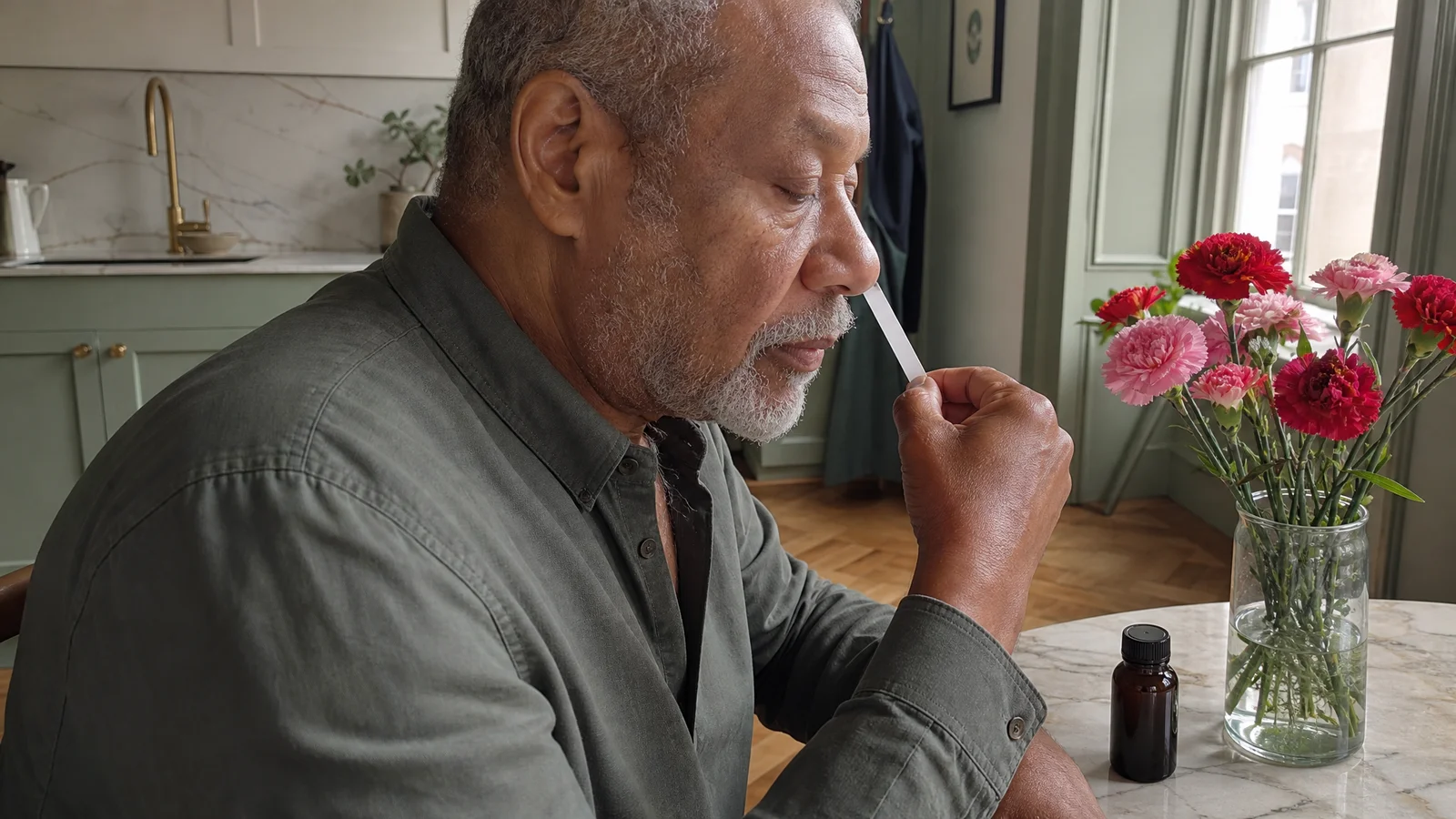
Open a drawer that holds a good clove sachet and you get something like a spice cupboard crossed with a carnation. That warmth is exactly what eugenol oil does best, and a sachet is one of the gentlest ways to use it. The trick is where the oil goes: onto a dry filler inside a closed pouch, never straight onto cloth.

Why the filler matters more than the oil
Eugenol is slow to leave a surface. Its vapor pressure is only about 0.03 mmHg at 25 C, according to the reference record in PubChem, so a sachet releases scent gently and a closed drawer collects it. That is lovely in a drawer and a good reason to start with a small load. The same record notes that eugenol darkens and thickens when it meets air, and we describe the shift toward amber as ordinary behavior for a phenol. Oil spread thinly over pale cotton has the most air contact it can possibly have, so we give it something absorbent and neutral to sit on instead: dried flowers, a plain wood-chip or cellulose filler, or a spent-scent potpourri base from a craft shop.
Choosing a filler by feel
You will be stirring this with your hands in gloves, so pick a filler you enjoy handling. Dried flower heads give a gentle rustle, wood chips have a faint woody scent of their own, and cellulose is quiet and neutral. A scented filler changes the final smell, so a plain one lets the clove warmth speak for itself.
Weigh it, don't count drops
Because the batch on our published Certificate of Analysis has a relative density of 1.065, a gram of oil is about 0.94 ml. At the rough convention of 20 drops to the milliliter, half a gram is around nine drops, but droppers vary, so a small scale does the job better. Here is the grams-of-oil arithmetic for a few common sizes:
| Dry filler | 0.5% oil | 1% oil | 2% oil |
|---|---|---|---|
| 50 g (one sachet) | 0.25 g | 0.5 g | 1.0 g |
| 200 g (a gift batch) | 1.0 g | 2.0 g | 4.0 g |
We would begin at the 0.5% row. A drawer concentrates scent, and a sachet that is too strong cannot be un-scented, while a weak one can always be topped up. Eugenol alone smells like a clove sweet shop, so if you want a rounder blend, rose, ylang ylang and vanilla all sit well beside it. Those come from your usual aroma supplier, and each one brings its own limits, so our formulating guide shows how to count the total. Cinnamon leaf oil deserves a special mention: it is mostly eugenol itself, which means adding it adds clove character rather than softening it.
Making it in five calm steps
- Wear gloves and work over a tray, and wash your hands afterward.
- Weigh the dry filler into a glass or ceramic bowl.
- Weigh the eugenol oil into a small glass beaker, then drizzle it over the filler a little at a time, stirring so it spreads and does not pool. Pooled oil is how a pouch ends up with a dark patch.
- Cover the bowl and let the filler rest, smelling it at one day and again at one week with the lid closed in between.
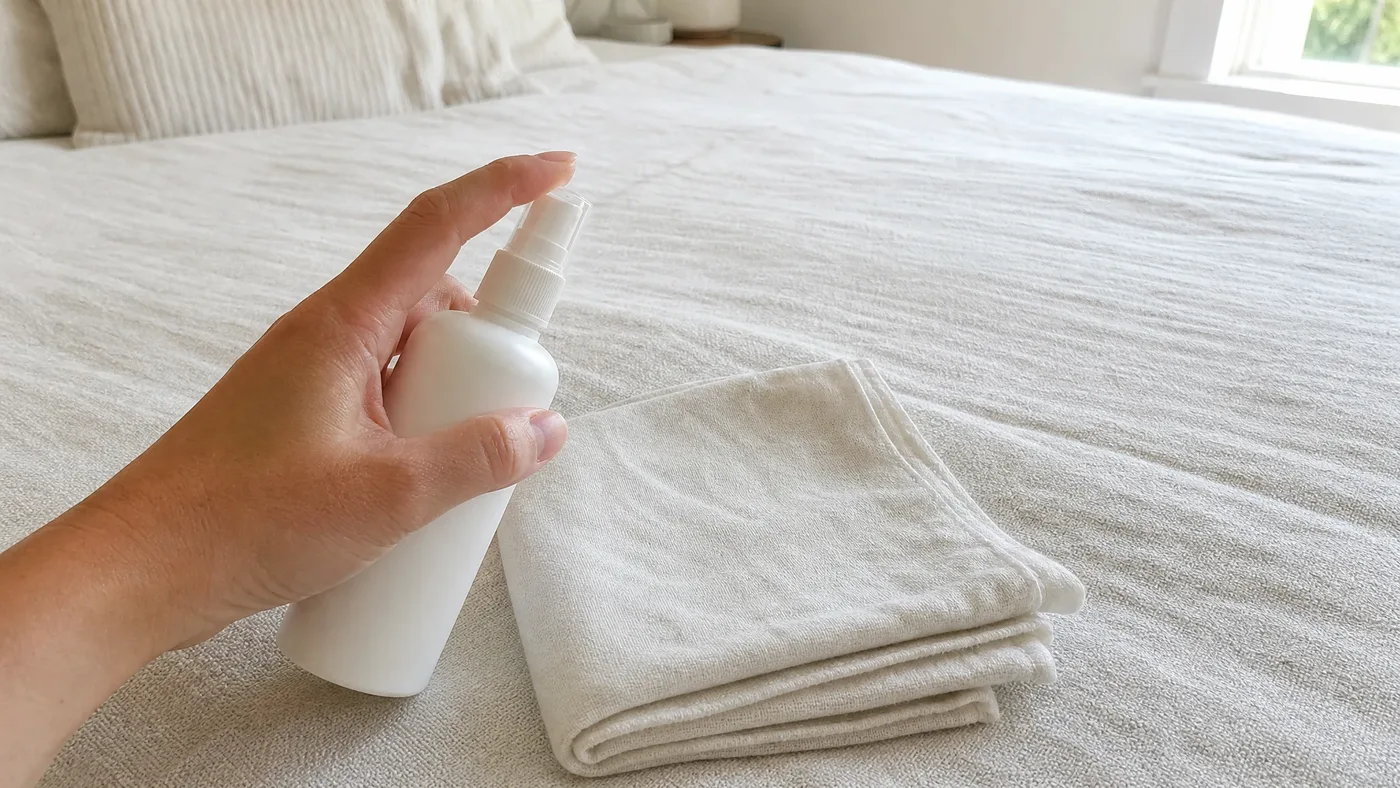
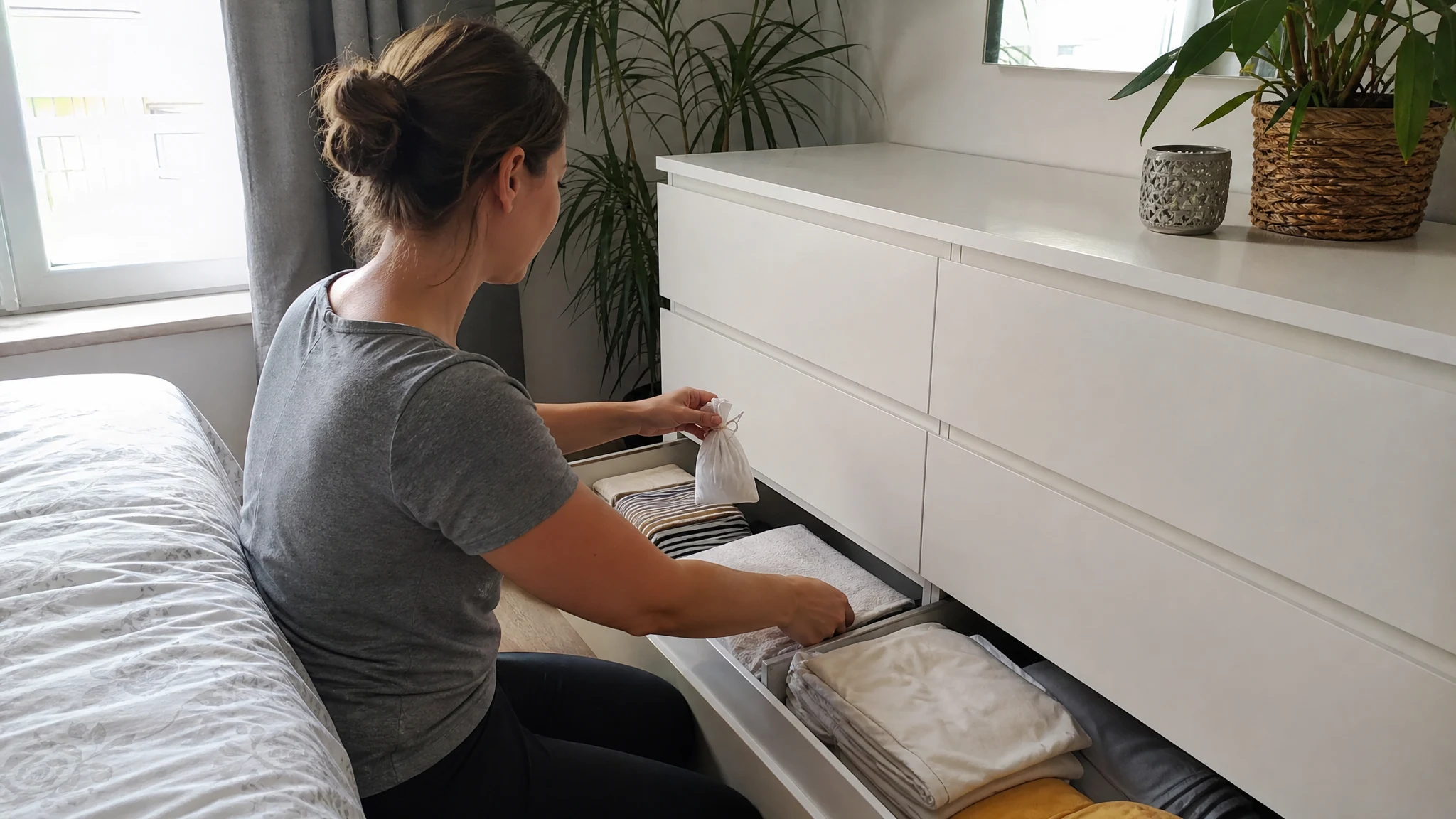
- Fill a tight-weave inner pouch, drop it into an outer cotton or muslin pouch, and tuck it in with the clothes. Two layers keep loose filler and oil off your linens.
Resist the urge to make a dozen at once. One sachet teaches you how the filler takes the oil, how the scent smells after a week in a closed drawer and whether you want it stronger or softer next time.
Where to tuck it
Lay a sachet among folded towels, hang one from a hook at the back of a wardrobe, or slip one into a box of keepsakes. Open the drawer a few days later and you will notice how the scent has built up in the closed space, soft at first and then rounder. A ribbon on the outer pouch makes it a nice small gift, as long as the recipient knows it is not for children or pets to handle.
Where a sachet sits in the rules
IFRA's guidance files fragrancing sachets under Category 12, products with negligible expected skin contact (IFRA Guidance, 51st Amendment), and the eugenol Standard prints "No restriction" for that category (IFRA Standards, 51st Amendment). That is a statement about a sachet that stays sealed, so we would keep it away from pillowcases and anything worn against skin. A sachet is a fragrance item, so we describe it that way and leave claims about moths or freshness to other products.
Children, pets and sensitive noses
Loose filler is easy for a toddler to open and a cat to chew. Pet Poison Helpline lists clove among the oils that can poison animals and puts cats and birds at greatest risk (Pet Poison Helpline), so a sachet belongs in a drawer that neither can reach. If an animal chews one, call your veterinarian or a poison line. Eugenol is also a recognized skin sensitizer, so anyone who has reacted to clove or fragrance before should skip this project and ask a dermatologist. Our handling article covers spills and our potpourri article covers diluents and fixatives that work here too.
Make one small sachet first, give it a week, and see how the scent has settled before you scale up to a batch.
Sources & Further Reading
- IFRA, Guidance for the use of IFRA Standards, 51st Amendment: ifra-51st-amendment-guidance.pdf
- IFRA Standards, 51st Amendment (eugenol): ifra-standards-51st-amendment.pdf
- NCBI PubChem, eugenol (CID 3314): pubchem.ncbi.nlm.nih.gov/compound/Eugenol
- Pet Poison Helpline, essential oils: petpoisonhelpline.com/pet-poison/essential-oils/