Eugenol Linen Spray: Why It Clouds and How to Fix It
Shake a few drops of eugenol oil into a bottle of water and you will watch it sink into little amber beads. That is not a flaw in the oil, it is chemistry: eugenol dissolves in water only up to about 2.5 grams per liter. Once you know that number, most of a linen spray recipe is a question of ratios.

The number behind the cloudiness
PubChem records eugenol's water solubility as 2,460 mg/L at 25 C (PubChem, eugenol), which works out to about 0.25% by weight. A 100 g spray carrying 1% fragrance holds 1 g of it. If that fragrance were all eugenol, that is roughly 10 g per liter, four times what water can hold. If eugenol is a tenth of the blend, it comes to about 1 g per liter, comfortably under the line. So a blend where eugenol plays a supporting role is far easier to carry than one where it is the star, though solubility in a mixture is not strictly additive and a small trial batch is how you confirm it.
Three ways to carry the oil
A solubiliser in water. Polysorbate 20 is the usual route to a clear water spray. Suggested ratios of solubiliser to oil vary widely between suppliers and between oils, so read the sheet for the one you buy and pre-blend it with the oil before it meets the water. As arithmetic, a 100 g spray with 1 g of fragrance uses 1 g of polysorbate at 1:1 and 10 g at 10:1, a tenth of the whole bottle.
An alcohol base. Eugenol dissolves readily in ethanol, and the spray dries quickly. Ethanol is flammable with a flash point below room temperature, so mist it nowhere near a flame, candle or hot lamp. Eugenol's own flash point sits above 100 C (PubChem), which means the alcohol, not the eugenol, sets the fire safety rules.
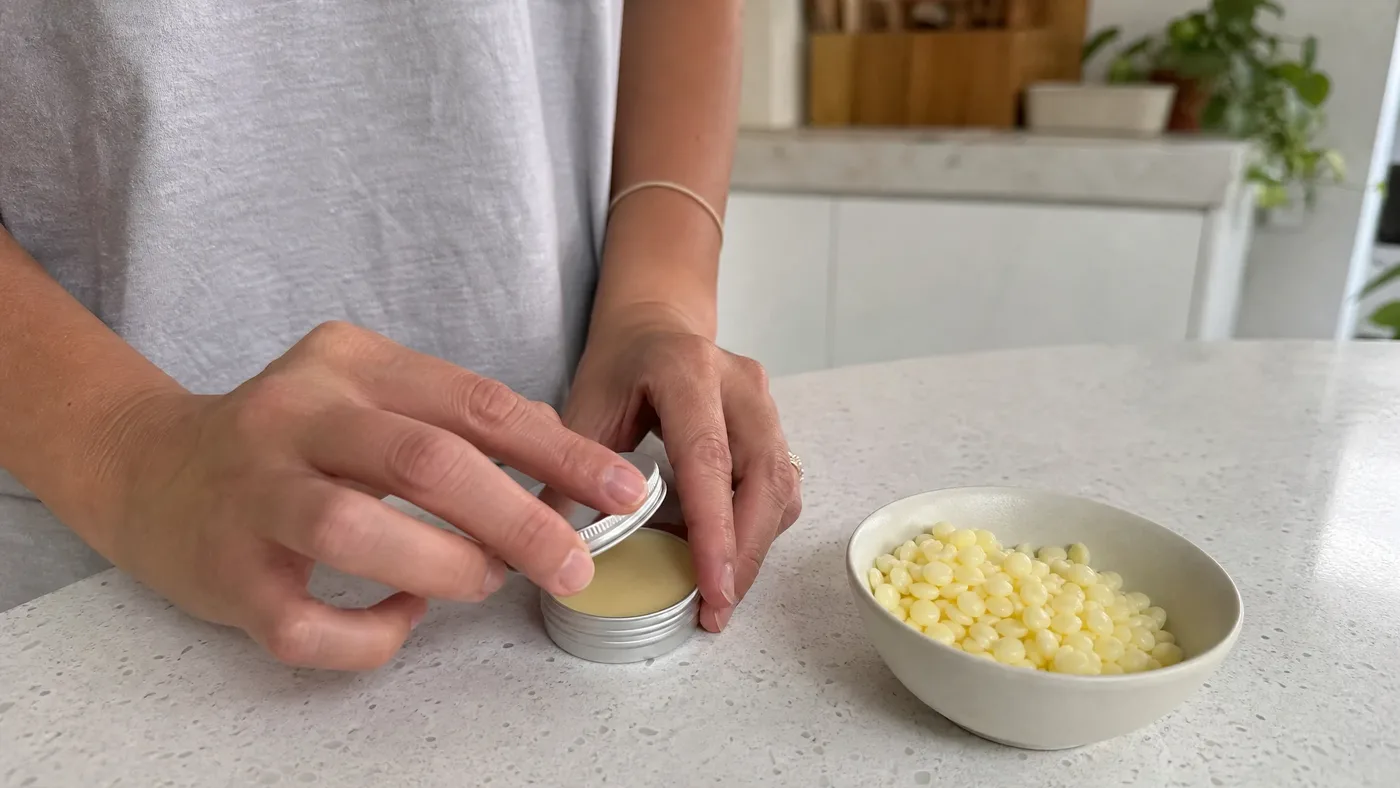
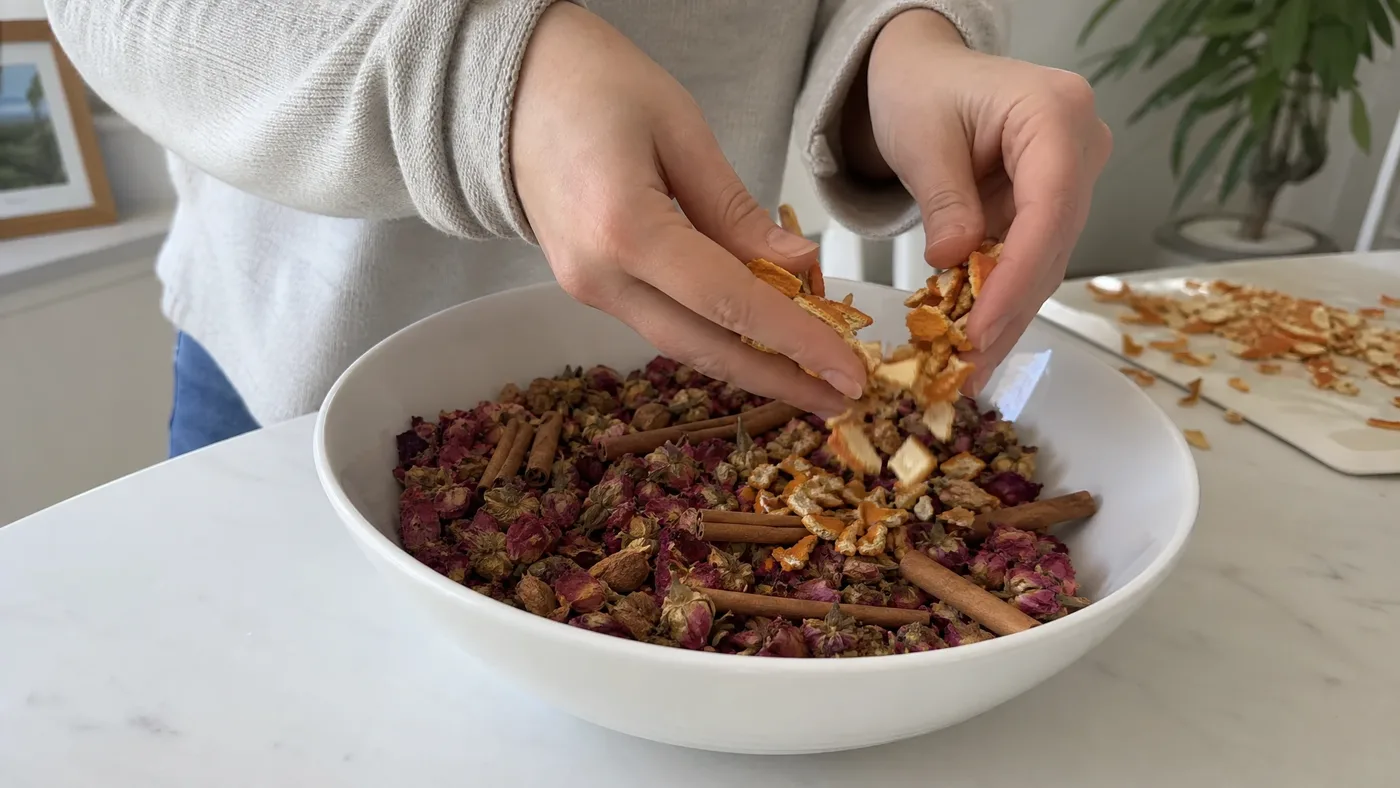
A different product. If you only want linens to smell warm, a sachet puts nothing in the air. Our sachet guide shows how.
Read the haze
A hazy spray means some oil has not been solubilized. Raising the solubiliser ratio is the first adjustment, trimming the fragrance percentage is the second, and it also saves money and cuts staining. A spray that is clear on day one and hazy on day seven has told you something useful, so watch it over the shelf life you intend before you hand it to anyone.
A fabric spot test
Because eugenol darkens toward amber as it meets air, which we describe as ordinary behavior for a phenol, a fabric that soaks up the spray could take on a faint tan mark. Spray a hidden seam or an offcut of the real fabric, let it dry for a full day, compare it with an unsprayed piece in daylight, then wash it as the care label says and compare again. Do it on the lightest fabric you plan to scent, and again after a week.
Spraying well
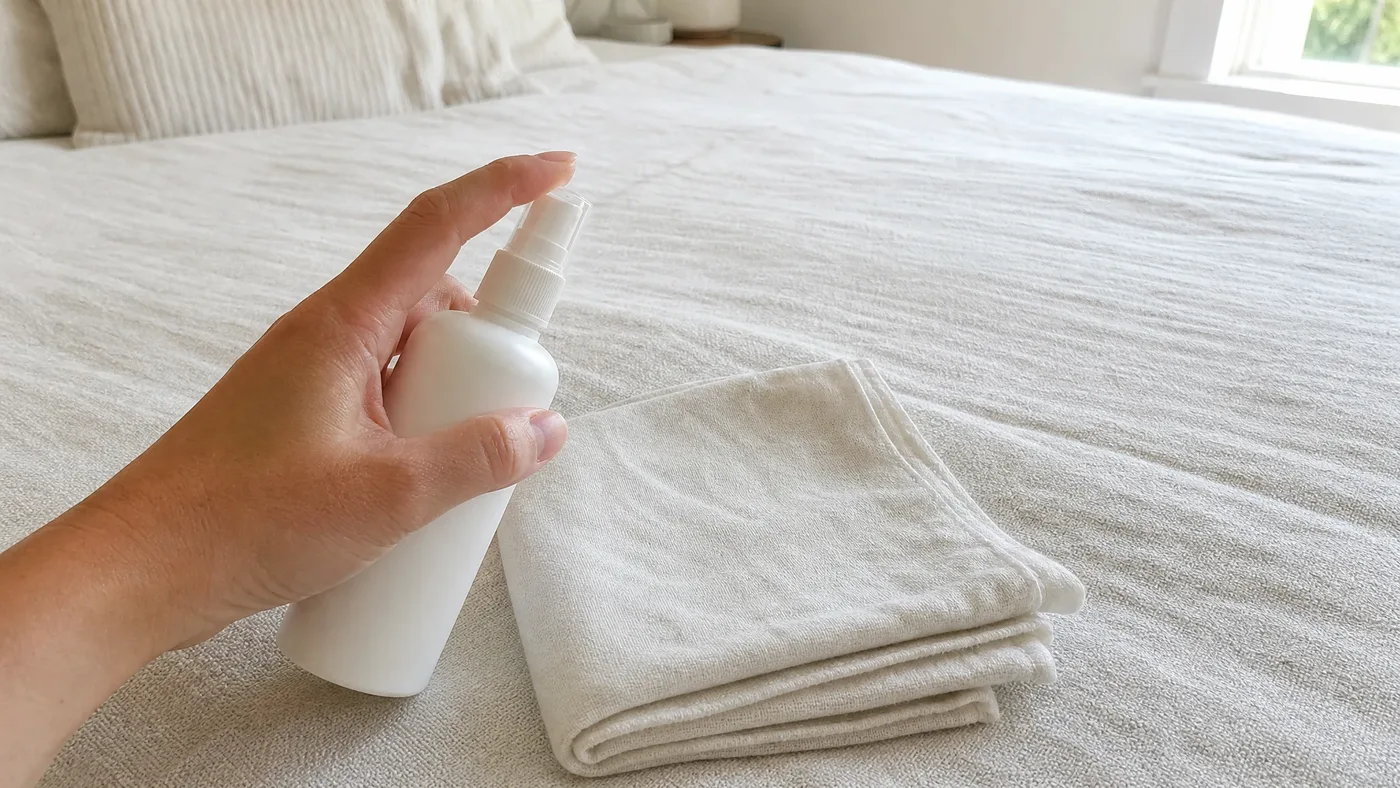
A light mist from an arm's length away is plenty. Linen sprays work best when the fabric is dry and the scent is allowed to settle before you judge it. Damp fabric smells different from dry fabric, and warm spice notes often seem louder in the first few minutes than they do an hour later, so give it time. If you smell it up close and it seems faint, resist the urge to add more to the bottle. Spray a little more cloth instead. A sprayed pillowcase, a curtain hem or a drawer liner that has dried for a few hours is a fairer test than a sniff of the bottle.
Keep a note of how many sprays each item received, so you can repeat what worked and skip what overwhelmed the room.
Water needs a preservative
Any product with water in it needs a preservative system chosen for it. A little eugenol in a spray is a fragrance load, not a preservative, so a home spray used within days is a different matter from a bottle with months on the label. For anything you sell, a cosmetic chemist should pick the preservative and a lab should run a challenge test.
Where IFRA draws the lines
The eugenol Standard allows 4.0% in the finished product for Category 10A, which IFRA's guidance uses for fabric enhancing sprays, and 18% for Category 10B, which covers manual air freshener sprays (IFRA Standards, 51st Amendment). A 1% fragrance spray cannot reach 4.0% eugenol even if the whole blend were eugenol; a 5% fragrance spray that is 80% eugenol would sit exactly on it. Which category your product belongs to depends on how you label and sell it, and limits change between amendments. Our IFRA explainer has the whole table.
People and pets in the room
Pet Poison Helpline lists clove among the oils that can poison animals, with cats and birds at greatest risk (Pet Poison Helpline). Eugenol oil is an isolate from clove oil rather than an essential oil, but a mist around cats, birds and bedding they lie on is still a poor idea, and our pets article goes through the routes. If you want a slower scent in a room, the reed diffuser dosing guide is the better fit. Skip sprays if the fabric is pale silk you cannot spot test or if the household has birds.
A clear bottle starts with a small trial batch and a patient week of watching it.
Sources & Further Reading
- NCBI PubChem, eugenol (CID 3314): pubchem.ncbi.nlm.nih.gov/compound/Eugenol
- IFRA Standards, 51st Amendment (eugenol): ifra-standards-51st-amendment.pdf
- Pet Poison Helpline, essential oils: petpoisonhelpline.com