Does Eugenol Oil Go Bad? How to Judge an Old Bottle
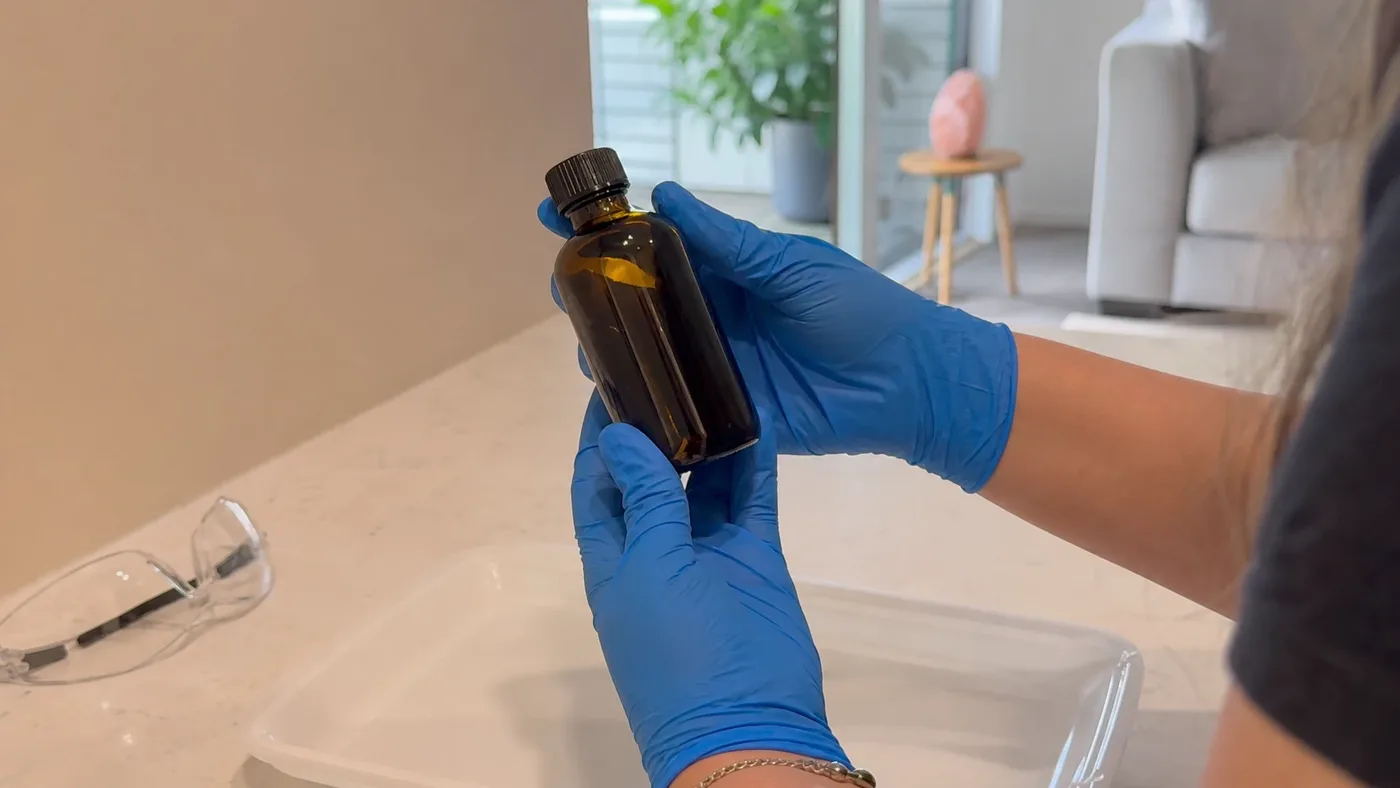
Hold an old bottle of eugenol oil up to a window and you may find it a shade or two deeper than the pale yellow you remember. Before you reach for the bin, it helps to know that darkening is the normal way this material ages, and that colour is only the first of three things worth checking.

Colour tells you about air, not yet about quality
The reference record on eugenol says it "darkens and thickens on exposure to air" ( Eugenol | C10H12O2 | CID 3314 - PubChem ). It turns toward amber once air has been at it, which is ordinary behaviour for a phenol, and a part-used bottle ages faster than a sealed one. Laboratory work on how eugenol oxidises, done with an enzyme rather than in a bottle, found it forms reactive intermediates that go on to make insoluble polymeric material ( Peroxidase-catalyzed oxidation of eugenol: formation of a cytotoxic metabolite(s) ). Reasoning from that, a darker and thicker bottle is consistent with molecules slowly joining up. That is an inference; we know of no study that analysed an aged commercial bottle.
So how long do we expect a bottle to last? We say typically 2 to 4 years, kept tightly capped in a cool, dark place, and every size we sell comes in dark glass. Treat that as a guide for a sealed or well-kept bottle, not as a date on which anything happens. Our storage guide explains how headspace speeds things up, and why eugenol turns amber goes into the chemistry.
A three-step check for an old bottle
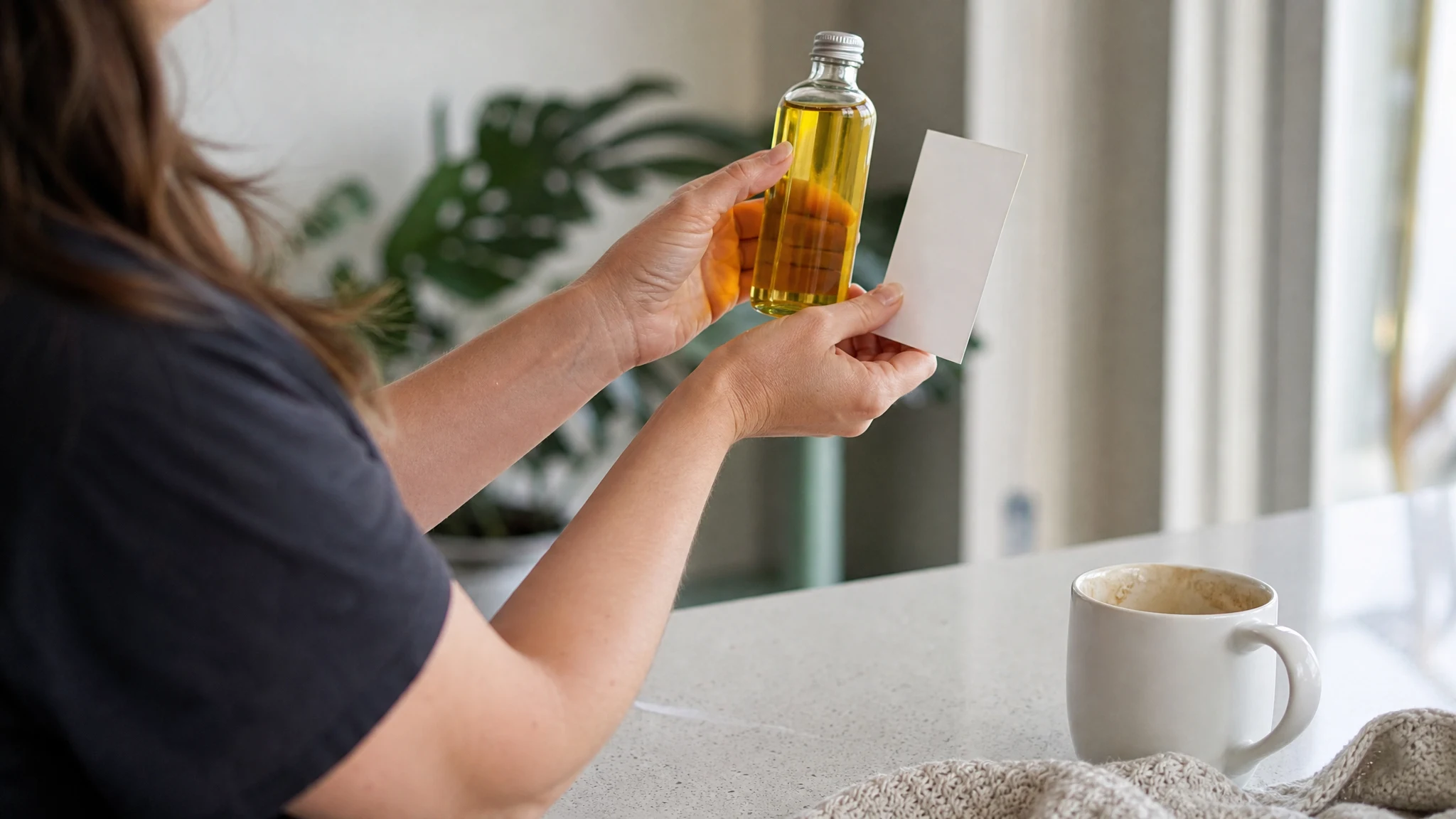
- Look through the side of the glass against a white card. Pale yellow to amber is the expected range. A deep brown that no longer lets light through is further along.
- Tilt it. Fresh eugenol runs like a thin oil. If it moves slowly, or you see a sticky film on the neck and the inside of the cap, the thickening the reference describes has started.
- Smell it from a few centimetres away, not with your nose in the neck. Compare it with how you remember the clean, warm, carnation-like scent. A flatter, sharper or sour note means the oil has changed.
Cloudiness or particles are a separate signal. They can mean contamination, such as water or residue from the threads, and are a reason to stop using that bottle.
What to do with what you find
If the colour is the only change, you have a part-aged oil. For a rough-and-ready use such as refreshing a pot of dried flowers, it is a fair place to spend it, and the amber will not show. Our potpourri guide has the numbers.
Skin-contact products are where we would be stricter. Eugenol is a recognised skin sensitiser and skin limits for it are low; the fragrance industry puts the leave-on ceiling around half a percent in many products. We do not know what is in an aged bottle, and that unknown is the reason we would use fresh oil for anything that touches skin and retire a thick, sticky or sharp-smelling one. Our guide to allergy versus irritation explains the difference.
Throwing it away needs a little care too. Do not pour it down the drain; soak it into paper or a bit of cat litter, seal it in a bag and put it in household waste, or ask your local waste authority whether it prefers a hazardous waste drop-off. Keep the paper away from pets.
Making the next bottle last
You control one variable more than any other: the amount of air in the bottle. Decant working amounts into a small dark airtight bottle, cap it firmly and wipe the thread before closing. If a bottle is half empty and will sit for months, pour it into a smaller one so the oil reaches the shoulder. None of this is fussy, and it adds real months to the useful life of a bottle you want to finish.
An amber bottle is just an older bottle, and a few seconds with the window and a white card will tell you what it still has to give.
Sources & Further Reading
- Eugenol | C10H12O2 | CID 3314 - PubChem, National Center for Biotechnology Information
- Peroxidase-catalyzed oxidation of eugenol: formation of a cytotoxic metabolite(s), Thompson et al., Journal of Biological Chemistry 1989