Why Do Old Chypres and Fougères Smell Different Now?
It is tempting to blame clove for what happened to the classic chypres and fougères. Eugenol is the famous restricted spice, so it gets the credit. But if you read the rules side by side with what those families are made of, the ingredients that really reshaped them are oakmoss and isoeugenol, and eugenol turns out to be the roomy one.
What defines the two families
A chypre is usually described as a fragrance with citrus, floral, woody or patchouli, mossy and musky facets, and it needs an inflection of oakmoss or treemoss. Perfume writer Victoria of Bois de Jasmin traces the family to Coty's 1917 Chypre, which leaned on an aroma-chemical called isobutyl quinoline for the oakmoss radiance (Bois de Jasmin, 2020). She also notes that moss restrictions pushed perfumers toward a combination of other naturals and synthetics for the mossy effect, and that at least one modern chypre uses no oakmoss yet keeps a chypre darkness.
Fougère is more of a fantasy accord, but a 2011 study of six French ferns analysed their volatiles by GC-MS and concluded that coumarin, (E)-2-hexenal, (Z)-3-hexenol and 1-octen-3-ol are the main odorous components of fougère-family perfumes (Froissard et al., Natural Product Communications, 2011). Hay, green leaf, mushroom. Clove does not appear in either description.
If you have ever smelled an old bottle of a classic mossy perfume on a relative's dressing table, you know the feeling: dark, green, a little dusty, slightly mysterious. Modern versions are often lighter and cleaner. It is a pleasure to trace why, and eugenol is only a small part of that story.
Where eugenol sneaks in anyway
Eugenol still matters in these perfumes, because you do not have to add the isolate to get it. IFRA's annex of typical natural contributions lists eugenol at about 18% in carnation absolute, 2.3% in rose absolute, 2% in jasmine absolute and 0.5% in ylang ylang oils, with clove bud oil around 82% (IFRA Eugenol Standard, Amendment 49 text with Annex). IFRA's guidance adds that a restricted material counts whether it is added directly or indirectly, so a rose, jasmine and ylang heart spends part of the eugenol budget before you add a drop.
It helps to know what a carnation smells like as a flower, too. A 2013 Japanese study found most modern carnation cultivars have weak scents dominated by methyl benzoate, while some wild Dianthus species and their hybrids emitted eugenol in large amounts (Kishimoto et al., 2013). The clove-and-carnation note in perfumery is therefore a built idea, which is why our carnation accord walk-through and the vintage soliflore piece treat it as a design choice.
Three ceilings, one category
Fine fragrance and solid perfume sit in IFRA's Category 4. In the 51st Amendment, the maximum in the finished product for that category is 2.5% for eugenol, 0.11% for isoeugenol and 0.10% for oakmoss extracts (IFRA Standards, 51st Amendment; categories per the IFRA Guidance). Simple division shows eugenol's ceiling is about 23 times isoeugenol's and 25 times oakmoss's.
Here is what that means for a perfume at 20% concentrate, as an illustration only. The ceiling of 2.5% allows eugenol up to 12.5% of the concentrate, but isoeugenol only up to 0.55% and oakmoss only up to 0.5%. At 10% concentrate the figures double. A carnation and spice heart built on eugenol has plenty of headroom. A heart that leaned on isoeugenol, or a mossy base that needed a generous hand of oakmoss, gets squeezed hard.
How to smell the difference yourself
If you can get hold of an older sample and a modern version, smell them on separate strips, one after the other, with a rest for your nose between. You will notice that the modern one often opens brighter and dries down sooner, and that the older one stays dark and mossy for hours. You do not need to name the ingredients to enjoy that difference; just write down what you smell and in what order.
Then go back to the spice. In a chypre-style heart, a little carnation-clove warmth sits underneath the florals and gives them depth, which is a quieter job than the headlines suggest.
A better way to read a vintage brief
- Name the category first. Fine fragrance and solid perfume are Category 4. A lotion-type product sits elsewhere, with a lower eugenol number (0.64% for Categories 5A to 5C).
- Add up the eugenol from every material, using your supplier's analysis where you have it and IFRA's typical figures where you do not. Our IFRA limits article shows the sums.
- Check any isoeugenol or oakmoss line in the brief against its own standard. Our eugenol and isoeugenol comparison explains why the two cannot swap places.
- Check the current IFRA amendment, because limits change, and have a regulatory specialist sign off anything you sell.
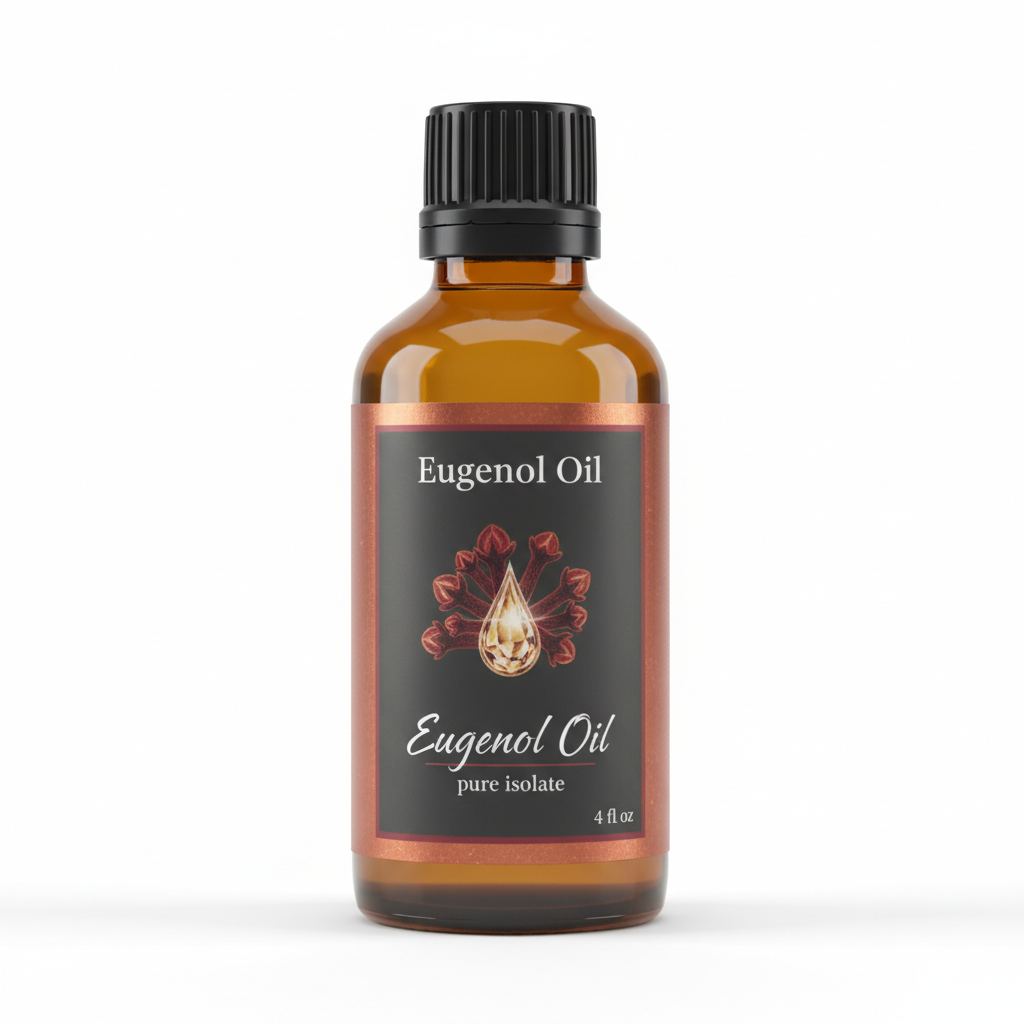
We sell eugenol oil only, a refined isolate from clove oil, so oakmoss and isoeugenol are for another supplier. What we can say is that the spice in a chypre or fougère heart has more room than the headlines suggest, and the moss is where the real puzzle sits.
Sources & Further Reading
- IFRA, 2023. IFRA Standards, 51st Amendment (Eugenol, Isoeugenol, Oakmoss extracts). ifra-standards-51st-amendment.pdf
- IFRA, 2023. Guidance for the use of IFRA Standards, 51st Amendment. ifra-51st-amendment-guidance.pdf
- IFRA Eugenol Standard, Amendment 49 text with Annex of natural contributions. perfumersworld.com copy of the Eugenol Standard
- Froissard D, et al., 2011. Volatiles of French ferns and "fougere" scent in perfumery. Natural Product Communications. pubmed.ncbi.nlm.nih.gov/22224297
- Kishimoto K, et al., 2013. Analysis of scents emitted from flowers of interspecific hybrids between carnation and fragrant wild Dianthus species. J Jpn Soc Hortic Sci. jstage.jst.go.jp
- Bois de Jasmin, 2020. Revolutionary Perfume: A Brief History of Chypre. boisdejasmin.com