
How to Read a Eugenol SDS: The Sections That Matter
A safety data sheet is not a quality certificate and not a usage guide: it tells you how the supplier classifies the hazards of the material and what to do when handling goes wrong. It will not tell you how much you can put in a candle, or whether the lot you received is what the label says. Mixing up the SDS, the certificate of analysis and the IFRA certificate is the commonest way to ask the wrong document the right question.
Which document answers which question
| Your question | Document | What it can and cannot say |
|---|---|---|
| How do I handle, store, spill-clean and dispose of this? | SDS | The supplier's hazard classification and handling guidance. Not an identity or purity test. |
| Is this lot what it claims, and what is its assay? | COA | Test results for one batch. The COA on our shop page reports density and refractive index only (how to read one). |
| How much of this fragrance mixture may go in my product category? | IFRA certificate | Issued by a company that formulates fragrance mixtures, for mixtures. IFRA says certificates are "generally not issued for raw materials". |
| Which declarable allergens are in the mixture, and how much? | Allergen declaration | A list of declarable fragrance allergens with their levels. Ask the supplier whether one exists; do not assume the IFRA certificate carries it. |
The IFRA wording comes from IFRA's certificates page, which also says IFRA does not issue certificates itself and that a certificate "does not replace a safety assessment" (IFRA, certificates page). So for a single material such as eugenol, the IFRA certificate is not the normal document to expect; the SDS and COA are. Our site does not publish an SDS or an IFRA certificate, and we will not imply that it does. Ask any seller, us included, in writing which documents exist for the lot you are buying.
The sixteen sections, and which five to read first
OSHA's Hazard Communication rule requires an SDS to follow a fixed 16-section order: Identification; Hazard(s) identification; Composition/information on ingredients; First-aid measures; Fire-fighting measures; Accidental release measures; Handling and storage; Exposure controls/personal protection; Physical and chemical properties; Stability and reactivity; Toxicological information; Ecological information; Disposal considerations; Transport information; Regulatory information; and Other information, including date of preparation or last revision (29 CFR 1910.1200, eCFR). Appendix D labels sections 12 to 15 as "not mandatory". We read the US rule. If you buy from or sell into the EU or UK, the SDS follows that region's regulation, which we did not read, so ask an industrial hygienist or regulatory specialist what applies to you.
Start with these five:
- Section 3, Composition. For a single substance it gives the chemical name, synonyms and CAS number. Check that it says eugenol and matches the label. For a mixture, Appendix D requires the name and concentration of each health-hazard ingredient above its cut-off, with exact percentages unless a trade-secret claim applies, or batch variability or a group of similar mixtures allows ranges. A trade-secret claim must be stated on the sheet.
- Section 2, Hazard identification. The classification, signal word, hazard statements, pictograms and precautionary statements. See the worked example below.
- Section 9, Physical and chemical properties. Eighteen items, including appearance, odour, flash point, relative density, solubility and viscosity.
- Section 8, Exposure controls and personal protection. The exposure controls and protective equipment the supplier specifies; compare them with how you actually work.
- Section 16, date of preparation or last revision. An undated or years-old sheet is a reason to ask for a current one.
Worked example: reading Section 2 for eugenol
PubChem aggregates the classifications that companies notified to the European Chemicals Agency. For eugenol, across 2,820 reports, the share carrying each statement is: H317 "May cause an allergic skin reaction" in 99.8%; H319 "Causes serious eye irritation" in 80.4%; H315 "Causes skin irritation" in 20.6%; H302 "Harmful if swallowed" in 17.3%. The signal word is "Warning" and the pictogram GHS07. Five of the 2,820 reports say eugenol does not meet the criteria at all (PubChem, eugenol, GHS classification). The same page also lists a Japanese government entry, NITE-CMC, revised in fiscal 2025, that adds H336 (drowsiness or dizziness), H351 (suspected of causing cancer) and aquatic toxicity statements, which the ECHA notifications do not carry. These are notifications, not an official verdict, and we could not see from the page whether an EU harmonised classification exists.
The lesson for a reader at a desk with two SDSs open: two suppliers of the same material can print different Section 2s without either being fraudulent, because classification can rest on the supplier's own data, jurisdiction and date. When they differ, take the stricter handling instructions and ask the supplier which classification they rely on. The one statement almost everyone agrees on, H317, is the skin-sensitisation one, which is why sensitisation is the main handling concern for makers.
Flash point: read the method, not just the number
PubChem's eugenol record lists a flash point of 219 F (NTP, 1992), about 104 C, and ">212 F (>100 C), closed cup" from the National Fire Protection Association's 2010 guide (PubChem, eugenol). The first entry does not state a method. On your SDS, look for "closed cup" or "open cup" next to the number, and treat a sheet that gives a flash point with no method as incomplete. A flash point is a lab ignition test on a heated sample of the neat liquid; it does not tell you what happens in a wax pool or a diffuser. For that, see our flash point post.
A blend's SDS can be silent about eugenol
OSHA's Appendix A uses cut-offs: for acute toxicity and skin corrosion or irritation, ingredients at 1% or more are relevant, though lower levels can matter if they are suspected to affect classification. Reasoning from that, a fragrance blend with a small eugenol share may carry an SDS that never names eugenol in Section 3, and that is no proof eugenol is absent. Eugenol is a fragrance allergen that must be declared on cosmetic labels above set thresholds in the EU and UK, which is the job of the allergen declaration, not the SDS. If your product is a cosmetic or you sell into those markets, request both documents, and read our compliance guide and IFRA explainer for what each is for.
How to request one, and what to check on arrival
- Ask in writing for the SDS for the specific product and lot, in the format required for your country, and the date it was prepared.
- Check Section 3 against the label. Check that Section 16 has a date.
- Compare Section 9's flash point and density with the COA for the same lot. A mismatch means one document is for a different material.
- If a section says "no data available" for a property the COA reports, ask which is current.
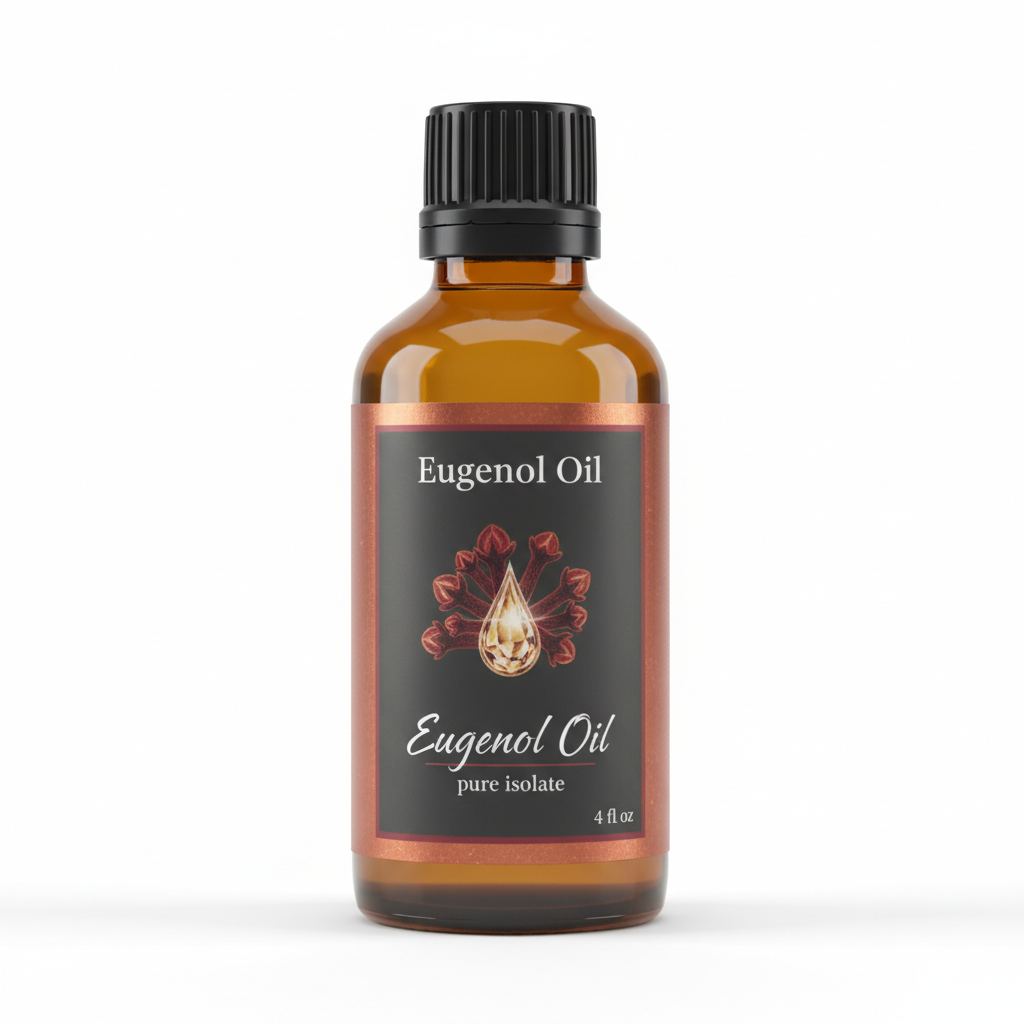
Our eugenol oil is a refined isolate from clove oil, sold undiluted and not offered for dental use or internal use. The published COA on our site covers one batch, and no SDS is published there, so a lot-specific SDS is a document to ask for before you plan around it. Whether a given sheet is adequate for your jurisdiction is a question for an industrial hygienist, regulatory specialist or attorney, not for a product page.
An SDS answers "what is the hazard and how do I handle it", the COA answers "what is in this lot", and the IFRA certificate answers "how much in this product"; buy the three documents as three separate answers.
Sources & Further Reading
- OSHA, 29 CFR 1910.1200 and Appendix D (Safety Data Sheets), via eCFR. ecfr.gov/current/title-29/section-1910.1200
- PubChem. Eugenol (CID 3314): GHS classification (ECHA C&L notifications, NITE-CMC, HCIS) and flash point. pubchem.ncbi.nlm.nih.gov/compound/3314
- IFRA. IFRA certificates. ifrafragrance.org/safe-use/ifra-certificates