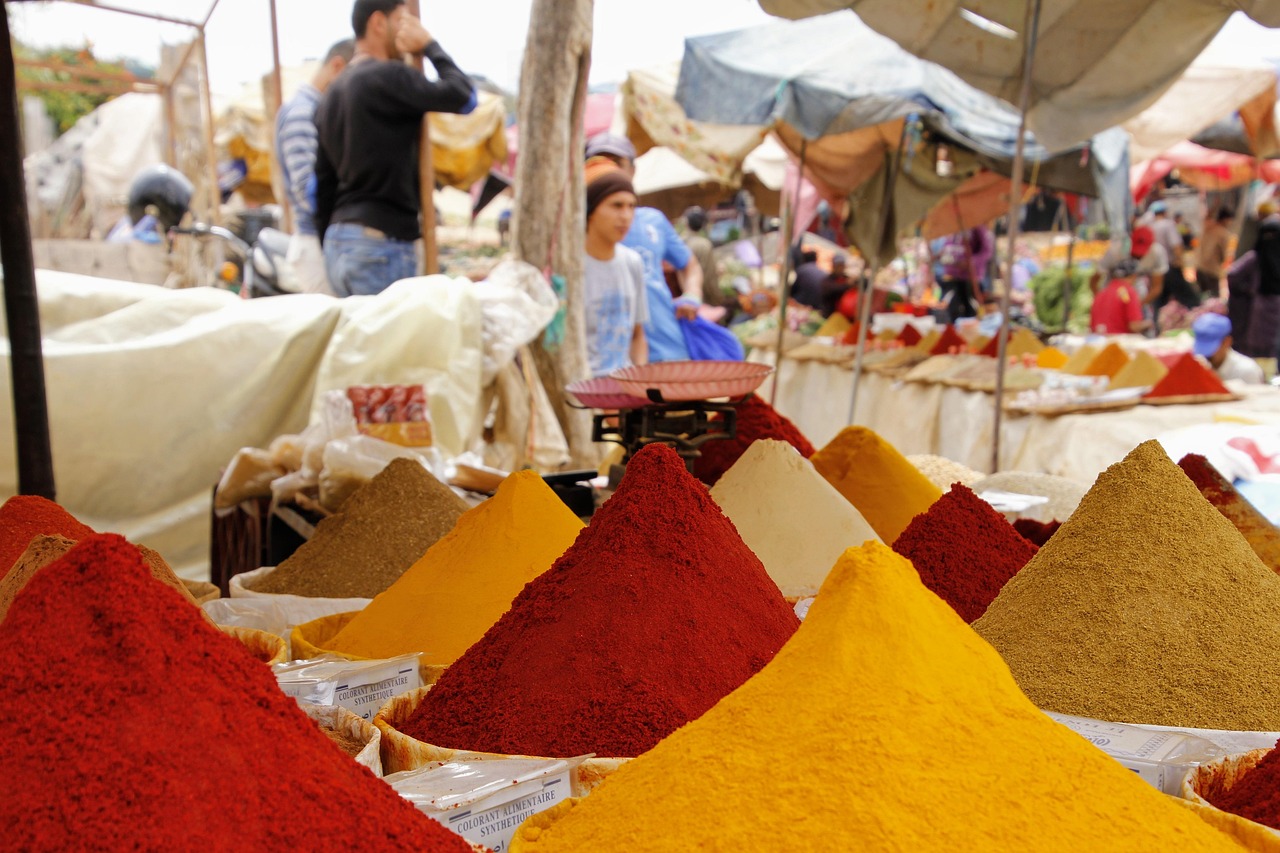
A Signature Oriental Spice Blend Featuring Eugenol
There is a particular kind of fragrance that feels like stepping into a candlelit room lined with old wooden shelves and leather-bound books. Deep, slightly sweet, resinous, and warm. That is the territory an oriental spice blend inhabits, and eugenol oil is the molecule that makes it possible to build that atmosphere from scratch.
Eugenol is the dominant aromatic compound found in clove bud oil, and in its refined, isolated form it becomes one of the most useful raw materials in a home perfumer's cabinet. It anchors blends, extends lighter notes, and adds a richness that synthetic musks simply cannot replicate. When you pair it with the right frankincense, something genuinely beautiful happens.
This guide walks you through a complete eugenol perfume blend built around Boswellia carterii frankincense, including the full recipe, step-by-step instructions, safety notes, and several variations to make the formula your own. If you are new to working with eugenol, the article on formulating with eugenol is an excellent place to build your foundation before diving in here.
Why Boswellia Carterii Suits This Blend
Frankincense is not a single ingredient. The genus Boswellia encompasses more than a dozen commercially significant species, each with its own resin chemistry, harvest region, and aromatic personality. Choosing the right variety is not a matter of prestige. It is a matter of fit.
Boswellia carterii is sourced primarily from Somalia and the Horn of Africa. Its essential oil is steam-distilled from the dried resin tears of the tree, and it yields a profile that sits at the intersection of citrus, pine, and soft balsam. The opening note is almost bright, with a lemony lift that fades into a warm, slightly powdery base. That powdery quality is the key characteristic that makes carterii the right frankincense for an oriental spice context.
Where some frankincense varieties push toward green or medicinal directions, carterii stays smooth and approachable. It does not fight with eugenol's clove-like intensity. Instead, it provides a clean, resinous lift beneath the spice, creating vertical contrast in the accord. The result is a blend that feels rounded and full rather than flat or one-dimensional.
You can explore this oil further and source high-quality carterii at the carterii product page, where sourcing details and batch information are available.
For a broader look at how eugenol behaves across the calendar year, the piece on eugenol in autumn and holiday fragrances covers the seasonal context beautifully.
Aroma Architecture of the Blend
Before looking at the ingredient list, it helps to understand the structural role each material plays.
- Eugenol oil (refined): The heart and spine of the blend. It delivers the warm, spicy clove character that defines the oriental spice identity. In this formula it appears as the dominant mid-note.
- Boswellia carterii frankincense: The bridge between the spice and the softer elements. It opens the blend and prevents it from feeling heavy or one-note.
- Sandalwood essential oil (Australian or Mysore): A creamy, woody base that softens eugenol's edges and extends the dry-down beautifully.
- Benzyl benzoate (natural isolate): A gentle, faintly floral fixative that improves diffusion and longevity without adding a competing scent profile.
- Rose absolute (diluted, 10% in jojoba): Used sparingly, the rose adds a lush, honeyed quality that elevates the blend from simple spice into something more complex.
- Vanilla absolute or CO2 extract: A soft, sweet anchor in the base. It harmonizes with eugenol naturally because eugenol and eugenyl acetate share aromatic territory with vanillin.
- Fractionated coconut oil (FCO): The carrier. Odorless, stable, and well-suited to skin application.
Full Ingredients List
This recipe produces approximately 10 ml of finished blend at a 5% dilution, appropriate for a perfume oil worn on pulse points. Scale proportionally for larger batches.
| Ingredient | Drops | Milliliters (approx.) | Role |
|---|---|---|---|
| Eugenol oil (refined) | 12 | 0.60 ml | Heart / spice core |
| Boswellia carterii frankincense EO | 10 | 0.50 ml | Top-to-mid bridge |
| Australian sandalwood EO | 8 | 0.40 ml | Woody base |
| Benzyl benzoate (natural) | 6 | 0.30 ml | Fixative, diffusion |
| Rose absolute (10% dilution in jojoba) | 4 | 0.20 ml | Floral lift, depth |
| Vanilla CO2 extract | 4 | 0.20 ml | Sweet base anchor |
| Fractionated coconut oil | To fill to 10 ml | ~7.80 ml | Carrier |
Total aromatic concentrate: approximately 0.50 ml (5% of final volume). This places the formula within a safe, comfortable range for a leave-on skin application.
Step-by-Step Blending Instructions
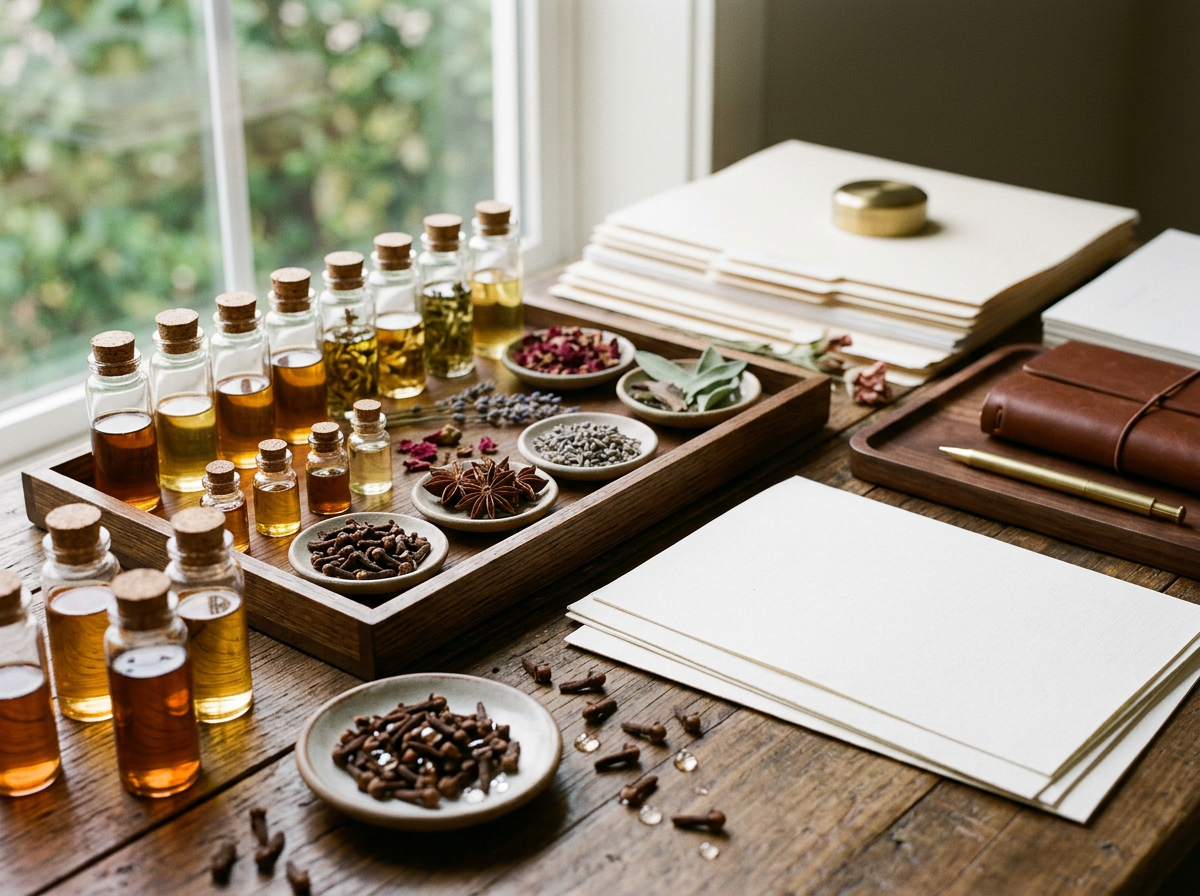
- Gather your materials. You will need a 10 ml amber glass roll-on or dropper bottle, a clean pipette or dropper for each material, a digital scale accurate to 0.01 g, and a blending strip or small strip of unbleached card for initial assessment.
- Pre-measure everything. Measure each aromatic ingredient into a small glass beaker before combining anything. This prevents over-pouring and allows you to adjust before commitment.
- Combine the aromatic concentrate first. Add eugenol, frankincense, sandalwood, benzyl benzoate, rose dilution, and vanilla into the beaker in that order. Stir gently with a clean glass rod for about 20 seconds.
- Assess on a blending strip. Dip a strip into the concentrate and let it dry for two minutes. The wet impression will be spice-forward and bright. Give it five minutes and you will notice the carterii frankincense beginning to settle in below the clove note, with sandalwood appearing at the edges.
- Adjust if needed. If the blend feels too sharp, add one extra drop of vanilla or sandalwood. If it feels flat, add one extra drop of frankincense. Reassess on a fresh strip before proceeding.
- Add the carrier. Transfer the concentrate into your 10 ml bottle, then fill to volume with fractionated coconut oil. Cap and gently roll the bottle between your palms for 30 seconds to integrate.
- Rest the blend. Place the capped bottle in a cool, dark drawer for a minimum of 48 hours. The aromatic materials need time to marry. The character of the blend on day one will be noticeably different from day five. Many perfumers prefer to wait a full week before final evaluation.
Dilution, Safety, and Patch Testing
Eugenol is a potent compound, and working with it responsibly is simply good practice. The 5% dilution in this formula is appropriate for most adults using the blend on pulse points in small quantities. Avoid using higher concentrations without a thorough understanding of your skin's sensitivity.
Patch test protocol: Apply a small amount of the finished blend (not the concentrate) to the inside of your forearm. Leave it undisturbed for 24 hours. If you notice redness, itching, or unusual warmth, discontinue use and rinse the area thoroughly with plain water. Do not apply the blend over broken or recently sun-exposed skin.
- Keep all aromatic concentrates away from eyes and mucous membranes.
- This formula is not intended for children under 12 or during pregnancy without guidance from a qualified healthcare provider.
- Do not apply to skin immediately before sun or UV lamp exposure, as some aromatic compounds may increase photosensitivity.
- Benzyl benzoate is a known sensitizer in some individuals. If you have reacted to balsam-rich fragrances before, perform a careful patch test and consult a healthcare provider if you have questions.
For a deeper look at common formulation errors, including over-use of eugenol and carrier missteps, the article on beginner mistakes when formulating with eugenol covers the topic in helpful detail.
Storage and Shelf Life
Store the finished blend in a sealed amber or cobalt glass bottle, away from heat and direct light. A cool drawer or a small dedicated fragrance cabinet works well.
Expected shelf life is 12 to 18 months when stored correctly. The carrier oil (fractionated coconut oil) is highly stable and resists oxidation well compared to other carriers, which contributes to the formula's longevity. The eugenol itself is also quite stable.
Signs that a blend has turned: a sharp, rancid, or sour quality that was not present in the original. If the scent character changes significantly, it is time to make a fresh batch.
Label your bottle with the blend name, date of creation, and dilution percentage. This simple habit becomes invaluable once your collection grows.
Variations on the Base Formula
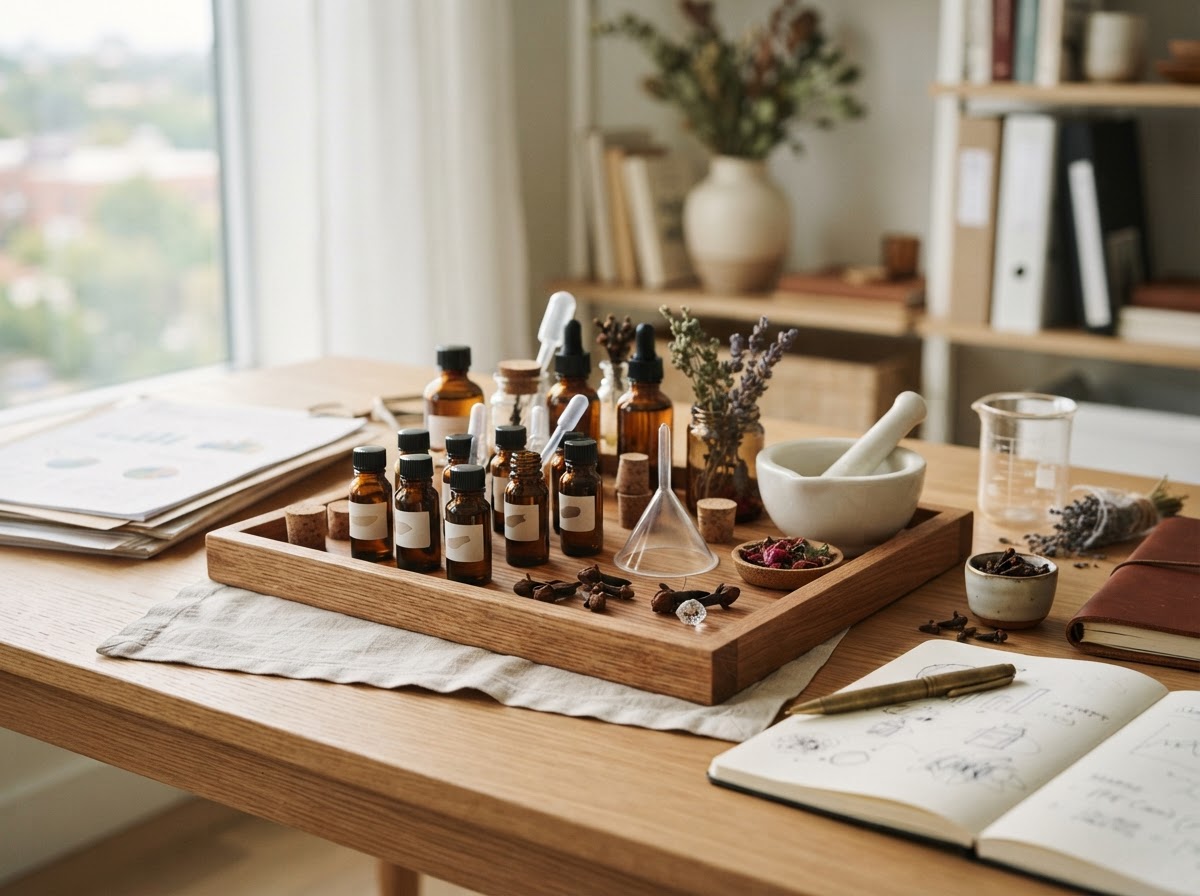
The base recipe is intentionally restrained. That makes it a strong platform for exploration. Here are three directions worth considering.
Variation 1: Smoky Oud Accord
Reduce sandalwood to 5 drops. Add 3 drops of oud essential oil (or oud accord if cost is a concern) and 2 drops of vetiver essential oil. The result leans darker, smokier, and more assertively oriental. The carterii frankincense plays a more prominent role here because the citrus-resinous lift it provides contrasts beautifully with vetiver's earthy heaviness.
Variation 2: Soft Amber and Citrus
Add 4 drops of bergamot essential oil to the concentrate and reduce eugenol to 9 drops. Bergamot's bright, slightly floral character softens the spice considerably and introduces a more accessible, daytime-appropriate quality. This variation suits lighter skin application and works especially well in cooler months when a full oriental spice profile might feel heavy for everyday wear.
Variation 3: Black Pepper and Cedar
Replace sandalwood with 6 drops of Atlas cedarwood. Add 3 drops of black pepper essential oil. This version carries a drier, more aromatic character with a peppery bite that sits alongside the eugenol note rather than beneath it. It is the most unisex of the three variations, with a clean, slightly austere quality that appeals to those who find the vanilla-forward base too sweet.
Using the Blend as a Warm Spice Fragrance in Other Formats
This concentrate is designed for skin application, but the aromatic profile translates well to other formats with minor adjustments.
For a room diffuser oil, prepare the concentrate without the carrier and dilute it in a neutral diffuser base at 3 to 4%. Avoid applying undiluted aromatic concentrates directly to diffuser pads or reed sticks.
For a solid perfume, melt a small quantity of beeswax (approximately 1 g per 5 ml of finished volume) with the fractionated coconut oil before adding the aromatic concentrate. Pour into a small tin while still warm and allow to set completely before use. The slow-diffusion quality of a solid format suits this blend particularly well, as the heavier base notes in the oriental spice accord benefit from gradual release against warm skin.
For a linen mist, dilute the aromatic concentrate at 1 to 1.5% in a base of distilled water and a small amount of polysorbate 20 to aid dispersion. Shake before each use. This concentration is lower than skin application, but the aromatic character of carterii frankincense and eugenol carries through effectively even at reduced percentages.
Final Thoughts on the Blend
An oriental spice blend built around eugenol is one of the most rewarding projects in natural perfumery. The ingredients are relatively accessible, the aromatic effect is immediate, and the formula rewards patience during the resting period in a way that synthetic fragrance oils simply do not.
Boswellia carterii earns its place at the center of this formula. Its smooth resinous lift keeps the blend from collapsing into pure spice, and its compatibility with eugenol across the full arc of the dry-down is something that becomes clearer with every batch you make. Give it the resting time it deserves, adjust the variations to match the mood or season, and let the warm spice fragrance develop into something that feels genuinely personal.