
A Clove-Rose Signature Blend: Eugenol Meets the Queen of Flowers
Some aromatic pairings feel inevitable. Rose and clove have been companions in perfumery for centuries, woven into attars, potpourris, and oriental accords long before synthetic molecules entered the picture. What makes this pairing endure is simple: eugenol oil, the refined aromatic compound at the heart of clove, possesses a warmth and depth that rose petals seem to genuinely want beside them. The spice lifts the floral. The floral softens the spice. The result is a clove rose blend that reads as intimate, complex, and surprisingly wearable.
This guide walks you through building that accord from scratch, using high-quality eugenol oil alongside one very specific frankincense variety as a base anchor. We will cover every measurement, every step, and every safety consideration you need to work with confidence.
Why Frankincense Serrata? The Quiet Anchor This Blend Needs
Most clove-rose formulas lean heavily on a musk or a woody base to prevent the accord from floating away. Frankincense serrata takes a different approach. Where carterii can feel almost citrus-bright in its opening and sacra tips toward the frankly resinous, frankincense serrata settles into a dry, slightly earthy, balsamic warmth that sits just underneath the other materials without competing for attention.
Serrata is sourced primarily from Boswellia serrata trees native to India, particularly from the dry forests of Rajasthan and Madhya Pradesh. The resin has been a cornerstone of Indian incense culture for a very long time. Its aroma profile is softer and less camphorous than many African frankincense varieties, with a gentle powdery drydown that complements rather than crowds a rose note.
In a spicy floral blend, you need a base that does two things: it holds the lighter materials so they do not evaporate too quickly, and it contributes its own quiet character to the story. Serrata does both. Its tenacity is excellent in a carrier oil base, and its powdery-balsamic character reads almost skin-like in the drydown, giving the finished blend that seamless quality that separates a polished eugenol rose perfume from a simple mixture of oils.
If you want to explore how eugenol behaves across a wider range of base and mid materials, the full breakdown in Formulating with Eugenol: The Ultimate Blending and Accord Guide is worth bookmarking before you start.
Full Ingredients List
This formula produces approximately 10 ml of a finished blend at a 5% dilution in a carrier oil, suitable for use as a personal fragrance oil applied to pulse points. All essential oil measurements are given in both drops (approximate, using a standard 20-drops-per-ml dropper) and milliliters for precision formulating.
| Ingredient | Role in Blend | Drops | Milliliters |
|---|---|---|---|
| Eugenol oil (refined) | Spice heart, clove character | 4 drops | 0.20 ml |
| Rose otto or rose absolute (diluted 10% in jojoba) | Floral heart, soft richness | 6 drops | 0.30 ml |
| Frankincense serrata essential oil | Balsamic base, longevity anchor | 6 drops | 0.30 ml |
| Geranium bourbon essential oil | Bridge note, rosy-green lift | 4 drops | 0.20 ml |
| Cedarwood atlas essential oil | Soft woody support | 4 drops | 0.20 ml |
| Fractionated coconut oil (or jojoba) | Carrier, dilution base | N/A | 9.50 ml |
Total essential oil content: 24 drops (approximately 1.20 ml), yielding a final concentration of roughly 5% in 10 ml finished product. If you are using rose absolute already pre-diluted at 10% in jojoba, the actual aromatic concentration from rose is significantly lower than the drop count suggests, which is why the formula uses a relatively generous amount.
Step-by-Step Blending Instructions
-
Gather and label everything first
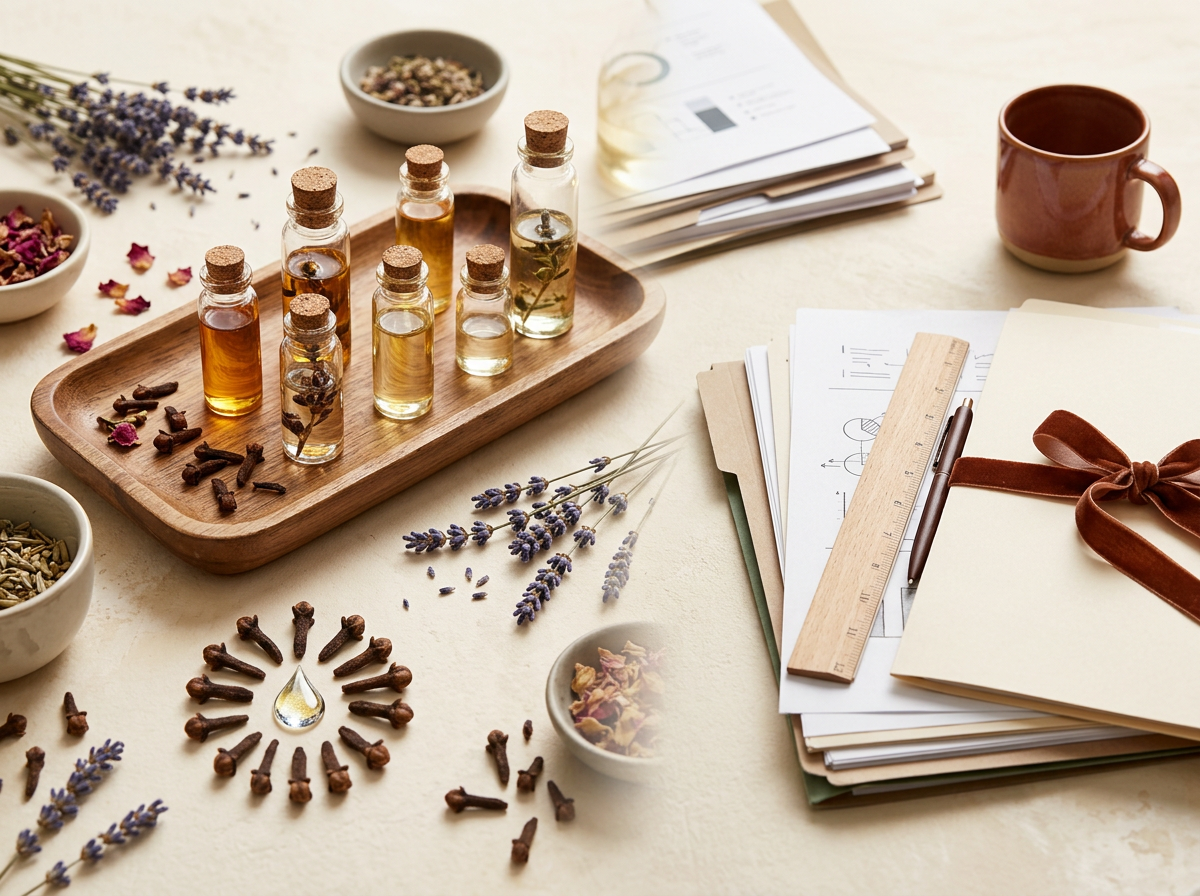
Set out your 10 ml amber glass roller bottle or dropper bottle, your pipettes or graduated dropper, and all five aromatic materials. Label the bottle before you fill it. Rushing at the end leads to unlabeled bottles you will not remember six months later.
-
Add the base note first
Drop the frankincense serrata into the bottle first. Base notes set the aromatic foundation and allow subsequent materials to orient themselves. Six drops. Cap the bottle briefly and give it one gentle swirl.
-
Add cedarwood atlas
Four drops of cedarwood atlas go in next. This soft woody material blends easily with the serrata and together they create a warm, slightly powdery platform for the florals.
-
Add the geranium bourbon
Geranium bourbon is the bridge in this formula. It carries both rosy and slightly green qualities that ease the transition between the eugenol spice and the rose heart. Add four drops now.
-
Add the rose material
Six drops of your pre-diluted rose otto or rose absolute. If you are working with undiluted rose otto (rare and expensive), reduce this to two drops and add four more drops of carrier. Rose absolute tends to give a richer, darker floral character; rose otto is lighter and more transparent. Both work beautifully here.
-
Add the eugenol oil last
Eugenol oil is potent. Adding it last means you can pause after two drops, take a quick strip smell, and decide whether you want the full four drops or prefer a lighter spice presence. For a classic eugenol rose perfume character, all four drops create the signature warmth. For something more floral-forward, three drops is sufficient.
-
Add the carrier oil
Pour or pipette the fractionated coconut oil into the bottle to bring the total volume to 10 ml. Seat the roller ball or dropper insert and cap firmly.
-
Rest the blend
Turn the bottle gently end-over-end five or six times to integrate the materials. Then set it aside in a cool, dark spot for at least 48 hours before evaluating the scent. Eugenol and rose both shift noticeably as a blend rests. The sharp edge of the clove softens, the rose deepens, and the serrata begins to pull everything together.
Dilution Ratios, Patch Testing, and Safety Notes
The formula above is built at 5% dilution, which is appropriate for a leave-on personal fragrance oil applied to small areas of skin such as wrists, inner elbows, or the base of the neck. If you wish to use this blend in a bath oil or a full-body lotion, reduce the essential oil concentration to 1 to 2% by scaling back the aromatic drops accordingly.
Eugenol and skin sensitization: Eugenol oil is a known sensitizer at higher concentrations. The International Fragrance Association (IFRA) sets usage limits for eugenol in leave-on skin products, and the 5% total dilution in this formula, with eugenol contributing only 0.20 ml of the total aromatic volume, falls within a conservative range for most adults. That said, individual sensitivity varies considerably.
Patch test protocol: Apply a small amount of the finished blend to the inner forearm. Leave it undisturbed for 24 hours without washing. If you notice any redness, itching, or unusual sensation, discontinue use. Never apply undiluted eugenol oil directly to skin.
Avoid contact with eyes and mucous membranes. Keep all blends away from children and pets. If you are pregnant or nursing, speak with a qualified healthcare provider before using any aromatic products on your skin.
For a deeper look at how eugenol interacts with other spice and floral materials from a formulating standpoint, the article on What Blends Well with Eugenol: 12 Partner Materials covers a wide range of combinations worth exploring.
Storage and Shelf Life
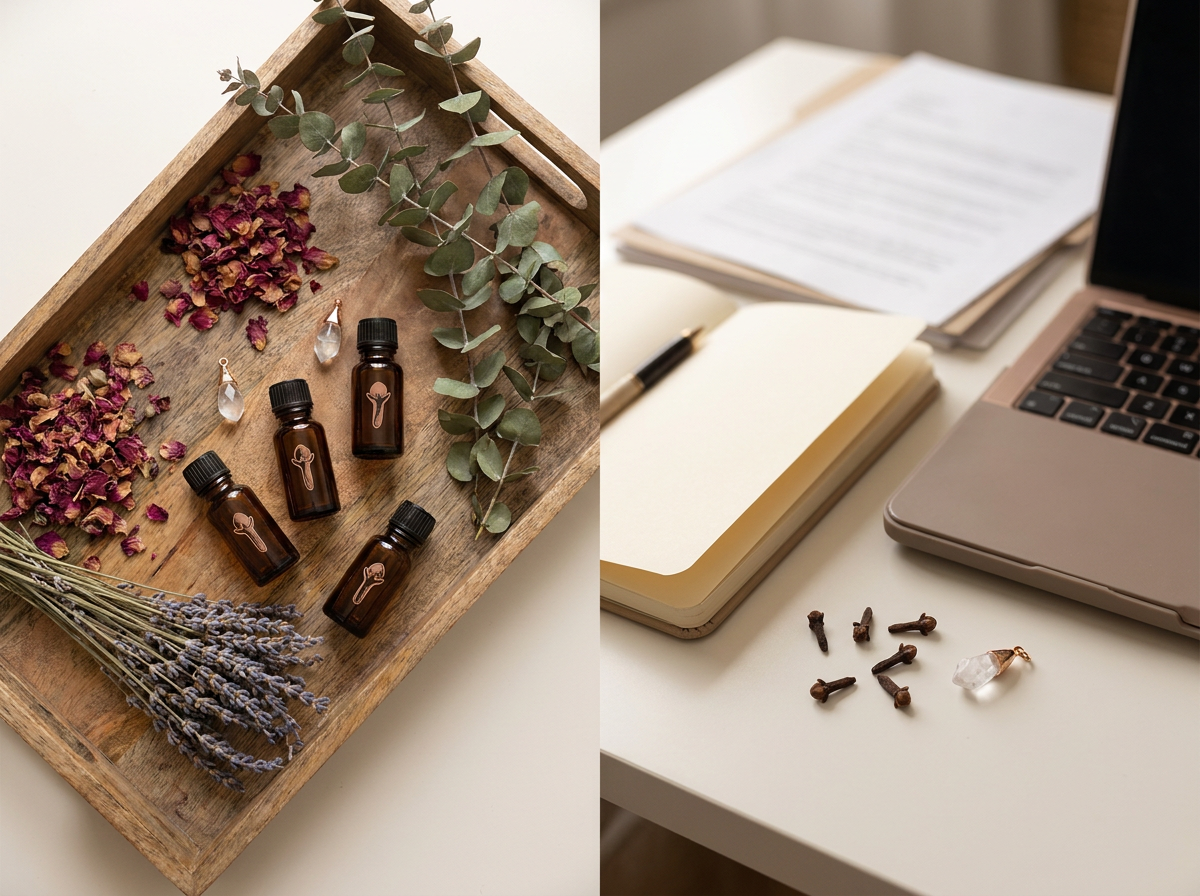
Store your finished blend in a tightly capped amber or cobalt glass bottle, away from direct sunlight and heat sources. A drawer, a cabinet, or a dedicated essential oil storage box all work well.
Fractionated coconut oil has an excellent shelf life of two or more years and does not go rancid quickly. Jojoba, technically a liquid wax, lasts even longer. The limiting factor in this formula is the essential oils themselves. Eugenol oil is relatively stable due to its phenolic nature. Rose absolute has a good shelf life when stored correctly. Frankincense serrata keeps well in a sealed bottle.
A well-stored 10 ml bottle of this blend should remain pleasant for 12 to 18 months. Label the bottle with the date you made it. If the scent develops an off or sharp note at any point, the carrier oil may have begun to turn and it is time to make a fresh batch.
Variations on the Clove-Rose Blend
Variation 1: Deeper Spice, Less Floral
Increase the eugenol oil to six drops and reduce the rose material to four drops. Add two drops of black pepper essential oil to introduce a sharper, greener spice facet alongside the warm clove character. This version is more unisex, reading as a spicy oriental rather than a clearly floral scent. The serrata base becomes more prominent in this configuration, which suits it well.
Variation 2: Green and Luminous
Keep the original formula but replace the cedarwood atlas with four drops of vetiver (Haiti or Reunion origin). Vetiver adds a green, rooty depth that creates an interesting contrast with the sweetness of the rose. The result is a spicy floral blend with an earthy undercurrent, closer in spirit to a vintage oriental than a contemporary fresh floral. This variation also benefits from an extended resting period of at least five days before your first evaluation.
Variation 3: Powdery and Soft
For a softer, more powdery interpretation, reduce the eugenol to two drops and add four drops of benzoin resinoid (diluted) alongside the serrata. Benzoin has a warm, vanilla-adjacent sweetness that reads almost edible in the drydown. Combined with the powdery balsamic character of serrata, this variation creates a clove rose blend that feels intimate and skin-like rather than boldly spiced. It works especially well as an evening wear formula.
If your interest in eugenol blending is expanding into related floral accords, the step-by-step walkthrough on Building a Carnation Accord Around Eugenol covers complementary techniques that pair naturally with what you have learned here.
A Few Final Notes on Working with This Blend
The clove-rose pairing rewards patience more than almost any other accord. Do not evaluate it the moment you seal the bottle. The materials need time to marry, and eugenol in particular tends to soften and round out considerably as a blend sits. What smells sharp and slightly angular on day one often becomes genuinely beautiful by day three or four.
Keep a small notebook or digital log of every batch you make. Note the specific rose material you used (otto versus absolute makes a real difference), whether you started with the full four drops of eugenol or dialed back, and how the blend smelled at 48 hours versus one week. This kind of record-keeping turns a single recipe into a genuine personal formulating practice, and the clove-rose accord is a worthy foundation to build from.