
The Chemistry Behind Why Eugenol Oil Darkens Over Time
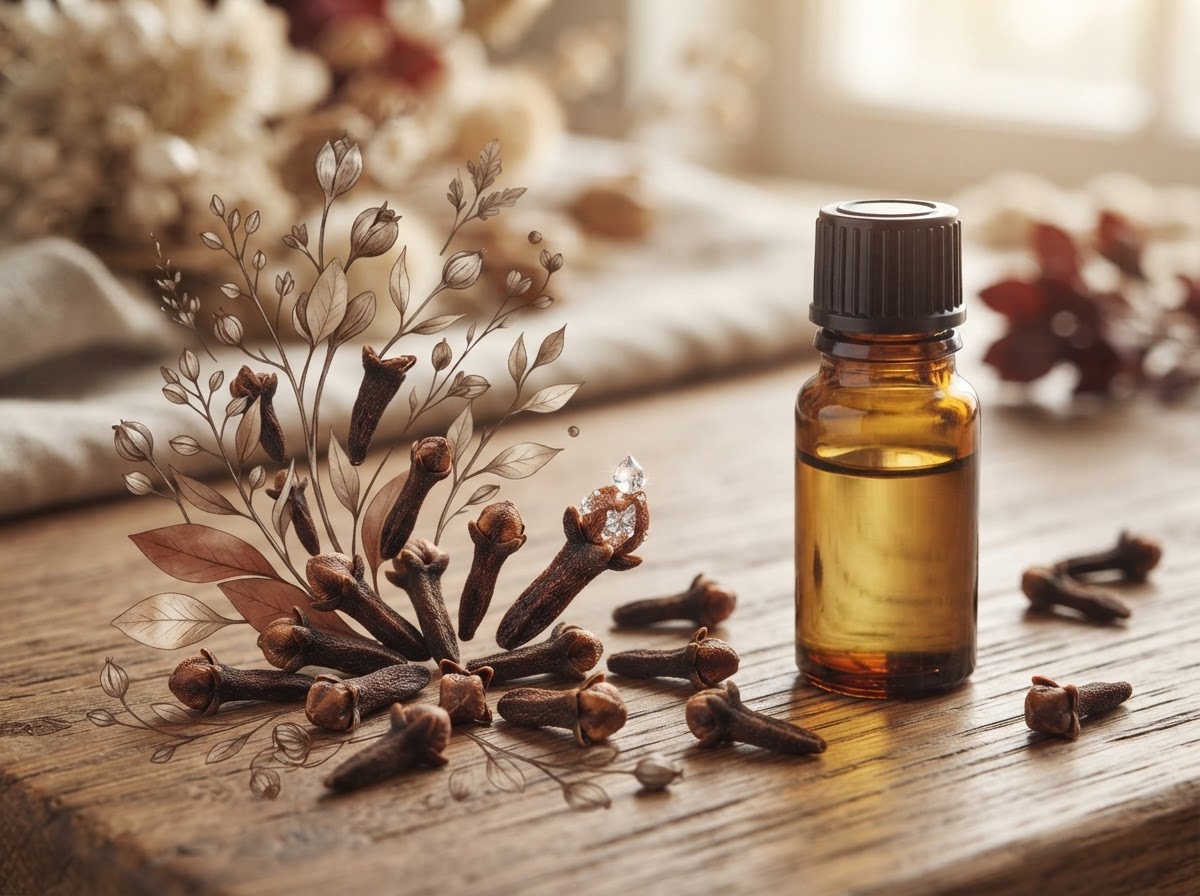
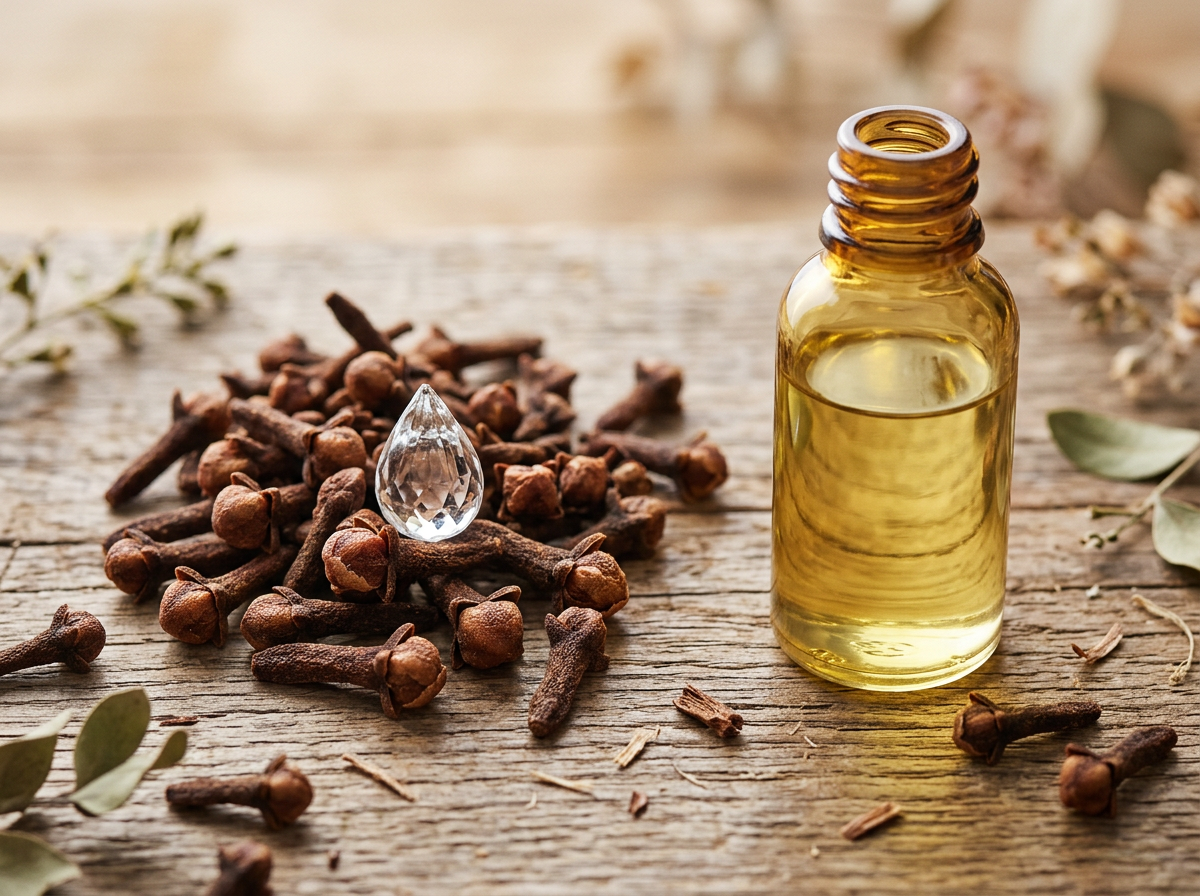
Open a bottle of fresh clove bud oil and you'll usually find something close to pale straw yellow, thin, almost watery in how it moves. Leave that same bottle on a shelf for a year or two, especially somewhere warm or sunlit, and it comes back a different color: deep gold, amber, sometimes a brownish red so dark it looks like a completely different product. Customers ask about this constantly, usually assuming something has gone wrong. In most cases, nothing has. What you're watching is basic organic chemistry playing out in slow motion, and understanding it is a lot more useful than guessing.
This piece walks through what eugenol actually is at the molecular level, why does eugenol oxidize the way it does, what research has observed about that process, and how to read color as one data point among several rather than a verdict on quality.
What's Actually in the Bottle: Chemical Composition
Clove bud oil, the primary commercial source of eugenol, is not a single compound. It's a mixture, and understanding the mixture matters for understanding the color shift. A typical steam-distilled clove bud oil breaks down roughly like this:
- Eugenol (4-allyl-2-methoxyphenol): usually 70 to 90 percent of the oil, the dominant compound by a wide margin
- Eugenyl acetate: the acetate ester of eugenol, generally 2 to 15 percent depending on harvest and distillation
- Beta-caryophyllene: a sesquiterpene, usually 5 to 15 percent, contributing to the woody backnote
- Trace compounds: alpha-humulene, various minor phenolics, and small amounts of other terpenes, together rarely exceeding a few percent
Eugenol's structure is the key to everything that follows. It's a phenol, meaning it has a hydroxyl (OH) group attached directly to an aromatic benzene ring, plus a methoxy group and an allyl side chain (a three-carbon chain with a double bond) hanging off the same ring. That combination, phenolic OH plus an unsaturated side chain, is chemically reactive in a specific, well-documented way. Phenols in general are electron-rich at the ring, and that electron density is exactly what makes them prone to oxidation when exposed to air.
Eugenol Phenol Oxidation: The Mechanism
Here's the short version of the chemistry, without requiring an organic chemistry background. Phenols like eugenol can lose a hydrogen atom from the OH group when they encounter oxygen, light, or trace metal ions (even parts-per-million levels of iron or copper picked up from processing equipment can act as catalysts). Losing that hydrogen generates what's called a phenoxy radical, an unstable, reactive species that wants to pair up with something else.
Two of those radicals can combine to form a new molecule called dehydrodieugenol, essentially two eugenol molecules joined at what used to be their radical centers. This dimer, and further oxidation products that build on it, tend to be colored compounds. As oxidation continues, some of these intermediates get pushed further into quinone-type structures, which are notably good at absorbing visible light and are part of why oxidized phenolics trend toward yellow, amber, and eventually brown or red-brown as concentration builds.
Put simply: eugenol amber color chemistry is a story of small molecules linking into bigger, more conjugated ones, and conjugation (extended networks of alternating double bonds) is what makes organic compounds visibly colored in the first place. Fresh eugenol has limited conjugation and looks nearly colorless to pale yellow. Oxidized eugenol has more, and it shows.
Research suggests that phenolic essential oil components as a class, not just eugenol, follow a similar oxidative darkening pattern when exposed to oxygen, heat, and UV light over time, though the specific breakdown products and color intensity vary by structure.
What Research Has Actually Observed
It's worth being precise about what's known here versus what's assumed. Peer-reviewed work on clove oil storage and eugenol stability is more limited than you'd expect for such a widely used compound, but a few consistent observations show up across the literature and industry testing:
- Storage studies on clove bud oil have observed measurable increases in color intensity (often tracked by absorbance or a standardized color scale) correlating with time, temperature, and headspace oxygen exposure.
- Gas chromatography analysis of aged versus fresh clove oil batches has found small but detectable decreases in relative eugenol percentage alongside the appearance of minor peaks consistent with oxidation byproducts, including dehydrodieugenol-type compounds.
- Light exposure, particularly UV, appears to accelerate the process compared to identical samples stored in the dark, which tracks with what's known about photo-oxidation in other phenolic compounds.
- Antioxidant additives and reduced headspace (less air in the bottle) have been observed to slow, though not eliminate, the rate of color change in comparative storage trials.
None of this amounts to a definitive, universally cited timeline. Oxidation rates vary by batch purity, trace metal content, container material, and storage conditions, so a bottle in a cool dark cabinet may hold its color for a couple of years while an identical bottle left near a sunny window darkens within months. The pattern is consistent; the exact speed is not.
Does Darkening Mean the Oil Has Gone Bad?
This is the question that actually matters to most people, and the honest answer is: color alone doesn't tell you. A darker oil has undergone more oxidation than a paler one from the same original batch, which means some fraction of the eugenol has converted into other compounds. That's a real chemical change. It is not automatically a sign that the oil is unusable, and it is not, by itself, evidence of contamination or spoilage in the way that mold or rancidity would be in a fatty oil.
What darkening does reasonably suggest:
- The scent profile has likely shifted somewhat, oxidized phenolics often read as slightly duller or less bright than the sharp, clove-forward top note of a fresh bottle
- The active eugenol percentage may have dropped modestly from its original spec
- The oil has been exposed to some combination of air, light, heat, or time, which is useful context for how it was stored
What it does not automatically mean:
- That the oil is unsafe to use in appropriate diluted, cosmetic applications
- That the bottle was mishandled or defective from the start
- That every dark oil is more oxidized than every pale one (some source crops and distillation methods naturally yield a deeper starting color)
If you're evaluating an older bottle, a strong off-note, a flat or muted scent compared to what you remember, or a noticeably thicker, more resinous texture are more informative signals than color alone.
Safety Profile and General Considerations
Eugenol is a potent phenolic compound, and undiluted application to skin is not appropriate. A few general points worth keeping in mind:
- Dilution matters. Eugenol is one of the more concentrated phenols used in aromatic and cosmetic applications, and standard guidance from aromatherapy safety references keeps topical dilution well below what many milder oils allow. Always dilute in a suitable carrier oil before any skin contact, and follow a reputable dilution chart rather than guessing.
- Patch test first. Apply a small diluted amount to a limited area of skin and wait 24 to 48 hours before broader use, watching for redness, itching, or irritation.
- Keep it away from eyes, ears, and mucous membranes. Phenolic oils are irritating to sensitive tissue even at diluted strengths.
- Store out of reach of children and pets. Concentrated essential oils are not intended for ingestion and should be kept well out of reach.
- Oxidized oil can be more irritating than fresh oil. Because some of the oxidation byproducts are themselves reactive compounds, a heavily aged, darkened batch is generally considered a reasonable candidate for more caution on skin, not less. If a bottle has darkened substantially and smells notably different from when it was purchased, it's worth being more conservative with topical use or switching to aromatic use only.
- Everyone's skin responds differently. Individual sensitivity varies considerably, and prior comfortable use of a product doesn't guarantee the same response with a different batch or after storage-related changes.
This information is educational and general in nature. Anyone with specific skin sensitivities, who is pregnant or nursing, or who has questions about how a botanical ingredient fits their individual circumstances should consult a qualified healthcare provider before use.
Sourcing and Quality Indicators
Because color is such an unreliable standalone signal, it helps to know what actually distinguishes a well-sourced, well-handled eugenol oil from one that's questionable from the start.
Look for a GC/MS report
A gas chromatography and mass spectrometry (GC/MS) report from the specific batch, not a generic sample report, is the single most useful document a supplier can provide. It shows the actual eugenol percentage alongside the other compounds present, letting you see whether the oil matches typical clove bud oil composition or has been diluted, adulterated, or blended with a cheaper source like clove leaf or stem oil (which tend to run higher in eugenol percentage but carry a harsher, less refined aromatic profile).
Ask about distillation source
Clove bud oil, clove leaf oil, and clove stem oil are chemically related but not interchangeable. Bud oil is generally considered the higher-quality, more refined-smelling option and commands a higher price; leaf and stem oils are cheaper, often more astringent, and sometimes sold under vague "clove oil" labeling without specifying which plant part was distilled. A transparent supplier will tell you directly which part of the plant the oil came from.
Check the container and packaging
Because oxidation is accelerated by light, quality-conscious suppliers package eugenol oil in dark amber or cobalt glass, never clear glass or plastic. A supplier shipping a phenolic oil in clear packaging is a signal that storage and shelf-life weren't front of mind during production.
Note the harvest and distillation date
Reputable suppliers can tell you roughly when a batch was distilled, even if they don't print a formal "best by" date. An oil with no traceable production window at all is harder to evaluate honestly, since you have no baseline to compare current color and scent against.
Trust your nose alongside the paperwork
A fresh, well-sourced clove bud oil has a sharp, warm, distinctly spicy top note. If a bottle smells flat, waxy, or has an odd sourness underneath the clove note, that's a more reliable indicator of a problem than color shift alone, regardless of what the original GC/MS report said.
Storage Practices That Slow the Process
You can't stop oxidation entirely, it's a fundamental property of the phenol structure, but you can meaningfully slow it down:
- Keep it cool. Reaction rates roughly double for every 10°C rise in temperature, a rough rule of thumb that applies reasonably well here. A cool cabinet beats a bathroom shelf or a car glovebox.
- Keep it dark. Amber or cobalt glass blocks much of the UV and visible light that accelerates photo-oxidation. Store bottles in a closed cabinet or box even if the glass itself is tinted.
- Minimize headspace air. Every time a bottle is opened, some oxygen gets introduced and the remaining air in the bottle increases as the liquid level drops. Transferring remaining oil into a smaller bottle as it's used reduces the oxygen surface area in contact with the oil.
- Keep the cap tight and avoid frequent opening. Simple, but it matters more than people expect for a compound this reactive.
- Use within a reasonable window. Most phenolic essential oils are considered at their best within one to two years of production when stored properly; beyond that, expect gradual color and scent drift even under good conditions.
Reading the Bottle in Front of You
The next time a bottle of eugenol oil looks darker than you remember, the chemistry behind it is straightforward: a phenol-rich oil sitting in the presence of oxygen, light, and time, slowly forming larger, more conjugated molecules that absorb more visible light and read to the eye as amber, gold, or brown. That process is well understood at a mechanistic level even if the exact rate is hard to predict for any single bottle. Color change on its own is not a verdict, it's a data point, and it's most useful when paired with scent, texture, sourcing paperwork, and how the oil has actually been stored. A dark bottle from a transparent, well-documented supplier that's been kept cool and capped tight is a very different situation than a dark bottle of unknown origin left on a sunny windowsill for three years, even though both might look the same shade of amber sitting side by side.