Eugenol Around Pets: What Makers Should Warn About
We cannot tell you that eugenol is safe around pets, and neither can any source we found. What exists is a warning from poison-control organisations about clove-derived oils and cats, a well-documented enzyme gap in cats that was studied with drugs and not with eugenol, and no published exposure data for diffusers, melts or candles. If you sell or make scented products, the position that follows from that is plain: keep the material away from animals, say so on the label, and send questions to a veterinarian.
What the poison-control sources actually say
The ASPCA's household-products page says "Cats are especially sensitive to essential oils", warns that swallowing them could cause stomach upset, nervous system depression and liver damage, and that inhaling them could lead to aspiration pneumonia. It adds that it would not recommend using any essential oils in areas where pets have access unless the pets are supervised or a veterinarian approves (ASPCA). Pet Poison Helpline says essential oil toxicosis "can affect all species, but cats and birds are at the greatest risk", and its list of oils that can cause poisoning includes clove (Pet Poison Helpline).
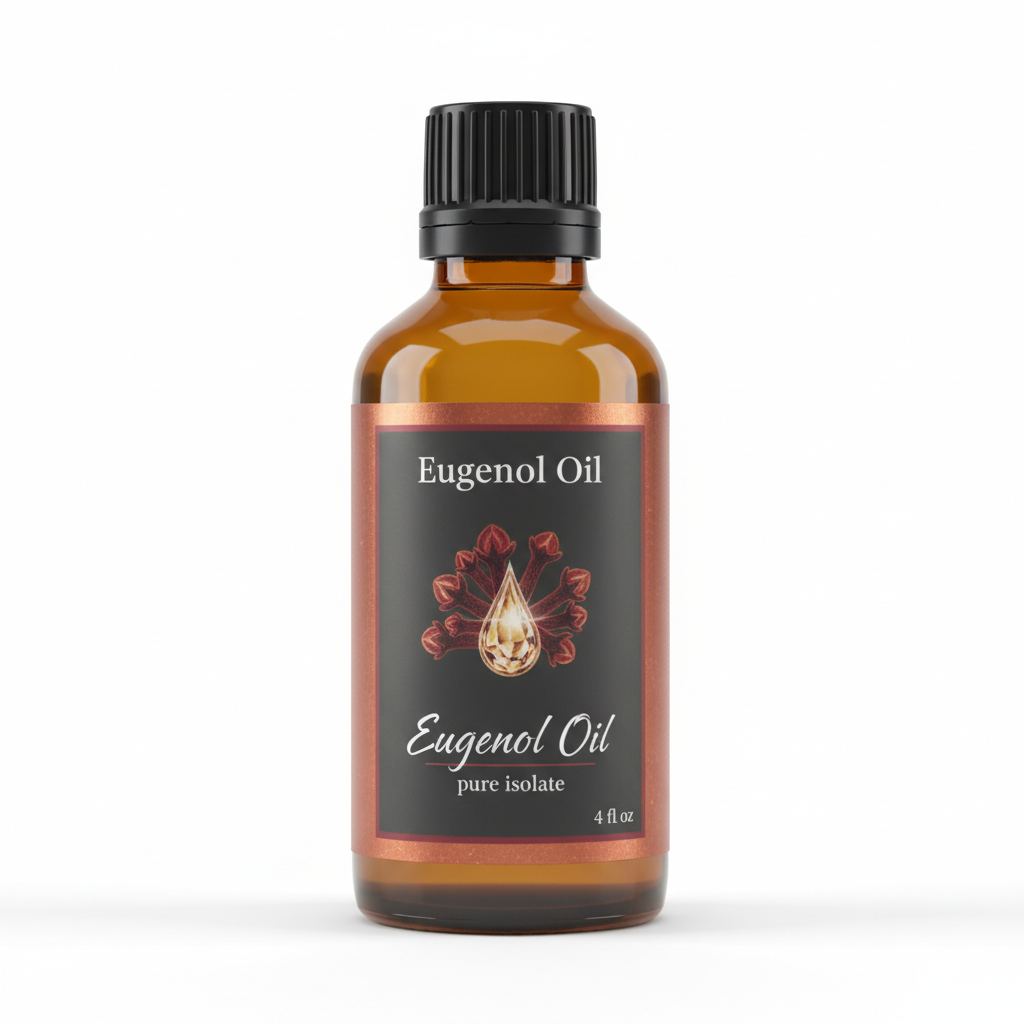
Two limits on that. First, our eugenol oil is not an essential oil; our How We Test page says so, and describes it as an isolate narrower than the clove oil it came from. Neither organisation's page, as we read it, names isolated eugenol. Second, that is not a reason to relax: our eugenol oil is isolated from clove oil, we have no animal data for it, and our shop copy already says to keep it away from children and pets.
Why cats are the worry, and what that study did not test
Shrestha and colleagues (PLoS One, 2011) examined the gene UGT1A6, which codes for a detoxifying enzyme. They traced its inactivation to between 35 and 11 million years ago and found that all living cats lack a working copy; of 22 other carnivores they checked, only the brown hyena and northern elephant seal showed similar inactivating changes, and every affected species was a strict meat eater. The paper's motivation is drugs: cats' unusual sensitivity to acetaminophen and aspirin (Shrestha et al., PLoS One, 2011). It did not test eugenol, clove oil or any fragrance material.
Reasoning from it: eugenol is a phenol (its chemical name is 4-allyl-2-methoxyphenol), and the usual explanation in the consumer literature is that cats clear phenolic compounds poorly because of this missing enzyme. That is an inference, and we found no paper that measured how cats handle eugenol. It is a reason for caution, not a measured dose threshold, and we will not invent one.
What exists for dogs and what it does not tell you
A 2026 randomized trial in 100 dogs with sarcoptic mange compared a 7% topical clove oil product, at three dose levels, with a positive control and no treatment, over 14 days; the abstract does not describe the vehicle and reports no adverse events in the dogs themselves (Hu et al., Frontiers in Veterinary Science, 2026). Its safety pharmacology work was in rats. It studied clove oil, not isolated eugenol, on the skin of dogs under a veterinary protocol, not airborne vapor in a home, and we are not suggesting anyone put anything on an animal. A 2026 review of essential oils for flea and tick control lists eugenol among phenolic compounds with promising results in laboratory tests, but its abstract reports no safety findings and calls for rigorous field studies of safety (Bava et al., Antibiotics, 2026). Searches of Europe PMC for eugenol or clove oil with cat or dog toxicosis turned up no case series of exposure from diffusers, candles or melts; that is a limited search and not proof that none exists.
Which route is the exposure, and why that matters for a maker
Three routes, and the ranking below is reasoning from the sources above, not data:
- Swallowing. A potpourri bowl, a wax melt with oil on its surface, a dropper left on a counter, a spilled bottle, or fabric that was sprayed and then licked. NOAA's CAMEO Chemicals entry describes eugenol as a primary irritant and sensitizer that may be harmful by ingestion or inhalation (NOAA CAMEO Chemicals, eugenol). This is the route the ASPCA's stomach and liver warning is about.
- Skin. Paws on wet sprayed floors, fur against freshly scented fabric, or a spill. Eugenol is a recognised skin sensitiser (our How We Test page), and ECHA notifications list H317 in 99.8% of 2,820 reports (PubChem, eugenol). Those are human skin classifications; applying them to animals is an inference.
- Breathing. A passive reed diffuser or a candle in a large room is a small source, and an ultrasonic mist or a spray is a larger one. The same PubChem record lists eugenol's vapor pressure as 0.0221 mmHg at 25 C and gives about 0.004% for its fraction in saturated air (Patty's Toxicology, via HSDB). Reasoning from that, the air above a closed bottle is a ceiling for what airborne eugenol can reach at room temperature, which is useful for comparing products, but it says nothing about what an animal's body does with it. The ASPCA's aspiration-pneumonia warning is about inhaling the oils, and the page gives no concentration or form, so we cannot say how a vapor from a candle compares.
Our own guides for the products involved: wax melts, reed diffusers and the room and linen spray, which is the one that puts the most liquid in the room.
What to put on a label or listing
This is a proposal for makers, not a regulatory text. Do not call a scented product pet-safe, pet-friendly or natural and therefore fine; none of the sources above supports it. State plainly that the product contains an eugenol-bearing fragrance, keep it away from children and pets, and do not use it where pets, particularly cats and birds, cannot leave the room. Include your supplier's SDS. Our shop copy lists the same core: concentrated material, keep away from eyes, children and pets, store out of casual reach, not for internal use. If your product claim goes further than that (a "pet-safe" candle, say), you need a veterinarian's sign-off and a regulatory specialist, and we have neither to offer.
If an animal has been exposed
Call a veterinarian, or one of the two poison lines. The ASPCA Animal Poison Control hotline is (888) 426-4435; Pet Poison Helpline's page lists (855) 764-7661 and, in its article text, 800-213-6680. Have the product name, how much, when, and the SDS to hand. A consultation fee may apply with either service; we did not verify the terms.
Who should skip our oil
Households with cats or birds that cannot be kept out of the rooms where a product is used should skip eugenol-based fragrance in sprays, diffusers and open bowls, and ask their veterinarian before anything else. We do not sell diffusers, candles or melts; we sell eugenol oil only, undiluted, for makers who take the handling and labelling above seriously. That is the whole recommendation.
Sources & Further Reading
- ASPCA. Pet Poisons: Be Mindful of these Household Products and Cleaning Agents. aspca.org
- Pet Poison Helpline. Essential oils. petpoisonhelpline.com/pet-poison/essential-oils
- Shrestha B. et al., 2011. Evolution of a major drug metabolizing enzyme defect in the domestic cat and other felidae. PLoS One 6(3):e18046. PubMed 21464924
- Hu H. et al., 2026. The safety and efficacy of topical clove oil for the treatment of naturally occurring Sarcoptes scabiei var. canis infestation in dogs. Front Vet Sci. PubMed 42638871
- Bava R. et al., 2026. Essential Oils for Flea and Tick Control in Companion Animals: A Critical Review. Antibiotics 15(3):312. PubMed 41892473
- NOAA CAMEO Chemicals. Eugenol. cameochemicals.noaa.gov/chemical/20399
- NCBI PubChem. Eugenol (CID 3314), ECHA C&L Inventory and HSDB data. pubchem.ncbi.nlm.nih.gov/compound/Eugenol