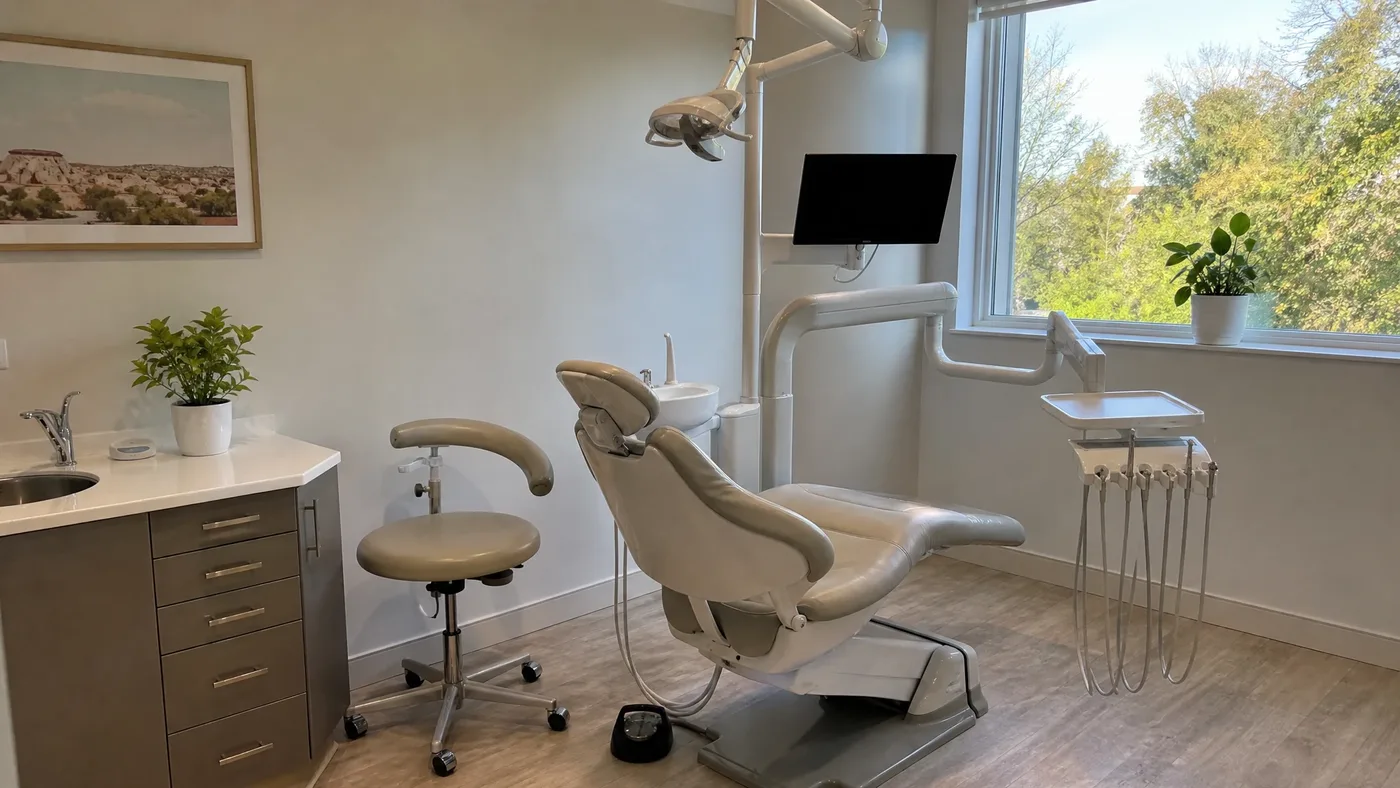
Eugenol in Dentistry: History and Regulatory Context
If you landed here with a dental problem, stop reading and call a dentist: a toothache, a swollen gum or a broken filling needs an examination, and nothing on this page is advice for treating your mouth. The rest is history and regulatory context for makers who keep meeting eugenol's dental reputation and wonder whether it has anything to do with the fragrance isolate on their bench. It does not, and the reasons are specific.
What dentistry actually uses is a cement, not a bottle of oil
The dental material is zinc oxide-eugenol (ZOE): zinc oxide powder mixed with eugenol into a cement. U.S. federal regulation defines it as a device. Under 21 CFR 872.3275, zinc oxide-eugenol is "a device composed of zinc oxide-eugenol intended to serve as a temporary tooth filling or as a base cement to affix a temporary tooth filling, to affix dental devices such as crowns or bridges, or to be applied to a tooth to protect the tooth pulp." It is classified as Class I (general controls) and exempt from premarket notification, subject to the regulation's limits.
Three things follow from that text, all reasoning from the regulation rather than from any study. The intended uses are mechanical and protective placements performed by a dental professional. The regulated product is the finished cement, with its own definition, not the ingredient sold by the kilogram. And the same section sets a separate class for cements other than ZOE, so the category is defined by composition. A review of the molecule (Kamatou et al., Molecules, 2012) describes the same family of products in broader terms: eugenol combined with zinc oxide to make a cement used for surgical dressings, temporary fillings, pulp capping agents and cavity liners.
One more reading of the same text, again reasoning rather than a finding: Class I with a 510(k) exemption describes how the device is regulated for market entry, not how a reaction is judged. The case reports below sit alongside that classification without contradicting it, which is a reminder that "regulated, low-class" and "no reactions reported" are different statements.
We could not retrieve a source that dates the first ZOE cement, and we are not going to give a date from memory. The sources we could read treat it as established practice without dating it.
Why dentistry moved eugenol out of some jobs
A 2023 review of dental luting cements (Heboyan et al., Molecules, 2023) says provisional cements previously mostly contained eugenol and are nowadays mainly made without it, because the oil component can interfere with the curing of the final, resin-based cement and lower its bond strength. That is a review's summary of earlier laboratory work, so we checked a primary one.
A 2024 in vitro study (Khaitan et al., Journal of Conservative Dentistry and Endodontics, 2024) used 112 samples cut from 56 extracted human molars. Eugenol-containing and eugenol-free materials sat on the dentin for 24 hours, 7 days or 14 days, and micro-shear bond strength of an etch-and-rinse adhesive and a self-etch adhesive was measured. After 24 hours of eugenol exposure the self-etch adhesive showed significantly lower bond strength; after 7 or 14 days the reduction was not significant. The authors conclude that a day of exposure matters and a week or more has minimal effect. The study was on extracted teeth in a lab, with eight samples per subgroup, so it says nothing about a person's mouth. The honest summary is that "eugenol blocks resin" is too blunt: the evidence shows a timing- and adhesive-dependent effect in vitro.
The documented harm side
The Kamatou review lists adverse effects reported with eugenol-containing dental products: local irritation, ulcer formation, allergic contact dermatitis, tissue necrosis, impaired healing and, rarely, anaphylactic-like shock. Two case reports show what that looks like in practice, and each is a single patient:
- A 2013 BMJ Case Reports article (Tammannavar et al., 2013) describes immediate allergic contact urticaria to eugenol during dental treatment, and notes eugenol turns up in periodontal dressings and root canal cements.
- A 2010 case report (Aleman Navas et al., International Journal of Dentistry, 2010) describes a zinc oxide-eugenol paste packed into a tooth socket that mimicked trigeminal neuralgia for three years and led to chronic bone infection and a foreign-body reaction, resolved by surgical removal.
Case reports prove that something can happen, not how often. They are included because they explain why this material is handled by professionals, with a dental history taken first.
Why none of this transfers to a fragrance isolate
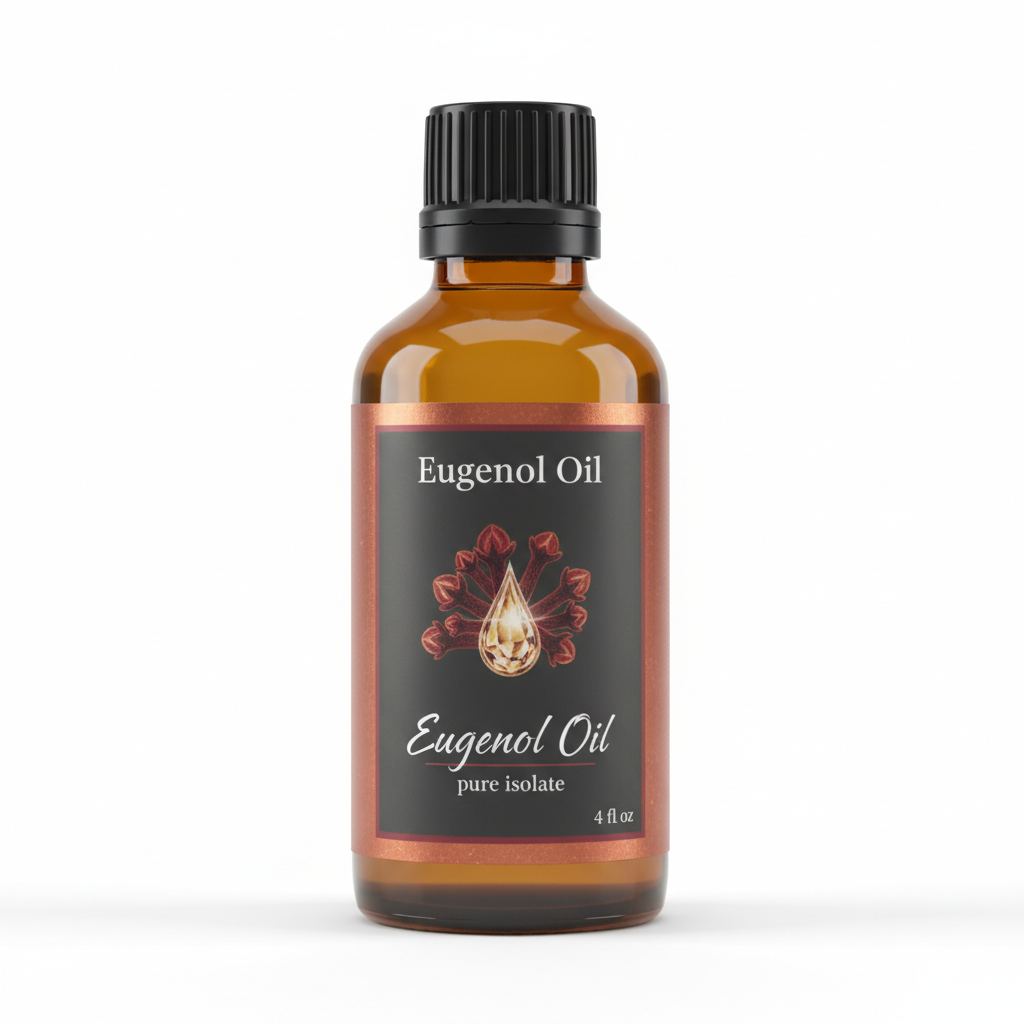
- Different product, different regulation. A dental cement is a regulated device with a defined use. The eugenol oil we sell is a refined isolate obtained from clove oil, sold for fragrance and formulation work. Our How We Test page states that it is not offered for dental or therapeutic use of any kind, and we make no medical claims for it.
- Different controls. Nothing in the sources above supports using a bottle of fragrance material in a mouth. The reported dental harms happen in supervised clinical settings with a professional placing the material.
- Same molecule, same sensitiser. Because eugenol is one molecule, the allergy reports are relevant to makers in one respect: it is a recognised skin sensitiser, which is why our own shop copy says to dilute and patch test and to wash hands after handling. For limits, see our sensitisation article; for the regulatory side, the compliance guide.
What we did not read
FDA and other regulators have also looked at eugenol in over-the-counter oral products. We did not read those notices, so this page states nothing about them. If you need to know how a dental or oral product containing eugenol is regulated today, ask a regulatory attorney or specialist, and for any question about a material in or near teeth, ask the dentist treating you. A pharmacist can tell you what an over-the-counter oral product contains.
If the clove-oil toothache story brought you here
The popularity of clove oil for tooth pain is a story about a famous molecule, not an instruction we can give. Eugenol's reputation is told in the short history of clove and its molecule, and what our material is (and is not) in the myths article. Our eugenol oil is a fragrance and formulation material for candle, soap, perfume and home-fragrance makers; a dental problem belongs with a dentist, an allergic reaction with an allergist, and a child or pet that has swallowed a concentrated oil with poison control, a physician or a veterinarian right away.
Sources & Further Reading
- U.S. Code of Federal Regulations, Title 21, Section 872.3275. Dental cement. ecfr.gov/21-CFR-872.3275
- Kamatou GP, Vermaak I, Viljoen AM, 2012. Eugenol: from the remote Maluku Islands to the international market place. Molecules. pubmed.ncbi.nlm.nih.gov/22728369
- Heboyan A et al., 2023. Dental Luting Cements: An Updated Comprehensive Review. Molecules. pubmed.ncbi.nlm.nih.gov/36838607
- Khaitan A et al., 2024. Effect of eugenol exposure time on the bond strength of an etch-and-rinse and a self-etch adhesive to dentin: an in vitro study. J Conserv Dent Endod. pubmed.ncbi.nlm.nih.gov/38989483
- Tammannavar P et al., 2013. An unexpected positive hypersensitive reaction to eugenol. BMJ Case Reports. pubmed.ncbi.nlm.nih.gov/24049087
- Aleman Navas RM et al., 2010. Case report: late complication of a dry socket treatment. International Journal of Dentistry. pubmed.ncbi.nlm.nih.gov/21253516