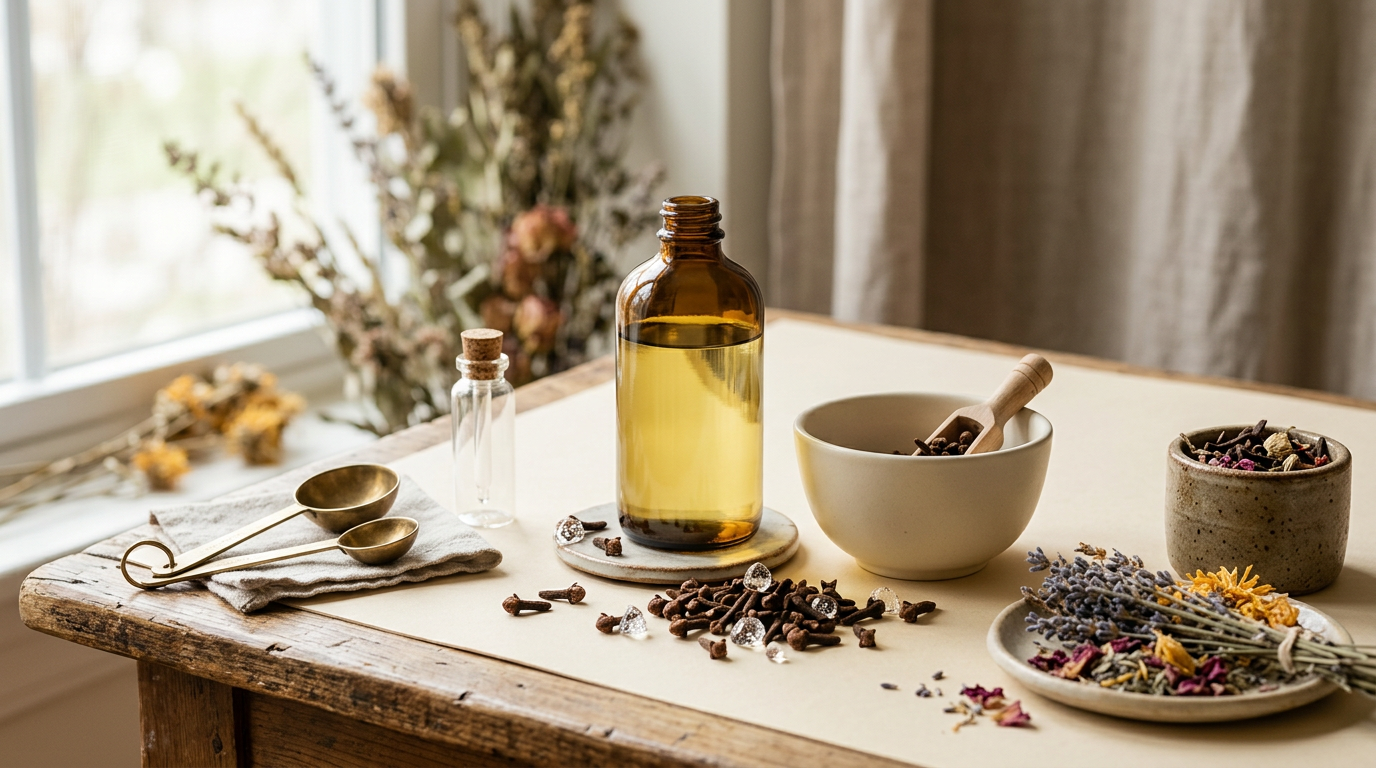
DIY Eugenol Spice Sachet Oil for Drawers and Linens
There's a particular kind of quiet pleasure in opening a dresser drawer and catching a warm, spicy note before you've even found your sweater. That's the appeal of a diy spice sachet oil made with clove bud essential oil (eugenol oil): a small, low-effort project that turns a linen closet or a stack of folded towels into something a little more considered. This eugenol linen scent recipe leans on clove's rich, almost bakery-spice character, rounded out with warming companions like cinnamon leaf and sweet orange, so the drawers you open all winter smell deliberate instead of accidental.
Below you'll find a full recipe for clove scented drawer sachets, from the oil blend itself to the fabric pouches that hold it, along with the dilution math, patch-testing steps, and storage notes that matter most when you're working with a compound as concentrated as eugenol.
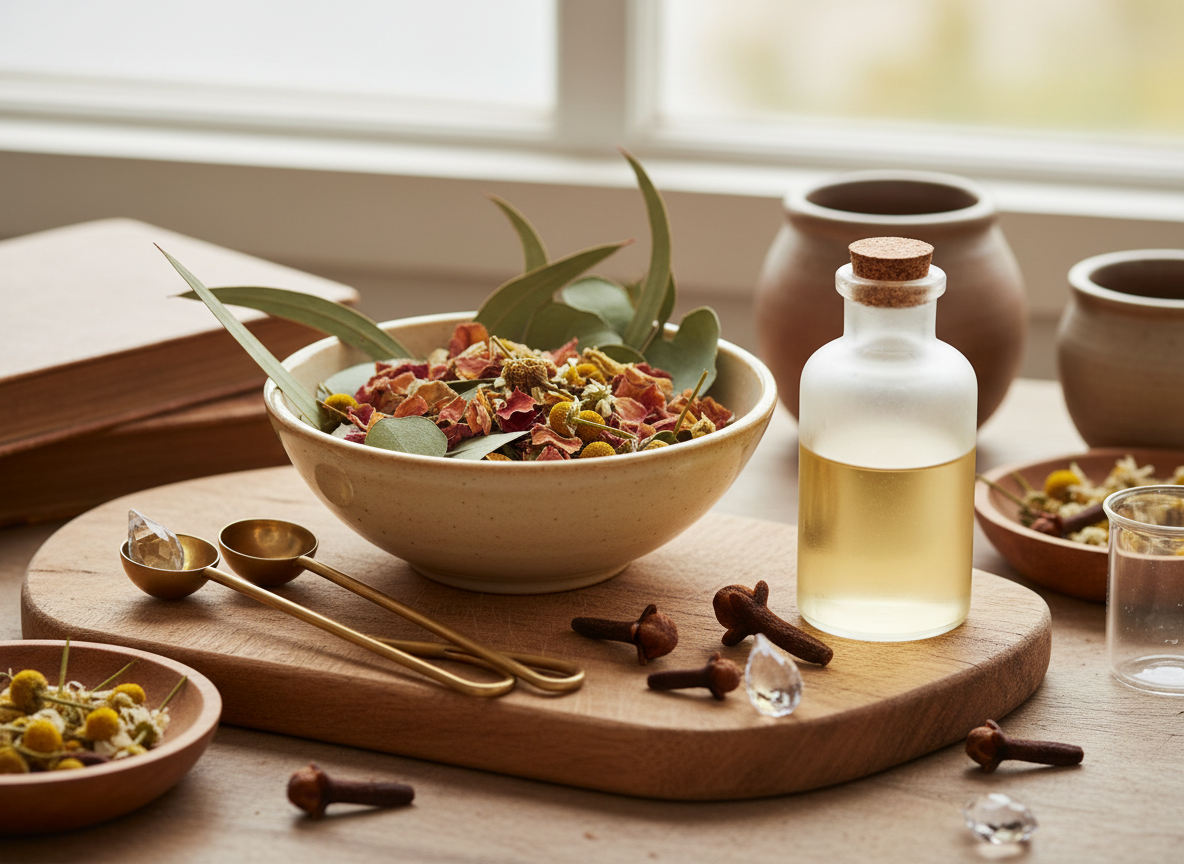
Difficulty and Time
- Difficulty: Beginner
- Active prep time: 20 minutes
- Rest/cure time: 24 hours before first use
- Yield: 6 to 8 small sachets (about 3 x 4 inches each)
Ingredients
This recipe has two parts: the scent oil blend, and the dry sachet filler it goes into. Keeping the oil off your skin and mostly contained in the filler is part of what makes this project low-risk and low-fuss.
For the Eugenol Spice Sachet Oil (makes about 2 tablespoons)
- 15 drops clove bud essential oil (eugenol oil)
- 8 drops cinnamon leaf essential oil (leaf, not bark, for a gentler profile)
- 6 drops sweet orange essential oil
- 4 drops cedarwood essential oil
- 2 tablespoons fractionated coconut oil or another light carrier oil
For the Sachet Filler
- 1 cup dried orris root, cellulose fiber, or plain uncooked rice (as a scent-carrying base)
- 2 tablespoons whole dried clove buds
- 1 cinnamon stick, broken into small pieces
- 1 tablespoon dried orange peel
- 6 to 8 small muslin or cotton drawstring bags (about 3 x 4 inches)
- A small glass or ceramic mixing bowl (avoid plastic, since concentrated oils can degrade some plastics over time)
- A glass measuring spoon or dropper
If you're new to working with clove oil, our guide to diluting clove oil safely is worth a read before you start, since eugenol behaves differently on skin and fabric than lighter oils like lavender.
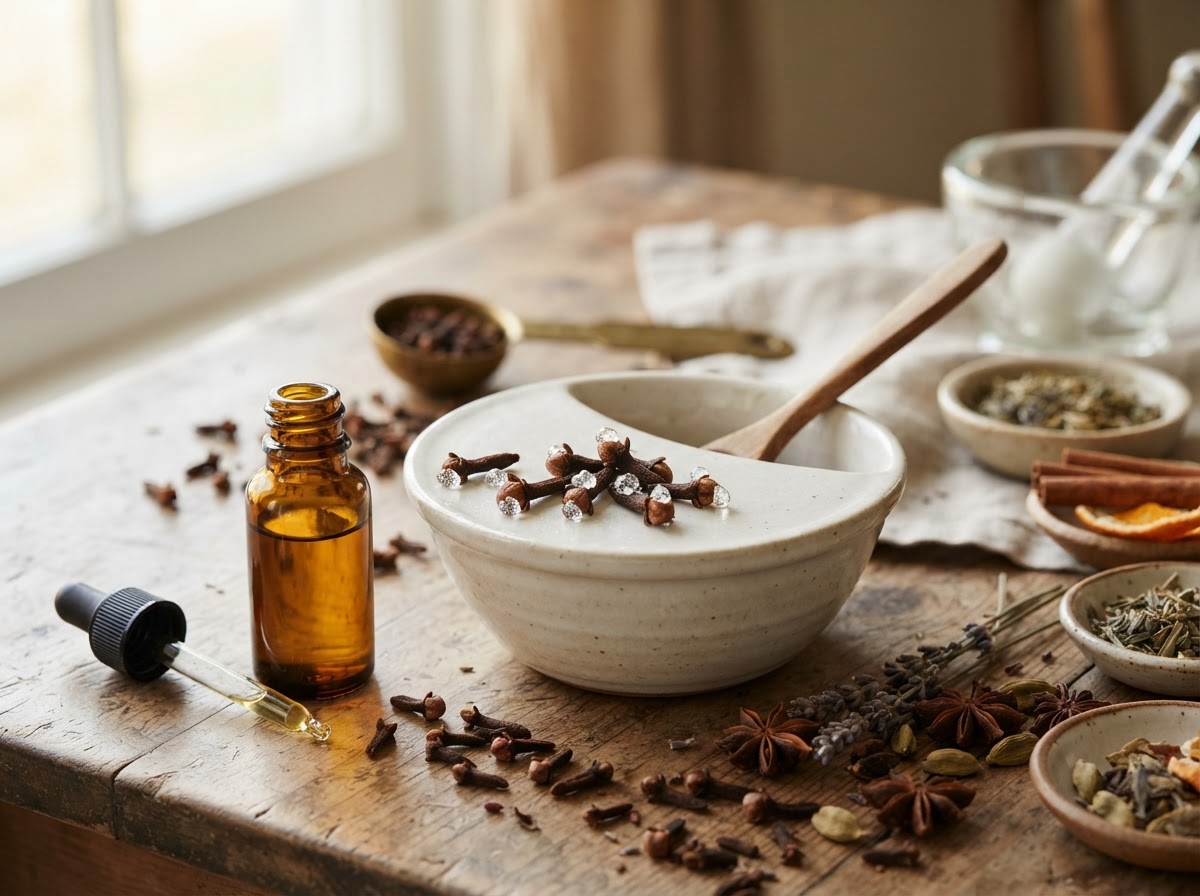
Step-by-Step Instructions
Step 1: Mix the Oil Blend
In your glass bowl, combine the fractionated coconut oil with the clove, cinnamon leaf, sweet orange, and cedarwood essential oils. Stir gently with a glass rod or wooden skewer rather than a plastic one. This diluted blend is the heart of the eugenol linen scent recipe: the carrier oil slows evaporation so the scent lasts in the sachet rather than fading within a week.
Step 2: Combine the Dry Filler
In a separate, larger bowl, toss together the orris root or rice, whole cloves, broken cinnamon stick pieces, and dried orange peel. This dry mixture is what actually goes inside each sachet bag; it acts as a slow-release base that holds onto the oil blend far longer than fabric alone would.
Step 3: Combine Oil and Filler
Drizzle the oil blend over the dry filler mixture a little at a time, stirring as you go so the oil distributes evenly rather than pooling in one spot. You're aiming for a filler that feels barely damp, almost dusty, not wet or clumped. If it looks oily and dark in patches, you've used too much; add a bit more dry filler to balance it out.
Step 4: Fill the Sachets
Spoon two to three tablespoons of the scented filler into each muslin bag, then pull the drawstring tight and knot it. If your bags don't have drawstrings, a piece of twine tied snugly around the top works just as well. Give each sachet a gentle shake to settle the filler.
Step 5: Let Them Cure
Set the finished sachets on a tray lined with parchment paper and let them sit undisturbed for 24 hours before tucking them into drawers. This rest period lets the scent settle into the fibers and mellows any sharpness from the fresh oil blend, so what you smell on day one is softer than what you smell right after mixing.
Step 6: Place and Refresh
Tuck one sachet per drawer, or two for larger linen shelves, nestled among folded fabric rather than pressed against a single garment. For anyone curious about pairing this recipe with other spice-forward blends, our piece on layering clove and cedarwood for closet scents covers a few combinations worth trying next.
Safety Warnings
Clove bud oil is one of the more concentrated essential oils commonly available, and eugenol, its primary aromatic compound, is potent even at small volumes. Please read through these points before you begin.
- Dilution matters. The ratios above (roughly a 5 percent dilution in carrier oil) are meant for a sachet that stays out of direct, prolonged skin contact. Never apply undiluted clove oil directly to skin, and don't increase the drop count in hopes of a stronger scent; more concentrated eugenol raises the chance of skin irritation if it does contact you while mixing.
- Patch test first. Before handling the mixed oil freely, dab a small diluted amount on the inside of your forearm and wait 24 to 48 hours. If you notice redness, itching, or discomfort at any point, wash the area with mild soap and water and discontinue use.
- Wear gloves while mixing. Since the blend is more concentrated than a typical body-safe dilution, disposable gloves are a smart, simple precaution while you measure and stir.
- Keep away from children and pets. Store finished sachets and any leftover oil blend well out of reach. Cats in particular process essential oil compounds very differently than humans do, so keep sachets, and any spilled oil, away from areas pets can access, chew, or lie on.
- Not for use during pregnancy or nursing without professional guidance. If you are pregnant, nursing, or managing any ongoing health condition, speak with a qualified healthcare provider before introducing concentrated essential oil projects into your home.
- Avoid eyes and mucous membranes. If the oil blend contacts your eyes, flush thoroughly with clean water and seek medical attention if irritation continues.
- Ventilation. Mix in a well-ventilated space. Eugenol's aroma is strong, and a closed room can make it overwhelming quickly.
This recipe is intended for scenting fabric and enclosed spaces only, not for topical or internal use. It's a cosmetic and aromatic project, not a substitute for professional advice on any skin or health concern.
Storage Instructions and Shelf Life
Store any leftover oil blend in a small amber glass bottle, tightly capped, away from direct sunlight and heat. Kept this way, the blend should hold its character for up to a year, though clove's scent naturally mellows over time as the top notes fade first.
The finished sachets themselves tend to stay noticeably fragrant for six to eight weeks in a closed drawer. Once the scent fades, you don't need to start over: open the bag, add three or four fresh drops of your oil blend directly onto the dry filler, and let it rest for a few hours before returning it to the drawer. Most sachets can be refreshed this way two or three times before the dried spices themselves lose their base character and it's time to make a new batch.
Variations and Substitutions
Once you've made a basic batch, there's plenty of room to adjust the profile to your taste or what you have on hand.
- Warmer, more classic spice cabinet scent: Increase cinnamon leaf slightly and add 3 drops of nutmeg or allspice essential oil.
- Brighter, less heavy blend: Swap the cedarwood for 4 drops of bergamot, and lean a little more on the sweet orange.
- Moth-deterrent focus for a linen closet: Clove has long been used in traditional sachet blends alongside cedar for exactly this purpose; keep the cedarwood at the higher end of the range and add a few extra whole cloves to the dry filler.
- No essential oil dropper on hand: A quarter teaspoon of ground clove and a quarter teaspoon of ground cinnamon stirred directly into the dry filler will carry a milder, more rustic version of the scent, though it won't last quite as long as the oil-based version.
- Carrier oil swap: Jojoba oil works as well as fractionated coconut oil and has a longer shelf life of its own, which can help the finished blend stay stable a bit longer.
- Fabric choice: Cotton and muslin both breathe well and let scent diffuse steadily. Tightly woven synthetic fabrics tend to trap the scent inside rather than letting it out, so they're best avoided for this project.
A Few Final Notes
Once you've learned how to make spice sachets with eugenol, the process becomes quick enough to repeat every season, adjusting the spice mix for autumn versus a lighter spring version. Keep notes on the ratios you liked best; clove's intensity means small changes in drop count make a bigger difference than they would with a milder oil. If you want to explore where this particular note comes from botanically, our overview of eugenol as a compound is a good next stop.